The short answer
A vinyl replacement window in Phoenix costs about $315 to $1,100 installed, and ten vinyl windows run $3,150 to $10,800. Glass matters most. A desert house needs a low solar heat gain coefficient to keep the afternoon sun out, and the frame has to survive decades of 110 F summers.
What window replacement costs in Phoenix
The table starts from national installed prices and adjusts them for Phoenix. The U.S. Army Corps of Engineers puts construction costs in the Phoenix area at 0.90 times the national average, so a window that costs $1,000 to install in an average US city tends to cost about $900 here.
| Job | Phoenix (typical range) | US average |
|---|---|---|
| Vinyl window, installed | $315–$1,100 | $350–$1,200 |
| Fiberglass window, installed | $540–$1,800 | $600–$2,000 |
| Wood window, installed | $720–$2,700 | $800–$3,000 |
| Aluminum window, installed | $160–$900 | $175–$1,000 |
| Composite window, installed | $360–$2,050 | $400–$2,300 |
| 10 vinyl windows, installed | $3,150–$10,800 | $3,500–$12,000 |
| Bay window, vinyl | $1,000–$3,450 | $1,100–$3,850 |
| New trim, per window | $36–$110 | $40–$120 |
Estimates for 2026, including labor and standard parts. Phoenix prices use the metro's construction cost factor of 0.90 (US average = 1.00) from the U.S. Army Corps of Engineers Area Cost Factors. Your quote depends on access, materials and the condition of the home.
These prices assume an insert (pocket) replacement in a standard opening. A full-frame replacement, where the installer takes the old frame out and works on the rough opening, costs more. At Phoenix prices, a vinyl window in the middle of the range runs about $315 to $1,100 installed.
What raises a Phoenix window quote
- Full-frame work on a stucco wall. Stucco is the standard exterior finish on valley houses, and taking a frame out means cutting and patching the stucco around the opening. Ask whether the quote includes the patch and the paint.
- Second-story access. Ladders and scaffolding take longer to set up, and the work goes slower.
- Size and shape. Large picture windows, arched tops and bay windows cost much more than a standard slider. A vinyl bay window runs $1,000 to $3,450 here.
- Glass upgrades. Low-E coatings, argon fill and laminated glass add to the per-window price. Ask for the upgrade cost in writing, window by window.
Price your own project with the cost estimator below, or open the full window cost estimator. Both use the rate for your ZIP code. For national prices and how window styles compare, see our window replacement guide.
Which window frame suits a desert house?
Many valley houses still have single-pane aluminum sliders, and those windows are usually why an owner starts shopping. Aluminum conducts heat, and single glass does little to stop the sun.
| Frame | Phoenix installed price per window | Where it fits here |
|---|---|---|
| Vinyl | $315 to $1,100 | Most stucco tract houses; the usual value pick |
| Fiberglass | $540 to $1,800 | West- and south-facing walls with hard afternoon sun |
| Wood or clad wood | $720 to $2,700 | Custom and older custom homes |
| Aluminum | $160 to $900 | Slim frames; choose a thermally broken model |
| Composite | $360 to $2,050 | Wood look with less upkeep |
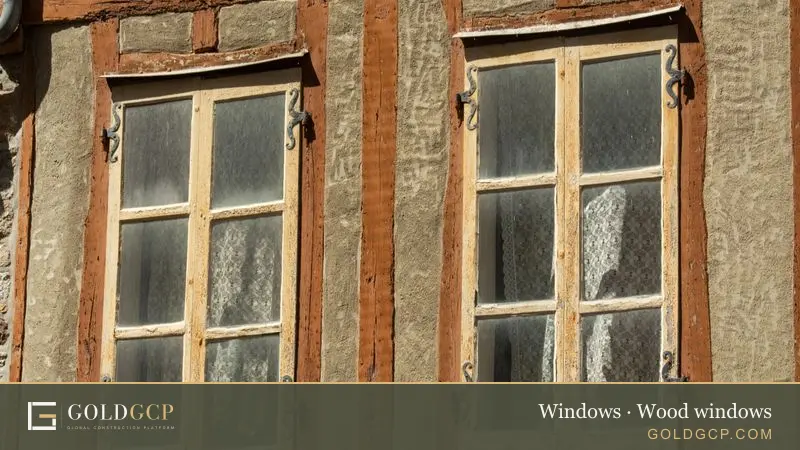
Vinyl costs the least of the insulated frames. Our vinyl windows guide covers lifespan and color choices. Vinyl softens in extreme heat, so on a wall that takes the full western sun, compare it with fiberglass windows, which cost more but hold their shape. Owners of custom homes often want wood windows to keep the original look. If you like the thin lines of mid-century aluminum, read our aluminum windows guide about thermal breaks before you buy.
What fails first on a desert window
The sun and the dust do the damage, not the cold. Seals between the panes fail first, and a failed seal shows up as fog or a white haze inside the glass. Glazing gaskets dry out and shrink, which lets dust in and lets cooled air out. Vinyl on a west wall can warp or bow over time. When you get quotes, ask what warranty covers seal failure and for how long.
Glass ratings for the Phoenix climate
Phoenix is a cooling climate, so the window's main job is to keep summer heat out. Two numbers on the NFRC label tell you how well it does that:
- U-factor measures heat flow through the whole window. Lower is better.
- Solar heat gain coefficient (SHGC) measures how much of the sun's heat comes through the glass. Lower is better here.
The ENERGY STAR zone for Phoenix
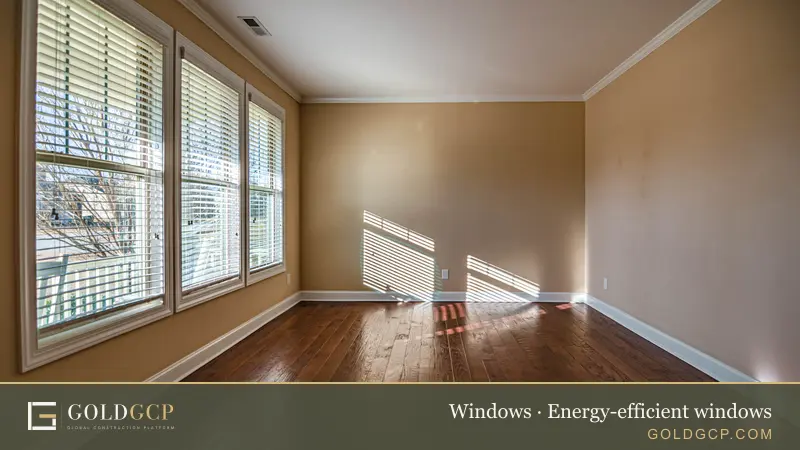
ENERGY STAR Version 7.0 took effect in October 2023 and sets its criteria by climate zone. In the South-Central zone, windows generally need a U-factor of 0.28 or lower and an SHGC of 0.23 or lower (Window & Door). Low-E coatings are now required across all climate zones to hit those numbers. Ask the installer for the ENERGY STAR label for your zone. Our energy-efficient windows guide explains the labels.
What the energy code asks for
Arizona is a home rule state with no mandatory statewide energy code (BCAP), so each city adopts its own edition. Phoenix adopted the 2018 International Residential Code as part of the 2018 Phoenix Building Construction Code, along with the International Energy Conservation Code. Mesa put the 2009 IECC into effect in 2012, and Peoria adopted the 2012 IECC in 2013. The edition that applies to your house depends on your city, so ask the building department which one is current before you order glass.
Under the IECC, U-factor and SHGC must come from an NFRC label on the product, or from the code's default table if the unit is unlabeled (IQ Glass). Windows also have to meet an air infiltration limit of 0.3 cubic feet per minute per square foot.
Which walls need the strongest glass
In a warm climate, a low SHGC matters most on windows that face south, east and west (ENERGY STAR). A standard double-pane window lets about 75 percent of the sun's heat into the home. Low-E coatings also cut fading from ultraviolet light by up to 75 percent, which matters in a valley where the sun bleaches furniture and floors.
If your house has a large west-facing wall of glass, put the strongest coating there. A solar-selective low-E glass can keep a low SHGC without making the room dark. Replacing single-pane windows with ENERGY STAR certified units lowers household energy bills by an average of up to 13 percent nationwide, according to ENERGY STAR.
Do you need a permit to replace windows in Phoenix?
For a same-size change-out, usually not. The Arizona Building Officials association lists door and window replacements where no structural member is changed as work that does not require a permit (AZBO). That covers the common job: pulling an old slider and setting a new unit of the same size into the same opening.
A job that changes the opening needs a permit. Enlarging a window typically requires a permit from the local building authority, and the plans must meet Arizona window size rules and structural support requirements (Energy Shield). If wiring inside the wall has to move, a licensed electrician handles that part.
| Job | Permit in most valley cities |
|---|---|
| Same-size window change-out, no structural change | Usually none |
| Enlarging or adding a window | Permit and plan review |
| Changing the opening's structure | Permit and plan review |
Where you apply depends on where you live, because each city runs its own building department. If your house sits in unincorporated Maricopa County, the county Planning and Development Department handles it, and all new permit applications go through the county's online Permit Center (Maricopa County). The county's Permit Center phone line is 602-506-3301.
Fees are based on the size and complexity of the project, and each building department publishes its own fee and valuation tables (AZBO). A permit is issued in the name of the party doing the work, and an inspector can check the job against the code. If you are unsure whether your job needs one, call your city's building department before you order windows.
Arizona law also requires a homeowner selling a house to disclose all remodeling work and whether permits were obtained. A permit gives you a permanent record of the work and the inspections.
HOA rules
Many valley subdivisions have HOAs, and window color and style can fall under the community rules. Maricopa County tells owners to review their HOA CC&Rs before any modification, and notes that a building permit does not stop an HOA from enforcing them (Maricopa County). Get the HOA approval before the order goes in, especially if you are changing frame color.
Bedroom windows, safety glass and security bars
Egress windows in bedrooms
A bedroom needs a way out in a fire. Arizona's building code requires any habitable room to have at least one operable exterior window or door with a clear opening of at least 8 percent of the room's floor area. Windows must be at least 20 inches high and 24 inches wide, and no window or door may sit more than 44 inches above the floor unless it is the only window in the room (Energy Shield). If you are enlarging a bedroom window, the new opening has to meet the egress rules.
Security bars
Bars and grilles over a bedroom window need to open from the inside without a key or a tool. If old fixed bars sit in front of a bedroom window you are replacing, price quick-release hardware in the same job.
Where safety glass is required
Large, low windows and windows near doors need tempered or laminated glass. Your installer should mark these windows on the order. Ask which panes in your house fall under the rule before the order is placed.
Monsoon wind, dust and sun
The valley's weather shapes what a window has to survive. The monsoon typically runs from the latter half of June through September, and downburst winds in those storms can reach 50, 60 or 70 mph, and in rare cases exceed 100 mph (NWS Albuquerque). Those winds throw loose debris, and the weather service advises staying away from windows during a downburst because flying items can break glass.
Dust is the other problem. Blowing dust is common near open fields and dry lake beds, and it finds every gap. A window that seals well keeps dust out of the house and off the tracks of a slider. Ask the installer how the new unit seals at the sill and the jambs.
Rain is scarce. Phoenix averages 7.22 inches of rain a year under the 1991-2020 normals, and Scottsdale averages 8.73 inches (NWS Phoenix). Most of the year is dry and open for work, but monsoon storms are when a bad seal shows up as a leak. Schedule the job for the dry months if you can, and check the flashing and sealant at every opening before the storms arrive.
How to check a window installer before you hire
Arizona licenses contractors through the Arizona Registrar of Contractors, which regulates more than 60,000 residential and commercial contractors (AZ ROC). Any business that contracts to build, alter, repair or improve a structure must hold a license, and contractors must be licensed before they submit a bid (AZ ROC). Arizona has no direct reciprocity with other states, so a license from California or Nevada does not carry over.
- Look up the license on the AZ ROC website. Check that it is active and that the business name matches the bid.
- Ask for the license number in writing on the contract.
- Get the window line, frame material, U-factor and SHGC, and the insert or full-frame method in writing.
- Ask who pulls the permit if your job needs one, and who handles the HOA approval.
- Keep the deposit modest and tie the rest to milestones.
The Registrar also investigates complaints against licensed pros and unlicensed entities. Check the complaint record before you sign.
Every installer in the GOLDGCP network passes six-step vetting: license verification, an insurance check, a background and business check, a portfolio review, client reference calls, and onboarding with a quality score. You pay your pro directly, stage by stage, each payment after you approve that stage. Read more about how milestone payments work.
Areas we cover
GOLDGCP window installers work across the Valley of the Sun:
- Phoenix
- Scottsdale
- Mesa
- Tempe
- Chandler
- Gilbert
- Glendale
- Peoria
Enter your ZIP code to see window prices for your street and get matched with a local installer.
How GOLDGCP works
- Tell us about the windows: how many, the frame you have now, and any that fog, stick, leak dust or won't lock. Use the form, call or send a WhatsApp message.
- See prices for your ZIP code, then get matched with up to 3 vetted, licensed installers.
- Your installer measures each opening, confirms the glass ratings and pulls the permit if the job needs one.
- You pay your pro directly by milestone, for example after the windows arrive and after the final walkthrough, and follow the job in the client portal.
For new doors at the same time, see our patio doors guide or the entry doors guide. If summer heat is also coming through the roof, our Phoenix plumbing guide covers the water side of the house.
Frequently asked questions
How much does window replacement cost in Phoenix?
A vinyl replacement window costs about $315 to $1,100 installed in Phoenix, fiberglass $540 to $1,800 and wood $720 to $2,700. Ten vinyl windows run about $3,150 to $10,800. Full-frame replacement costs more than an insert, and bay and custom windows cost more again.
Do I need a permit to replace windows in Phoenix?
Usually not for a same-size change-out. Arizona Building Officials lists door and window replacements with no structural change as exempt from permits. Enlarging or adding a window needs a permit and plan review from your city's building department, or from Maricopa County if you live in an unincorporated area.
What U-factor and SHGC do windows need in Phoenix?
ENERGY STAR's South-Central zone asks for a U-factor of 0.28 or lower and an SHGC of 0.23 or lower. The energy code edition that applies depends on your city, because Arizona has no statewide energy code. Ask your building department which edition is current.
Which frame should I choose for a west-facing wall in Phoenix?
Fiberglass holds its shape better than vinyl in hard afternoon sun, and it costs more. Vinyl is the value pick for most walls. On a west wall, ask about a solar-selective low-E glass and check the warranty on seal failure either way.
Do bedroom windows in Phoenix have to meet egress rules?
Yes. A habitable room needs an operable exterior window or door with a clear opening of at least 8 percent of the floor area, at least 20 inches high and 24 inches wide, with the sill no more than 44 inches above the floor unless it is the only window in the room.
Do window installers need a license in Arizona?
Yes. Any business that contracts to alter or improve a structure must hold an Arizona Registrar of Contractors license, and contractors must be licensed before they bid. Look the license up at roc.az.gov and check that the business name matches the bid.
When is the best time to replace windows in Phoenix?
The dry months. Phoenix averages about 7 inches of rain a year, and most of it falls in monsoon storms from late June through September. Openings are exposed during a change-out, so spring and fall are the easiest times. Custom windows can take weeks to arrive after ordering.
How we calculate these prices
GOLDGCP starts from national price ranges for each job, taken from published 2026 cost guides and checked against local price guides where they exist. To get a local price, we multiply the national range by the construction cost factor for the metro from the U.S. Army Corps of Engineers Area Cost Factors (US average = 1.00). Where that table has no entry for a metro, we use the nearest listed location or the state value. For ZIP codes outside the 50 largest metros, the cost estimator uses the state's price level from the Bureau of Economic Analysis Regional Price Parities. Ranges include labor and standard materials but not unusual site conditions, so a written quote after an inspection is always the final price.
Sources
- windowanddoor.com
- bcapcodes.org
- IQ Glass International
- ENERGY STAR
- azbo.us
- Energy Shield Window & Door Company
- Maricopa County Planning and Development Department · Maricopa County Planning and Development…
- Maricopa County Planning and Development Department · Maricopa County Planning and Development…
- National Weather Service · National Weather Service
- National Weather Service · National Weather Service
- Arizona Registrar of Contractors · Arizona Registrar of Contractors
- Arizona Registrar of Contractors · Applying for a License
- U.S. Army Corps of Engineers
- U.S. Bureau of Economic Analysis

About this guide
Written by the GOLDGCP editorial team. Prices come from national cost guides adjusted with official construction cost factors for Phoenix; rules and statistics come from the agencies and reports linked in the text. We update this page when prices or codes change.