How much impact windows cost
Quick answer
Impact windows usually cost $400 to $1,200 per window installed, according to HomeGuide, with the unit alone at $300 to $800 or more. A typical house with 15 to 20 openings comes to roughly $6,000 to $24,000. In wind-borne debris regions, building codes require glazed openings to be impact-rated or covered.
Impact window prices by size of job and style
HomeGuide's national figures for hurricane impact windows:
| Windows in the job | Installed total |
|---|---|
| 5 | $2,000 to $6,000 |
| 10 | $4,000 to $12,000 |
| 15 | $6,000 to $18,000 |
| 20 | $8,000 to $24,000 |
| 25 | $10,000 to $30,000 |
Style changes the price per opening:
| Style | Installed price per window |
|---|---|
| Fixed (picture) | $400 to $750 |
| Single-hung | $400 to $950 |
| Double-hung | $500 to $1,100 |
| Sliding | $600 to $2,300 |
| Architectural shapes | $500 to $2,400 |
Labor alone runs $100 to $400 per window. The installer normally pulls the permit, which HomeGuide puts at $50 to $200. Swapping out existing windows costs about $25 to $50 more per opening than setting impact units in a new build, because the old units have to come out first.
For comparison with standard windows, here is the national per-window price table by frame material:
| Job | US average (typical range) | Typical |
|---|---|---|
| Vinyl window, installed | $350–$1,200 | $650 |
| Fiberglass window, installed | $600–$2,000 | $1,100 |
| Wood window, installed | $800–$3,000 | $1,500 |
| Aluminum window, installed | $175–$1,000 | $590 |
| Composite window, installed | $400–$2,300 | $1,350 |
| 10 vinyl windows, installed | $3,500–$12,000 | $6,500 |
| Bay window, vinyl | $1,100–$3,850 | $2,100 |
| New trim, per window | $40–$120 | $75 |
US national averages for 2026, labor and standard materials included, from published cost guides (sources at the end of this page). Local prices differ: see the city table below, or enter your ZIP code in the calculator.
What makes a window impact-rated
An impact window pairs a heavy-duty frame with impact-resistant glass. ENERGY STAR lists laminated glass for impact resistance among the premium options that push a window toward the top of its price range. The idea is that when debris hits, the glass may crack but the opening stays closed, so wind cannot rush in and pressurize the house.
The rating covers the whole assembly: glass, frame, anchors and installation. A window with laminated glass that has not passed the required tests, or that is installed without the tested anchoring, does not count as protection under the code.
Where code requires impact protection
Wind-borne debris regions
The building codes tie the requirement to the design wind speed at your site. The Florida Building Code defines a wind-borne debris region as any area within a hurricane-prone region that is:
- Within 1 mile of the coastal mean high water line where the ultimate design wind speed is 130 mph or more, or
- Anywhere the ultimate design wind speed is 140 mph or more.
Under section R301.2.1.2 of the International Residential Code, exterior glazing in a windborne debris region must be protected from windborne debris, and that protection must pass the large missile test of ASTM E1886 and ASTM E1996. Your local building department can tell you the design wind speed and whether your lot sits inside the region.
What counts as protection
The Florida Building Code accepts either impact-resistant glazed openings or an impact-resistant covering over standard windows. Accepted test standards include ASTM E1996 with ASTM E1886, the Miami-Dade TAS 201, 202 and 203 protocols, SSTD 12 and AAMA 506.
The IRC also allows a low-cost exception: wood structural panels at least 7/16 inch thick, spanning no more than 8 feet, precut and predrilled to fit each opening, with permanent corrosion-resistant anchors installed on the building. Panels cost little, but someone has to put them up before every storm.
ASTM E1996 and ASTM E1886 explained
These two standards work as a pair. ASTM E1886 is the test method: a lab fires a missile at a window or shutter, then runs the sample through cycles of positive and negative air pressure that mimic gusting hurricane winds. ASTM E1996 is the specification: it sets which missile, how many hits and how much pressure cycling a product must survive, based on the building and its wind zone.
The missile levels in E1996, as summarized in Florida Building Commission training material:
| Level | Missile | Speed |
|---|---|---|
| A (small missile) | Ten 2-gram steel balls | 130 feet per second |
| B | 2 lb 2x4 | 50 feet per second |
| C | 4.5 lb 2x4 | 40 feet per second |
| D | 9 lb 2x4 | 50 feet per second |
| E | 9 lb 2x4 | 80 feet per second |
The same material notes that glazed openings within 30 feet of grade must pass the large missile test, while openings higher than 30 feet may use the small missile test. For homes under the residential code, the large missile test is a 4.5 lb 2x4 at 40 feet per second on three samples, followed by 4,500 positive and 4,500 negative pressure cycles. Garage doors and rolling doors are tested under a separate standard, ANSI/DASMA 115, so check our door guide for those openings.
Florida Product Approval and Miami-Dade NOA
Florida adds a product approval layer on top of the test standards.
- Florida Product Approval is the statewide route. Building officials must accept Florida Product Approvals.
- Miami-Dade Notice of Acceptance (NOA) is issued by the county's Product Control Section, and only to manufacturers and their private labelers. It is based on the TAS 201 (large missile impact), TAS 202 (static air pressure, water and forced entry) and TAS 203 (cyclic pressure) protocols.
- The High-Velocity Hurricane Zone covers Broward and Miami-Dade counties. Florida Building Commission training material notes that the ASTM E1996 approval route used elsewhere in the state is not acceptable in this zone, which is why window lines sold there carry an NOA.
Florida law also bars advertising or selling a product as hurricane, windstorm or impact protection unless it holds a state or local approval. Ask for the approval or NOA number on your quote and check that the design pressure printed there meets or beats the pressure your permit calls for at each opening.
Impact windows vs. shutters, panels and storm windows
| Option | Installed cost (per window) | What to know |
|---|---|---|
| Impact windows | $400 to $1,200 | Always in place; no storm prep |
| Hurricane shutters | $35 to $350 | Must be closed or deployed before a storm, depending on type |
| Plywood or OSB panels (IRC exception) | Varies with labor | At least 7/16 inch, span no more than 8 feet, permanent anchors |
| Storm windows | $150 to $400 | Add insulation; HomeGuide says they do not protect against hurricane winds or debris |
Prices are from HomeGuide. Impact windows cost the most up front, but they work while you are away and need no setup when a storm is coming. Shutters and panels are cheaper and still meet the code where they are approved, as long as someone puts them in place.
Insurance and wind mitigation credits in Florida
Section 627.0629 of the Florida Statutes requires residential property insurers to include actuarially reasonable discounts, credits or deductible reductions for construction features that reduce windstorm loss. Opening protection and window, door and skylight strength are named in the law.
To get credit, have a qualified inspector complete the Uniform Mitigation Verification Inspection Form, OIR-B1-1802. The Florida Office of Insurance Regulation adopted a new version of the form that took effect April 1, 2026. A completed form is valid for up to five years, as long as the house has no material changes. Insurers must also explain their hurricane mitigation discounts on their websites, a rule in place since October 1, 2023.
The size of the credit depends on your insurer and on whether every glazed opening is protected, so ask your agent before you buy. Keep the approval numbers, permit and final inspection for each opening, since the inspector will ask for proof.
Frames, glass and lifespan
HomeGuide's unit prices for impact windows by frame, before installation:
| Frame | Unit price |
|---|---|
| Aluminum | $200 to $400 |
| Vinyl | $300 to $600 |
| Fiberglass | $350 to $700 |
| Wood | $400 to $800 or more |
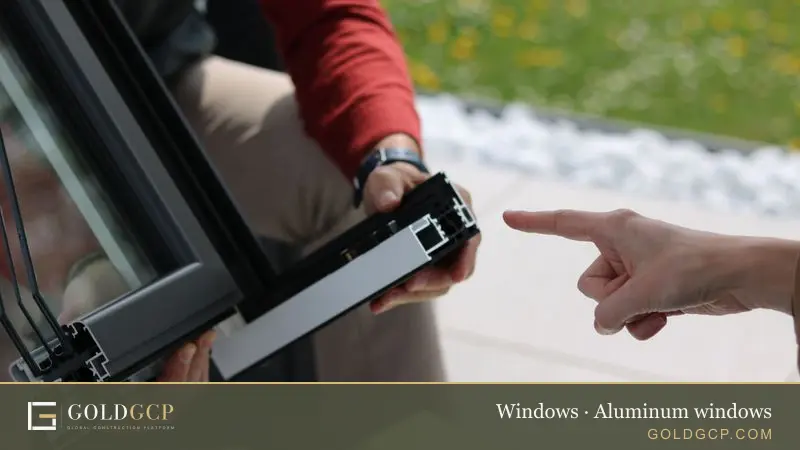
Aluminum windows are the lightest and least costly but insulate poorly. Vinyl windows and fiberglass windows cost more and insulate better, and wood windows are the least common choice for coastal impact work. Adding low-E glass costs 10% to 25% more than standard glass, per HomeGuide. Our energy-efficient windows guide explains the ratings to compare.
HomeGuide puts the life of impact windows at 10 to 40 years, depending on glass and material quality, with windows in hot, sunny spots tending to break down sooner.
Use the window calculator to price your openings by size and style.
Find an impact window installer near you
Enter your ZIP code to see impact window prices for your area and get matched with licensed installers who work in your county's wind zone.
How to hire an impact window installer
ASTM E1886 tests the whole assembly and its installation, so the anchoring matters as much as the glass. Before you sign:
- Confirm the design wind speed and debris-region status for your address with the building department or the installer.
- Get the Florida Product Approval or Miami-Dade NOA number for each product, plus its design pressure and missile level.
- Ask how each opening will be anchored and whether the method matches the approval drawings.
- Make sure the quote names who pulls the permit and books the final inspection.
- Ask for copies of the approvals and the final inspection, so your wind mitigation inspector can document them.
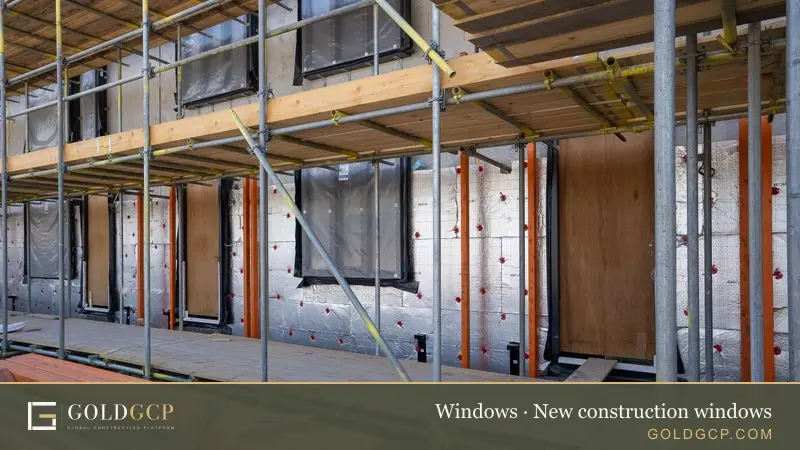
GOLDGCP shows prices by ZIP code before anyone visits and matches you with 3 vetted, licensed pros. Contractors pass state license verification, an insurance check, a background and business check, a portfolio review, client reference calls and onboarding with a quality score. Payment goes in milestones that you approve one stage at a time. If you want to see frames and glass in person first, visit our windows and doors showroom. For openings that need resizing, our new construction windows guide covers reframing and flashing.
Frequently asked questions
How much do impact windows cost?
HomeGuide puts hurricane impact windows at $400 to $1,200 per window installed, or $300 to $800 or more for the unit alone. A house with 15 windows typically runs $6,000 to $18,000, and 20 windows $8,000 to $24,000, depending on style, size and frame.
Are impact windows required by code?
In a wind-borne debris region, yes, unless the windows are covered by approved shutters or panels. The Florida Building Code defines the region as within 1 mile of the coast where design wind speed is 130 mph or more, or anywhere it reaches 140 mph or more.
What is a Miami-Dade NOA?
A Notice of Acceptance is a product approval issued by Miami-Dade County's Product Control Section to manufacturers whose products pass the TAS 201, 202 and 203 tests. Products used in the High-Velocity Hurricane Zone, Miami-Dade and Broward counties, need this level of approval.
What is the difference between ASTM E1996 and E1886?
ASTM E1886 is the test method: a missile strikes the sample, then the sample goes through cycles of positive and negative pressure. ASTM E1996 is the specification that sets the missile level and pressure cycling a product must pass for its location.
Do impact windows lower insurance in Florida?
They can. Florida law requires insurers to offer discounts or credits for opening protection. A licensed inspector documents it on form OIR-B1-1802, valid up to five years. The amount varies by insurer, so ask your agent for a quote before and after.
Are storm windows the same as impact windows?
No. Storm windows mount over existing windows to add insulation and cut noise. HomeGuide notes they do not protect against hurricane-force winds or flying debris. Impact windows replace the window itself and are tested to stay closed after a debris strike.
Can I use plywood instead of impact windows?
The IRC allows wood structural panels at least 7/16 inch thick spanning no more than 8 feet, precut for each opening with permanent anchors on the house. Check with your building department, since local amendments, especially in Florida's High-Velocity Hurricane Zone, can be stricter.
How we calculate these prices
GOLDGCP starts from national price ranges for each job, taken from published 2026 cost guides and checked against local price guides where they exist. To get a local price, we multiply the national range by the construction cost factor for the metro from the U.S. Army Corps of Engineers Area Cost Factors (US average = 1.00). For ZIP codes outside the 50 largest metros, the calculator uses the state's price level from the Bureau of Economic Analysis Regional Price Parities. Ranges include labor and standard materials but not unusual site conditions, so a written quote after an inspection is always the final price.
Sources
- How much do hurricane windows cost? · HomeGuide
- Wind Loads: Impacts from ASCE 7-16 · Florida Building Commission
- 2021 IRC R301.2.1.2 Protection of openings · International Code Council
- Florida Building Code, 5th Edition (2014): Fenestration Mitigation · Florida Building Commission
- ASTM E1996 Standard Specification for Impact Protective Systems · ASTM International
- NOA General Submittal Information · Miami-Dade County Product Control Section
- Wind Mitigation Resources · Florida Office of Insurance Regulation
- Section 627.0629, Florida Statutes · Florida Legislature

About this guide
Written by the GOLDGCP editorial team. Prices come from national cost guides; rules and statistics come from the agencies and reports linked in the text. We update this page when prices or codes change.