What it costs to import construction materials
Quick answer
Importing building materials such as windows, doors, tile, stone, cabinets and fixtures into the US costs a lot more than the product price. The landed cost, the full price of getting goods to your jobsite, adds ocean or air freight, cargo insurance, US customs duties and fees, a customs broker, port charges and delivery inland. On a typical container of finished materials, those costs can add a substantial share on top of the factory price, and you only know what you saved once everything is counted.
| Job | US average (typical range) | Typical |
|---|---|---|
| 20 ft container freight (estimate) | $3,000–$5,500 | $4,200 |
| 40 ft container freight (estimate) | $4,000–$7,500 | $5,500 |
| Shared container (LCL) freight | $900–$2,000 | $1,400 |
| Air freight | $3,000–$9,000 | $6,000 |
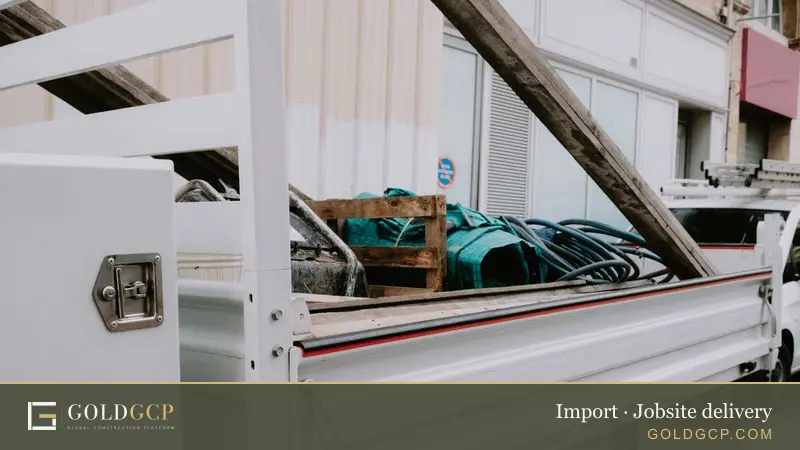
| Inland delivery to the jobsite | $350–$1,500 | $750 |
US national averages for 2026, labor and standard materials included, from published cost guides (sources at the end of this page). Local prices differ: see the city table below, or enter your ZIP code in the cost estimator.
These freight and delivery ranges are GOLDGCP's working estimates. They are not market quotes. Ocean freight rates change with fuel prices, demand and trade routes, sometimes sharply from month to month. Use them for early budgeting, and get a dated quote before you order.
The parts of a landed cost
| Cost | What it is | How it's priced |
|---|---|---|
| Product (FOB) | The factory price with goods loaded at the origin port | Agreed with the supplier |
| Ocean or air freight | Moving the goods to a US port or airport | Per container, per cubic meter or per kilogram |
| Cargo insurance | Covers loss or damage in transit | A small percentage of the cargo value |
| Customs duties | Tariffs set by product classification and country of origin | A percentage of the customs value |
| Merchandise Processing Fee (MPF) | A US Customs fee on formal entries | 0.3464% of value, minimum $34.58 and maximum $670.86 (from October 1, 2026) |
| Harbor Maintenance Fee (HMF) | A fee on cargo arriving by ocean vessel | 0.125% of cargo value, with no cap |
| Customs broker | Files the entry and clears the goods | Per entry, plus extra services |
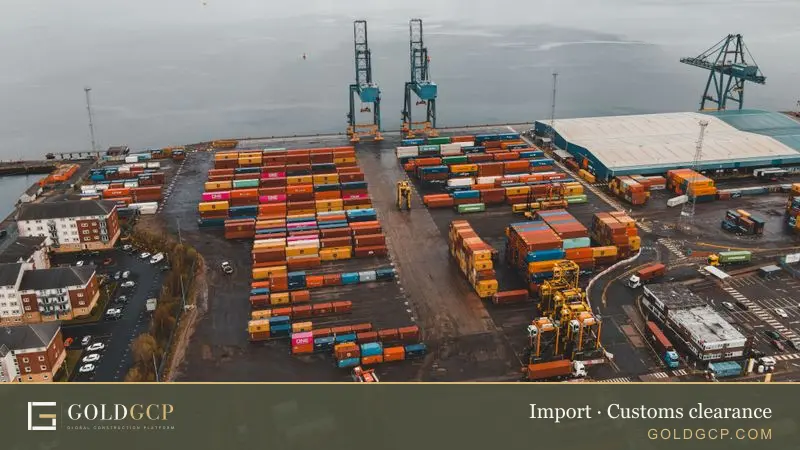
| Port and terminal charges | Unloading, storage and handling at the port | Per container |
| Inland delivery | Trucking from the port to your warehouse or jobsite | By distance and load |
Calculate your landed cost
Enter the product value, origin, shipping method and duty rate to see a full landed-cost estimate.
The same estimator has its own page, easy to share or bookmark: Landed cost estimator.
Duties and classification
Customs duties depend on the product's classification under the Harmonized Tariff Schedule (HTS), a numbered list that covers every product type, and on the country it was made in. Two similar products can carry different rates because of their materials or how they're built. Some products from some countries also carry additional tariffs on top of the standard rate, and these change with trade policy. To budget duties reliably, have a licensed customs broker confirm the classification and current rate before you order.
Rules every importer has to follow
Importer Security Filing (ISF)
For ocean shipments, the importer has to file an Importer Security Filing, often called "10+2," with US Customs no later than 24 hours before the cargo is loaded on the vessel at the foreign port. The deadline counts from loading at the foreign port. Departure and arrival dates don't change it. Late, wrong or incomplete filings can bring liquidated damages of $5,000 per violation. Your freight forwarder or customs broker usually files it, but the importer is responsible.
Customs bond and entry
Commercial imports above the informal-entry limit need a formal customs entry and a customs bond, which guarantees payment of duties and fees. Importers usually buy a single-entry bond for one shipment or a continuous bond if they import regularly.
Product standards
Building materials sold or installed in the US often have to meet US standards: energy ratings and impact ratings for windows and doors, fire ratings for some doors, and certifications for plumbing fixtures. A product that costs less abroad but fails inspection here saves nothing. Check the requirements for your state and project before ordering.
When importing makes sense
Importing usually pays off when:
- You are buying in volume, such as a full container for a development, a multifamily project or several homes
- You need custom or specialty products that are expensive or slow to get domestically
- Your schedule allows for production plus 4 to 10 weeks or more of ocean transit and customs clearance
- You have a way to inspect the goods before they ship
For a single kitchen or a few windows, buying domestically is often simpler and close in price once freight, duties, brokerage and the risk of damage are counted.
Container, shared container or air?
Most of the freight cost and the schedule depend on the shipping method:
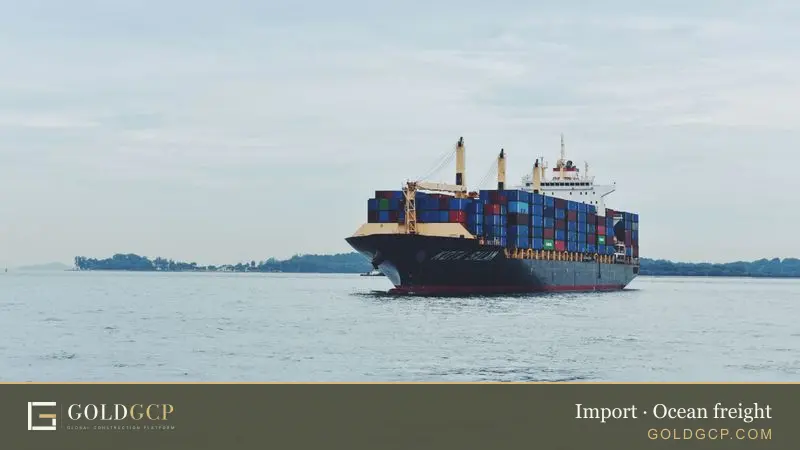
- A full container load (FCL), in a 20-foot or 40-foot container, gives the lowest cost per unit for large orders, and the container stays sealed from the factory to your warehouse.
- Less than container load (LCL) shares a container with other shippers. It suits smaller orders, but costs more per cubic meter and adds handling at both ends, which raises the risk of damage.
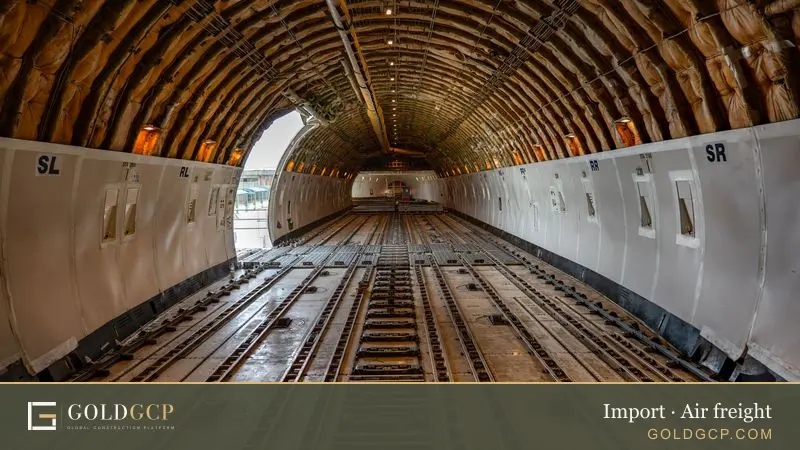
- Air freight is fast but far more expensive. It suits small, high-value or urgent items. Heavy materials like tile and stone almost always go by sea.
Inspecting goods before they ship
Problems cost the least to fix while the goods are still at the factory. A pre-shipment inspection checks quantities, dimensions, finishes, packaging and labels against the order before the goods leave. For building materials, it should also check that products match the specifications needed to pass US inspections, such as window ratings or fixture certifications. Once goods are on the water, fixing a defect means waiting weeks for replacements.
Trade terms that set who pays for what
International sales use standard trade terms, called Incoterms, that define where the seller's responsibility ends. Under EXW (Ex Works), the buyer handles everything from the factory door. Under FOB (Free on Board), the seller delivers the goods loaded on the vessel at the origin port, and the buyer pays ocean freight and everything after. Under DDP (Delivered Duty Paid), the seller handles shipping, duties and delivery. FOB is the most common term for imported building materials, and it is the "product" line in a landed-cost calculation.
Common mistakes first-time importers make
- Comparing the factory price to US retail without counting freight, duties, fees and delivery
- Missing the Importer Security Filing deadline for ocean cargo
- Guessing the tariff classification instead of confirming it with a customs broker
- Skipping a pre-shipment inspection and discovering damaged or wrong items at the jobsite
- Ordering products that don't meet US code requirements for the project
- Underestimating the schedule, especially around holidays at the origin port
Any one of these can turn a planned saving into a loss. A forwarder that handles sourcing, inspection, shipping and customs together takes most of these risks off your hands.
How GOLDGCP Source & Ship works
GOLDGCP's in-house forwarders handle the whole chain for contractors, developers and homeowners:
- Source: we find and vet factories for windows, doors, tile, stone and quartz, cabinets, fixtures, lighting, flooring and hardware.
- Inspect: goods are checked at the factory before they ship.
- Ship: we book container, shared-container or air freight.
- Clear customs: entry, ISF, duties and fees are filed through a licensed broker.
- Deliver: we truck the goods to your warehouse or jobsite.
See GCP Source & Ship for our sourcing service, or request a sourcing quote through the form on this page.
Frequently asked questions
What is landed cost?
The total cost of getting imported goods to your door: the product price plus freight, insurance, duties, customs fees, brokerage, port charges and inland delivery.
What fees does US Customs charge on imports?
Besides duties, formal entries pay the Merchandise Processing Fee of 0.3464% of value, with a minimum of $34.58 and a maximum of $670.86 per entry (from October 1, 2026), and ocean cargo pays the Harbor Maintenance Fee of 0.125% of value.
What is an ISF filing?
The Importer Security Filing, or "10+2," is required for ocean shipments to the US. It must be filed at least 24 hours before cargo is loaded at the foreign port, and violations can cost $5,000 each.
How do I find the duty rate for building materials?
Classify the product under the Harmonized Tariff Schedule and check the rate for its country of origin, including any additional tariffs. A licensed customs broker can confirm the classification before you buy.
How long does it take to import materials from overseas?
Plan for production time plus several weeks of ocean transit and customs clearance, often 4 to 10 weeks or more from shipping to delivery. Air freight is much faster but costs far more.
Is it cheaper to import building materials?
Often, for large orders and specialty products. For small orders, freight, duties and fees can cancel out the savings, so compare the full landed cost with domestic prices.
Do imported windows and doors need US certifications?
Often, yes. Energy, impact and fire ratings, and local building codes, apply to products installed in US buildings no matter where they were made. Confirm requirements before ordering.
Do I need a customs broker to import building materials?
It isn't legally required for every importer, but almost all commercial importers use a licensed customs broker. The broker classifies products, files the entry and ISF, calculates and pays duties and fees, and keeps the shipment compliant. Mistakes in classification or filing can cost far more than the broker's fee.
How we calculate these prices
GOLDGCP starts from national price ranges for each job, taken from published 2026 cost guides and checked against local price guides where they exist. To get a local price, we multiply the national range by the construction cost factor for the metro from the U.S. Army Corps of Engineers Area Cost Factors (US average = 1.00). Where that table has no entry for a metro, we use the nearest listed location or the state value. For ZIP codes outside the 50 largest metros, the cost estimator uses the state's price level from the Bureau of Economic Analysis Regional Price Parities. Ranges include labor and standard materials but not unusual site conditions, so a written quote after an inspection is always the final price.
Sources

About this guide
Written by the GOLDGCP editorial team. Prices come from national cost guides; rules and statistics come from the agencies and reports linked in the text. We update this page when prices or codes change.