
How much an electrician costs
Quick answer
A licensed electrician in the US typically charges $50 to $130 an hour, plus a service call of $100 to $200 that often covers the first hour. Most small jobs, such as replacing an outlet, a switch or a light fixture, come to $150 to $400. Larger work is priced by the project: a new dedicated circuit runs $250 to $900, an EV charger $750 to $2,600, and upgrading a panel to 200 amps $1,300 to $2,800.
| Job | US average (typical range) | Typical |
|---|---|---|
| Hourly rate (licensed electrician) | $50–$130/hr | $90/hr |
| Service call | $100–$200 | $150 |
| Small repair, outlet or switch | $150–$400 | $250 |
| Replace an outlet with a GFCI | $90–$200 | $145 |
| New GFCI outlet | $150–$350 | $250 |
| Ceiling fan installation | $150–$350 | $250 |
| Light fixture or chandelier | $220–$3,400 | $900 |
| Dedicated circuit | $250–$900 | $550 |
| EV charger installation | $750–$2,600 | $1,500 |
| Panel upgrade to 200 amps | $1,300–$2,800 | $2,000 |
| Rewiring or grounding a house | $2,000–$10,000 | $6,000 |
| Electrical permit | $50–$350 | $200 |
US national averages for 2026, labor and standard materials included, from published cost guides (sources at the end of this page). Local prices differ: see the city table below, or enter your ZIP code in the calculator.
Rates by license level
Electricians' rates follow their training. HomeGuide's national figures:
| Electrician | Typical hourly rate | Training |
|---|---|---|
| Apprentice | $40 to $70 | Works under supervision while completing about 8,000 hours of field training |
| Journeyman | $50 to $100 | Finished an apprenticeship and passed the journeyman exam |
| Master | $90 to $130+ | Years of journeyman experience and the master exam; can supervise others |
| Emergency (nights, weekends, holidays) | $150 to $200 | After-hours service |
Companies usually bill the master's or journeyman's rate even when an apprentice does part of the work, since the licensed electrician is responsible for it.
Find an electrician near you
Enter your ZIP code to see local prices and get matched with a vetted, licensed electrician for your area. GOLDGCP works in every US ZIP code.
Electrician rates in 50 US metros
This table shows typical hourly rates for a licensed electrician across the 50 largest US metros, based on each metro's construction cost factor.
| Metro | Cost factor | Hourly rate (licensed electrician) |
|---|---|---|
| New York | 1.31 | $66–$170/hr |
| San Francisco Bay Area | 1.28 | $64–$165/hr |
| San Jose | 1.28 | $64–$165/hr |
| Boston | 1.23 | $62–$160/hr |
| Chicago | 1.20 | $60–$155/hr |
| San Diego | 1.19 | $60–$155/hr |
| Sacramento | 1.17 | $59–$150/hr |
| Philadelphia | 1.15 | $57–$150/hr |
| Seattle | 1.15 | $57–$150/hr |
| Providence | 1.15 | $57–$150/hr |
| Los Angeles | 1.14 | $57–$150/hr |
| Detroit | 1.13 | $56–$145/hr |
| Riverside–San Bernardino | 1.11 | $56–$145/hr |
| Portland | 1.10 | $55–$145/hr |
| Las Vegas | 1.10 | $55–$145/hr |
| Milwaukee | 1.10 | $55–$145/hr |
| Hartford | 1.10 | $55–$145/hr |
| Minneapolis–St. Paul | 1.06 | $53–$140/hr |
| Pittsburgh | 1.06 | $53–$140/hr |
| Denver | 1.05 | $53–$135/hr |
| Washington DC | 1.04 | $52–$135/hr |
| St. Louis | 1.04 | $52–$135/hr |
| Cincinnati | 1.02 | $51–$135/hr |
| Salt Lake City | 0.99 | $50–$130/hr |
| Orlando | 0.98 | $49–$125/hr |
| Columbus | 0.98 | $49–$125/hr |
| Cleveland | 0.98 | $49–$125/hr |
| Baltimore | 0.96 | $48–$125/hr |
| Kansas City | 0.96 | $48–$125/hr |
| Jacksonville | 0.96 | $48–$125/hr |
| Virginia Beach–Norfolk | 0.94 | $47–$120/hr |
| Miami | 0.93 | $47–$120/hr |
| Tampa | 0.93 | $47–$120/hr |
| Indianapolis | 0.93 | $47–$120/hr |
| Phoenix | 0.90 | $45–$115/hr |
| Rochester | 0.90 | $45–$115/hr |
| Oklahoma City | 0.89 | $45–$115/hr |
| Buffalo | 0.89 | $45–$115/hr |
| Nashville | 0.87 | $44–$115/hr |
| Memphis | 0.87 | $44–$115/hr |
| Richmond | 0.87 | $44–$115/hr |
| Louisville | 0.86 | $43–$110/hr |
| Birmingham | 0.86 | $43–$110/hr |
| Atlanta | 0.85 | $43–$110/hr |
| Charlotte | 0.85 | $43–$110/hr |
| Raleigh–Durham | 0.85 | $43–$110/hr |
| Dallas–Fort Worth | 0.84 | $42–$110/hr |
| Houston | 0.82 | $41–$105/hr |
| Austin | 0.82 | $41–$105/hr |
| San Antonio | 0.80 | $40–$105/hr |
Cost factors from the U.S. Army Corps of Engineers Area Cost Factors (US average = 1.00). Outside these metros, the calculator uses your state's price level from the Bureau of Economic Analysis. Linked metros have a full local guide.
Common electrical jobs and what they cost
| Job | Typical installed cost |
|---|---|
| Replace an outlet with a GFCI outlet | $90 to $200 |
| Install a new GFCI outlet | $150 to $350 |
| Outdoor GFCI outlet | $180 to $350 |
| Ceiling fan installation | $150 to $350 |
| Bathroom exhaust fan | $150 to $950 |
| Doorbell, thermostat or smoke detector | $140 to $350 |
| Dedicated circuit (for an appliance or EV) | $250 to $900 |
| EV charger installation | $750 to $2,600 |
| Electric meter box replacement | $500 to $2,100 |
| Replace a fuse box with a breaker panel | $1,100 to $4,000 |
GFCI outlets
A GFCI (ground-fault circuit interrupter) outlet cuts power in a fraction of a second when current leaks to ground, for example through water or a person. The National Electrical Code requires GFCI protection in places like bathrooms, kitchens near the sink, garages and outdoors, and HomeGuide notes that all outdoor outlets must be GFCI-protected. If your home has bathrooms or a kitchen with ordinary outlets, upgrading them is one of the cheapest safety improvements you can make.
Panel upgrades
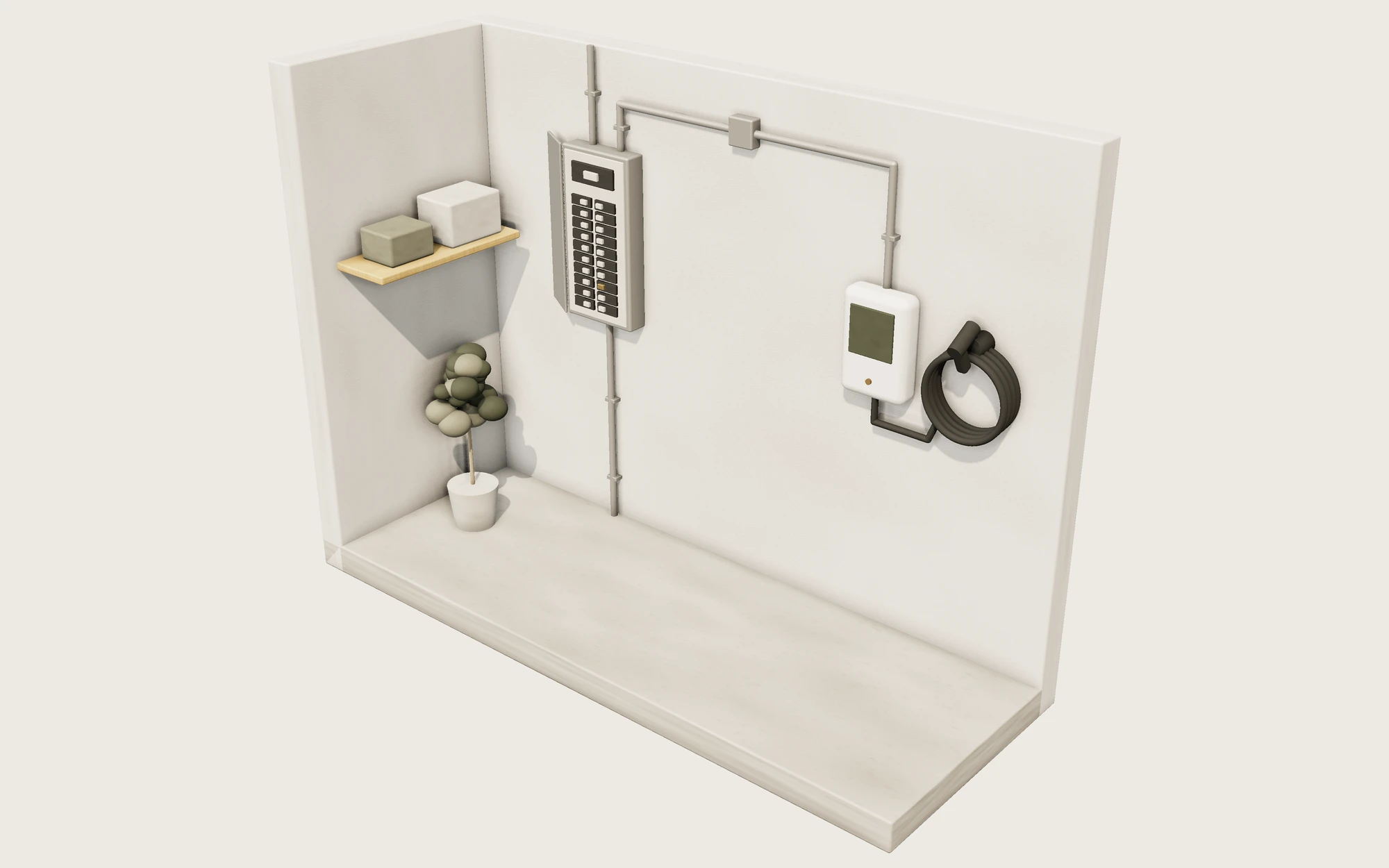
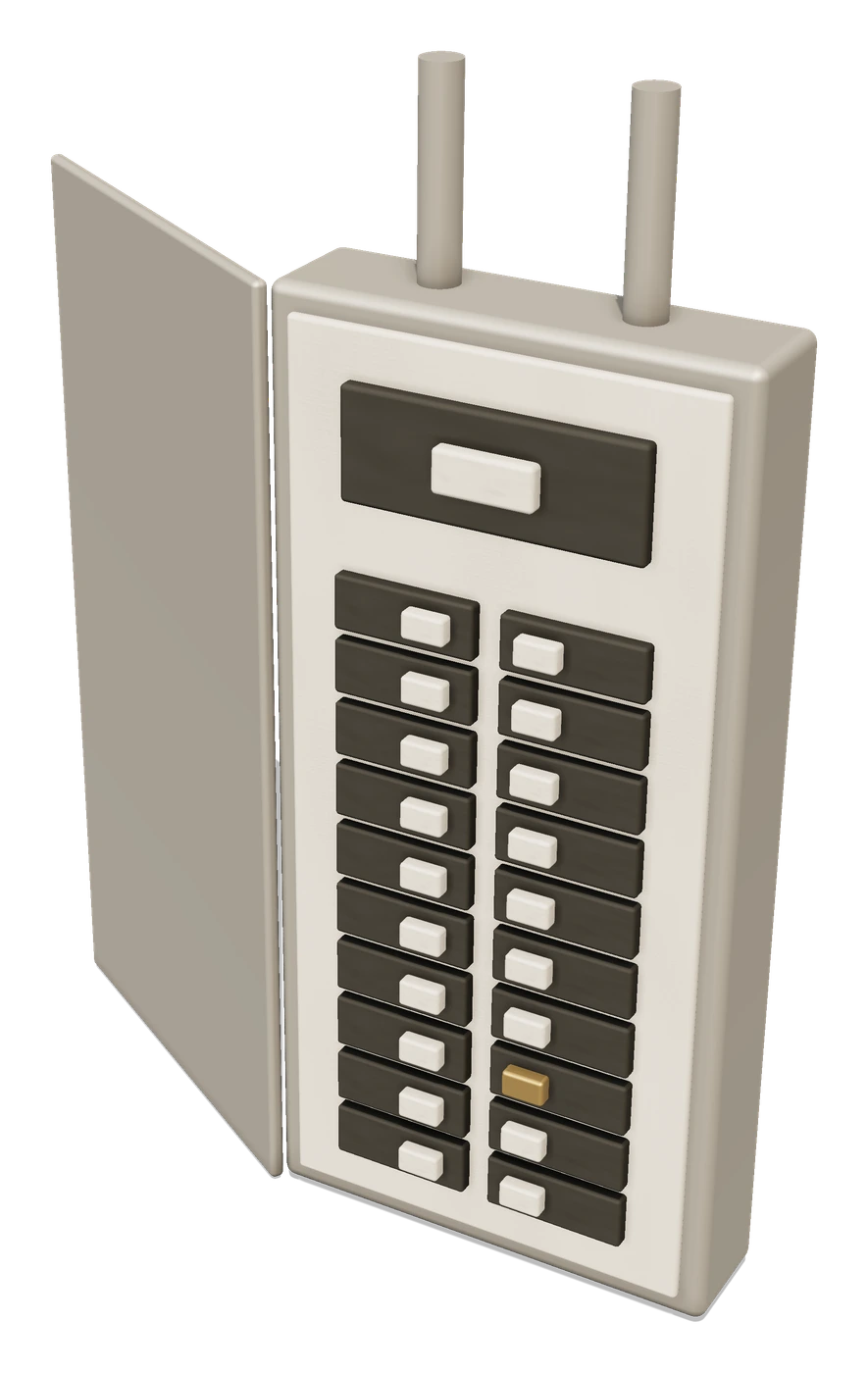
The electrical panel distributes power from the utility to every circuit in the house. Many older homes have 60- or 100-amp service, which can't support modern loads such as an EV charger, a heat pump, a tankless electric water heater or a kitchen full of appliances.
| Panel work | Typical cost |
|---|---|
| Upgrade 60 to 100 amps | $850 to $1,100 |
| Upgrade 100 to 200 amps | $1,300 to $1,600 |
| New 200-amp panel and service | $1,800 to $2,500 |
| Upgrade 200 to 400 amps | $2,000 to $4,000 |
Signs your panel needs attention: breakers that trip often, lights that dim when appliances start, a fuse box instead of breakers, scorch marks or a burning smell near the panel, or plans to add a large electric appliance. A panel upgrade usually needs a permit, coordination with the utility, and sometimes a new meter base.
Electrical safety warning signs
Call a licensed electrician soon if you notice:
- Outlets or switch plates that feel warm, or that spark when you plug something in
- A burning smell with no obvious source
- Flickering lights on several circuits
- Breakers that trip repeatedly, or fuses that keep blowing
- Two-prong outlets throughout an older house, which usually means no ground wire
- Aluminum branch wiring, used in some homes built in the 1960s and 1970s, which needs special connectors
If you smell burning or see smoke from an outlet or the panel, shut off the power at the main breaker if it is safe to reach, leave the house and call 911.
Licenses and permits
Electricians are licensed by the state in most of the US, and by cities or counties in some places. License levels are usually apprentice, journeyman and master or electrical contractor. Most areas require a permit to run new wiring, add circuits or outlets, or replace a panel, but not to replace an outlet or switch with the same kind. HomeGuide puts typical electrical permit fees at $50 to $350. The permit brings an inspection that checks the work against the electrical code adopted in your area, usually a version of the National Electrical Code.
Electrical work is one of the few home trades where DIY mistakes can start fires long after the job is done. Even where homeowners are allowed to do their own wiring, the permit and inspection still apply.
Home EV chargers: Level 1 or Level 2
A Level 1 charger plugs into a standard 120-volt outlet and adds only a few miles of range per hour, which works for short daily commutes. A Level 2 charger runs on a 240-volt circuit, like a dryer, and charges several times faster, which is what most EV owners install. Installing a Level 2 charger usually costs $750 to $2,600. The price depends mostly on the distance from the panel to the parking spot, whether the panel has room for a new 240-volt circuit, and whether a panel upgrade is needed. Many utilities offer rebates for home chargers, so check with yours before installing.
Smoke alarms and surge protection
Two low-cost upgrades are worth doing whenever an electrician is at the house. Smoke alarms wear out: the National Fire Protection Association recommends replacing them every 10 years, and interconnected alarms that all sound together give earlier warning. Whole-house surge protection, installed at the panel, protects appliances and electronics from voltage spikes, and recent editions of the National Electrical Code require it when the electrical service is replaced or upgraded.
Signs your wiring needs an upgrade
Homes wired decades ago were not built for today's loads. Common signs of an outdated system include:
- Too few outlets, with extension cords and power strips in most rooms
- Two-prong outlets with no ground wire
- A fuse box rather than a breaker panel
- Lights that dim when the microwave, air conditioner or hair dryer starts
- Outlets that no longer hold a plug firmly
A licensed electrician can inspect the system, usually for the cost of a service call or an hourly rate, and tell you whether a few new circuits will do or whether the house needs a panel upgrade or partial rewiring.
How to hire an electrician
- Check the electrician's license with your state or local licensing board.
- Confirm liability insurance, and workers' compensation if they have employees.
- Ask whether the price includes the permit and inspection.
- For panel upgrades and EV chargers, ask whether the utility needs to be involved and who schedules it.
- Get the price in writing, and pay in stages for larger jobs.
Every electrician in the GOLDGCP network passes a license check, insurance verification, a background check and reference calls before getting a job, and you pay in milestones as the work gets done.
Frequently asked questions
How much does an electrician charge per hour?
Usually $50 to $130 an hour nationally. Apprentices bill less, master electricians more, and emergency calls on nights, weekends and holidays run about $150 to $200 an hour. Most also charge a service call of $100 to $200.
How much does it cost to install a GFCI outlet?
Replacing an existing outlet with a GFCI outlet costs about $90 to $200. Installing a new GFCI outlet costs $150 to $350, and an outdoor GFCI outlet $180 to $350.
How much does it cost to upgrade to a 200-amp panel?
Upgrading from 100 to 200 amps typically costs $1,300 to $1,600, or $1,800 to $2,500 when a new service panel is needed. Permits, utility work and meter replacement can add to that.
How much does it cost to install an EV charger?
Usually $750 to $2,600 for a Level 2 charger, depending on the distance from the panel and whether the panel has capacity for a new 240-volt circuit.
Do I need a permit for electrical work?
For new wiring, new circuits or outlets, and panel work, almost always. Replacing an outlet or switch with the same type usually doesn't need one. Electrical permits typically cost $50 to $350.
When should I call an emergency electrician?
When there is a burning smell, sparking, smoke, a hot outlet or panel, or a complete loss of power that isn't a utility outage. Shut off the main breaker if it is safe to do so, and call 911 if there is smoke or fire.
Can I do my own electrical work?
Some states let homeowners do electrical work on their own home with a permit and inspection. Many jobs still require a licensed electrician, and insurance and resale problems can follow unpermitted work.
How do I know if my panel needs to be replaced?
Common signs are breakers that trip often, a fuse box instead of breakers, scorch marks or a burning smell near the panel, lights that dim when large appliances start, and plans to add an EV charger, heat pump or electric water heater that the current service can't support. A licensed electrician can check the panel's capacity and condition during a service call.
How we calculate these prices
GOLDGCP starts from national price ranges for each job, taken from published 2026 cost guides and checked against local price guides where they exist. To get a local price, we multiply the national range by the construction cost factor for the metro from the U.S. Army Corps of Engineers Area Cost Factors (US average = 1.00). For ZIP codes outside the 50 largest metros, the calculator uses the state's price level from the Bureau of Economic Analysis Regional Price Parities. Ranges include labor and standard materials but not unusual site conditions, so a written quote after an inspection is always the final price.
Sources
- Electrician cost per hour · HomeGuide
- GFCI outlet cost · HomeGuide
- Cost to replace an electrical panel · HomeGuide
- Smoke alarms: replacement guidance · National Fire Protection Association
- Area Cost Factors, PAX Newsletter 3.2.1 (2024) · U.S. Army Corps of Engineers
- Regional Price Parities by State · U.S. Bureau of Economic Analysis

About this guide
Written by the GOLDGCP editorial team. Prices come from national cost guides; rules and statistics come from the agencies and reports linked in the text. We update this page when prices or codes change.