
The short answer
Electricians across Dallas-Fort Worth typically bill $42 to $110 an hour, a 200-amp panel upgrade runs about $1,100 to $2,350, and an EV charger install $630 to $2,200. The local detail that matters most: Oncor owns the line and the meter, but the meter base and everything inside your walls are yours, so your electrician and Oncor have to work together on bigger jobs.
What electricians cost in Dallas-Fort Worth
Our figures start from national cost data and apply the Fort Worth construction cost factor of 0.84 from the U.S. Army Corps of Engineers. That puts most jobs here about 16% below the national average.
| Job | Dallas–Fort Worth (typical range) | US average |
|---|---|---|
| Hourly rate (licensed electrician) | $42–$110/hr | $50–$130/hr |
| Service call | $84–$170 | $100–$200 |
| Small repair, outlet or switch | $125–$335 | $150–$400 |
| Replace an outlet with a GFCI | $76–$170 | $90–$200 |
| New GFCI outlet | $125–$295 | $150–$350 |
| Ceiling fan installation | $125–$295 | $150–$350 |
| Light fixture or chandelier | $185–$2,850 | $220–$3,400 |
| Dedicated circuit | $210–$755 | $250–$900 |
| EV charger installation | $630–$2,200 | $750–$2,600 |
| Panel upgrade to 200 amps | $1,100–$2,350 | $1,300–$2,800 |
| Rewiring or grounding a house | $1,700–$8,400 | $2,000–$10,000 |
| Electrical permit | $42–$295 | $50–$350 |
Estimates for 2026, including labor and standard parts. Dallas–Fort Worth prices use the metro's construction cost factor of 0.84 (US average = 1.00) from the U.S. Army Corps of Engineers Area Cost Factors. Your quote depends on access, materials and the condition of the home.
Angi's local data agrees. Angi puts Dallas electricians at $50 to $100 an hour, with the first hour costing more, about $150 on average. By license level, Angi lists apprentices at $40 to $60 an hour, journeyman electricians at $60 to $90 and master electricians at $90 to $120. Its average Dallas electrical job costs $333, and most fall between $164 and $505. Emergency calls cost about twice as much (Angi).
For a panel upgrade, Angi's Dallas average is $1,650, with most projects between $1,237 and $2,062. A 200-amp panel installed runs $1,340 to $2,060 in its data, and a 400-amp service $2,060 to $4,125 (Angi).
What changes the price in North Texas:
- The age of the house. Angi notes that many Dallas homes built before the 1990s may have outdated, undersized panels. In the City of Dallas, 46.1% of homes were built before 1980, compared with a median build year of 2010 in Frisco (Census Reporter, ACS 2024).
- Oncor coordination. A service upgrade needs the power cut at the meter and an inspection before it comes back on.
- The permit. Listed on its own line, it should be on every estimate for a panel, a new circuit or a charger.
Price your own job with the calculator below, which uses the rate for your ZIP code. For national prices, see our electrical cost guide.
Oncor, your retail provider and the city utilities
Texas split the power business in two. In most of the state you choose a Retail Electric Provider, the company that sends your bill, through the state's Power to Choose site. The wires company still delivers the power, reads the meter and fixes outages, whichever provider you pick. Some city-owned utilities and electric cooperatives were not required to join that market, so their customers may have no choice of provider (Power to Choose).
For most of DFW, the wires company is Oncor. CoServ, a member-owned cooperative, serves areas north of Dallas (CoServ).
Who owns what on an overhead service, according to Oncor:
| Part | Owner | Who you call |
|---|---|---|
| Pole, transformer, service line to the house | Oncor | Oncor |
| Meter | Oncor | Oncor |
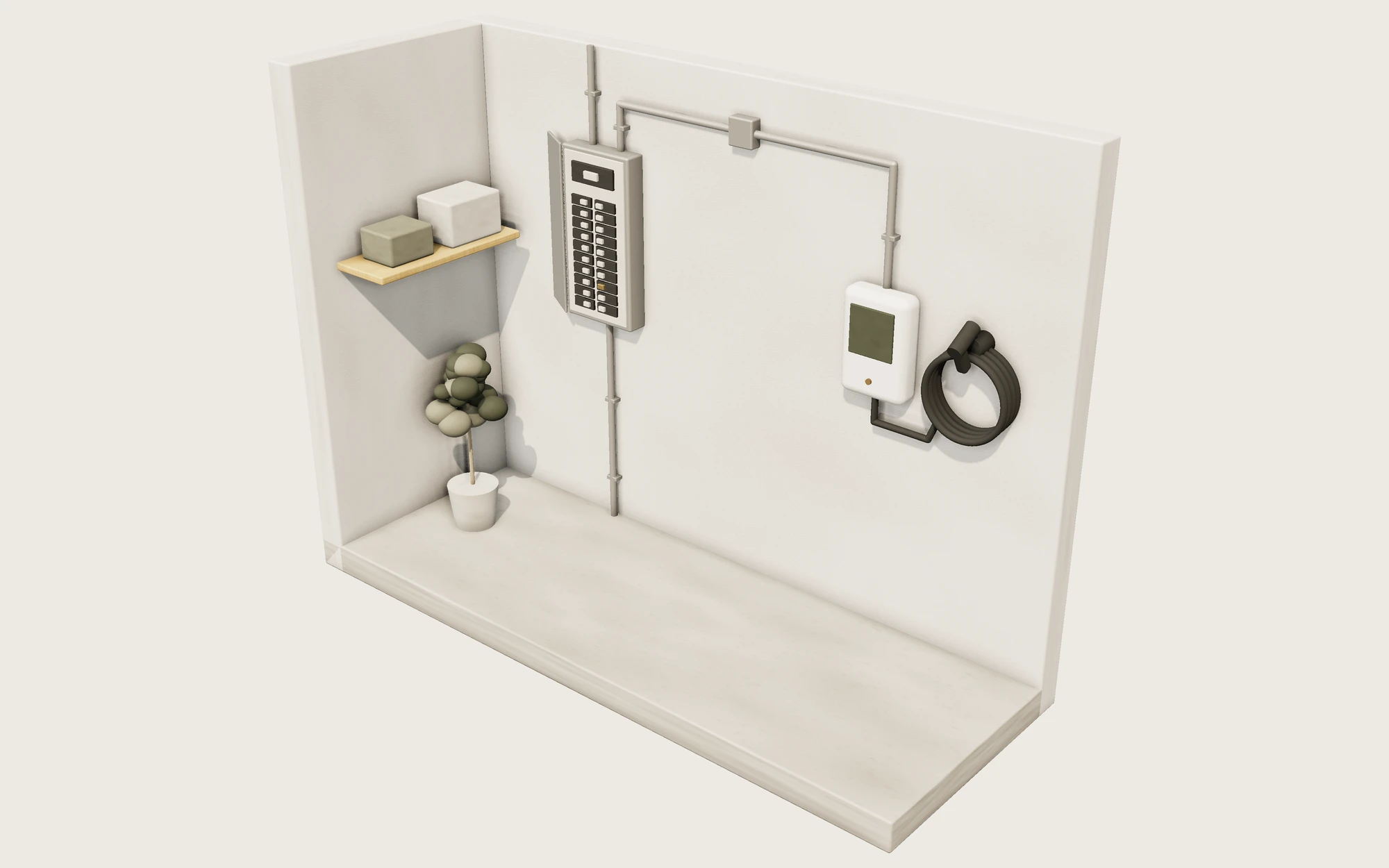
| Meter base, the wiring in it, the mast and weatherhead | You | A licensed electrician |
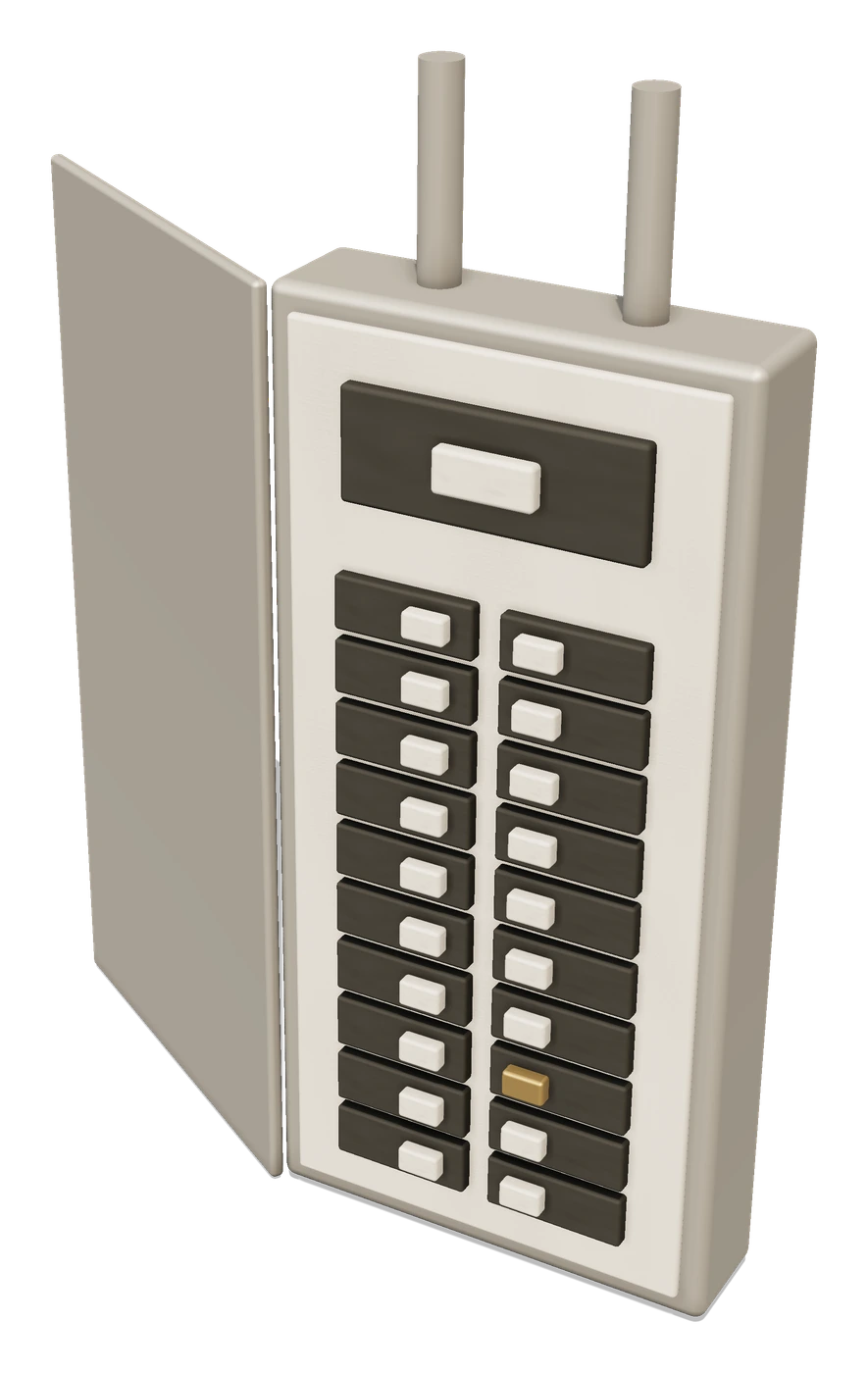
| Panel, breakers and all wiring inside | You | A licensed electrician |
| Your bill and rate plan | Your retail provider | The number on your bill |
This matters most after a storm. If wind or a falling limb tears the meter base or weatherhead off the house, Oncor's process is: report it at 888-313-4747, let Oncor do a temporary hazardous disconnect, hire an electrician to repair your equipment, check whether your city requires an inspection (the city tells Oncor when it passes), then call 888-313-6862 to have power reconnected (Oncor FAQ). Oncor also says its employees never enter your home to do work and never call to demand payment to prevent a disconnection.
Panel upgrades for EV chargers, heat pumps and bigger loads
DFW houses run air conditioning hard. The metro has about 2,825 cooling degree days a year against 2,218 heating degree days, and averages 20.2 days at 100°F or more (NWS Fort Worth). Add an EV charger, a heat pump or a pool pump to an older 100-amp panel and the electrician may tell you the service is full.
How a typical upgrade goes on the Oncor grid:
- The electrician runs a load calculation and decides whether a new 200-amp panel is enough or the service itself needs to grow.
- The electrician pulls the city permit.
- For a planned outage, Oncor asks for three days' notice and charges for disconnecting and reconnecting service.
- The electrician replaces the panel and, if needed, the meter base and mast, which you own.
- The city inspects, and Oncor restores power.
One number on these quotes can look wrong. Oncor's service guidelines explain that a 320-amp meter socket and a 400-amp panel have the same real capacity, because meter sockets are rated for continuous current and panels for their maximum (Oncor Electric Service Guidelines). So a "400-amp upgrade" quote may show a 320-amp meter base, and that is normal.
EV chargers
A Level 2 charger needs a dedicated 240-volt circuit. In DFW, plan on $630 to $2,200 installed, more if the panel needs work first. If the panel is close to full, ask the electrician whether managing the charger's load could avoid a full service upgrade.
Rebates and credits in 2026
The federal tax credit for home EV chargers (30C) ended for equipment placed in service after June 30, 2026, and the credits for heat pumps and panels (25C) and for solar and batteries (25D) ended after December 31, 2025 (IRS). Oncor runs energy efficiency programs through participating third-party providers, usually open from January to November (Take A Load Off, Texas). Check what is open before you schedule work, and do not count on a rebate until it is approved.
Standby generators after Winter Storm Uri
In February 2021, DFW stayed below freezing for 139 straight hours (NWS), and the state's grid operator, ERCOT, ordered controlled outages because there was not enough generation, according to Oncor.
Three rules apply:
- Your HOA cannot ban a permanently installed standby generator, though it can regulate its location and screening (Texas Property Code 202.019, Texas Legislature).
- Oncor requires the transfer switch to sit on the load side of the meter base, and never built into or in series with the meter and base (Oncor guidelines).
- Portable generators belong outdoors, away from the house. Texas health officials counted 19 carbon monoxide deaths during Uri, from generators, grills and vehicles in enclosed spaces and from ice blocking the vents of gas heaters (Texas DSHS).
In Dallas, wiring a standby generator and its transfer switch is electrical work that needs a permit and a licensed electrician, like any new circuit.
Solar and batteries on the Oncor grid
Oncor says net metering does not apply in the deregulated market. Instead, Oncor reprograms your meter to measure the surplus power you send to the grid and passes that number to your retail provider, which credits you under a buyback plan if your plan has one (Oncor FAQ). The Public Utility Commission of Texas notes that the buyback rate is part of your contract with the provider and is usually lower than the price you pay for power, and that city utilities and co-ops set their own rates (PUCT).
The steps on Oncor's grid: choose an installer, file an Interconnection Application, wait for Permission to Operate, and only then turn the system on. Oncor also suggests making the house more efficient first, because that is typically more cost effective than adding panels.
Solar installation is electrical work and must go through a TDLR-licensed electrical contractor, and anyone selling a turnkey solar system needs that license. Since September 1, 2026, residential solar retailers and salespeople also have to register with TDLR (TDLR). If your roof is near the end of its life, replace it before the panels go up; our Dallas roofing guide covers costs and hail-rated shingles. An HOA may not prohibit solar devices outright, with some exceptions in Property Code 202.010.
Do you need a permit?
Yes for most wiring work. Repairs that only swap a device often do not.
In Dallas, electrical work must be done by a licensed electrician unless the homeowner proves to the Chief Electrical Inspector that they have the knowledge to do the work on their own home, and permits are required unless Chapter 52 of the city code exempts the work (City of Dallas). Under the city's homeowner exemption, electrical repairs are allowed after passing a city exam. Dallas enforces the 2023 National Electrical Code with local amendments (Chapter 56). Its fee guide sets a $175 minimum for alteration and standalone trade permits, plus a $15 technology fee per document (Dallas fee guide).
In Fort Worth, an electrical permit requires a city contractor registration, and that registration requires a TDLR electrical contractor license. Homeowners working on their own homestead are exempt from registering (City of Fort Worth).
Arlington publishes a clear list for one- and two-family homes. No permit is needed to reinstall receptacles, to replace a breaker with one of the required size in the same spot, for low-voltage wiring under 25 volts and 50 watts, or for minor repairs such as replacing lamps (City of Arlington). New circuits, panels, chargers and generators all need one.
Plano, Frisco, McKinney, Irving and Denton run their own building departments. Your electrician should know each city's rules and pull the permit.
How to check an electrician before you hire
Texas licenses electricians statewide through the Texas Department of Licensing and Regulation, and the license is required even outside city limits (TDLR).
| License | What it takes | What it allows |
|---|---|---|
| Residential Wireman | 4,000 hours of supervised work | Wiring in houses, under a contractor |
| Journeyman Electrician | 8,000 hours | Wiring in any building, under a contractor |
| Master Electrician | 12,000 hours plus 2 years as a journeyman | Can qualify a contracting business |
| Electrical Contractor | Must be or employ a master electrician; carries workers' comp and liability insurance | The business you sign with |
Source: TDLR, Electricians at a Glance. TDLR had 227,117 electrical licensees in fiscal 2025.
Before you hire:
- Look up both the company's Electrical Contractor license and the electrician's own license on the TDLR License Search, and check the disciplinary search for fines.
- Ask for the certificate of insurance. TDLR requires electrical contractors to carry workers' compensation and general liability.
- Get a written price that lists the permit, any Oncor disconnect fee, and whether drywall patching is included.
- For solar, confirm the seller is TDLR licensed and, since September 2026, registered as a solar retailer.
A homeowner may wire their own home under the state exemption, but a handyman without a license may not do that work for pay. Complaints go to TDLR online.
Every electrician in the GOLDGCP network passes six-step vetting: license verification, an insurance check, a background and business check, a portfolio review, client reference calls and onboarding with a quality score. You pay by milestone after you approve each stage. See how milestone payments work.
Common electrical jobs in DFW homes
| Job | DFW price | Notes |
|---|---|---|
| Replace an outlet with a GFCI | $76 to $170 | Kitchens, baths, garages and outdoors |
| Ceiling fan | $125 to $295 | A fan-rated box may be needed |
| Dedicated circuit | $210 to $755 | Window A/C, freezer, workshop |
| EV charger | $630 to $2,200 | Check panel capacity first |
| Panel upgrade to 200 amps | $1,100 to $2,350 | Oncor disconnect and city inspection |
| Rewiring or grounding | $1,700 to $8,400 | Older homes with two-prong outlets |
| Meter base repair after a storm | Get a quote | City inspection before Oncor reconnects |
Areas we cover
GOLDGCP electricians work across Dallas-Fort Worth:
- Dallas
- Fort Worth
- Plano
- Arlington
- Irving
- Frisco
- McKinney
- Denton
Enter your ZIP code to see electrical prices where you live and get matched with licensed electricians nearby.
How GOLDGCP works
- Describe the job: the panel size if you know it, what you want to add, and your utility. Use the form, call or send a WhatsApp message.
- See prices for your ZIP code, then get matched with 3 vetted, TDLR-licensed electricians.
- Your electrician gives a written estimate, pulls the permit and coordinates any Oncor disconnect.
- You pay the electrician directly by milestone and follow progress in the client portal.
For sparking, burning smells or a meter base torn off in a storm, call our 24/7 emergency line, and call Oncor at 888-313-4747 first if lines are down.
Frequently asked questions
How much does an electrician cost per hour in Dallas?
Angi lists $50 to $100 an hour in Dallas, with the first hour around $150. Master electricians run $90 to $120 an hour. Our DFW range is $42 to $110 an hour. Emergency work costs about twice the normal rate.
How much does a panel upgrade cost in Dallas-Fort Worth?
About $1,100 to $2,350 for a 200-amp panel in our DFW figures. Angi's Dallas average is $1,650, with 400-amp service at $2,060 to $4,125. Add the city permit and any Oncor disconnect and reconnect charge.
Do I need a permit to install an EV charger in Dallas?
Yes. A charger needs a new 240-volt circuit, and Dallas requires a permit for that work. The city's fee guide sets a $175 minimum for standalone trade permits plus a $15 technology fee. Your electrician should pull it and book the inspection.
Can I do my own electrical work in Texas?
State law exempts a homeowner wiring the home they own and live in. Dallas adds its own condition: you must prove your knowledge to the Chief Electrical Inspector, and the homeowner exemption covers electrical repairs after a city exam. You still need permits.
Who fixes the meter box on my house, Oncor or me?
In Oncor territory, the meter belongs to Oncor, but the meter base, mast and weatherhead belong to you. After storm damage, Oncor disconnects power, you hire a licensed electrician for repairs, the city inspects if required, and then Oncor reconnects.
Does Oncor offer net metering for solar?
No. Oncor says net metering does not apply in the deregulated market. It measures the surplus your panels send to the grid and passes it to your retail provider, which pays under a buyback plan. Compare buyback plans on Power to Choose.
Is there still a federal tax credit for EV chargers or solar in Texas?
No. The home EV charger credit ended for equipment placed in service after June 30, 2026. The solar and battery credit and the heat pump and panel credit ended after December 31, 2025.
How we calculate these prices
GOLDGCP starts from national price ranges for each job, taken from published 2026 cost guides and checked against local price guides where they exist. To get a local price, we multiply the national range by the construction cost factor for the metro from the U.S. Army Corps of Engineers Area Cost Factors (US average = 1.00). For ZIP codes outside the 50 largest metros, the calculator uses the state's price level from the Bureau of Economic Analysis Regional Price Parities. Ranges include labor and standard materials but not unusual site conditions, so a written quote after an inspection is always the final price.
Sources
- How much does an electrician cost per hour? · HomeGuide
- How Much Does It Cost to Upgrade an Electrical Panel in Dallas, TX? · Angi
- Electricians at a Glance · Texas Department of Licensing and Regulation
- Oncor FAQs · Oncor Electric Delivery
- Electric Service Guidelines (February 2025) · Oncor Electric Delivery
- Thinking About Solar Panels for Your Home? · Public Utility Commission of Texas
- Building Inspection FAQs · City of Dallas
- Contractor Registration · City of Fort Worth
- Area Cost Factors, PAX Newsletter 3.2.1 (2024) · U.S. Army Corps of Engineers
- Regional Price Parities by State · U.S. Bureau of Economic Analysis

About this guide
Written by the GOLDGCP editorial team. Prices come from national cost guides adjusted with official construction cost factors for Dallas–Fort Worth; rules and statistics come from the agencies and reports linked in the text. We update this page when prices or codes change.