
The short answer
A licensed electrician in Los Angeles usually charges $57 to $150 an hour, plus a service call of $115 to $230. A panel upgrade to 200 amps runs about $1,500 to $3,200, and a Level 2 EV charger $855 to $2,950 installed. In LA, your utility matters most. LADWP or Southern California Edison sets how a service upgrade works and which rebates you can get.
What electricians cost in Los Angeles
The table covers labor and standard materials for a single-family home. We start from national cost data and apply the Los Angeles factor of 1.14 from the U.S. Army Corps of Engineers Area Cost Factors, which puts construction costs here about 14% above the US average.
| Job | Los Angeles (typical range) | US average |
|---|---|---|
| Hourly rate (licensed electrician) | $57–$150/hr | $50–$130/hr |
| Service call | $115–$230 | $100–$200 |
| Small repair, outlet or switch | $170–$455 | $150–$400 |
| Replace an outlet with a GFCI | $105–$230 | $90–$200 |
| New GFCI outlet | $170–$400 | $150–$350 |
| Ceiling fan installation | $170–$400 | $150–$350 |
| Light fixture or chandelier | $250–$3,900 | $220–$3,400 |
| Dedicated circuit | $285–$1,050 | $250–$900 |
| EV charger installation | $855–$2,950 | $750–$2,600 |
| Panel upgrade to 200 amps | $1,500–$3,200 | $1,300–$2,800 |
| Rewiring or grounding a house | $2,300–$11,400 | $2,000–$10,000 |
| Electrical permit | $57–$400 | $50–$350 |
Estimates for 2026, including labor and standard parts. Los Angeles prices use the metro's construction cost factor of 1.14 (US average = 1.00) from the U.S. Army Corps of Engineers Area Cost Factors. Your quote depends on access, materials and the condition of the home.
Small jobs, like swapping a switch or adding a GFCI outlet in a bathroom, are mostly the service call plus an hour of time. A panel upgrade takes most of a day on site, typically 8 to 10 hours according to HomeGuide. The permit office and the utility set the rest of the schedule. If the utility has to install a new meter, HomeGuide puts that at $200 to $500 on its own.
Use the calculator for a figure based on your ZIP code and your job.
LADWP or SCE: which utility serves you
Greater Los Angeles is split between utilities, and the split changes the paperwork for any job that touches the meter. Homes inside the City of Los Angeles get power from the Los Angeles Department of Water and Power (LADWP). Most other cities and unincorporated areas in the county are served by Southern California Edison (SCE), which has about 5 million customers across 50,000 square miles, according to a 2025 UCLA Emmett Institute report. A few cities run their own power companies.
| Where you live | Electric utility |
|---|---|
| City of Los Angeles, including its San Fernando Valley neighborhoods | LADWP |
| Pasadena | Pasadena Water and Power |
| Glendale | Glendale Water & Power |
| Burbank | Burbank Water and Power |
| Anaheim | Anaheim Public Utilities |
| Long Beach, Torrance, Santa Monica, Irvine and most other LA County and Orange County cities | SCE (check your bill) |
A new panel, a meter change, a solar system or a battery needs the utility's approval as well as a city permit. Rebates come from the utility too, so two neighbors on either side of a city line can get very different help with the same job. Check the name on your power bill before you collect quotes, and tell the electrician which utility you have.
Panel upgrades for EV chargers and heat pumps
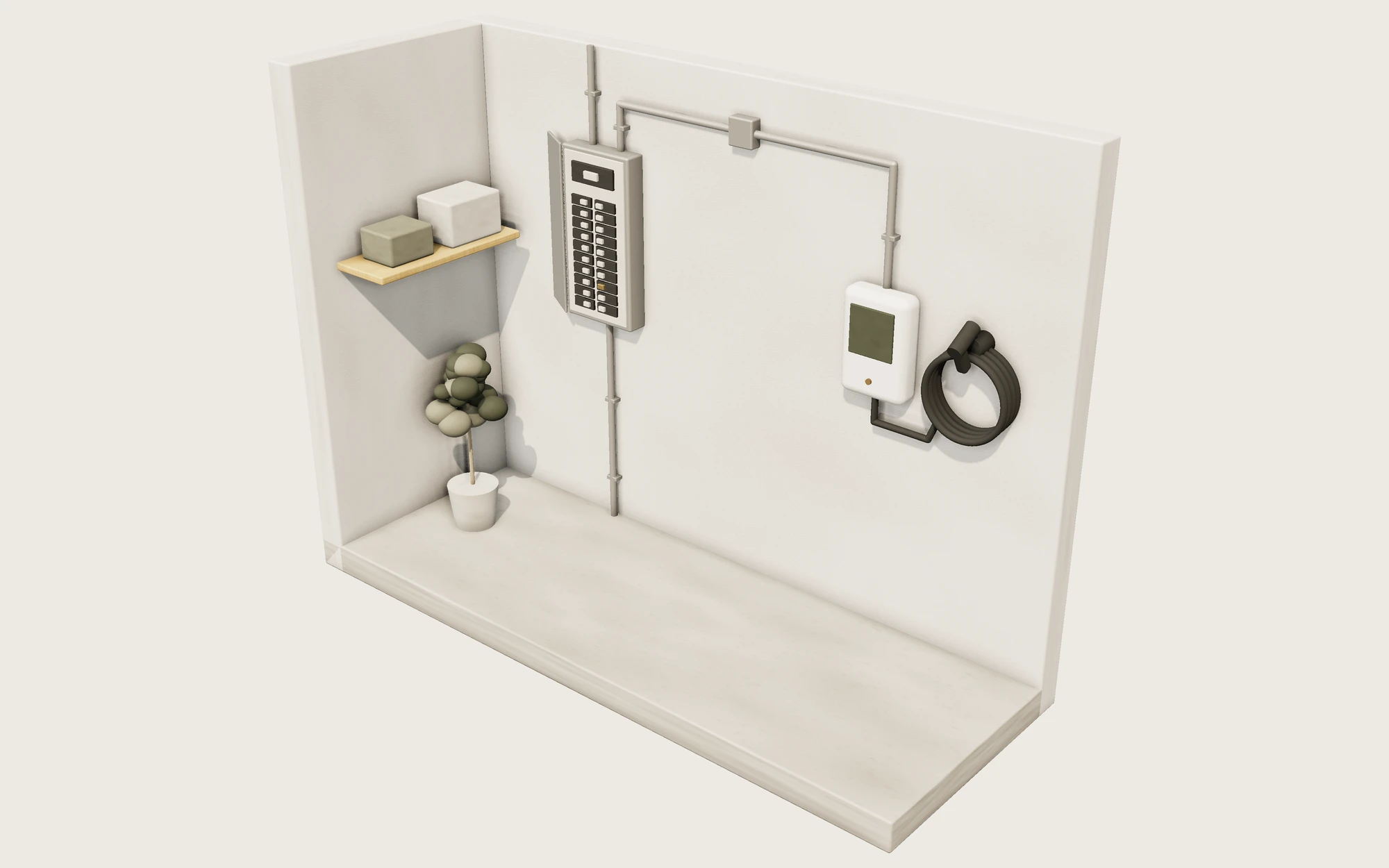
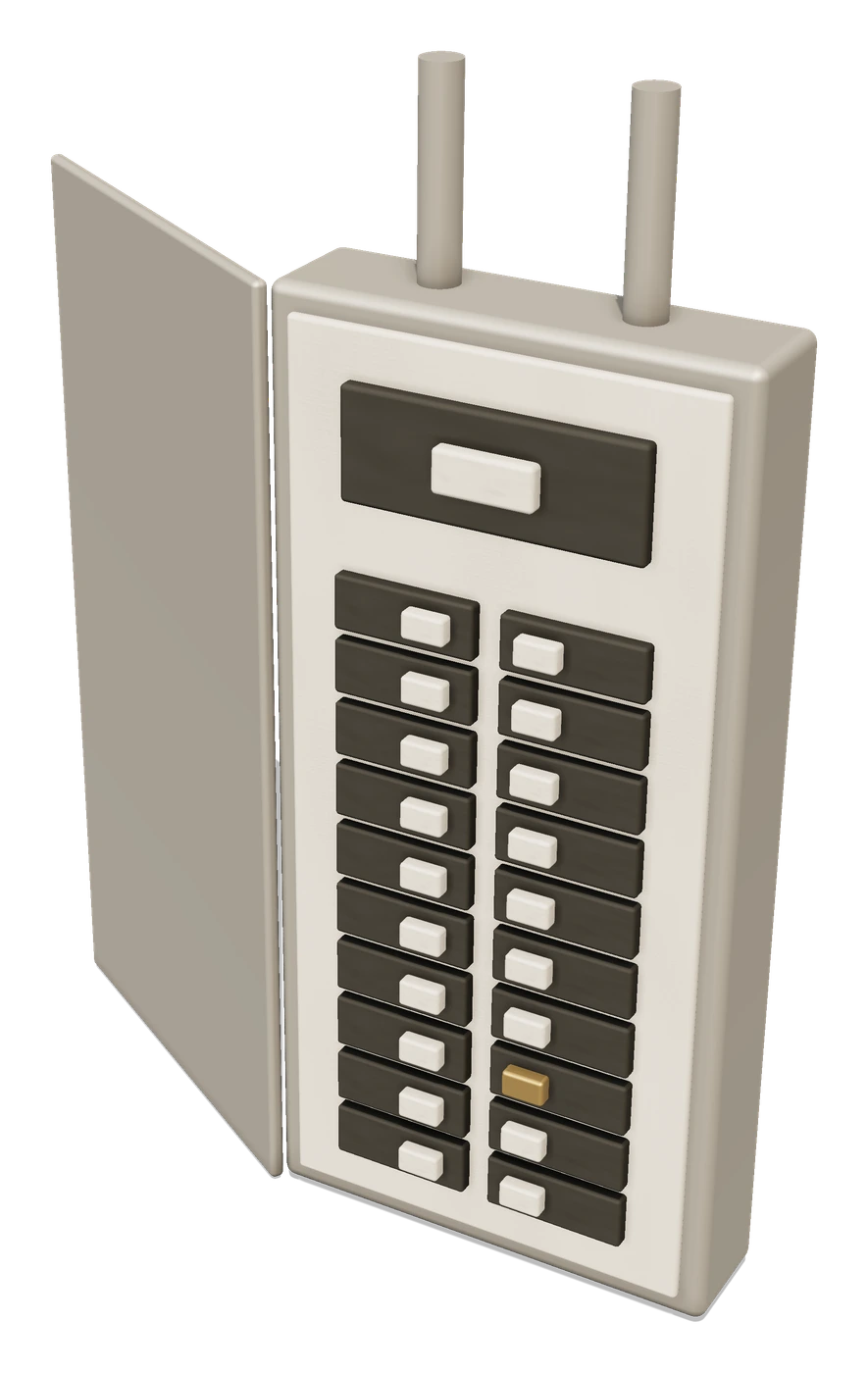
The median LA home was built around 1965, according to LA neighborhood data, so many panels were sized for a household with no car charger or heat pump. SCE's Charge Ready Home program states that adding an EV charger calls for a panel rated at least 200 amps. ENERGY STAR notes that a heat pump water heater needs a 240-volt supply and sometimes a capacity upgrade at the breaker box. If you plan to add both, ask the electrician to do a load calculation for everything at once, so you pay for one upgrade instead of two.
How it works with LADWP
LADWP asks customers to book a service assessment before installing a charger. A service panel upgrade may be needed first. The electrician pulls an LADBS express permit online, and inspections can usually be booked for the next business day. If you want a separate time-of-use meter for the car, LADWP says the meter change takes about 5 to 10 business days after LADBS signs off, when no panel upgrade is involved.
How it works with SCE
SCE handles meter and service requests through its own project portal at sce.com/projectportal. If your household is income-qualified, or you live in a disadvantaged community in SCE territory, the Charge Ready Home program pays up to $4,200 toward a panel upgrade with an EV outlet, or up to $1,000 for an outlet alone when the home already has 200 amps. The rebate covers the panel and the 240-volt circuit, not the charger itself. It applies only to single-family homes with their own panel and meter.
Rebates and credits in 2026
| Program | Who qualifies | Amount |
|---|---|---|
| LADWP Residential EV Charger Rebate | LADWP residential customers | Up to $1,000 for a qualified Level 2 charger; $500 more for Lifeline or EZ-SAVE customers; $250 more for a separate EV meter |
| SCE Charge Ready Home | Income-qualified SCE customers or disadvantaged communities | Up to $4,200 (panel plus outlet) or $1,000 (outlet only) |
| LADWP Consumer Rebate Program, heat pumps | LADWP residential customers | Up to $2,500 per ton for heat pump HVAC; up to $2,500 for a heat pump water heater |
| Federal EV charger credit (30C) | Ended | Not allowed for property placed in service after June 30, 2026 |
Sources: LADWP EV charger rebate, LADWP Consumer Rebate Program, IRS. LADWP's heat pump rebates require a final approved Building and Safety permit, so an unpermitted install loses the rebate. For more on heat pump water heaters, see our Los Angeles water heater guide.
Solar and batteries under LADWP and SCE
SCE customers who applied to connect on or after April 15, 2023 are on the state's Net Billing Tariff, often called NEM 3.0. Under it, power you send to the grid earns credits based on its value to the grid, which the California Public Utilities Commission says is usually lower than the retail rate, though it can rise above it on late summer evenings. The CPUC says customers get the most bill savings under net billing by adding a battery, so they can use or export stored power during those high-value hours. Residential SCE customers who apply before the end of 2027 get a small export bonus for nine years. Net billing customers must use SCE's TOU-D-PRIME rate and pay a one-time $94 interconnection fee.
LADWP is a city-owned utility and is not covered by the CPUC tariff. It runs its own net energy metering program. Under its NEM guidelines%20(1).pdf), when your panels produce more than you use in a billing period, the excess becomes a credit on your account that rolls into later bills. Any credit left when you close the account is lost. Every grid-tied system must meet LADWP's interconnection rules, and the application starts at ladwp.com/nem.
The federal credit for home solar and batteries (Section 25D) ended for spending after December 31, 2025, so a 2026 quote should not subtract it.
On the permit side, LADBS issues express permits online, to contractors only, for solar systems up to 10 kW where the main panel is rated 225 amps or less. Batteries tied to solar on a one- or two-family home can also go through the express route under the same panel limit, but they need a separate fire plan check from the Los Angeles Fire Department. Bigger systems or bigger panels go through plan check.
Do you need a permit?
Yes, for nearly anything beyond replacing a fixture or device. The Los Angeles Department of Building and Safety lists the electrical jobs it can permit without plan review in its express permit bulletin (revised June 2026):
- New wiring under 600 volts and up to 400 amps in existing homes
- Rewiring or adding outlets on existing circuits
- EV charging, including any service upgrade, receptacle and wiring it needs, up to 400 amps of service
- Solar up to 10 kW and solar-plus-battery systems, with the panel limits above
Express permits skip plan review and are issued through the city's online permit system. Fees are charged per item plus city surcharges. Permit-fee estimates for 2026:
| Job | Approximate permit fee |
|---|---|
| Panel upgrade | about $60 |
| EV charger circuit | about $60 |
| Rooftop solar system | about $216 |
Those figures come from a permit fee estimator, not LADBS, and several items on one permit add up. Local electricians' price guides put an EV charger permit at $100 to $350. Ask for the permit as its own line on the estimate.
When the city finds unpermitted electrical work, it charges a $356 code violation inspection fee, and a permit taken out after the fact costs twice the normal fee. LADWP's heat pump rebates also ask for a final approved permit with the application.
Pasadena, Glendale, Burbank, Long Beach and the Orange County cities have their own building departments and fee schedules.
How to check an electrician before you hire
California licenses electrical contractors through the Contractors State License Board under the C-10 Electrical class. A C-10 contractor can install anything that generates, carries or uses electricity, from outlets and panels to solar cells.
There is a second check for the crew. Anyone who does electrical work as an employee of a C-10 contractor must hold a state electrician certification from the Department of Industrial Relations. The CSLB has enforced this since July 1, 2009. Uncertified helpers can dig trenches or run conduit, but they cannot connect wiring or devices. The general electrician certificate takes 8,000 hours of on-the-job experience, and the residential certificate takes 4,800.
Before you sign:
- Look up the C-10 license number on the CSLB site. Check that the name matches and the status is active.
- Check that workers' compensation is on file if the company has employees.
- Ask whether the people doing the wiring are state-certified electricians.
- Get a written price that lists the permit and, for panel or solar work, who handles the utility paperwork.
A handyman without a license can take jobs under $1,000 total, but only if no permit is needed and they work alone. A new circuit, a panel, a charger or solar all need permits, so they need a C-10.
GOLDGCP checks each electrician's state license, insurance, background and references before they get a job, and you pay in milestones as the work is approved.
Common electrical jobs in LA homes
| Job | LA price range | Permit and utility steps |
|---|---|---|
| New GFCI outlet | $170 to $400 | Usually no utility involvement |
| Ceiling fan installation | $170 to $400 | Express permit if new wiring is run |
| Dedicated circuit | $285 to $1,050 | Express permit; space in the panel |
| Level 2 EV charger | $855 to $2,950 | LADWP or SCE assessment first; rebate forms |
| Panel upgrade to 200 amps | $1,500 to $3,200 | Express permit; the utility may change the meter |
| Rewiring or grounding a house | $2,300 to $11,400 | Express permit for non-engineered rewiring |
| Solar or solar plus battery | Quoted per system | Online LADBS permit, fire plan check for batteries, utility interconnection |
Areas we cover
GOLDGCP electricians work across Los Angeles and Orange County:
- Los Angeles, including the San Fernando Valley
- Pasadena, Glendale and Burbank
- Santa Monica and Torrance
- Long Beach
- Orange County, including Irvine and Anaheim
Type your ZIP code below to see whether a vetted electrician covers your street.
How GOLDGCP works
- Tell us about the job through the form, by phone or on WhatsApp. Mention your utility and your panel size if you know it.
- We match you with 3 vetted, licensed electricians and show prices for your ZIP code before anyone visits.
- The electrician you pick pulls the LADBS permit and coordinates with LADWP or SCE.
- You pay in milestones, each one after you approve that stage, and the last after the final inspection.
For a dead circuit, a burning smell or sparking, use the 24/7 emergency line at the top of the page.
Frequently asked questions
How much does an electrician cost per hour in Los Angeles?
Usually $57 to $150 an hour for a licensed electrician, plus a $115 to $230 service call. Rates in LA run about 14% above the national average. Evening, weekend and holiday calls cost more, and jobs that need a permit add the city fee.
How much does a panel upgrade cost in Los Angeles?
Upgrading to 200 amps costs about $1,500 to $3,200 here, and a 400-amp upgrade $2,300 to $4,550. The utility may also need to change the meter. SCE customers who qualify by income or neighborhood can get up to $4,200 from Charge Ready Home.
Do I need a permit to install an EV charger in Los Angeles?
Yes. In the City of LA, an EV charger needs an LADBS electrical permit, which the electrician can get online as an express permit with no plan review, including any service upgrade the charger needs. LADWP also recommends a service assessment before installation, and its rebate requires the permit.
Is LADWP on NEM 3.0?
No. The state's Net Billing Tariff covers SCE, PG&E and SDG&E customers. LADWP runs its own net metering program, where extra solar power becomes a bill credit that carries forward. SCE customers in Long Beach, Torrance or Irvine who connected after April 15, 2023 are on net billing.
Does an electrician in California need to be certified?
The company needs a C-10 license from the CSLB. Employees who connect wiring for a C-10 contractor must also hold a state electrician certification from the Department of Industrial Relations. Ask the contractor whether the crew on your job is certified.
Can a handyman do electrical work in Los Angeles?
Only very small jobs. California lets an unlicensed handyman take work under $1,000 total, and only when no permit is needed and they have no employees. New circuits, panels, EV chargers and solar all need permits, so they need a licensed C-10 electrician.
Is there still a federal tax credit for EV chargers or solar?
Not for new work. The federal EV charger credit ended for equipment placed in service after June 30, 2026, and the residential solar and battery credit ended for spending after December 31, 2025. Utility rebates from LADWP and SCE are still available in 2026.
How we calculate these prices
GOLDGCP starts from national price ranges for each job, taken from published 2026 cost guides and checked against local price guides where they exist. To get a local price, we multiply the national range by the construction cost factor for the metro from the U.S. Army Corps of Engineers Area Cost Factors (US average = 1.00). For ZIP codes outside the 50 largest metros, the calculator uses the state's price level from the Bureau of Economic Analysis Regional Price Parities. Ranges include labor and standard materials but not unusual site conditions, so a written quote after an inspection is always the final price.
Sources
- Express Permits (No Plan Check Required), P/GI 2026-003 · Los Angeles Department of Building and Safety
- Residential EV Charger Rebate Program · LADWP
- Charge Ready Home · Southern California Edison
- Net Energy Metering and Net Billing · California Public Utilities Commission
- Net Energy Metering Guidelines · LADWP
- C-10 Electrical classification · Contractors State License Board
- Electrician Certification FAQs · California Department of Industrial Relations
- How much does it cost to replace an electrical panel? · HomeGuide
- Area Cost Factors, PAX Newsletter 3.2.1 (2024) · U.S. Army Corps of Engineers
- Regional Price Parities by State · U.S. Bureau of Economic Analysis

About this guide
Written by the GOLDGCP editorial team. Prices come from national cost guides adjusted with official construction cost factors for Los Angeles; rules and statistics come from the agencies and reports linked in the text. We update this page when prices or codes change.