
The short answer
A new asphalt shingle roof on a typical Los Angeles house costs about $8,000 to $15,950, and tile runs $15,950 to $57,000. Most leak repairs land between $170 and $1,150. In LA, the rules matter as much as the material: almost every reroof needs an LADBS permit, a rated cool roof product, and Class A materials in fire zones.
What roofers charge in Los Angeles
The table below starts from national cost data and adjusts it for Los Angeles. The U.S. Army Corps of Engineers puts construction costs in the Los Angeles area at 1.14 times the national average, so a roof that costs $10,000 elsewhere tends to cost around $11,400 here.
| Job | Los Angeles (typical range) | US average |
|---|---|---|
| Asphalt shingle roof, 2,000 sq ft | $8,000–$15,950 | $7,000–$14,000 |
| Metal roof, 2,000 sq ft | $11,400–$36,500 | $10,000–$32,000 |
| Tile roof, 2,000 sq ft | $15,950–$57,000 | $14,000–$50,000 |
| Flat roof, 1,000 sq ft | $3,400–$12,550 | $3,000–$11,000 |
| Tear-off of one old layer, 2,000 sq ft | $2,300–$4,550 | $2,000–$4,000 |
| Vent boot repair | $85–$170 | $75–$150 |
| Replace up to 25 shingles | $115–$340 | $100–$300 |
| Flashing repair | $230–$570 | $200–$500 |
| Minor leak repair | $170–$1,150 | $150–$1,000 |
| Leak with water damage | $1,150–$6,850 | $1,000–$6,000 |
| Roof deck repair, per 100 sq ft | $230–$570 | $200–$500 |
Estimates for 2026, including labor and standard parts. Los Angeles prices use the metro's construction cost factor of 1.14 (US average = 1.00) from the U.S. Army Corps of Engineers Area Cost Factors. Your quote depends on access, materials and the condition of the home.
Local price guides back this up. Angi puts the average LA roof replacement at $17,271, with most jobs between $10,256 and $24,963, or about $8.60 per square foot (Angi). Its example is a 1,700-square-foot LA house that needs roughly 2,000 square feet of roofing once you count the slope and the eaves.
What pushes a quote up in LA:
- Tile. Clay and concrete tile is heavy, and the crew handles every piece. Resetting old tile on new underlayment is priced as its own job.
- Hillside access. Steep driveways and tight lots in places like Silver Lake or the Hollywood Hills make it harder to stage materials and haul away debris.
- Code items. A cool roof product, a Class A assembly in a fire zone, and decking repairs found after tear-off all add cost.
- Old layers. Each layer of roofing that has to come off adds about $2,300 to $4,550 on a 2,000-square-foot roof.
Run your own numbers with the calculator below, or open the full roofing calculator. Both use the rate for your ZIP code. For national prices and how roofers measure a roof, see our roofing cost guide.
Roofing materials that suit LA
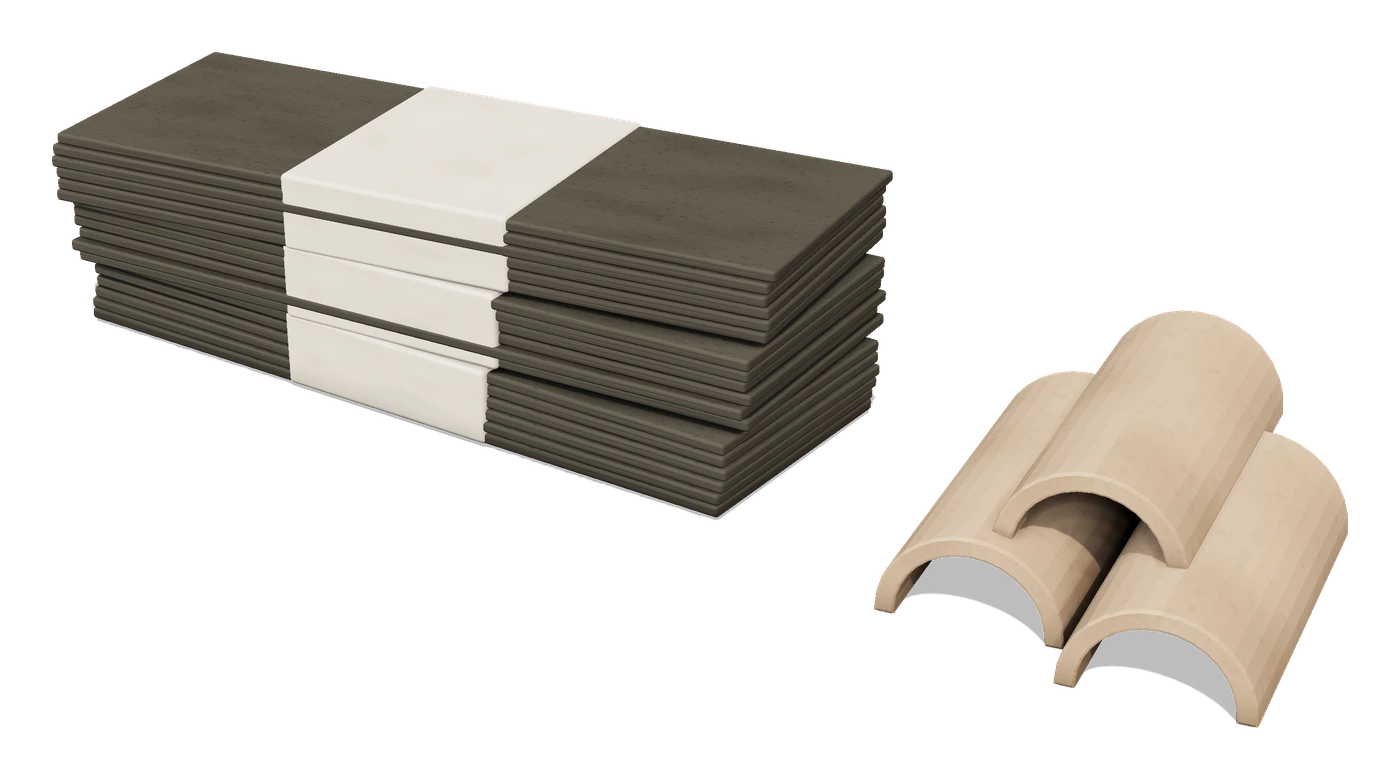
Here is how the common roofing choices compare at Los Angeles prices for 2,000 square feet of roof:
| Material | LA installed cost, 2,000 sq ft | Typical lifespan | LA notes |
|---|---|---|---|
| Asphalt (composition) shingles | $8,000 to $15,950 | 20 to 30 years (architectural) | Must meet the cool roof rule on a reroof in zones 8 and 9 |
| Metal | $11,400 to $36,500 | 30 to 80+ years | Light; costs more up front but lasts longest |
| Concrete or clay tile | $15,950 to $57,000 | 30 to 100+ years | Heavy; the layer under the tile wears out first |
| Low-slope (flat) roof, 1,000 sq ft | $3,400 to $12,550 | 5 to 60 years by type | Strictest cool roof rule: aged reflectance of 0.63 |
Lifespans come from HomeGuide's material table. Wood shakes are left off on purpose. California only allows wood roofing that the State Fire Marshal has approved after a long weathering test, and in very high fire hazard zones the roof must be Class A, so most LA roofers steer owners elsewhere.
Tile roofs: the underlayment is the weak spot
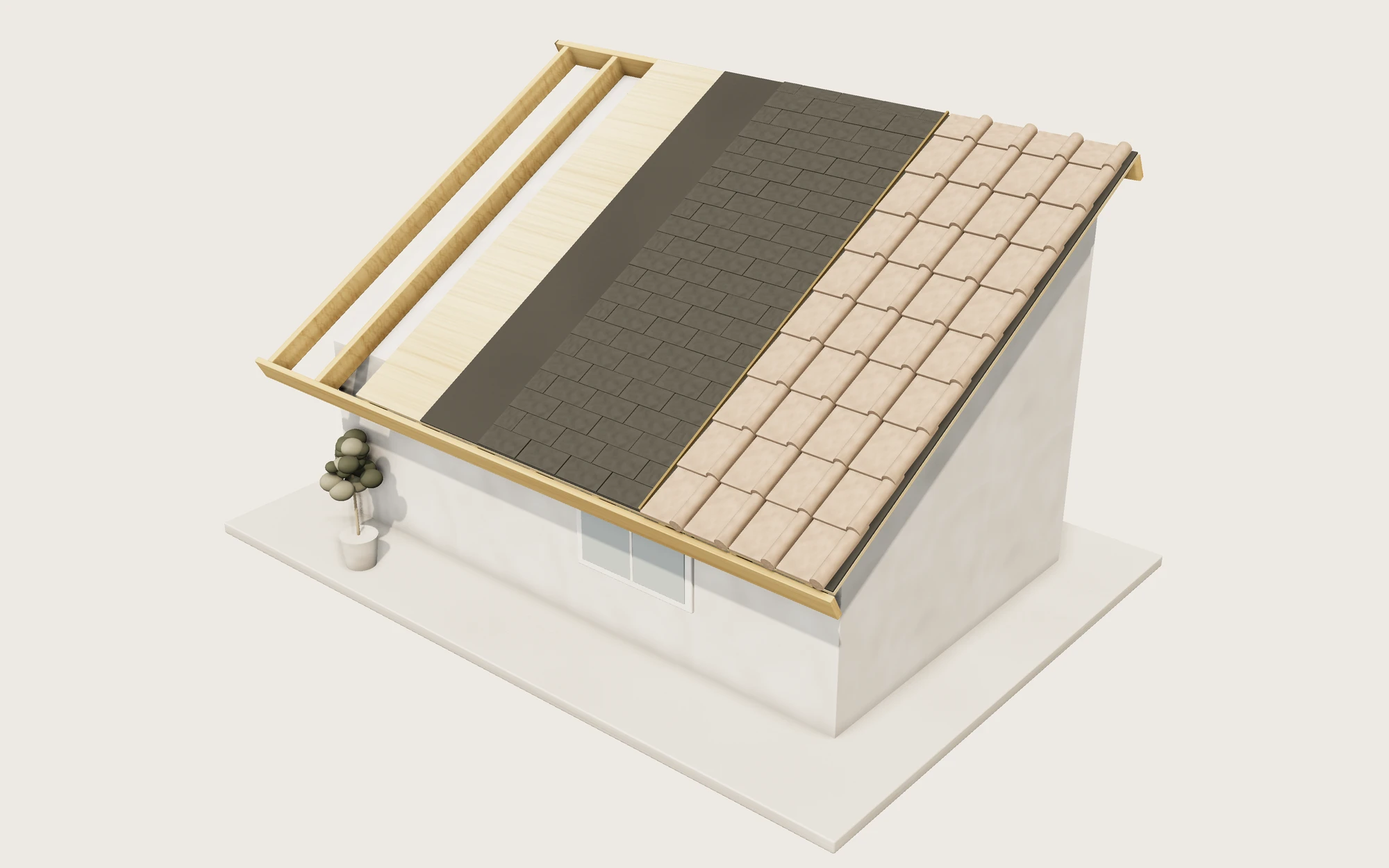
Tile itself can last a very long time, but the felt or synthetic layer under it does not. Once that layer dries out and cracks, water that slips between the tiles reaches the deck. The fix is often a "lift and relay": the crew removes the tiles, puts down new underlayment and flashing, then resets the same tiles, replacing broken ones. LADBS treats this as an express permit job, and because the roof surface stays the same, its bulletin says no cool roof compliance is needed.
Flat roofs on mid-century homes
Low-slope roofs face the tightest cool roof rule in Title 24: a three-year aged solar reflectance of at least 0.63. That usually means a white or very light membrane or coating. Coating an existing flat roof with an approved product is also on the LADBS express permit list.
Why LA roofs leak when they do
Los Angeles gets most of its rain in a short window. Downtown averages 14.25 inches a season, and about 82% of it falls from December through March, based on the NOAA normals for 1991 to 2020 (LA Almanac). July and August average close to zero. A roof can sit dry for eight months with a cracked vent boot or a slipped tile, and nobody notices until the first big storm.
Those storms can be heavy. During the February 2024 atmospheric river, downtown LA recorded 7.03 inches in two days, the wettest two-day February on record (NBC Los Angeles, citing NWS data). That is about half of a normal season.
Plan inspections and repairs for late summer and fall, before the rain starts. A roofer can reseal flashing, replace cracked tiles, clear valleys and gutters, and check the underlayment at the eaves while the schedule is open. If a storm is already on its way and the roof is leaking, see our Los Angeles emergency repair guide.
Cool roof rules for a reroof
LA was the first major US city to require cool roofs on new homes. The city's Cool Roof Ordinance (No. 183149) changed the LA Green Building Code so that new and refurbished homes need roofing that meets minimum reflectance and emittance values. It took effect on January 1, 2015 (Adaptation Clearinghouse summary). Repairs are exempt.
In practice, LADBS applies one simple test on its express permit form: if you replace more than 50% of a home's roof area, the new product must be labeled and certified by the Cool Roof Rating Council (CRRC).
The state Energy Code sets the numbers. For single-family reroofs under the 2022 Title 24 rules:
| Roof type | Climate zones | Minimum aged solar reflectance | Minimum thermal emittance | Or SRI |
|---|---|---|---|---|
| Steep slope (shingles, tile, metal) | 4 and 8 to 15 | 0.20 | 0.75 | 16 |
| Low slope (flat) | 4 and 6 to 15 | 0.63 | 0.75 | 75 |
Source: CRRC summary of Title 24, Part 6. The state rule for steep roofs has exceptions, for example a home with R-38 attic insulation, a qualifying radiant barrier, or no ducts in the attic in zone 9.
Which zone are you in? It goes by ZIP code. Coastal areas such as Santa Monica, Torrance and most of Long Beach are zone 6. Inland South Bay areas fall in zone 8, and Downtown LA, Pasadena and the San Fernando Valley are zone 9 (SoCalREN climate zone directory). Inside the City of LA, plan on a CRRC-rated product for any reroof over half the roof, whatever the zone. For more on how energy rules shape a project, see our Title 24 guide.
LADWP customers can apply for a cool roof rebate of up to $0.60 per square foot through the Consumer Rebate Program. The application is due within 12 months of purchase, and LADWP says funding is limited (LADWP fact sheet).
Fire zones and Class A roofs
Wildfire shapes roofing rules across the hills of Los Angeles. In January 2025, the Palisades Fire destroyed 6,845 structures and the Eaton Fire destroyed 9,419, according to CAL FIRE's incident pages (Palisades, Eaton).
What the law requires:
- Very High Fire Hazard Severity Zones. Under California Health and Safety Code 13132.7, if more than half of a roof is replaced within one year, the whole roof covering must be at least Class A. Any roof covering applied in a repair or replacement in these zones must be Class A as well (California Legislative Information). LADBS repeats this on its reroof permit list.
- New homes and rebuilds. Chapter 7A of the California Building Code adds detail for new construction in fire hazard zones: a Class A roof assembly, a 72-pound cap sheet or Class A underlayment where there is airspace under the roofing, metal valley flashing over a 36-inch cap sheet, and gutters fitted to keep leaves from piling up (2022 California Building Code, Chapter 7A).
- New maps. CAL FIRE issued updated fire hazard zone maps for the region, including the City of LA, on March 24, 2025. A city cannot lower the zone the state recommends, and the LAFD expects more parcels to be affected (LAFD). Check your address before you choose a material.
A Class A rating belongs to the tested assembly, which includes the underlayment and the way it is installed. Ask the roofer for the listing that shows the exact product and assembly you are buying is Class A.
Do you need a permit?
Inside the City of Los Angeles, a reroof needs a building permit from the Department of Building and Safety (LADBS). Most one- and two-family reroofs qualify for an express permit, which skips plan check. The express list covers reroofing with a Class A or B covering lighter than 6 pounds per square foot over solid sheathing, relaying tile on new underlayment, and coating an existing roof (LADBS bulletin P/GI 2020-003).
The fee follows the value of the job. Based on LADBS permit records compiled by PermitCalculator:
| Reroof job value | Express permit fee, all surcharges |
|---|---|
| $12,000 | about $284 |
| $25,000 | about $448 |
Small repairs often need no permit. Since December 31, 2025, LA's code exempts work valued at $2,500 or less that does not affect the structure or public safety, and a small roof patch usually fits. Pasadena, Glendale, Burbank, Long Beach, Torrance and the Orange County cities run their own building departments, with their own fees.
A permit brings an inspector to check the deck, underlayment, flashing and the cool roof label. It also creates the record a buyer's inspector or your insurer will look for later.
Repair or replace?
Repair makes sense when the damage is local: a cracked vent boot, a few broken tiles, a lifted shingle tab, or failed flashing at a chimney or skylight. At LA prices those run from about $85 to $570. A leak that has already soaked the deck or a ceiling costs $1,150 to $6,850.
Replacement starts to make sense when:
- Leaks show up in more than one place after the same storm
- Shingles are bald, curled or brittle over large areas
- The tile is fine but the underlayment is failing across the roof (a relay may be the middle option)
- The roof is near the end of its material's lifespan
- You live in a fire zone and the current roof is not Class A
Keep the 50% line in mind. Replacing more than half the roof triggers the city's cool roof requirement, and in a very high fire hazard zone, the Class A rule for the whole roof.
Storm and fire insurance claims
Before calling a roofer about storm or fire damage, photograph the damage inside and out and call your insurer to open a claim. Get the adjuster's scope in writing and compare it line by line with the roofer's estimate. Be careful with anyone who knocks on doors after a disaster. In California, contracting without a license in a declared disaster area is a felony (CSLB).
How to check a roofer before you hire
California licenses roofers under the C-39 Roofing classification of the Contractors State License Board. A C-39 contractor installs and repairs roofing and waterproofing, from shingles and tile to metal and membranes.
- Look up the license number on the CSLB website. The status should be active and the business name should match.
- Confirm workers' compensation. Every active C-39 roofer must carry it, even with no employees, because roofing is one of the classes the CSLB singles out (CSLB). A roofer who says they are exempt is wrong.
- Read the complaint and disciplinary history on the same page.
- Get a written contract that names the product line, the CRRC rating, the underlayment, the flashing and who pulls the permit.
- Keep the deposit small. California caps a home improvement down payment at $1,000 or 10% of the price, whichever is less (CSLB).
The $1,000 handyman exception rarely helps with roofs, since it only covers work that needs no permit and is done by one person with no employees.
GOLDGCP checks every roofer before they join: state license verification, insurance, a background and business check, a portfolio review, client reference calls, and onboarding with a quality score. Payment is split into milestones, each one after you approve that stage. Read more about how milestone payments work.
Areas we cover
Roofers in the GOLDGCP network work across greater Los Angeles and Orange County:
- Los Angeles, from Downtown to the Westside and South LA
- The San Fernando Valley and Burbank
- Pasadena and Glendale
- Santa Monica and Torrance
- Long Beach
- Orange County, including Irvine and Anaheim
Enter your ZIP code to see roofing prices for your street and get matched with a local roofer.
How GOLDGCP works
- Tell us about the roof: material, rough size, the leak or the plan. Use the form, call or send a WhatsApp message.
- You see prices for your ZIP code, then we match you with 3 vetted, licensed roofers.
- Your roofer inspects, gives a written estimate, pulls the LADBS or city permit and orders the right cool roof or Class A product.
- You pay by milestone: for example after tear-off and deck inspection, and after the final inspection. Track it all in the client portal.
For an active leak during a storm, call our 24/7 emergency line.
Frequently asked questions
How much does a new roof cost in Los Angeles?
For about 2,000 square feet of roof, expect $8,000 to $15,950 in asphalt shingles, $11,400 to $36,500 in metal and $15,950 to $57,000 in tile. Angi's LA data puts the average replacement at $17,271. Steep hillside lots, tear-off of old layers and deck repairs push the price up.
How much does roof repair cost in Los Angeles?
Small fixes such as a vent boot, a few shingles or a flashing repair cost about $85 to $570. A minor leak runs $170 to $1,150. If water has already damaged the deck, insulation or a ceiling, plan on $1,150 to $6,850.
Do I need a permit to replace my roof in Los Angeles?
Yes. A reroof in the City of LA needs an LADBS building permit, usually an express permit with no plan check. Fees track job value: about $284 for a $12,000 reroof and $448 for a $25,000 one, based on LADBS records. Small repairs under $2,500 are usually exempt.
Does a new roof in LA have to be a cool roof?
If you replace more than 50% of a home's roof in the City of Los Angeles, LADBS requires a CRRC-labeled cool roof product. Flat roofs must reach an aged solar reflectance of 0.63, steep roofs 0.20. Repairs and tile relays on new underlayment do not trigger the rule.
What roof is required in a Los Angeles fire zone?
In a Very High Fire Hazard Severity Zone, state law requires a Class A roof covering when more than half the roof is replaced within a year, and for any roof covering applied in a repair or replacement. New homes and rebuilds in fire zones also follow Chapter 7A of the building code.
When should I fix my roof in LA?
Late summer and fall, before the rain. Downtown LA gets about 82% of its yearly rain from December through March, so problems often stay hidden until the first storm. Booking an inspection in September or October avoids the post-storm rush.
What license does a roofer need in California?
A C-39 Roofing license from the Contractors State License Board. Check it at cslb.ca.gov. Every active C-39 contractor must carry workers' compensation insurance, even without employees, so ask for proof and confirm it on the license record.
How we calculate these prices
GOLDGCP starts from national price ranges for each job, taken from published 2026 cost guides and checked against local price guides where they exist. To get a local price, we multiply the national range by the construction cost factor for the metro from the U.S. Army Corps of Engineers Area Cost Factors (US average = 1.00). For ZIP codes outside the 50 largest metros, the calculator uses the state's price level from the Bureau of Economic Analysis Regional Price Parities. Ranges include labor and standard materials but not unusual site conditions, so a written quote after an inspection is always the final price.
Sources
- How much does a roof replacement cost? · HomeGuide
- How Much Does Roof Replacement Cost in Los Angeles, CA? · Angi
- Express Permits (No Plan Check Required), IB P/GI 2020-003 · LADBS
- CRRC Chart of CEC's 2022 Title 24, Part 6 Cool Roof Requirements · Cool Roof Rating Council
- Health and Safety Code Section 13132.7 · California Legislative Information
- Monthly Rainfall Normals and Records for Downtown Los Angeles · Los Angeles Almanac
- Workers' Compensation Requirements · Contractors State License Board
- Consumer Rebate Program Fact Sheet · LADWP
- Area Cost Factors, PAX Newsletter 3.2.1 (2024) · U.S. Army Corps of Engineers
- Regional Price Parities by State · U.S. Bureau of Economic Analysis

About this guide
Written by the GOLDGCP editorial team. Prices come from national cost guides adjusted with official construction cost factors for Los Angeles; rules and statistics come from the agencies and reports linked in the text. We update this page when prices or codes change.