
The short answer
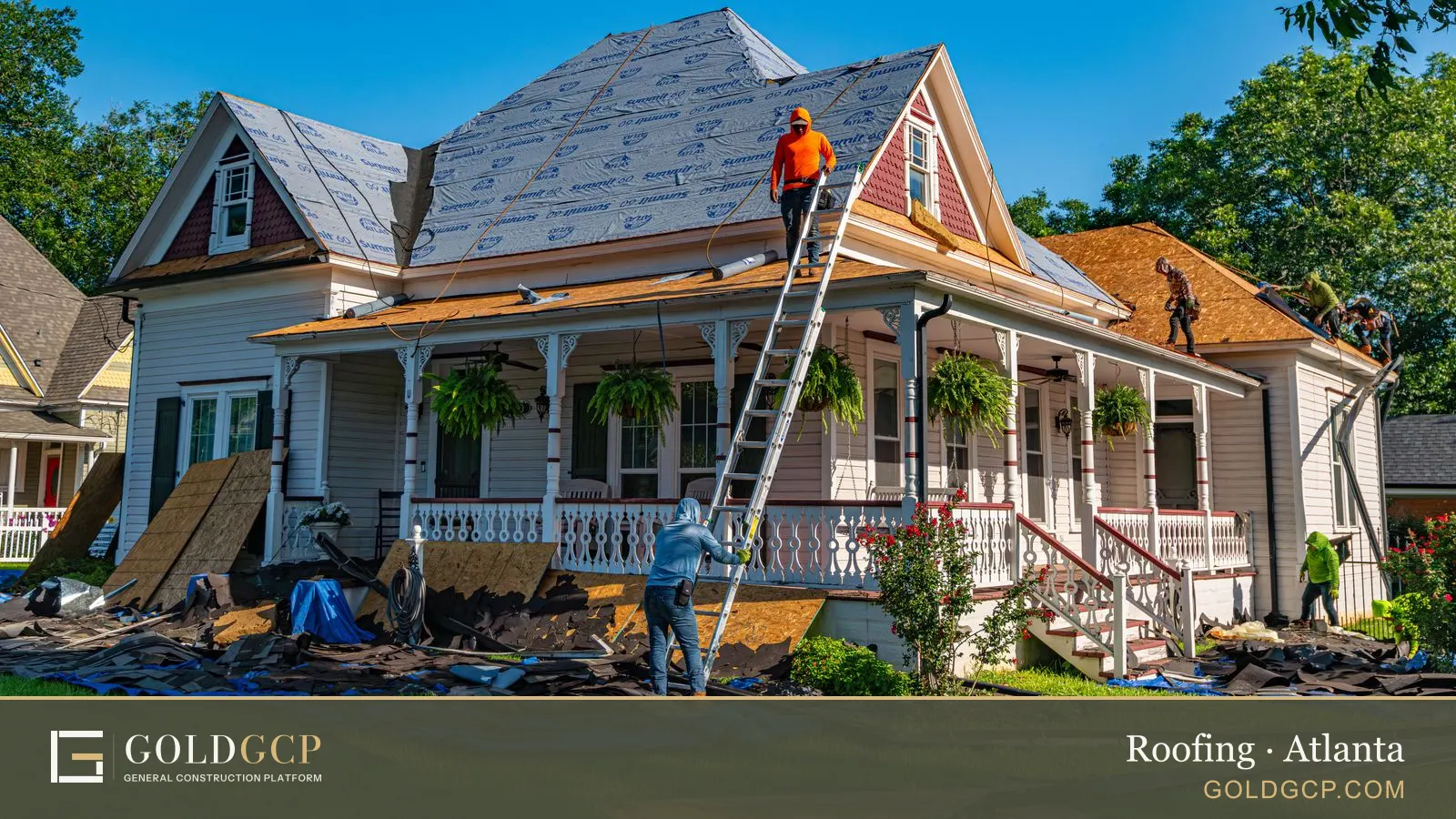
A new asphalt shingle roof on a 2,000 square foot Atlanta house runs about $5,950 to $11,900. Metal runs $8,500 to $27,200, and tile $11,900 to $42,500. Most repairs land between $64 and $850. In Atlanta, hail and wind ratings matter as much as the material. Permit rules change from city to city.
What roofers charge in Atlanta
The table uses national cost data adjusted for Atlanta. The U.S. Army Corps of Engineers puts construction costs in the Atlanta area at 0.85 times the national average, so a roof that costs $10,000 elsewhere tends to cost around $8,500 here.
| Job | Atlanta (typical range) | US average |
|---|---|---|
| Asphalt shingle roof, 2,000 sq ft | $5,950–$11,900 | $7,000–$14,000 |
| Metal roof, 2,000 sq ft | $8,500–$27,200 | $10,000–$32,000 |
| Tile roof, 2,000 sq ft | $11,900–$42,500 | $14,000–$50,000 |
| Flat roof, 1,000 sq ft | $2,550–$9,350 | $3,000–$11,000 |
| Tear-off of one old layer, 2,000 sq ft | $1,700–$3,400 | $2,000–$4,000 |
| Vent boot repair | $64–$130 | $75–$150 |
| Replace up to 25 shingles | $85–$255 | $100–$300 |
| Flashing repair | $170–$425 | $200–$500 |
| Minor leak repair | $130–$850 | $150–$1,000 |
| Leak with water damage | $850–$5,100 | $1,000–$6,000 |
| Roof deck repair, per 100 sq ft | $170–$425 | $200–$500 |
Estimates for 2026, including labor and standard parts. Atlanta prices use the metro's construction cost factor of 0.85 (US average = 1.00) from the U.S. Army Corps of Engineers Area Cost Factors. Your quote depends on access, materials and the condition of the home.
What pushes a quote up in Atlanta:
- Tear-off. Each old layer that has to come off adds $1,700 to $3,400 on a 2,000 square foot roof.
- Decking. Soft or rotted sheathing found after tear-off is priced by the 100 square feet, at $170 to $425.
- Material. Architectural shingles cost more than basic three-tab, and metal and tile cost more again.
- Access and pitch. Steep roofs and tight intown lots slow the crew down.
- Code items. A Class A assembly, the right wind-uplift fastening, and attic ventilation work all add cost.
Run your own numbers with the roofing cost estimator. It uses the rate for your ZIP code. For national prices and how roofers measure a roof, see our roofing cost guide.
Roofing materials that suit Atlanta
How the common choices compare at Atlanta prices for 2,000 square feet of roof:
| Material | Atlanta installed cost, 2,000 sq ft | Notes for this climate |
|---|---|---|
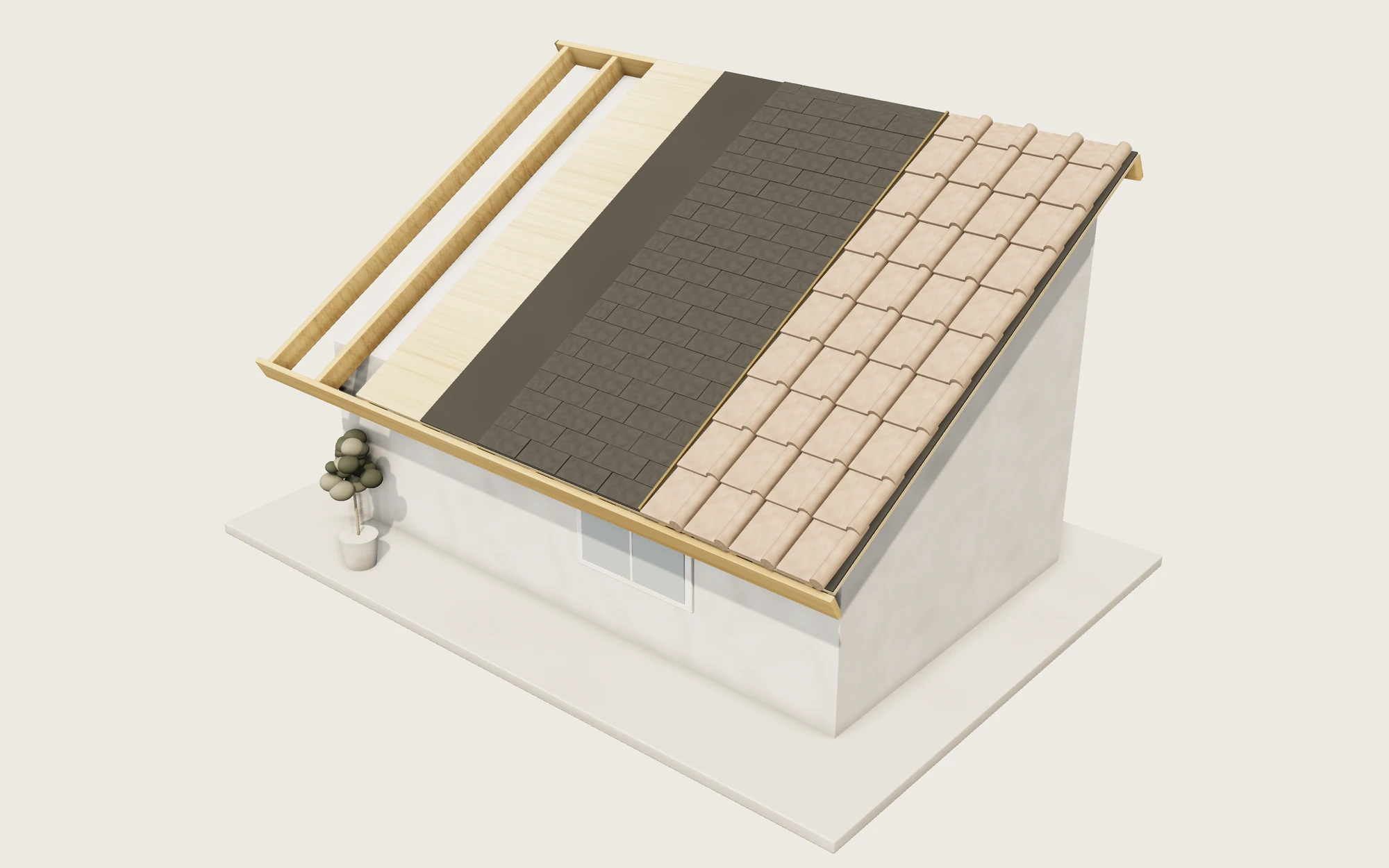
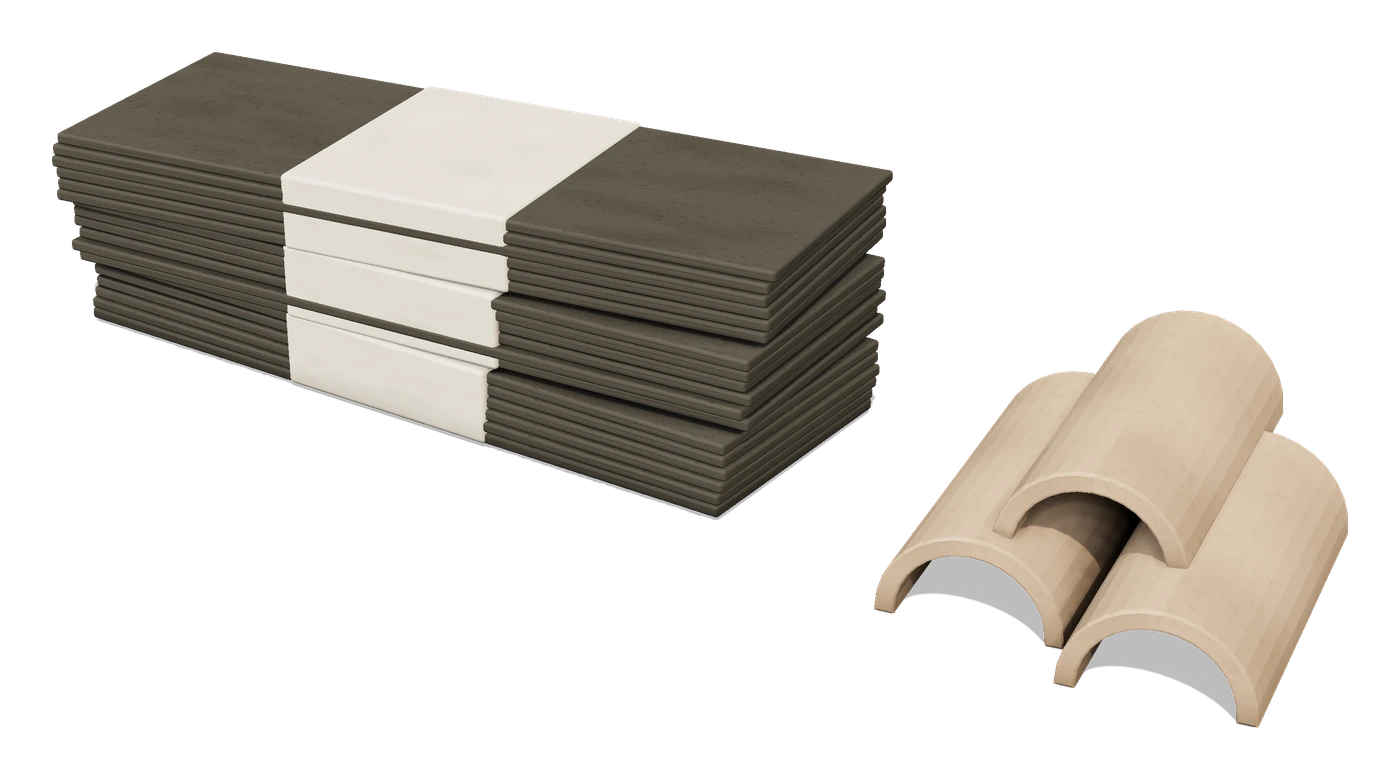
| Asphalt (composition) shingles | $5,950 to $11,900 | The default here. Ask for a Class 4 impact rating and a high wind rating. |
| Metal | $8,500 to $27,200 | Light and long-lived. Standing seam sheds pine straw and heavy rain well. |
| Concrete or clay tile | $11,900 to $42,500 | Heavy. The structure has to carry it, and the underlayment wears out first. |
| Low-slope (flat) roof, 1,000 sq ft | $2,550 to $9,350 | Common on intown additions, porches and commercial buildings. |
Atlanta's building rules require roof materials to meet a Class A, B or C fire rating and to be installed to the local wind-uplift and fastening requirements (OneClick Code). That is the minimum the code allows. Given the hail and thunderstorm history here, most owners should ask for more.
Shingles: what rating to ask for
A Class 4 impact rating is the top impact class: the shingle survived a laboratory test with steel balls dropped on it. Ask the roofer for the manufacturer's product data showing both the impact class and the wind rating, and make sure the underlayment and fastening pattern match what the manufacturer requires for that rating. A Class 4 shingle nailed the wrong way is not a Class 4 roof.
Metal and tile
Metal roofs handle wind and shed debris better than shingles, and they last longer, but they cost more and are noisier. Tile is heavy, so a structural check comes first on an older house. On both, failures start at the fasteners and flashing, not the panels or tiles.
Flat and low-slope roofs
Low-slope roofs need a membrane or a coating system instead of shingles. They are also where Atlanta's summer heat and standing water do the most damage. Sandy Springs requires a permit for flat roof replacement but not for replacing individual shingles on a pitched roof (City of Sandy Springs).
Why Atlanta roofs fail
Atlanta gets 50.43 inches of rain a year, spread across all twelve months, based on the NOAA normals for 1991 to 2020. July is the wettest month at 4.75 inches. The metro also sees 47 days a year at 90°F or hotter and about 36 nights below freezing. Heat, rain and occasional ice wear a roof down.
Hail
Hail causes most roof claims. State Farm paid nearly $110 million in Georgia hail claims in 2025, an average of about $17,000 per claim (Metro Atlanta CEO). Hail bruises shingle mats and knocks granules loose. The damage is often invisible from the ground, so after a storm get an inspection before you sign anything.
Thunderstorms, wind and tornadoes
Summer thunderstorms bring gusty straight-line wind, and the metro has a tornado history. On March 14, 2008, an EF2 tornado tracked six miles through downtown Atlanta with peak winds near 130 mph, damaging at least 50 homes and blowing roofing off structures (NWS Peachtree City). Wind ratings on the shingle and the fastening pattern keep a roof on in that kind of wind.
Ice storms
Ice storms are less frequent but still happen. In January 2005, ice brought down tree limbs and power lines across North and Central Georgia, and more than a quarter of a million customers lost power at some point (NWS Peachtree City). Limbs on roofs cause punctures and broken flashing.
Heat, humidity and attic ventilation
Atlanta's hot, humid summers make attic ventilation and insulation important, and re-roofing may trigger energy code upgrades (OneClick Code). A roof without ventilation traps moisture in the decking. Ask the roofer to check the ridge and soffit vents and the attic insulation while the roof is open.
Trees, pine straw and debris
Pine straw and leaves collect in valleys and behind chimneys, hold water against the shingles, and feed the moss and algae that stain north-facing slopes. Cleaning after the spring pollen and the fall leaf drop prevents most of that buildup.
Freezing nights and crawlspace moisture
About 36 nights a year drop below freezing. That matters less for the shingles than for what is under them: uninsulated ducts and pipes in the attic and crawlspace. A roof replacement is a good time to fix attic air sealing and insulation, since the crew already has the roof open.
Do you need a permit?
Inside a city, the city issues the permit. In unincorporated areas, the county does. Check the parcel's jurisdiction first.
City of Atlanta. Most roof replacements and structural roof repairs need a building permit through the Office of Buildings, and historic districts have extra review for materials and appearance (OneClick Code). The city's work-exempt list allows non-structural re-roofing repairs on one- and two-family homes without a permit, as long as no more than three layers of shingles remain (City of Atlanta). In a landmark or historic district, that exemption does not cover exterior work, and only repair work under $2,500 skips the certificate of appropriateness and the permit. The minimum application fee is $175, which includes a $25 technology fee, and permits that need plan review pay 50% of the building permit fee up front (Atlanta Code, Appendix A). Residential permits: 404-330-6906.
Sandy Springs. Replacing shingles only does not need a permit. Flat roof replacement does. Permits go through the Build Sandy Springs portal, and paying by card adds a 5% processing fee (City of Sandy Springs).
Marietta. A permit is required to alter or repair a building, and residential fees are $5 per $1,000 of construction cost with a $50 base fee and no plan review fee (City of Marietta). Applications go through SagesGov.
Cobb County. Unincorporated Cobb permits come from the Community Development Agency, and the county's building codes in effect are dated January 1, 2024 (Cobb County).
DeKalb County. A building permit application is required for all projects, and the county adopted the 2024 ICC codes effective January 1, 2026 (DeKalb County). If the house is inside an incorporated DeKalb city such as Decatur, the city handles the permit.
Gwinnett County and Lawrenceville. Unincorporated Gwinnett permits go through the county's ZIP Portal. The City of Lawrenceville issues its own permits through the LPP Portal (City of Lawrenceville).
Statewide, Georgia's current minimum codes are the 2024 IRC and IBC with Georgia amendments, which took effect January 1, 2026 (Georgia DCA).
A permit brings an inspector to check the deck, the underlayment and the flashing. It also creates the record a buyer's inspector or your insurer will look for later.
Repair or replace?
Repair makes sense when the damage is local. At Atlanta prices:
| Job | Atlanta cost |
|---|---|
| Vent boot repair | $64 to $130 |
| Replace up to 25 shingles | $85 to $255 |
| Flashing repair | $170 to $425 |
| Minor leak repair | $130 to $850 |
| Leak with water damage | $850 to $5,100 |
| Roof deck repair, per 100 sq ft | $170 to $425 |
Replacement starts to make sense when leaks show up in more than one place after the same storm, when shingles are bald or curled over large areas, when the roof is near the end of its material's life, or when a hail claim will cover most of the cost.
Storm and hail insurance claims
Photograph the damage inside and out, and call your insurer to open a claim before you call a roofer. Get the adjuster's scope in writing and compare it line by line with the roofer's estimate. Be careful with anyone who knocks on your door after a storm. Georgia's Office of Insurance and Safety Fire Commissioner takes complaints at 1-800-656-2298.
How to check a roofer before you hire
Georgia does not license roofers. The state's consumer office says plainly that roofers, painters, drywall contractors and repair handymen are not required to be licensed (Consumer Ed, Georgia Attorney General). That makes your own checks more important.
- Ask who signs the contract. If the job is sold and built as a residential contracting project over $2,500, the company needs a residential contractor license from the State Licensing Board for Residential and General Contractors. Look it up at verify.sos.ga.gov.
- Ask for insurance. Georgia businesses acting as residential or general contractors generally must carry general liability insurance, and those with three or more employees must carry workers' compensation (Consumer Ed). Get certificates, not promises.
- Keep the deposit small. Do not pay more than 25%, or at most one-third, of the total cost as a down payment, and never pay for the whole job before work begins.
- Get it in writing. A contract with the product line, the impact and wind ratings, the underlayment, the flashing, the permit responsibility, and start and completion dates.
- Ask for the lien waiver with each payment. Georgia's statutory forms protect you if the roofer does not pay a supplier.
If the house was built before 1978 and the job disturbs painted surfaces, the crew needs Georgia EPD lead-safe certification, not an EPA certificate. Georgia runs its own program (Georgia EPD).
GOLDGCP checks every roofer before they join: state license verification, insurance, a background and business check, a portfolio review, client reference calls, and onboarding with a quality score. You pay your pro directly, stage by stage, each milestone after you approve that stage. Read more about how milestone payments work.
Areas we cover
Roofers in the GOLDGCP network work across the Atlanta metro:
- Atlanta, from intown neighborhoods to the city's edges
- Marietta and Cobb County
- Alpharetta and north Fulton
- Sandy Springs
- Decatur and DeKalb County
- Roswell
- Lawrenceville and Gwinnett County
Enter your ZIP code to see roofing prices for your street and get matched with a local roofer.
How GOLDGCP works
- Tell us about the roof: material, rough size, the leak or the plan. Use the form, call or send a WhatsApp message.
- You see prices for your ZIP code, then we match you with up to 3 vetted, licensed pros.
- Your pro inspects, gives a written estimate, pulls the city or county permit and orders the right rated product.
- You pay your pro directly, stage by stage: for example after tear-off and deck inspection, and after the final inspection. Track it all in the client portal.
For an active leak during a storm, call our 24/7 emergency line.
Frequently asked questions
How much does a new roof cost in Atlanta?
For about 2,000 square feet of roof, expect $5,950 to $11,900 in asphalt shingles, $8,500 to $27,200 in metal and $11,900 to $42,500 in tile. Tear-off of an old layer adds $1,700 to $3,400, and deck repairs add $170 to $425 per 100 square feet.
How much does roof repair cost in Atlanta?
Small fixes such as a vent boot or a flashing repair cost about $64 to $425. A minor leak runs $130 to $850. If water has already damaged the deck or a ceiling, plan on $850 to $5,100.
Do I need a permit to replace my roof in Atlanta?
Inside the City of Atlanta, most roof replacements need a building permit, with a minimum application fee of $175. Sandy Springs does not require a permit for shingle-only replacement but does for flat roofs. Marietta charges $5 per $1,000 of construction cost with a $50 base fee.
What shingle rating should I ask for in Atlanta?
Ask for a Class 4 impact rating and the manufacturer's wind rating, with the fastening pattern and underlayment the manufacturer requires for that rating. Atlanta's code requires a Class A, B or C fire rating and installation to the local wind-uplift requirements, but hail is the reason to go higher.
Does hail damage get covered by insurance in Georgia?
Usually yes, if your policy has a storm or hail endorsement. Photograph the damage, open the claim before you hire anyone, and compare the adjuster's written scope with the roofer's estimate. State Farm paid nearly $110 million in Georgia hail claims in 2025.
Do roofers need a license in Georgia?
No. Georgia does not license roofers. If the job is sold as residential contracting work over $2,500, the company needs a residential contractor license, which you can check at verify.sos.ga.gov. Ask for general liability insurance and workers' compensation certificates either way.
When should I fix my roof in Atlanta?
Late summer and fall, before the winter rain and ice. Atlanta gets about 50 inches of rain a year spread across all months, and spring hail season starts in March. Booking an inspection in September or October avoids the post-storm rush.
How we calculate these prices
GOLDGCP starts from national price ranges for each job, taken from published 2026 cost guides and checked against local price guides where they exist. To get a local price, we multiply the national range by the construction cost factor for the metro from the U.S. Army Corps of Engineers Area Cost Factors (US average = 1.00). Where that table has no entry for a metro, we use the nearest listed location or the state value. For ZIP codes outside the 50 largest metros, the cost estimator uses the state's price level from the Bureau of Economic Analysis Regional Price Parities. Ranges include labor and standard materials but not unusual site conditions, so a written quote after an inspection is always the final price.
Sources
- OneClick Code
- City of Sandy Springs, Georgia · Residential Building Permits
- Metro Atlanta CEO
- National Weather Service · National Weather Service
- National Weather Service · National Weather Service
- City of Atlanta
- Municode
- City of Sandy Springs, Georgia · Permitting Process
- City of Marietta, GA
- Cobb County Government
- DeKalb County, GA
- City of Lawrenceville
- Georgia DCA
- Consumer Ed, Georgia Attorney General's Consumer Protection Division
- Georgia Secretary of State
- Georgia EPD
- U.S. Army Corps of Engineers
- U.S. Bureau of Economic Analysis

About this guide
Written by the GOLDGCP editorial team. Prices come from national cost guides adjusted with official construction cost factors for Atlanta; rules and statistics come from the agencies and reports linked in the text. We update this page when prices or codes change.