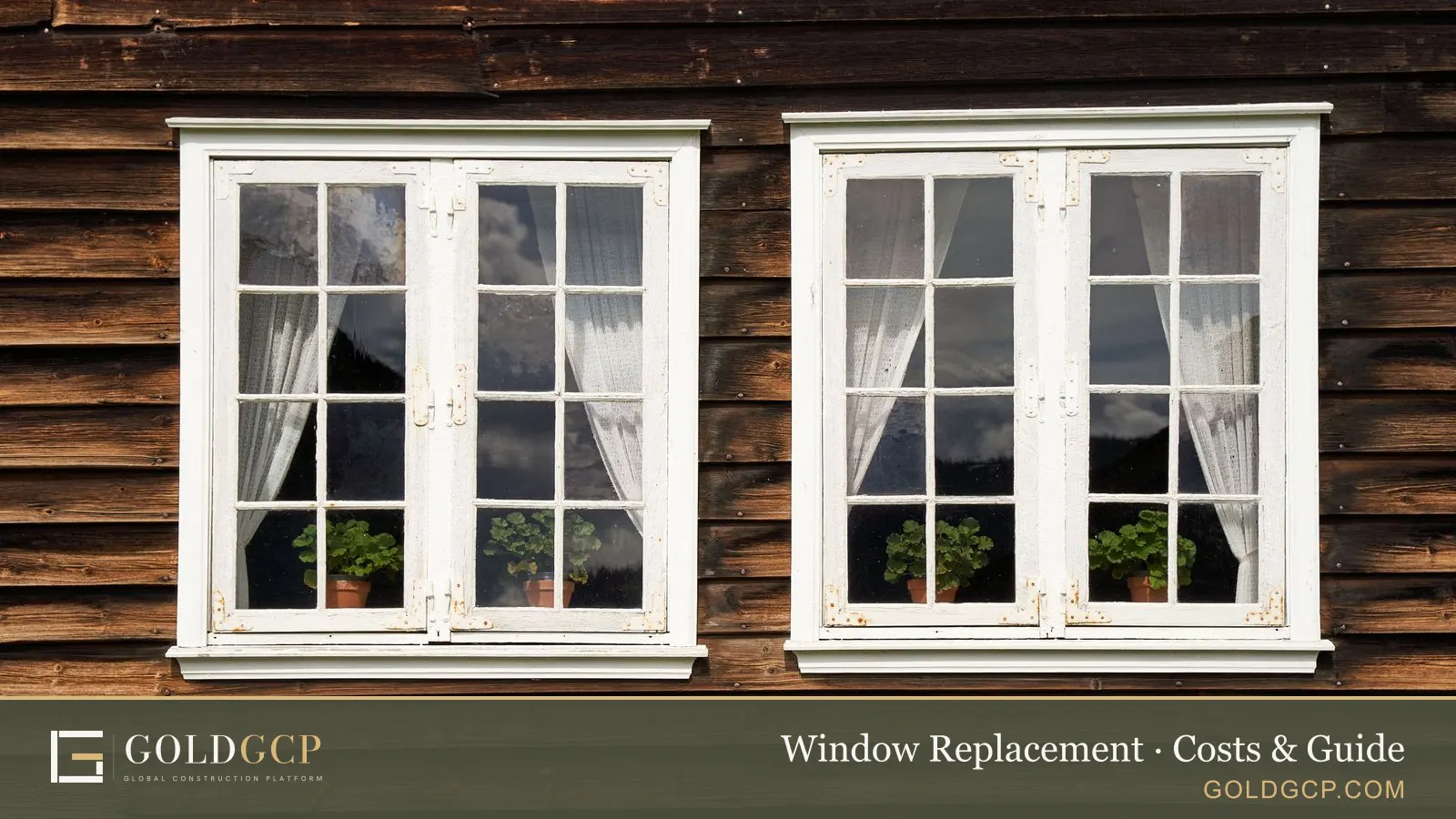
How much window replacement costs
Quick answer
Replacing a window in the US usually costs $450 to $1,500 per window installed, with an average around $900. For a whole house with 10 to 15 windows, that adds up to roughly $4,500 to $22,500. Frame material makes the biggest difference: vinyl windows cost the least, fiberglass and composite sit in the middle, and wood costs the most.
| Job | US average (typical range) | Typical |
|---|---|---|
| Vinyl window, installed | $350–$1,200 | $650 |
| Fiberglass window, installed | $600–$2,000 | $1,100 |
| Wood window, installed | $800–$3,000 | $1,500 |
| Aluminum window, installed | $175–$1,000 | $590 |
| Composite window, installed | $400–$2,300 | $1,350 |
| 10 vinyl windows, installed | $3,500–$12,000 | $6,500 |
| Bay window, vinyl | $1,100–$3,850 | $2,100 |
| New trim, per window | $40–$120 | $75 |
US national averages for 2026, labor and standard materials included, from published cost guides (sources at the end of this page). Local prices differ: see the city table below, or enter your ZIP code in the calculator.
Window replacement cost by number of windows
HomeGuide's national figures show how the total scales:
| Number of windows | Typical total cost |
|---|---|
| 1 | $450 to $1,500 |
| 5 | $2,250 to $7,500 |
| 10 | $4,500 to $15,000 |
| 15 | $6,750 to $22,500 |
| 20 | $9,000 to $30,000 |
| 25 | $11,250 to $37,500 |
Replacing several windows at once usually lowers the price per window, because the crew's setup, travel and disposal costs are spread across more openings.
Find a window installer near you
Enter your ZIP code to see local window prices and get matched with a vetted, licensed window installer for your area. GOLDGCP works in every US ZIP code, and our windows and doors showroom shows the product lines we install.
Window replacement costs in 50 US metros
This table prices replacing 10 vinyl windows in each of the 50 largest US metros, using each metro's construction cost factor.
| Metro | Cost factor | 10 vinyl windows, installed |
|---|---|---|
| New York | 1.31 | $4,600–$15,700 |
| San Francisco Bay Area | 1.28 | $4,500–$15,350 |
| San Jose | 1.28 | $4,500–$15,350 |
| Boston | 1.23 | $4,300–$14,750 |
| Chicago | 1.20 | $4,200–$14,400 |
| San Diego | 1.19 | $4,150–$14,300 |
| Sacramento | 1.17 | $4,100–$14,050 |
| Philadelphia | 1.15 | $4,000–$13,800 |
| Seattle | 1.15 | $4,000–$13,800 |
| Providence | 1.15 | $4,000–$13,800 |
| Los Angeles | 1.14 | $4,000–$13,700 |
| Detroit | 1.13 | $3,950–$13,550 |
| Riverside–San Bernardino | 1.11 | $3,900–$13,300 |
| Portland | 1.10 | $3,850–$13,200 |
| Las Vegas | 1.10 | $3,850–$13,200 |
| Milwaukee | 1.10 | $3,850–$13,200 |
| Hartford | 1.10 | $3,850–$13,200 |
| Minneapolis–St. Paul | 1.06 | $3,700–$12,700 |
| Pittsburgh | 1.06 | $3,700–$12,700 |
| Denver | 1.05 | $3,700–$12,600 |
| Washington DC | 1.04 | $3,650–$12,500 |
| St. Louis | 1.04 | $3,650–$12,500 |
| Cincinnati | 1.02 | $3,550–$12,250 |
| Salt Lake City | 0.99 | $3,450–$11,900 |
| Orlando | 0.98 | $3,450–$11,750 |
| Columbus | 0.98 | $3,450–$11,750 |
| Cleveland | 0.98 | $3,450–$11,750 |
| Baltimore | 0.96 | $3,350–$11,500 |
| Kansas City | 0.96 | $3,350–$11,500 |
| Jacksonville | 0.96 | $3,350–$11,500 |
| Virginia Beach–Norfolk | 0.94 | $3,300–$11,300 |
| Miami | 0.93 | $3,250–$11,150 |
| Tampa | 0.93 | $3,250–$11,150 |
| Indianapolis | 0.93 | $3,250–$11,150 |
| Phoenix | 0.90 | $3,150–$10,800 |
| Rochester | 0.90 | $3,150–$10,800 |
| Oklahoma City | 0.89 | $3,100–$10,700 |
| Buffalo | 0.89 | $3,100–$10,700 |
| Nashville | 0.87 | $3,050–$10,450 |
| Memphis | 0.87 | $3,050–$10,450 |
| Richmond | 0.87 | $3,050–$10,450 |
| Louisville | 0.86 | $3,000–$10,300 |
| Birmingham | 0.86 | $3,000–$10,300 |
| Atlanta | 0.85 | $3,000–$10,200 |
| Charlotte | 0.85 | $3,000–$10,200 |
| Raleigh–Durham | 0.85 | $3,000–$10,200 |
| Dallas–Fort Worth | 0.84 | $2,950–$10,100 |
| Houston | 0.82 | $2,850–$9,850 |
| Austin | 0.82 | $2,850–$9,850 |
| San Antonio | 0.80 | $2,800–$9,600 |
Cost factors from the U.S. Army Corps of Engineers Area Cost Factors (US average = 1.00). Outside these metros, the calculator uses your state's price level from the Bureau of Economic Analysis. Linked metros have a full local guide.
Window frame materials compared
| Frame | Installed cost per window | Good to know |
|---|---|---|
| Aluminum | $175 to $1,000 | Cheapest and slim, but conducts heat and cold |
| Vinyl | $200 to $1,500 | The most popular choice; low maintenance and energy efficient |
| Fiberglass | $400 to $2,000 | Strong and stable in heat and cold; can be painted |
| Composite | $400 to $2,300 | Wood-look with less upkeep |
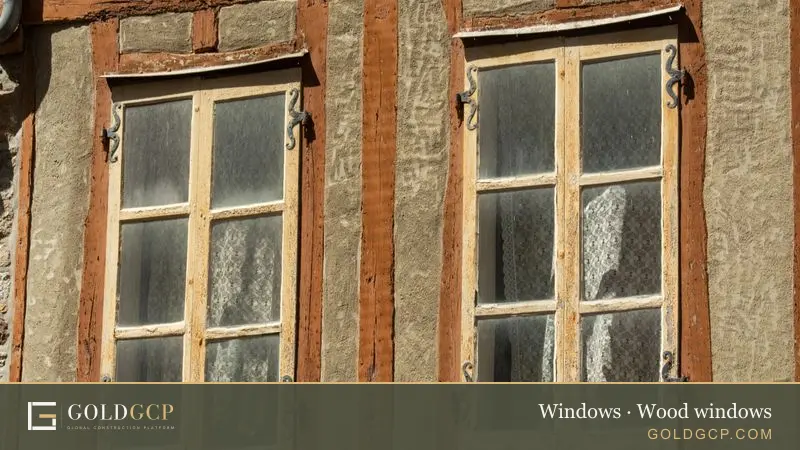
| Wood | $800 to $3,800 | Classic look, common in historic districts; needs regular maintenance |
Window style matters too. Double-hung and slider windows cost the least, casements a little more, and bay and bow windows several times as much because they project from the wall and need extra framing and roofing.
Insert or full-frame replacement?
There are two ways to replace a window:
- Insert (or pocket) replacement fits a new window into the existing frame. It is faster, cheaper and leaves the interior trim and exterior siding alone, but the glass area shrinks slightly and it only works when the old frame is square and free of rot.
- Full-frame replacement removes the window down to the rough opening. It costs more and disturbs trim and siding, but it lets the installer fix rot, insulate the gaps around the frame and flash the opening properly against water.
If the old frames are rotten or there has been water damage around the windows, full-frame replacement is usually worth the extra cost.
Energy savings and glass options
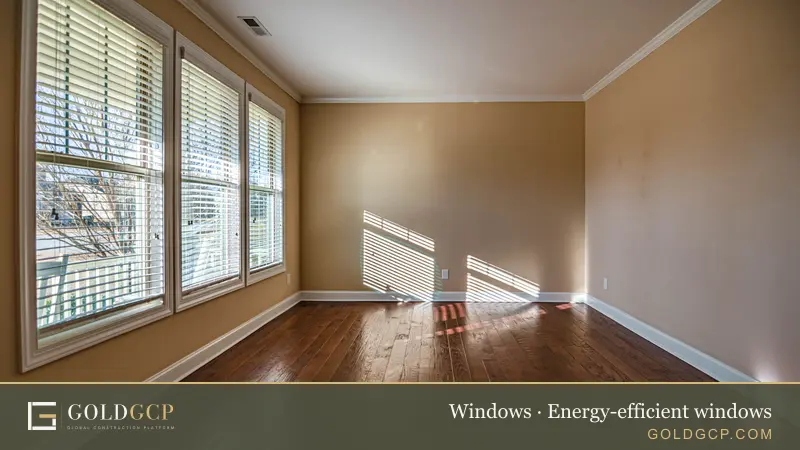
Replacing old, drafty windows with ENERGY STAR certified windows lowers household energy bills by an average of 12%, according to ENERGY STAR. The coatings on many certified windows, called low-E coatings, also cut the UV light that fades floors and furniture. Common glass upgrades:
- Double-pane glass is standard in replacement windows today.
- Triple-pane glass adds insulation and quiet, useful in cold climates and noisy streets.
- Low-E coatings reflect heat, and should be matched to your climate zone.
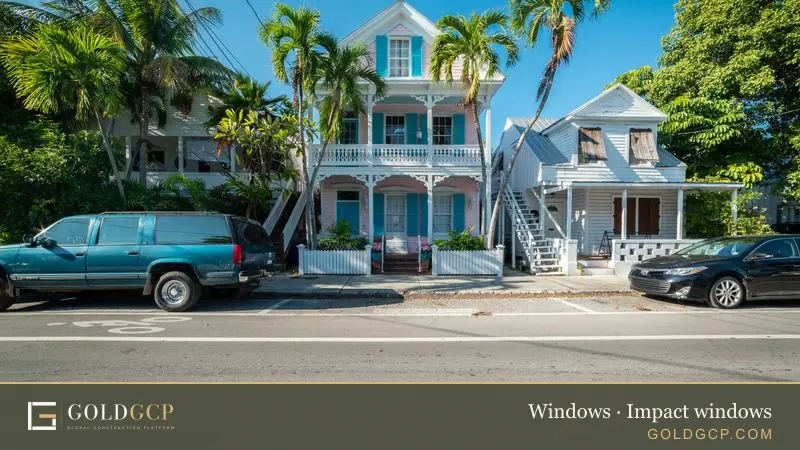
- Impact glass resists hurricane debris and break-ins, and is required in some coastal areas. It adds significantly to the price.
Do new windows add value?
Some, but they rarely pay for themselves at sale. The 2025 Cost vs. Value report found that vinyl window replacement costs $22,073 on average and recovers about 76% of that cost in added home value. The other returns come from lower energy bills, a quieter and more comfortable house, and fewer drafts and condensation problems.
Signs it's time to replace your windows
- Drafts you can feel with the window closed
- Fog or condensation between the panes, which means the seal has failed
- Windows that stick, won't stay open or won't lock
- Soft or rotting wood frames and sills
- Single-pane glass and high heating or cooling bills
- Water stains on the wall below the window
Permits
Many cities require a permit for window replacement, especially when the opening size changes, when the window is full-frame, or in buildings subject to energy or egress rules. Bedroom windows have minimum opening sizes so people can escape a fire, and replacement windows have to keep meeting them. A licensed installer should know the local requirements.
Window styles and what they cost
- Single-hung and double-hung windows are the most common and least expensive styles. On a double-hung window both sashes move, which makes cleaning easier.
- Sliders open sideways and suit wide, short openings.
- Casement windows crank outward and seal tightly when closed, so they insulate well, but cost a little more.
- Picture windows don't open; they are often the cheapest per square foot of glass.
- Bay and bow windows project from the wall and cost several times as much as a standard window, because they need extra framing, roofing and trim.
- Egress windows in basement bedrooms need a minimum opening size and a well outside, which adds excavation work.
What happens on installation day
A typical crew removes and replaces several windows per day. For each opening, they remove the old sash or the full frame, check the opening for rot, set and level the new window, insulate the gap around it, seal and flash the exterior, and finish the trim inside. Expect some dust near each window and plan to clear the area in front of windows the night before. Ask the crew to show you the sealed exterior before they leave, since water getting in around the frame is the most common installation defect.
How to tell if your windows can be repaired
Not every drafty window needs replacing. Worn weatherstripping, a broken balance spring in a double-hung window, cracked glazing putty or a failed lock can often be repaired for far less than a new window. Fogged double-pane glass can sometimes be fixed by replacing just the sealed glass unit. Replacement makes more sense when frames are rotten, warped or cracked, when several windows have failed seals, or when the windows are single-pane and energy bills are high.
Choosing a window for your climate
Windows carry ratings from the National Fenestration Rating Council that let you compare models. The U-factor measures how well a window keeps heat in; lower is better, which matters most in cold climates. The solar heat gain coefficient measures how much of the sun's heat passes through; lower is better in hot climates where air conditioning dominates. ENERGY STAR sets recommended values by climate zone, so a window certified for your region has been checked against these ratings.
How to hire a window installer
- Check the contractor's license and insurance.
- Ask whether the quote is for insert or full-frame replacement, and why.
- Get the window brand, model, frame material and glass package in writing.
- Ask what the warranty covers: the manufacturer's warranty on the window and the installer's warranty on the installation.
- Pay in stages, with the final payment after the windows are installed and inspected.
Every installer in the GOLDGCP network passes a license check, insurance verification, a background check and reference calls before getting a job, and you pay in milestones as the work gets done.
Frequently asked questions
How much does window replacement cost?
Usually $450 to $1,500 per window installed in the US, about $900 on average. Ten windows cost about $4,500 to $15,000, and 25 windows about $11,250 to $37,500.
How much does it cost to replace 25 windows?
About $11,250 to $37,500 at national prices, depending on the window size, style and frame material. Wood and custom windows cost more.
What is the cheapest type of replacement window?
Aluminum and basic vinyl windows. Vinyl is usually the better value because it insulates far better than aluminum and needs little maintenance.
Do new windows lower energy bills?
Replacing old, drafty windows with ENERGY STAR certified windows lowers household energy bills by an average of 12%, according to ENERGY STAR.
Are replacement windows worth it?
Vinyl window replacement recovers about 76% of its cost at resale, according to the 2025 Cost vs. Value report, and the rest comes back slowly through energy savings and comfort.
What is the difference between insert and full-frame replacement?
An insert window fits inside the existing frame, which is cheaper and faster. A full-frame replacement removes the old frame, which costs more but allows rot repair, insulation and proper flashing.
How long does window replacement take?
A crew can usually replace 8 to 12 windows in a day or two. Custom windows often take several weeks to arrive after ordering.
Should I replace all my windows at once?
Replacing all of them together usually lowers the price per window, because setup, travel and disposal are shared, and it gives the house a consistent look. If the budget is tight, start with the windows that leak, have failed seals or face the harshest weather, and plan the rest for a second phase with the same product line.
How we calculate these prices
GOLDGCP starts from national price ranges for each job, taken from published 2026 cost guides and checked against local price guides where they exist. To get a local price, we multiply the national range by the construction cost factor for the metro from the U.S. Army Corps of Engineers Area Cost Factors (US average = 1.00). For ZIP codes outside the 50 largest metros, the calculator uses the state's price level from the Bureau of Economic Analysis Regional Price Parities. Ranges include labor and standard materials but not unusual site conditions, so a written quote after an inspection is always the final price.
Sources
- How much does window replacement cost? · HomeGuide
- High performing windows or storm windows · ENERGY STAR
- 2025 Cost vs. Value Report · JLC / Zonda
- Area Cost Factors, PAX Newsletter 3.2.1 (2024) · U.S. Army Corps of Engineers
- Regional Price Parities by State · U.S. Bureau of Economic Analysis

About this guide
Written by the GOLDGCP editorial team. Prices come from national cost guides; rules and statistics come from the agencies and reports linked in the text. We update this page when prices or codes change.