The short answer
A vinyl replacement window costs about $400 to $1,400 installed in Seattle, and ten of them run $4,000 to $13,800. Washington's energy code sets a 0.30 maximum U-factor. In this wet, mild climate a leaky window shows up as condensation and drafts more than as heat loss.
What window replacement costs in Seattle
The table starts from national installed prices and adjusts them for Seattle. The U.S. Army Corps of Engineers puts construction costs in the Seattle area at 1.15 times the national average, based on the average of Tacoma (1.07) and Puget Sound bases (1.21). A window that costs $1,000 to install in an average US city costs about $1,150 here.
| Job | Seattle (typical range) | US average |
|---|---|---|
| Vinyl window, installed | $400–$1,400 | $350–$1,200 |
| Fiberglass window, installed | $690–$2,300 | $600–$2,000 |
| Wood window, installed | $920–$3,450 | $800–$3,000 |
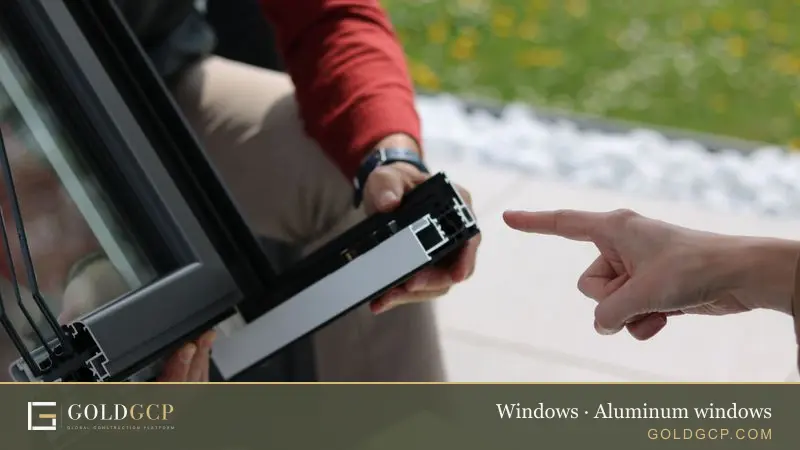
| Aluminum window, installed | $200–$1,150 | $175–$1,000 |
| Composite window, installed | $460–$2,650 | $400–$2,300 |
| 10 vinyl windows, installed | $4,000–$13,800 | $3,500–$12,000 |
| Bay window, vinyl | $1,300–$4,400 | $1,100–$3,850 |
| New trim, per window | $46–$140 | $40–$120 |
Estimates for 2026, including labor and standard parts. Seattle prices use a construction cost factor of 1.15 (US average = 1.00) from the U.S. Army Corps of Engineers Area Cost Factors, based on drawn from Tacoma (1.07) and Puget Sound bases (1.21). Your quote depends on access, materials and the condition of the home.
These prices assume an insert (pocket) replacement in a standard opening. A full-frame replacement, where the installer takes the old frame out down to the studs, costs more because the wall finish around the opening has to be opened and patched. Ask whether the quote includes that patch and the paint.
What raises a Seattle window quote
- Full-frame work on a house with wood shingle or stucco siding. Opening the wall around each window adds carpentry and finish work.
- Second-story access. Ladders and staging on a sloped lot take longer to set up.
- Size and shape. Large picture windows, arched tops and bay windows cost much more than a standard double-hung. A vinyl bay window runs $1,300 to $4,400 here.
- Lead-safe work. In a house built before 1978, the crew has to follow EPA lead-safe rules, which adds setup and cleanup time.
- New trim. New trim runs $46 to $140 per window in Seattle, and older houses often need it once the old casing comes off.
Price your own project with the cost estimator below, or open the full window cost estimator. Both use the rate for your ZIP code. For national prices and how window styles compare, see our window replacement cost guide.
The same estimator has its own page, easy to share or bookmark: Window replacement cost estimator.
Which window frame suits a Puget Sound house?
Seattle's older neighborhoods hold Craftsman bungalows with single-pane wood double-hungs, and mid-century ramblers often still have aluminum sliders. Newer Bellevue and Redmond subdivisions usually have builder-grade vinyl that is now fogging or failing to latch. Match the frame to the house and the wall it sits in.
| Frame | Seattle installed price per window | Where it fits here |
|---|---|---|
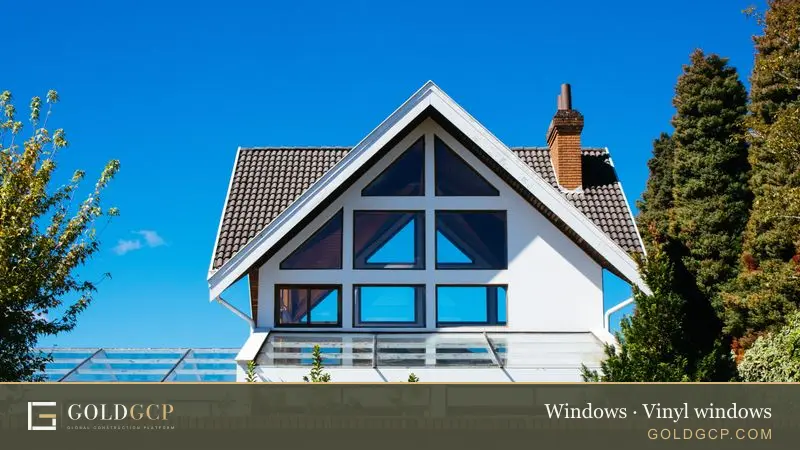
| Vinyl | $400 to $1,400 | Most ramblers and tract homes; the usual value pick |
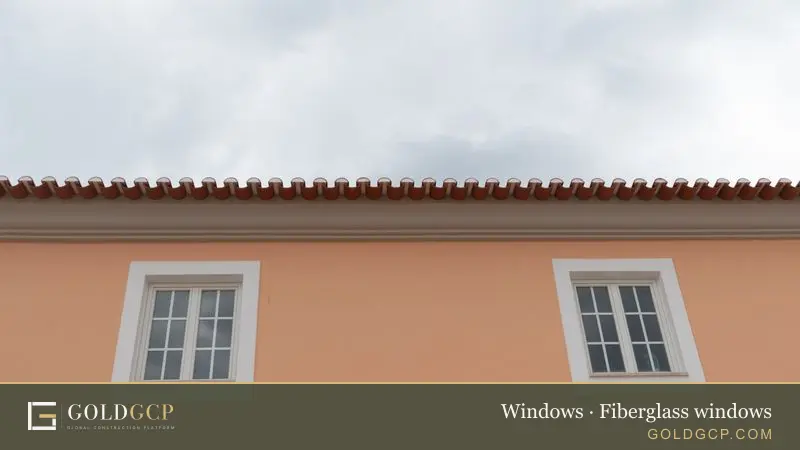
| Fiberglass | $690 to $2,300 | West-facing walls and windy sites; holds its shape and color |
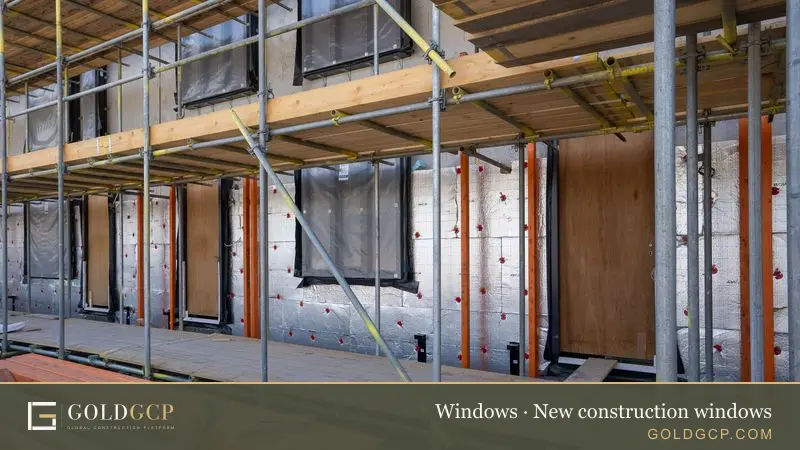
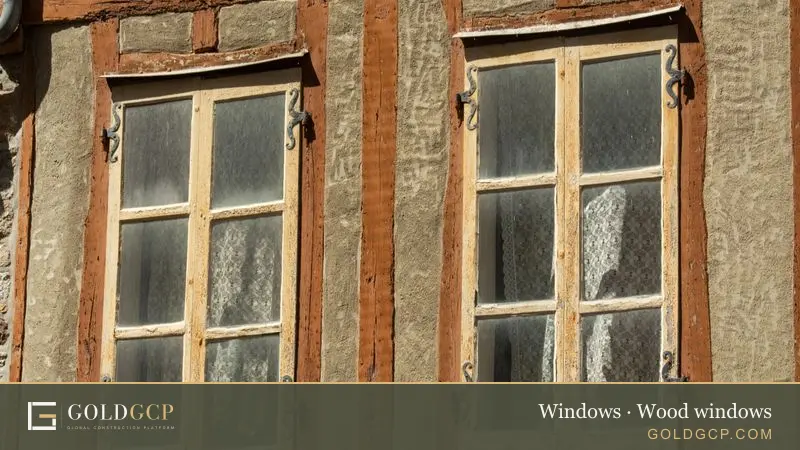
| Wood or clad wood | $920 to $3,450 | Craftsman bungalows, historic districts, painted interiors |
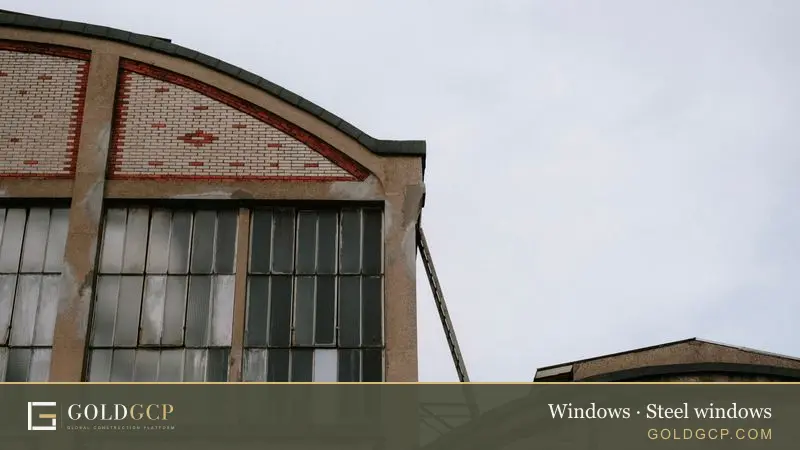
| Aluminum | $200 to $1,150 | Slim modern frames; choose a thermally broken model |
| Composite | $460 to $2,650 | Wood look with less upkeep in a damp climate |
Vinyl costs the least of the insulated frames. Our vinyl windows guide covers lifespan and color choices. On a wall that takes the prevailing southwest wind off Puget Sound, compare it with fiberglass windows, which cost more but hold their shape and color through moisture and temperature swings. Owners of older Craftsman bungalows often want wood windows to keep the original look. If you like the thin lines of mid-century aluminum, read our aluminum windows guide about thermal breaks before you buy.
Glass ratings for the Seattle climate
Seattle sits in a marine climate. Winters are mild and wet, summers are short, and the sky is often gray. In most homes here the window holds heat in and keeps interior glass above the dew point, so condensation does not run down the pane and rot the sill. Two numbers on the NFRC label show how well it does that.
- U-factor measures heat loss. Lower is better, and in this climate it is the number to watch.
- Solar heat gain coefficient (SHGC) measures how much of the sun's heat comes through the glass. In a heating climate you can let more sun in, so a higher SHGC is usually fine.
What Washington's energy code requires
Washington's residential energy code is the maximum and minimum energy code for residential construction in every town, city and county in the state (Washington State Building Code Council). The code retains a 0.30 U-factor for fenestration in its insulation and fenestration requirements table, and the equivalent U-factors table keeps the same 0.30 limit.
| Requirement | What it means for your order |
|---|---|
| U-factor 0.30 or lower | The NFRC label on each unit must show it |
| NFRC 100 rating | U-factors must be determined per NFRC 100 and certified by the manufacturer (2021 WSEC-R) |
| NFRC 200 rating | SHGC and visible transmittance must be determined per NFRC 200 |
| No label, no credit | Products without a labeled U-factor get a default from the code tables, and a single-pane nonmetal window defaults to 0.95 |
A single-pane wood window with no label is treated as U-0.95, far above the 0.30 limit. Pierce County states the same floor plainly in its window replacement bulletin: all new windows must meet a minimum U-value of 0.30 (Pierce County). Ask the installer for the NFRC label for the exact unit. Our energy-efficient windows guide explains the labels in more detail.
Condensation and the low U-value
A cold pane of glass in a warm, damp room collects water. Seattle's outdoor humidity and the moisture a family produces indoors (cooking, showers, laundry) make that worse. A window rated at U-0.30 keeps its interior surface warmer than a single pane does, which cuts condensation and the mold that follows it on wood sills. If a bedroom or bathroom window streams water every winter, replace it rather than wiping it every morning.
Do you need a permit to replace windows in Seattle?
It depends on the city and on whether the opening changes. A same-size swap is exempt in some jurisdictions and needs a permit in others, so check the address before you order.
| City or county | Same-size replacement | Enlarging or moving a window |
|---|---|---|
| Bellevue | No permit for replacements of the same size in the same location (Bellevue) | Permit with plan review |
| Redmond | No permit if the size and opening are not altered and the operable opening size is not decreased (Redmond) | Building permit |
| Pierce County | Window replacement permit, applied online, with a floor plan showing each window (Pierce County) | Remodel building permit |
| Everett | Permit required for most work except as exempted by code (Everett) | Permit with plan review |
| Renton | Permit required to alter, repair or replace a building or its systems (Renton) | Building permit |
| Unincorporated King County | Check with King County Permitting; roofing and siding replacement is exempt, windows are not on that list (King County) | Building permit |
A few details before you apply:
- Pierce County requires the openings to be flashed and sealed, and the issued permit must be printed and kept onsite for the inspector. Schedule the inspection titled "Final" when a legal adult will be home.
- Redmond does not accept paper applications or plans; forms go in on a USB drive, and waste reporting must be finished before final inspection.
- Bellevue runs permits through MyBuildingPermit, and its Permit Center is open Monday to Thursday, 10 a.m. to 3 p.m.
- Everett's permit counter is open Monday, Wednesday and Thursday, 8:30 a.m. to 12 p.m. and 1 p.m. to 3 p.m., and plan reviewers see people by appointment only.
- Renton's permit center answers questions at 425-430-7215 and publishes a fee estimator on its online portal.
Starting work before the permit is issued can trigger an extra fee on top of the regular permit fees, and a building cannot be occupied until it passes final inspection (WSEC-R). If your project needs drawings, our permit drawings guide covers what a set includes.
Bedroom egress, safety glass and security bars
Egress windows in bedrooms
Every sleeping room needs a window or door a person can climb out of in a fire. Older bedroom windows often fall short of the clear opening the code wants. When you replace one, ask the installer to measure the clear opening of the new unit as well as the rough opening. A casement usually opens wider than a slider of the same size, which helps in a small bedroom.
Where safety glass is required
Tempered or safety glass is required for glazing in or within 24 inches of a swinging door, with exceptions for decorative glazing, a wall or barrier between the door and the glass, closets 3 feet deep or less, and glazing next to the fixed panel of a patio slider (Pierce County). Large, low windows and windows near tubs and showers have their own rules. Ask your installer to mark these windows on the order.
Security bars
Bars, grilles and screens over a bedroom escape window have to release from inside without a key or a tool. If old fixed bars sit in front of a bedroom window you are replacing, price quick-release hardware or new bars in the same job.
Lead-safe work and asbestos in older Seattle homes
Much of Seattle, Tacoma and Everett went up before 1978, when the federal government banned lead-based paint for homes. About three-quarters of U.S. homes built before 1978 still contain some lead-based paint (EPA). Window replacement disturbs painted trim and sashes, so the EPA's Renovation, Repair and Painting rule applies to any paid work in a pre-1978 home. The firm must be certified, a certified renovator must be assigned to each job, and the crew must use lead-safe practices.
Washington runs its own RRP certification through the Department of Commerce. A firm applying must have an employee or owner with a valid Individual RRP certificate that is not within six months of expiration, and that person must supervise or perform the work. The firm application fee is $25, and applications go to the Department of Commerce Lead-Based Paint Programs in Olympia (Washington Department of Commerce). Ask for the firm's Commerce certificate as well as the individual's card.
Asbestos is the other old-house risk. Before any renovation project in the Puget Sound Clean Air Agency's area, you must check for asbestos. Residents who live in and own the single-family house may do their own survey; in all other situations an AHERA-certified building inspector must do it. Friable asbestos must be removed by a contractor certified by the Washington State Department of Labor and Industries, and an Asbestos/Demolition Notification and filing fee go to the agency before the material comes out (Puget Sound Clean Air Agency). Old glazing compound and caulk can contain asbestos, so ask the installer how they handle it.
When to schedule the work
Seattle's rain comes mostly from fall through spring, and openings are exposed for a few hours during each change-out. Late spring through early fall is the easiest time to schedule. Custom units can take several weeks to arrive after ordering, so order in late winter if you want the new windows in before the wet season. If a storm has already damaged a window, our Seattle emergency repair guide covers the first steps.
How to check a window installer before you hire
Washington registers contractors under Chapter 18.27 RCW. It is a criminal penalty to hire or act as an unregistered contractor, and a registered contractor must carry a bond and insurance. A contractor must be registered before they can sue a homeowner over a project, and building permit offices must verify registration before issuing permits (Chapter 18.27 RCW). Washington has no separate window-installer license class. The registration is the credential, plus any specialty certification the firm holds.
- Look up the registration on the Washington State L&I website. Check that it is active and that the business name matches the bid.
- Ask for the certificate of insurance and confirm the bond is current.
- For a pre-1978 house, ask for the firm's Washington Department of Commerce RRP certificate.
- Get the window line, frame material, U-factor and SHGC, and insert or full-frame method in writing.
- Ask who pulls the permit and who handles the inspection.
- Keep the deposit small and tie the rest to milestones.
Every installer in the GOLDGCP network passes six-step vetting: license verification, an insurance check, a business and public-records check, a portfolio review, client reference calls, and onboarding with a quality score. You pay your pro directly, stage by stage. Read more about how milestone payments work.
Areas we cover
GOLDGCP window installers work across the Puget Sound region:
- Seattle
- Bellevue
- Redmond
- Kirkland
- Tacoma
- Everett
- Renton
Enter your ZIP code to see window prices for your street and get matched with a local installer.
How GOLDGCP works
- Tell us about the windows: how many, the frame you have now, and any that fog, stick, leak or won't lock. Use the form, call or send a WhatsApp message.
- See prices for your ZIP code, then get matched with up to 3 vetted, licensed installers.
- Your installer measures each opening, confirms the U-factor and SHGC, and pulls the permit where the city requires one.
- You pay your pro directly by milestone, for example after the windows arrive and after the final inspection, and follow the job in the client portal.
For new doors at the same time, see our Seattle door installation guide. If the window job comes with a roof or siding repair, our Seattle roofing guide covers what those trades involve. Our windows and doors showroom shows the product lines we work with.
Frequently asked questions
How much does window replacement cost in Seattle?
A vinyl replacement window costs about $400 to $1,400 installed in Seattle, fiberglass $690 to $2,300 and wood $920 to $3,450. Ten vinyl windows run about $4,000 to $13,800. Full-frame replacement costs more than an insert, and bay or custom windows cost more again.
Do I need a permit to replace windows in Seattle?
It depends on the city. Bellevue and Redmond exempt same-size replacements that do not change the opening. Pierce County requires a window replacement permit with a floor plan, and Everett and Renton require a permit for most work. Check your address before you order.
What U-factor do replacement windows need in Seattle?
Washington's energy code sets a 0.30 maximum U-factor for fenestration, and Pierce County states the same floor. The NFRC label on each unit must show it. A single-pane window with no label defaults to U-0.95, far above the limit.
Do I need lead-safe certification for a pre-1978 Seattle house?
Yes. The EPA's Renovation, Repair and Painting rule covers paid work that disturbs paint in pre-1978 homes, and Washington runs its own firm certification through the Department of Commerce. Ask for the firm's Commerce certificate before work starts.
Can I replace windows in a Seattle historic district?
Check with your city's planning office first. Historic districts and landmarks often have their own design review for exterior changes, including windows. Get sign-off before you order, and ask the installer to hold the order until you have it.
Do bedroom windows have to meet egress rules in Seattle?
A bedroom needs a window or door a person can climb out of in a fire. When you replace one, ask the installer to measure the clear opening of the new unit as well as the rough opening. A casement usually opens wider than a slider of the same size.
When should I replace windows in Seattle?
Late spring through early fall. Seattle's rain comes mostly from fall through spring, and openings are exposed for a few hours during each change-out. Custom units can take several weeks to arrive, so order in late winter to beat the wet season.
How we calculate these prices
GOLDGCP starts from national price ranges for each job, taken from published 2026 cost guides and checked against local price guides where they exist. To get a local price, we multiply the national range by the construction cost factor for the metro from the U.S. Army Corps of Engineers Area Cost Factors (US average = 1.00). Where that table has no entry for a metro, we use the nearest listed location or the state value. For ZIP codes outside the 50 largest metros, the cost estimator uses the state's price level from the Bureau of Economic Analysis Regional Price Parities. Ranges include labor and standard materials but not unusual site conditions, so a written quote after an inspection is always the final price.
Sources

About this guide
Written by the GOLDGCP editorial team. Prices come from national cost guides adjusted with official construction cost factors for Seattle; rules and statistics come from the agencies and reports linked in the text. We update this page when prices or codes change.