
The short answer
Most water heater repairs in Seattle cost $175 to $860. A 50-gallon tank runs $805 to $3,550 installed, a gas tankless unit $2,400 to $6,450 and a heat pump model $2,300 to $5,300. The permit is the local factor that matters most. Plan on a permit for any replacement, and each city runs its own office.
What water heater work costs in Seattle
The table shows installed prices for a single-family home. They are adjusted with the Seattle construction cost factor of 1.15 from the U.S. Army Corps of Engineers, based on the average of Tacoma and the Puget Sound bases. Seattle runs about 15% above the national average.
| Job | Seattle (typical range) | US average |
|---|---|---|
| 40-gallon tank, installed | $690–$3,450 | $600–$3,000 |
| 50-gallon tank, installed | $805–$3,550 | $700–$3,100 |
| 80-gallon tank, installed | $1,400–$4,600 | $1,200–$4,000 |
| Tankless, electric, installed | $1,600–$3,450 | $1,400–$3,000 |
| Tankless, gas, installed | $2,400–$6,450 | $2,100–$5,600 |
| Heat pump (hybrid), installed | $2,300–$5,300 | $2,000–$4,600 |
| Water heater repair | $175–$860 | $150–$750 |
| Old tank removal | $86–$575 | $75–$500 |
| Gas vent replacement | $115–$690 | $100–$600 |
| Gas line upgrade | $400–$2,300 | $350–$2,000 |
| Expansion tank | $115–$460 | $100–$400 |
| Permit | $57–$230 | $50–$200 |
Estimates for 2026, including labor and standard parts. Seattle prices use a construction cost factor of 1.15 (US average = 1.00) from the U.S. Army Corps of Engineers Area Cost Factors, based on drawn from Tacoma (1.07) and Puget Sound bases (1.21). Your quote depends on access, materials and the condition of the home.
Repairs are priced by the part. These are the common jobs on a Puget Sound tank:
| Repair | Typical cost in Seattle | What it fixes |
|---|---|---|
| Thermocouple or igniter | $115 to $400 | Gas pilot that will not stay lit |
| Gas control valve | $115 to $400 | Pilot, burner control and thermostat on gas units |
| Heating element | $115 to $400 | Lukewarm water or hot water that runs out fast on electric tanks |
| Anode rod | $115 to $400 | Corrosion inside the tank |
| Pressure relief valve | $57 to $400 | A dripping or leaking relief valve |
| Expansion tank | $115 to $460 | Thermal expansion on a closed system |
| Tankless flush and descale | $85 to $400 | Scale in the heat exchanger |
| Old tank removal | $86 to $575 | Hauling the old unit away |
A gas unit that needs a new vent or a bigger gas line adds $115 to $690 for venting and $400 to $2,300 for the line. The permit is $57 to $230 and is passed through at cost, separate from tax and the equipment and labor range.
Use the cost estimator for a number based on your ZIP code, tank size and fuel.
Repair or replace?
Replace the heater if the tank body leaks, if it is past about 10 years old, or if the repair costs more than half a new unit. A tank that leaks from the shell cannot be patched. Thermocouples, elements, valves and anode rods are worth replacing on a younger tank.
Two local habits shorten tank life. Sediment from hard water cooks onto the bottom of the tank and corrodes the lower element on electric units. A worn anode rod lets the steel tank rust from the inside. Flush the tank once a year and have the anode rod checked at the same time.
If your tank is near the end of its life and you are thinking about a heat pump or tankless unit, get quotes before it fails. Both can need electrical, gas or venting changes that take longer to plan than a straight swap. A failed tank on a cold morning narrows your choice to whatever the installer has on the truck.
Tank, tankless or heat pump in a Seattle home
| Gas tank | Gas tankless | Heat pump | |
|---|---|---|---|
| Installed cost in Seattle | $805 to $3,550 (50 gal) | $2,400 to $6,450 | $2,300 to $5,300 |
| Extra work often needed | Two seismic straps, expansion tank, drip pan | Larger gas line, new venting, annual descale | Dedicated electrical circuit, condensate drain, air space |
| 2026 rebate | None listed for tanks | PSE up to $400 on qualifying models | PSE $750, up to $850 income-qualified |
Gas tank
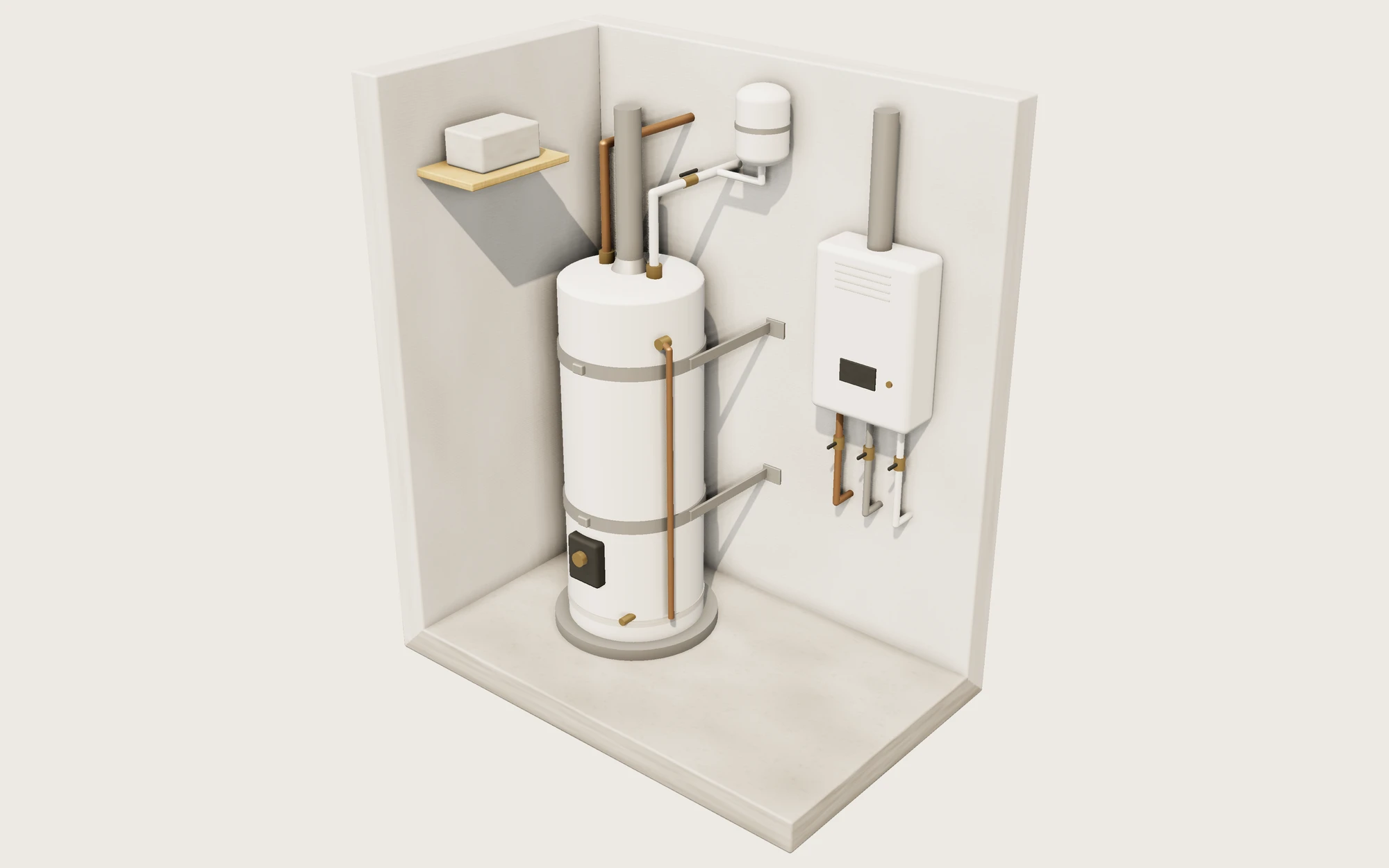
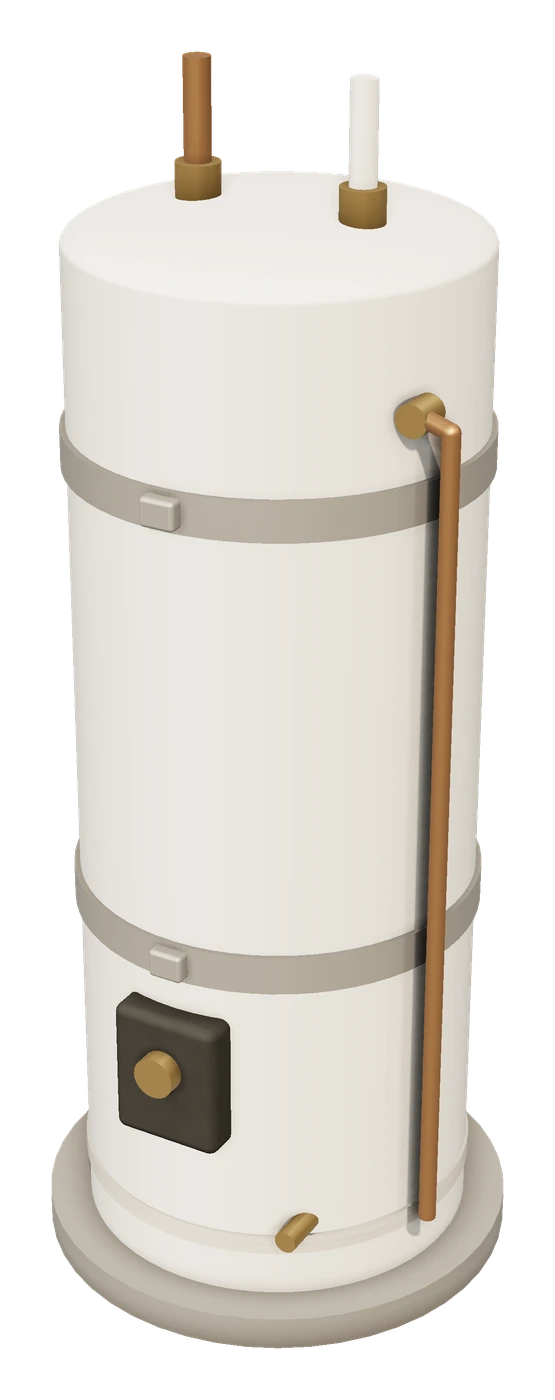
A like-for-like gas tank is the lowest-cost option, and it is still allowed for a single-family home. The replacement has to meet current code: two seismic straps, an expansion tank on a closed system, a relief valve line that runs outside or to an approved drain, and a drip pan where a leak would damage the home. In a garage, the ignition source sits at least 18 inches above the floor unless the unit is flammable vapor ignition resistant (FVIR). Our Seattle plumbing guide covers the strap rule and same-for-same permit basics in more detail.
Gas tankless
A tankless heater fires only when a tap is open, so no tank of water sits hot all day. Most of the cost is in the install. A tankless burner may need a larger gas line and new venting, and the unit needs a flush and descale at least once a year. Puget Sound Energy pays up to $400 on qualifying high-efficiency natural gas tankless models with a UEF of at least 0.95 and an ENERGY STAR rating. Income-qualified Tacoma customers may get up to $660 through PSE's Efficiency Boost program.
Heat pump
A heat pump water heater pulls heat from the air around it, so it needs room and airflow. It also needs a dedicated electrical circuit, a drain for condensate and sometimes more capacity at the electrical panel. Seattle's own rules for larger buildings go further: SDCI requires heat pump water heating for most new buildings and for new central water heating equipment in existing hotel and multifamily buildings, and systems must be sized to carry the full load with the compressor at 40°F and at least half at 24°F. For a single-family replacement, the choice is yours, and the rebate helps.
If your panel needs work first, read our Seattle electrician guide for panel upgrade costs.
Rebates for water heaters in 2026
Status of each program:
| Program | Who qualifies | Amount | Status |
|---|---|---|---|
| Puget Sound Energy heat pump rebate | PSE electric customers buying a qualifying Tier 3 or higher ENERGY STAR heat pump water heater | $750 | Open |
| PSE Efficiency Boost | Income-qualified PSE households | Up to $850 on a heat pump unit | Open |
| PSE gas tankless rebate | PSE gas customers buying a qualifying tankless model | Up to $400 | Open |
| PSE Efficiency Boost, gas tankless | Income-qualified Tacoma customers | Up to $660 | Open |
| Federal 25C tax credit | Homeowners | None for units installed in 2026 | Ended for 2026 installs |
The federal credit is the one to watch. A qualifying heat pump water heater installed in 2025 could still claim up to 30%, capped at $600, on a 2025 return. The credit was not extended, so it does not apply to installations in 2026. Budget for the full price. Any rebate arrives later as a refund.
Ask the installer to confirm the model number, the efficiency tier and the ENERGY STAR listing before you buy. A unit that misses the tier gets no rebate.
Do you need a permit?
Yes. A water heater replacement in Washington requires a permit, and each city in the metro runs its own office. A gas unit needs a plumbing permit plus a gas piping or mechanical permit. Inside city limits the city building department issues it; an unincorporated address uses the county office.
| Where you live | Who issues the permit | Notes |
|---|---|---|
| Seattle | Seattle Department of Construction and Inspections | Fees must be paid before the permit is issued |
| Bellevue | City of Bellevue | Electric replacement is a plumbing permit, gas is a mechanical permit; emergency swaps can be permitted the first city work day after |
| Redmond | City of Redmond | Apply through the REPS online portal; typical review is two weeks |
| Kirkland, Renton, Everett | The city building department | Each city has its own counter and fee schedule |
| Tacoma | City of Tacoma Planning & Development Services | Permit required for every replacement |
| Unincorporated King County | King County Permitting | Includes Fairwood; apply through MyBuildingPermit.com |
| Unincorporated Pierce County | Pierce County Planning and Public Works | Includes South Hill and Lake Tapps; plumbing and mechanical permits issue after payment |
The inspector checks the items Washington code requires:
- Seismic bracing: two 20-gauge sheet metal straps, one on the upper third of the tank and one on the lower third. Approved kits are sold at many retail outlets. Perforated plumber's tape is not allowed.
- Expansion tank: required on a closed system. A pressure-reducing valve or backflow preventer creates one, which covers most homes built after the mid 1990s in South King County and East Pierce County. A pressure-reducing valve is required when incoming pressure exceeds 80 PSI.
- Relief valve line: must run by gravity to the outside or to an approved drain.
- Drip pan: required when the heater sits where a leak would damage the home, including an attic, closet or upper floor.
- Access: at least 24 inches of continuous width to reach the unit.
- Garage: a fixed barrier such as a metal post between the heater and where the car parks, and the ignition source at least 18 inches above the floor.
- Gas units: not allowed in a bedroom or bathroom unless the unit is direct vent. Insufficient combustion air or venting can cause carbon monoxide buildup. Gas piping must not block removal of the tank.
Skipping the permit risks fines and can complicate home insurance claims, warranty coverage and the resale of the home. In Seattle, it is unlawful to proceed with any installation when the required permit fee has not been paid, and unpaid fees accrue interest at 12% per year after 30 days.
How to check a water heater installer before you hire
Water heater work in Washington is plumbing work, so the installer needs a plumber certification and the company needs contractor registration under Chapter 18.27 RCW. Hiring or acting as an unregistered contractor carries a criminal penalty.
- Look up the company's registration on the Washington State Department of Labor & Industries contractor lookup. Confirm it is active and in the company's name.
- Ask for the plumber's certification number and check it the same way.
- Confirm the company carries a bond and insurance. Registration is suspended if coverage lapses, and a homeowner can take action against the bond.
- Ask who pulls the permit and books the inspection. It should be the installer.
- Get the price in writing with the straps, expansion tank, drip pan, haul-away and permit listed separately.
A registered contractor must give you a disclosure statement, and that statement is a prerequisite to filing a lien claim. Washington also runs a homeowner recovery program for people harmed by contractors.
Every pro in the GOLDGCP network passes six-step vetting before getting a job: state license verification, an insurance check, a business and public-records check, a portfolio review, client reference calls, and onboarding with a quality score.
Water quality and how long your heater lasts
Tanks here still fail. The bigger local risks are sediment from older galvanized lines, a worn anode rod and high pressure. Homes with incoming pressure at or above 80 PSI need a pressure-reducing valve. Without one, the tank and its fittings take the strain.
These habits help a heater last:
- Flush the tank once a year.
- Check the anode rod and replace it when it is mostly gone.
- Descale a tankless unit at least once a year.
- Fix a dripping relief valve instead of ignoring it.
Areas we cover
GOLDGCP water heater installers work across the Seattle metro:
- Seattle
- Bellevue
- Redmond
- Kirkland
- Tacoma
- Everett
- Renton
Enter your ZIP code to see prices and find a vetted pro near you.
How GOLDGCP works
- Tell us what is happening through the form, a call or WhatsApp. Include the tank's age, size and fuel if you know them.
- We match you with up to 3 vetted, licensed pros and show prices for your ZIP code before anyone visits.
- The pro pulls the permit, does the work and books the inspection.
- You pay your pro directly, stage by stage, each milestone after you approve that stage.
No hot water and a leak on the floor? Call the 24/7 emergency line.
Frequently asked questions
How much does water heater repair cost in Seattle?
Most repairs run $175 to $860. A thermocouple or igniter costs about $115 to $400, a gas control valve $115 to $400 and an anode rod $115 to $400. A tank that leaks from the body needs replacing.
Should I repair or replace my water heater in Seattle?
Replace it if it is more than about 10 years old, if the tank itself leaks, or if the repair costs more than half the price of a new heater. Younger tanks with a bad thermocouple, element, valve or anode rod are usually worth fixing.
Is there a rebate for heat pump water heaters in Seattle?
Yes, for Puget Sound Energy customers. PSE pays $750 on a qualifying Tier 3 or higher ENERGY STAR heat pump water heater, and up to $850 for income-qualified households through Efficiency Boost. The federal tax credit ended for units installed in 2026.
Do I need a permit to replace a water heater in Seattle?
Yes. Plan on a permit for any replacement, and each city issues its own. Seattle permits come from the Seattle Department of Construction and Inspections, Bellevue and Redmond from their city offices, and unincorporated King and Pierce counties from the county. Fees run $57 to $230.
What does a Seattle water heater inspection check?
Two seismic straps on the upper and lower thirds of the tank, an expansion tank on a closed system, a relief valve line that runs outside or to a drain, a drip pan where a leak would cause damage, and at least 24 inches of access. A garage install needs a barrier and the burner raised.
Are tankless water heaters worth it in Seattle?
They cost more up front, $2,400 to $6,450 installed here, because the install may need a bigger gas line and new venting. They need a yearly descale. Puget Sound Energy pays up to $400 on qualifying high-efficiency gas models.
How do I check a water heater installer in Washington?
Look up the company's contractor registration on the Washington State Department of Labor & Industries website and confirm it is active and in the company's name. Ask for the plumber's certification number, confirm the bond and insurance, and ask who pulls the permit.
How we calculate these prices
GOLDGCP starts from national price ranges for each job, taken from published 2026 cost guides and checked against local price guides where they exist. To get a local price, we multiply the national range by the construction cost factor for the metro from the U.S. Army Corps of Engineers Area Cost Factors (US average = 1.00). Where that table has no entry for a metro, we use the nearest listed location or the state value. For ZIP codes outside the 50 largest metros, the cost estimator uses the state's price level from the Bureau of Economic Analysis Regional Price Parities. Ranges include labor and standard materials but not unusual site conditions, so a written quote after an inspection is always the final price.
Sources

About this guide
Written by the GOLDGCP editorial team. Prices come from national cost guides adjusted with official construction cost factors for Seattle; rules and statistics come from the agencies and reports linked in the text. We update this page when prices or codes change.