
The short answer
Water heater repair in Philadelphia runs $175 to $860. A 50-gallon gas tank installed costs $805 to $3,550, a gas tankless unit $2,400 to $6,450 and a heat pump $2,300 to $5,300. Every replacement needs a permit, and the office that issues it depends on where the house is.
What water heater work costs in Philadelphia
Prices below are installed, for a single-family home, adjusted with the Philadelphia construction cost factor of 1.15 from the U.S. Army Corps of Engineers. The metro runs about 15% above the national average.
| Job | Philadelphia (typical range) | US average |
|---|---|---|
| 40-gallon tank, installed | $690–$3,450 | $600–$3,000 |
| 50-gallon tank, installed | $805–$3,550 | $700–$3,100 |
| 80-gallon tank, installed | $1,400–$4,600 | $1,200–$4,000 |
| Tankless, electric, installed | $1,600–$3,450 | $1,400–$3,000 |
| Tankless, gas, installed | $2,400–$6,450 | $2,100–$5,600 |
| Heat pump (hybrid), installed | $2,300–$5,300 | $2,000–$4,600 |
| Water heater repair | $175–$860 | $150–$750 |
| Old tank removal | $86–$575 | $75–$500 |
| Gas vent replacement | $115–$690 | $100–$600 |
| Gas line upgrade | $400–$2,300 | $350–$2,000 |
| Expansion tank | $115–$460 | $100–$400 |
| Permit | $57–$230 | $50–$200 |
Estimates for 2026, including labor and standard parts. Philadelphia prices use the metro's construction cost factor of 1.15 (US average = 1.00) from the U.S. Army Corps of Engineers Area Cost Factors. Your quote depends on access, materials and the condition of the home.
Repairs are priced by the part. Common jobs:
| Repair | Typical cost in Philadelphia | What it fixes |
|---|---|---|
| Thermocouple or igniter | $115 to $400 | A gas pilot or burner that will not stay lit |
| Gas control valve or thermostat | $115 to $400 | Pilot and burner control on gas units |
| Heating element | $115 to $400 | Lukewarm water or hot water that runs out fast on an electric tank |
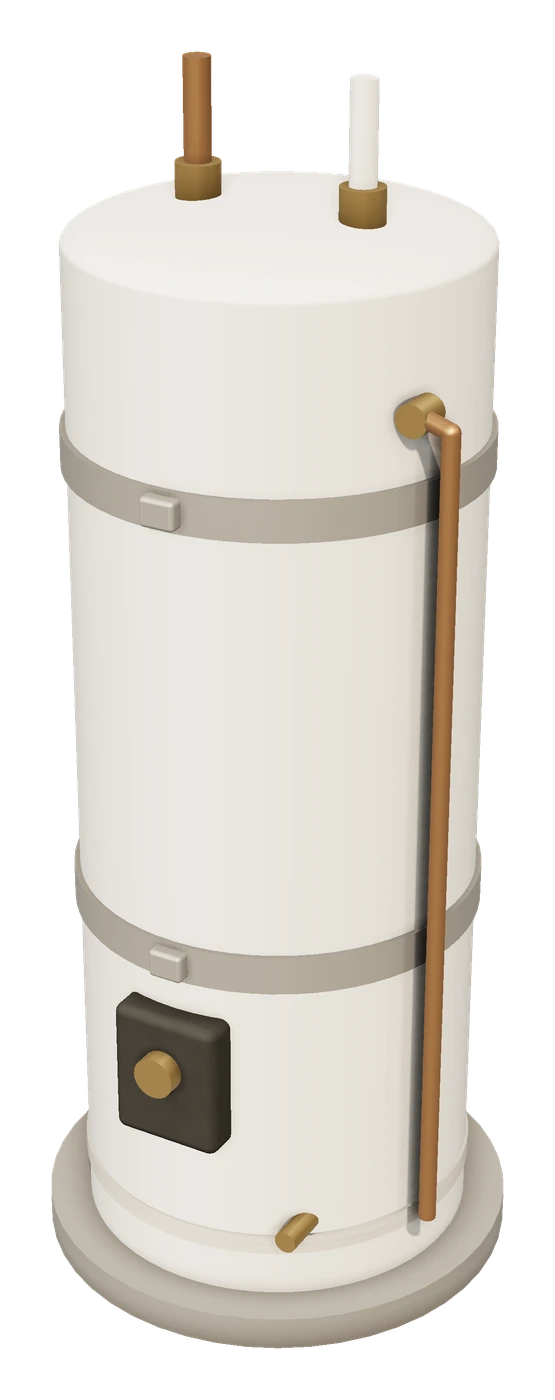
| Anode rod | $115 to $400 | Corrosion inside the tank |
| Pressure relief valve | $57 to $230 | A dripping or leaking relief valve |
| Tankless flush and descale | $86 to $575 | Scale in the heat exchanger |
| Tankless repair | $175 to $860 | Sensors, igniters, fans, heat exchanger |
If you smell gas at the heater, leave the house and call PGW at 215-235-1212 inside the city, or PECO at 1-800-841-4141 in the Pennsylvania suburbs. In South Jersey call 911 and South Jersey Gas at 1-800-582-7060. In Delaware call Delmarva Power gas at 302-454-0317.
Use the cost estimator for a number based on your ZIP code, tank size and fuel.
Repair or replace?
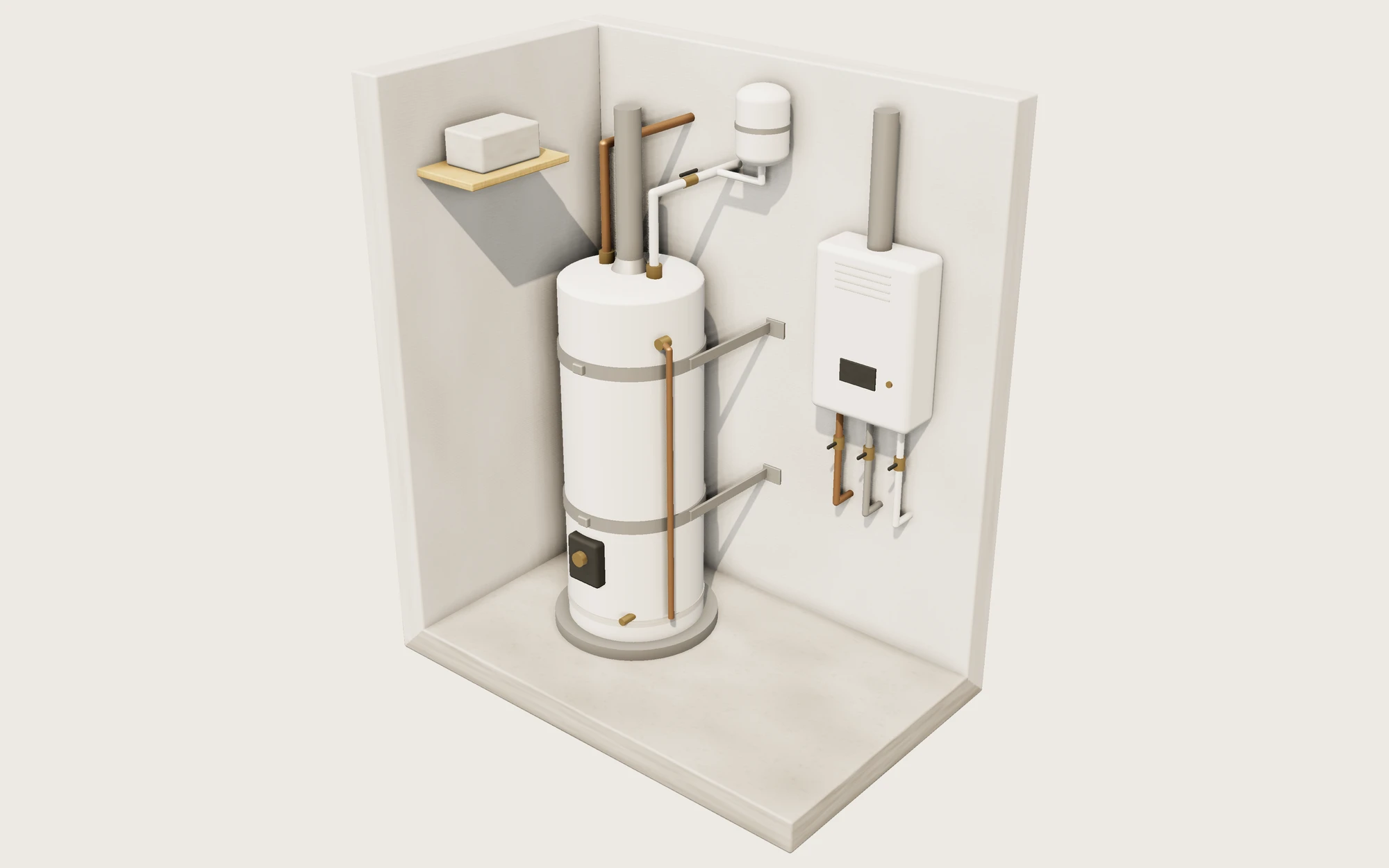
A gas tank in this climate lasts about 8 to 12 years, an electric tank 10 to 15, a heat pump 13 to 15 and a tankless unit 20 or more. Hard water shortens all of those.
Replace the heater when the tank body leaks, when it is past its expected life, or when the repair bill approaches half the price of a new unit. A thermocouple, element, valve or anode rod on a younger tank is usually worth fixing.
Two habits help:
- Flush the tank once a year. Sediment settles on the bottom, causes the rumbling sound and wears out the lower element on electric units.
- Check the anode rod every few years and replace it when it is mostly gone. It is the part that sacrifices itself so the tank does not rust.
In Philadelphia rowhouses the heater usually sits in a basement or a utility closet off the kitchen, and the old unit has to come up narrow stairs. Old tank removal runs $86 to $575 here, partly because of the tight stairwell.
Tank, tankless or heat pump in a Philadelphia home
| Gas tank | Gas tankless | Heat pump | |
|---|---|---|---|
| Installed cost | $805 to $3,550 (50 gal) | $2,400 to $6,450 | $2,300 to $5,300 |
| Extra work often needed | Venting check, expansion tank, pan and drain | Larger gas line ($400 to $2,300), new venting ($115 to $690) | Dedicated circuit, condensate drain, air space |
| Good fit | Most rowhouses and twins | Homes with gas service and room to vent | Basements and utility rooms that stay warm |
Gas tank
A like-for-like gas tank costs the least and still suits many Philadelphia homes. The replacement still has to meet current code: correct venting, a relief valve line that discharges safely, and an expansion tank if anything on the system closes it, such as a check valve, backflow preventer or pressure regulator. An expansion tank adds $115 to $460.
Gas tankless
A tankless heater fires only when a tap opens, so no tank of water sits hot all day. Most of the cost is in the install. A tankless burner often needs a larger gas line, $400 to $2,300 here, and new venting at $115 to $690. In a rowhouse, check the vent run and the gas line size before you buy. Tankless units also need a yearly flush and descale.
Heat pump
A heat pump water heater pulls heat from the air around it. It needs a dedicated electrical circuit, a drain for condensate and enough air space around the unit. It also cools the room it sits in, which helps in a Philadelphia basement in July and less so in January. A heat pump runs roughly $150 to $300 a year cheaper to operate than a tank electric or gas unit.
If your electrical panel needs work first, our Philadelphia electrician guide covers panel upgrades.
Rebates in 2026
The Section 25C credit, which paid up to $2,000 for a qualifying heat pump water heater, expired December 31, 2025. Units placed in service on or after January 1, 2026 get no federal credit. If you installed a qualifying heat pump in 2025 or earlier, you can still claim it on your 2025 return with IRS Form 5695.
Utility rebates remain, and they are smaller. PECO lists rebates for efficient gas water heaters, but the amounts could not be confirmed from the utility's own pages, so ask PECO directly before you count on a number. Ask the same way about New Jersey Clean Energy programs in Cherry Hill and South Jersey, and about Delaware programs in Wilmington. Get the rebate confirmed in writing before you sign a contract.
TECH Clean California is a California program and has nothing to do with Philadelphia.
What Philadelphia water and weather do to a heater
The Philadelphia Water Department supplies the city, and the homeowner owns everything from the curb stop inward, including the service line and the interior plumbing. PWD is not responsible for your plumbing.
Basements are where the water gets in. Remnants of Hurricane Ida in September 2021 dropped 5 to 10 inches of rain across the region in about six hours, and the Schuylkill crested at 16.35 feet in Philadelphia. A water heater on a basement floor sits in the path of that water. Three things help:
- Set the heater on a raised stand where the ceiling height allows.
- Install a pan with a drain if the basement has a floor drain.
- Ask PWD about the Basement Backup Protection Program, which installs a free backwater valve for qualifying homeowners. Call 215-685-4901.
Freezing is the other local problem. The airport averages about 77 nights at or below 32°F a year, and the outer suburbs run colder. A heater in an unheated garage or a drafty basement corner needs its pipes insulated, and a heater in a vacation home needs the water shut off or the heat kept on.
Do you need a permit?
Yes, in all three states. The office depends on where the house is.
City of Philadelphia. A plumbing permit from the Department of Licenses and Inspections, filed in the eCLIPSE portal. The fee is $31 for a one- and two-family home, with a $100 filing fee credited to the permit. A licensed master plumber must oversee the work. Switching from tank to tankless can also need a gas line permit and electrical work, and electrical permits in Philadelphia are inspected by a private licensed inspection agency hired by the owner, not by L&I staff. If the house is on the Philadelphia Register of Historic Places, check with the Historical Commission before any exterior change.
Pennsylvania suburbs (Main Line, Bucks, Delaware and Montgomery counties). The statewide Uniform Construction Code applies, but each township or borough runs its own code office or hires a third-party agency, so fees and turnaround differ from town to town. Replacing a water heater always needs a plumbing permit. Pennsylvania's homeowner exemption lets an owner do plumbing on their own primary residence, but not on a rental or a flip.
South Jersey (Cherry Hill and the rest). A construction permit from the municipal construction official under the New Jersey Uniform Construction Code. Replacing an existing heater with one of like capacity is classified as minor work: a permit is still required, but work may begin once the local code office has notice, which can be oral, written or email. The application needs the manufacturer's installation guide, a chimney certification where the heater vents into a chimney, and for electric units an Electrical Subcode Technical Form. The permit must carry the contractor's seal.
Wilmington and New Castle County, Delaware. New Castle County handles plumbing and HVAC as utility permits through the Department of Land Use. In the City of Wilmington, L&I issues the permit. Delaware licenses master plumbers through the Division of Professional Regulation.
Inspectors check the same things everywhere: gas connections, venting, the temperature and pressure relief discharge, the expansion tank and the electrical bonding on an electric unit. A permit also gives you a record that a buyer's inspector or an insurance adjuster may ask for later. Our Philadelphia plumbing guide covers the shared permit basics and PWD water quality.
How to check a water heater installer before you hire
Water heater work is plumbing work, and the license rule changes at each border.
- Pennsylvania: there is no statewide plumber license. In Philadelphia, look the plumber up in the city's Contractor Lookup by name, company or license number, and check that the master plumber license is active. Any home improvement contractor must also be registered with the Pennsylvania Attorney General under HICPA; search active registrations at hicsearch.attorneygeneral.gov. In the suburbs, ask the township or borough which trade licenses it requires.
- New Jersey: the installer should hold a New Jersey master plumber license, and the permit must be signed and sealed by that licensee. The home improvement contractor must be registered with the Division of Consumer Affairs, and the registration number belongs in the contract.
- Delaware: master plumbers are licensed by the Delaware Board of Plumbing, Heating, Ventilation, Air Conditioning and Refrigeration Examiners, and gas piping work falls under that license. The contractor also needs a Delaware business license.
Then ask who pulls the permit, who books the inspection, and what the written price includes. The price should list the permit, the expansion tank, the pan and drain if you need one, and haul-away of the old unit.
Every installer in the GOLDGCP network passes six-step vetting: state license verification, an insurance check, a background and business check, portfolio review, client reference calls, and onboarding with a quality score. Our vetting process explains each step.
Areas we cover
GOLDGCP water heater pros work across the Philadelphia metro:
- Philadelphia and its rowhouse neighborhoods
- The Main Line
- Bucks County and Delaware County
- Cherry Hill and South Jersey
- Wilmington, Delaware
Enter your ZIP code to find a vetted installer near you.
How GOLDGCP works
- Tell us what is happening through the form, a call or WhatsApp. Include the heater's age, size and fuel if you know them.
- We match you with up to 3 vetted, licensed pros and show prices for your ZIP code before anyone visits.
- The installer pulls the permit, does the work and books the inspection.
- You pay your pro directly, in milestones, each one after you approve that stage.
No hot water and water on the floor? Call the 24/7 emergency line at the top of the page.
Frequently asked questions
How much does water heater repair cost in Philadelphia?
Most repairs run $175 to $860. A thermocouple or igniter costs about $115 to $400, a gas control valve $115 to $400 and an anode rod $115 to $400. Tankless repairs run $175 to $860. A tank that leaks from the body needs replacing.
Should I repair or replace my water heater in Philadelphia?
Replace it if it is past its expected life, if the tank itself leaks, or if the repair costs close to half a new unit. A gas tank lasts about 8 to 12 years here, an electric tank 10 to 15. Younger tanks with a bad thermocouple, element or valve are usually worth fixing.
Do I need a permit to replace a water heater in Philadelphia?
Yes. In the city, L&I issues a plumbing permit through eCLIPSE, and the fee is $31 for a one- and two-family home. In the Pennsylvania suburbs the township or borough issues it. In South Jersey the municipal construction official does, and in Wilmington and New Castle County the county or city does.
Is there a rebate for a heat pump water heater in Philadelphia?
The federal 25C credit ended December 31, 2025, so units installed in 2026 get nothing from it. PECO lists gas water heater rebates, but confirm the current amount with PECO before you buy. Ask about New Jersey and Delaware programs if you live in Cherry Hill or Wilmington.
Are tankless water heaters worth it in Philadelphia?
They cost more up front, $2,400 to $6,450 installed for gas, because the job often needs a larger gas line and new venting. They last 20 years or more, against 8 to 12 for a gas tank. In a rowhouse, check the vent run and gas line size before you commit.
How long does a water heater last in Philadelphia?
A gas tank lasts about 8 to 12 years, an electric tank 10 to 15, a heat pump 13 to 15 and a tankless unit 20 or more. Hard water shortens all of them. Flushing the tank once a year and replacing the anode rod when it wears down add years.
What should I do if my basement floods around the water heater?
Shut off the power or gas to the heater first, then call PWD at 215-685-6300 if the water is coming from a main or sewer. Photograph the flooding for insurance. Ask PWD about the Basement Backup Protection Program, which installs a free backwater valve for qualifying homes.
How we calculate these prices
GOLDGCP starts from national price ranges for each job, taken from published 2026 cost guides and checked against local price guides where they exist. To get a local price, we multiply the national range by the construction cost factor for the metro from the U.S. Army Corps of Engineers Area Cost Factors (US average = 1.00). Where that table has no entry for a metro, we use the nearest listed location or the state value. For ZIP codes outside the 50 largest metros, the cost estimator uses the state's price level from the Bureau of Economic Analysis Regional Price Parities. Ranges include labor and standard materials but not unusual site conditions, so a written quote after an inspection is always the final price.
Sources

About this guide
Written by the GOLDGCP editorial team. Prices come from national cost guides adjusted with official construction cost factors for Philadelphia; rules and statistics come from the agencies and reports linked in the text. We update this page when prices or codes change.