

The short answer
Water heater repair in Washington DC runs $155 to $780. A 50-gallon tank installed costs $730 to $3,200, a gas tankless unit $2,200 to $5,800 and a heat pump model $2,100 to $4,800. Every jurisdiction here requires a permit, even for a like-for-like swap: DC, Arlington, Fairfax and suburban Maryland.
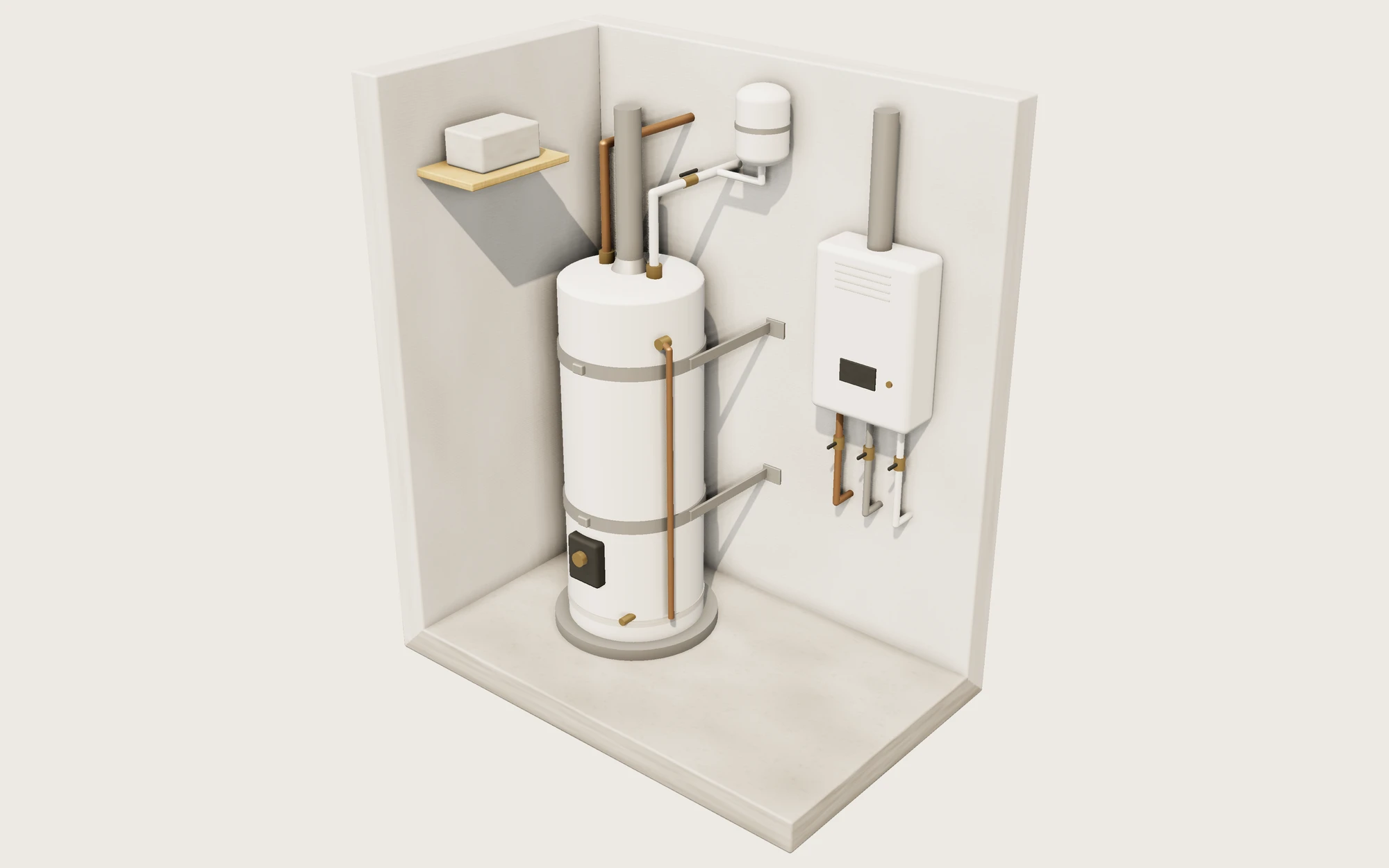
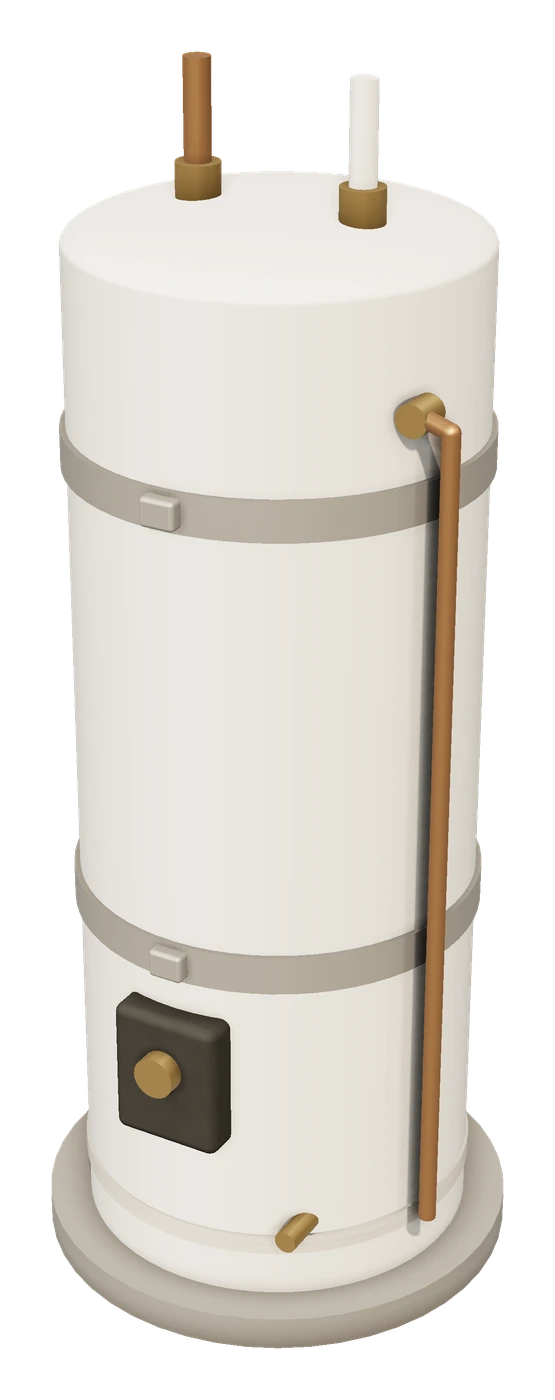
What water heater work costs in Washington DC
The table shows installed prices for a single-family home, adjusted with the metro's construction cost factor of 1.04 from the U.S. Army Corps of Engineers. That puts the metro about 4% above the national average.
| Job | Washington DC (typical range) | US average |
|---|---|---|
| 40-gallon tank, installed | $625–$3,100 | $600–$3,000 |
| 50-gallon tank, installed | $730–$3,200 | $700–$3,100 |
| 80-gallon tank, installed | $1,250–$4,150 | $1,200–$4,000 |
| Tankless, electric, installed | $1,450–$3,100 | $1,400–$3,000 |
| Tankless, gas, installed | $2,200–$5,800 | $2,100–$5,600 |
| Heat pump (hybrid), installed | $2,100–$4,800 | $2,000–$4,600 |
| Water heater repair | $155–$780 | $150–$750 |
| Old tank removal | $78–$520 | $75–$500 |
| Gas vent replacement | $105–$625 | $100–$600 |
| Gas line upgrade | $365–$2,100 | $350–$2,000 |
| Expansion tank | $105–$415 | $100–$400 |
| Permit | $52–$210 | $50–$200 |
Estimates for 2026, including labor and standard parts. Washington DC prices use the metro's construction cost factor of 1.04 (US average = 1.00) from the U.S. Army Corps of Engineers Area Cost Factors. Your quote depends on access, materials and the condition of the home.
Repairs are priced by the part. These are the metro figures from the price data:
| Repair | Typical cost in Washington DC | What it fixes |
|---|---|---|
| Water heater repair | $155 to $780 | Thermocouple, gas control valve, heating element, igniter, fan |
| Expansion tank | $105 to $415 | Closed systems with a check valve or pressure reducer |
| Gas vent replacement | $105 to $625 | Corroded or undersized flue on a gas unit |
| Gas line upgrade | $365 to $2,100 | Larger line for a tankless burner's higher BTU demand |
| Old tank removal | $78 to $520 | Hauling out the old unit |
A tank that leaks from the body needs replacing. On a younger tank, thermocouples, valves, elements and anode rods are usually worth replacing.
Try the cost estimator for a number based on your ZIP code, tank size and fuel.
Repair or replace?
A gas tank usually lasts 8 to 12 years, and a tankless unit 15 to 20, according to Tim Whistler Plumbing & Gas Fitting, an Arlington company. Once a tank is past 10 years and the repair bill climbs toward half the price of a new unit, replacement usually wins.
The metro's housing stock affects this decision. Two thirds of DC homes were built before 1980, and so were about half the homes in Arlington, Alexandria, Montgomery and Prince George's counties, per the Census Bureau's American Community Survey. A 1960s rowhouse may still have the original gas line, an undersized flue or a utility closet built for a smaller tank. A straight swap can turn into a venting or gas line job once the installer opens the closet.
Two local details affect the price.
Most Arlington homes have a check valve or pressure reducer on the incoming line, so heated water has nowhere to go, SwiftPro reports. Fairfax inspectors check for an expansion tank on a closed system, per Pioneer Plumbers.
Sediment builds up in the tank, and a yearly flush slows it down. SwiftPro quotes a flush in Arlington at $99 on promotion, normally $199, and a tankless descale at $300.
Tank, tankless or heat pump in a DC home
| Gas tank | Gas tankless | Heat pump | |
|---|---|---|---|
| Installed cost in the metro | $730 to $3,200 (50 gal) | $2,200 to $5,800 | $2,100 to $4,800 |
| Extra work often needed | Expansion tank ($105 to $415), venting ($105 to $625) | Larger gas line ($365 to $2,100), new venting | 240-volt circuit, condensate drain, air space |
| Lifespan | 8 to 12 years | 15 to 20 years | Varies by model |
Gas tank
A like-for-like gas tank costs the least and is still allowed in all three jurisdictions. On an older install, the replacement may need an expansion tank, a new flue and a relief valve line run to an approved termination point. Fairfax inspectors check gas venting, line sizing, the TPR discharge line and clearances, per Pioneer Plumbers.
Gas tankless
A tankless burner fires only when a tap opens, and most of the cost is in the install. Tim Whistler reports that older single-family homes in Lyon Village, Maywood and Cherrydale often need the gas line upsized for a tankless unit's higher BTU demand. Condo installs are sometimes simpler because the existing gas line is usually adequate, but the building's gas service and HOA rules on water heater changes decide whether it is possible at all.
Reagan National averages a January low of 30.1°F, and Dulles 25.2°F, per NOAA's 1991 to 2020 normals. Incoming water that cold means the unit works harder, so sizing matters more than in summer.
Heat pump
A heat pump water heater pulls heat from the air around it, so it needs a 240-volt circuit, a condensate drain and room for air. In a DC rowhouse or an Arlington condo, the utility closet is often too small, and the electrical panel may need work first. If your panel needs an upgrade, our Washington DC electrical guide covers what that involves.
Rebates for water heaters in 2026
The federal 25C tax credit ended for equipment placed in service after December 31, 2025, per the IRS. That leaves utility and state programs, and the amounts change often.
| Program | Who it covers | Status |
|---|---|---|
| DCSEU residential rebates | DC homeowners, installed by a DC-licensed contractor | Amounts not confirmed; check before buying |
| EmPOWER Maryland (Pepco, BGE) | Maryland homeowners | Amounts not confirmed; check before buying |
| Dominion Energy Virginia | Northern Virginia homeowners | Not confirmed |
| Federal 25C | Homeowners | Ended for equipment installed after December 31, 2025 |
The DC Sustainable Energy Utility runs residential heating and cooling rebates that include heat pump water heaters, but the amounts could not be confirmed in this research. Pepco's Maryland appliance rebate amounts could not be confirmed either. Ask the installer to confirm the current program and amount in writing before you sign, and check the DCSEU and Pepco pages yourself.
Is gas still allowed?
You can replace a gas water heater with another gas water heater anywhere in this metro.
The changing rule covers new construction only. Montgomery County's Bill 13-22 requires all-electric building standards for most new construction by December 31, 2026, and by December 31, 2027 for income-restricted housing, residential buildings of four or more stories and schools, per the county's announcement. A lawsuit arguing federal preemption was reported in 2024, so confirm the standards' status before you rely on them. Nothing in the law requires an existing home to remove a gas appliance.
DC's new-building energy rules and any Virginia gas restrictions could not be confirmed in this research.
Water quality and how long your heater lasts
Three utilities supply the metro's water, and each affects sediment and lifespan differently.
The District has more than 42,000 service lines with lead or galvanized-iron pipe, and homes built before the 1980s were typically built with a lead service line, per DC Water. If you are replacing a heater in an older DC home, ask the installer to look at the piping while the unit is out.
WSSC serves about 1.9 million customers in Montgomery and Prince George's counties, per WSSC.
Fairfax Water's 24/7 emergency line is 703-698-5613, per Fairfax Water.
Hardness figures for each utility could not be confirmed in this research. Flush a tank once a year, check the anode rod and replace it when it is mostly gone, and descale a tankless unit at least once a year.
Do you need a permit?
Every jurisdiction in this metro requires one. The office depends on where you live.
District of Columbia
New and replacement gas appliances require a permit from the DC Department of Buildings. Only licensed DC contractors for the trade may apply for trade permits, and homeowners cannot pull a plumbing or gas permit themselves. One- and two-family projects apply through the DOB Permit Wizard. Fees run $33 for work under $500, $65 for work between $501 and $1,000, and $30 plus 2% of construction value above $1,000, plus a 10% enhanced fee, per the DOB fee schedule. A $2,000 heater swap works out to about $70 plus the enhanced fee. In a historic district, check with the Office of Planning first.
Maryland: Montgomery and Prince George's counties
Plumbing and gas permits in both counties come from WSSC Water, not the county. A WSSC Water permit is required for each gas appliance installation, the installer must hold a WSSC Water license, and the permit does not replace the inspection, per WSSC's gas appliance FAQ. WSSC's first plumbing fixture inspection fee is $180, and the minimum non-refundable long form permit charge is $320, per the WSSC fee page. Verify a WSSC license at 301-206-8588.
Prince George's County DPIE charges a $66 administrative fee plus a mechanical permit fee of $86 or 1.3% of mechanical construction cost, whichever is greater, plus a 10% technology fee, per the DPIE fee schedule.
Virginia: Arlington, Fairfax and Alexandria
Arlington County requires a plumbing and gas permit with inspections to replace any gas-fueled water heater, even a like-for-like swap, per SwiftPro. Replacing an electric heater with the same type, size and location needs no permit. Virginia's building code lets an emergency replacement go in before the paperwork, as long as the permit application reaches the county by the end of the next working day.
Fairfax County requires a permit for a water heater replacement even for a straight swap, per Pioneer Plumbers. A Household Appliance Permit covers a direct replacement with the same fuel type and similar capacity and no new gas piping. A Residential Plumbing Permit is needed when new gas lines run or the fuel type changes. Either way, the work gets a final inspection.
Alexandria's building official enforces the same Virginia Uniform Statewide Building Code, but its fee schedule could not be confirmed in this research. Call the city before you assume a fee.
What the inspector checks
- Gas venting and connections, and gas line sizing
- An expansion tank on a closed system
- The TPR valve discharge line, routed to an approved termination point and never aimed at electrical equipment
- Electric wiring and clearances
Unpermitted work can complicate an insurance claim and stall a home sale when a buyer's inspector checks permit records, per Pioneer Plumbers. Ask whether the permit is in the quote, and if the installer says it is not needed, call someone else.
How to check a water heater installer before you hire
Each jurisdiction licenses water heater work differently, because it is plumbing and gas work.
In the District, the installer needs a DC home improvement contractor license from DLCP, which requires a $25,000 surety bond, plus a master plumber or gasfitter license from the DC Board of Industrial Trades. Look up the business license in Scout and the trade license in the Access DC OPLA search, per DLCP. Complaints: (202) 671-4500.
In Maryland, the installer needs an MHIC license, which since June 1, 2024 requires at least $500,000 in general liability insurance, per the Maryland Home Improvement Commission. Gas work also needs a WSSC Water license, checked at 301-206-8588. MHIC: 410-230-6231.
In Virginia, the installer needs a DPOR Board for Contractors license, Class A, B or C. Class C covers contracts over $1,000 but under $30,000, Class B $30,000 to under $150,000, and Class A $150,000 or more, per Code of Virginia 54.1-1100. The individual doing the work needs a DPOR tradesman license. DPOR: (804) 367-8511.
Four questions before you sign:
- What is your license number, and in which jurisdiction?
- Who pulls the permit and books the inspection?
- Is the expansion tank, venting and haul-away in the written price?
- If a rebate applies, which model and efficiency rating does it require?
Every installer in the GOLDGCP network passes a license check, insurance verification, a background check and reference calls before getting a job. Our vetting process guide explains the six steps.
Areas we cover
GOLDGCP water heater pros work across the Washington DC metro:
- Washington DC
- Arlington and Alexandria
- Fairfax and Northern Virginia
- Bethesda, Silver Spring and Montgomery County
Enter your ZIP code to find a vetted installer near you.
How GOLDGCP works
- Tell us what is happening through the form, a call or WhatsApp. Include the tank's age, size and fuel if you know them.
- We match you with up to 3 vetted, licensed pros and show prices for your ZIP code before anyone visits.
- The installer pulls the permit for your jurisdiction, does the work and books the inspection.
- You pay your pro directly, in milestones, each one after you approve that stage.
If you have no hot water and a leak on the floor, call the 24/7 emergency line at the top of the page.
Frequently asked questions
How much does water heater repair cost in Washington DC?
Most repairs run $155 to $780. A gas control valve, thermocouple or heating element sits in that range, and an expansion tank adds $105 to $415. A tank that leaks from the body needs replacing. A tankless repair can run higher because the parts cost more.
Should I repair or replace my water heater in Arlington or DC?
Replace it if the tank is past 10 years old, if the tank body leaks, or if the repair costs more than half a new unit. A gas tank lasts 8 to 12 years and a tankless unit 15 to 20, according to an Arlington installer. Younger tanks with a bad valve or element are usually worth fixing.
Do I need a permit to replace a water heater in Washington DC?
New and replacement gas appliances require a DC Department of Buildings permit, and only licensed DC contractors can apply for trade permits. Fees run $33 to $65 for small jobs and $30 plus 2% of construction value above $1,000, plus a 10% enhanced fee.
Do I need a permit in Montgomery County or Northern Virginia?
In Montgomery and Prince George's counties, WSSC Water issues the plumbing and gas permit and the installer must hold a WSSC license. Arlington requires a plumbing and gas permit for any gas water heater replacement, and Fairfax requires one even for a straight swap.
Is there a rebate for heat pump water heaters in the DC area?
The federal 25C tax credit ended for equipment installed after December 31, 2025, so confirm any rebate before you buy. DCSEU and EmPOWER Maryland run heat pump water heater programs, but the amounts could not be confirmed in this research. Ask the installer for the current figure in writing.
Is Washington DC banning gas water heaters?
You can replace a gas water heater with another gas water heater anywhere in the metro. Montgomery County's all-electric standard covers new construction, mostly from December 31, 2026, and a lawsuit challenging it was reported in 2024. Nothing requires an existing home to remove a gas appliance.
Are tankless water heaters worth it in Northern Virginia?
They cost more up front, $2,200 to $5,800 installed here, because older homes often need a larger gas line and new venting. They last 15 to 20 years versus 8 to 12 for a tank and use less energy. Cold January water means sizing matters more than in a milder climate.
How we calculate these prices
GOLDGCP starts from national price ranges for each job, taken from published 2026 cost guides and checked against local price guides where they exist. To get a local price, we multiply the national range by the construction cost factor for the metro from the U.S. Army Corps of Engineers Area Cost Factors (US average = 1.00). Where that table has no entry for a metro, we use the nearest listed location or the state value. For ZIP codes outside the 50 largest metros, the cost estimator uses the state's price level from the Bureau of Economic Analysis Regional Price Parities. Ranges include labor and standard materials but not unusual site conditions, so a written quote after an inspection is always the final price.
Sources
- Tim Whistler Plumbing & Gas Fitting
- SwiftPro
- Pioneer Plumbers
- irs.gov
- montgomerycountymd.gov
- dcwater.com
- WSSC Water · WSSC Water
- fairfaxwater.org
- dob.dc.gov · dob.dc.gov
- dob.dc.gov · dob.dc.gov
- WSSC Water · WSSC Water
- WSSC Water · Permit Services Fees & Charges
- princegeorgescountymd.gov
- dlcp.dc.gov
- labor.maryland.gov
- law.lis.virginia.gov
- U.S. Army Corps of Engineers
- U.S. Bureau of Economic Analysis

About this guide
Written by the GOLDGCP editorial team. Prices come from national cost guides adjusted with official construction cost factors for Washington DC; rules and statistics come from the agencies and reports linked in the text. We update this page when prices or codes change.