
The short answer
Most water heater repairs in Phoenix cost $135 to $675. A 50-gallon tank installed runs $630 to $2,800, a gas tankless unit $1,900 to $5,050 and a heat pump model $1,800 to $4,150. Hard water shortens tank life. Yearly flushing helps a tank reach 12 years instead of 8.
What water heater work costs in Phoenix
The table shows installed prices for a single-family home, adjusted with the Phoenix construction cost factor of 0.90 from the U.S. Army Corps of Engineers. That is about 10% below the national average.
| Job | Phoenix (typical range) | US average |
|---|---|---|
| 40-gallon tank, installed | $540–$2,700 | $600–$3,000 |
| 50-gallon tank, installed | $630–$2,800 | $700–$3,100 |
| 80-gallon tank, installed | $1,100–$3,600 | $1,200–$4,000 |
| Tankless, electric, installed | $1,250–$2,700 | $1,400–$3,000 |
| Tankless, gas, installed | $1,900–$5,050 | $2,100–$5,600 |
| Heat pump (hybrid), installed | $1,800–$4,150 | $2,000–$4,600 |
| Water heater repair | $135–$675 | $150–$750 |
| Old tank removal | $68–$450 | $75–$500 |
| Gas vent replacement | $90–$540 | $100–$600 |
| Gas line upgrade | $315–$1,800 | $350–$2,000 |
| Expansion tank | $90–$360 | $100–$400 |
| Permit | $45–$180 | $50–$200 |
Estimates for 2026, including labor and standard parts. Phoenix prices use the metro's construction cost factor of 0.90 (US average = 1.00) from the U.S. Army Corps of Engineers Area Cost Factors. Your quote depends on access, materials and the condition of the home.
Repairs are priced by the part. These are the most common jobs in Phoenix:
| Repair | Typical cost in Phoenix | What it fixes |
|---|---|---|
| Thermocouple or igniter | $135 to $400 | Gas pilot that will not stay lit |
| Gas control valve | $135 to $675 | Pilot and burner control on gas units |
| Heating element | $135 to $675 | Lukewarm water or hot water that runs out fast on electric tanks |
| Thermostat | $135 to $675 | Water too hot or too cool on electric tanks |
| Anode rod | $135 to $675 | Corrosion inside the tank |
| Pressure relief valve | $135 to $675 | Dripping or leaking relief valve |
| Tankless flush and descale | $135 to $675 | Scale in the heat exchanger |
| Tankless repair | $135 to $675 | Sensors, igniters, fans, heat exchanger |
Elements, thermostats, gas valves, igniters and relief valves can be replaced, according to Water Heater Warehouse AZ. A tank that leaks from the body cannot.
The cost estimator gives a number based on your ZIP code, tank size and fuel.
Repair or replace?
A gas tank in Phoenix usually lasts 8 to 12 years. Hard water is why the low end is common. Sediment settles on the bottom of the tank, insulates the burner from the water, and corrodes the lower element on electric units. The rumbling is sediment boiling on the bottom of the tank.
Replace the heater when:
- The tank body leaks. No repair fixes that.
- It is past 10 years old and a repair costs more than half the price of a new unit.
- Hot water runs out faster than it used to, or the water comes out rusty.
- You are paying to heat water in a tank that is already failing.
Repair it when the tank is younger and the problem is a part: a thermocouple, element, thermostat, gas valve or relief valve. On a 5-year-old heater, those parts are worth fixing.
If your tank is near the end and you want a heat pump or tankless unit, get quotes before it fails. Both can need gas, venting or electrical changes that take longer to plan than a straight swap.
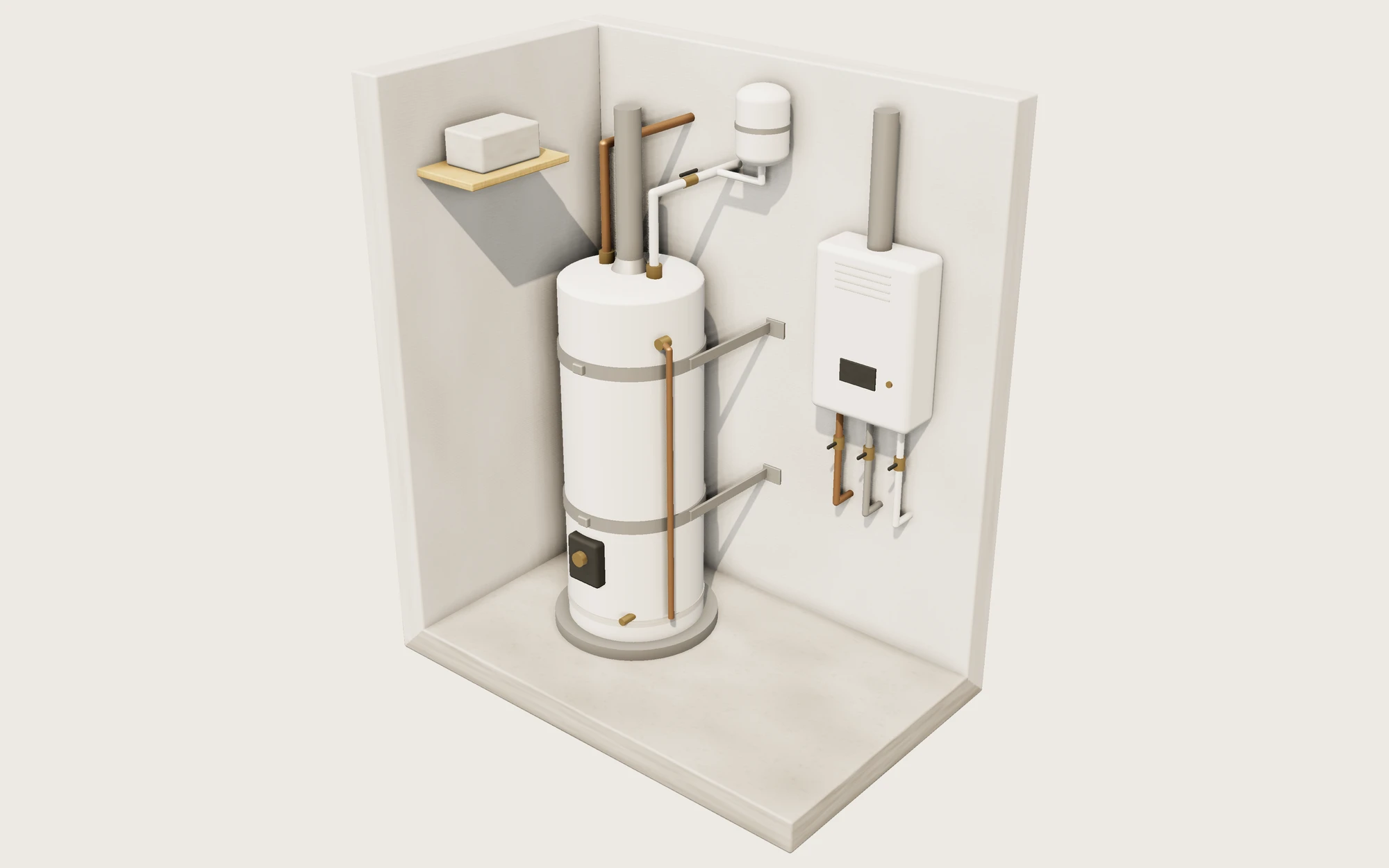
Tank, tankless or heat pump in a Phoenix home
| Gas tank | Gas tankless | Heat pump | |
|---|---|---|---|
| Installed cost in Phoenix | $630 to $2,800 (50 gal) | $1,900 to $5,050 | $1,800 to $4,150 |
| Extra work often needed | Expansion tank, pan and drain, gas connector | Larger gas line ($315 to $1,800), new venting ($90 to $540) | Dedicated circuit, condensate drain, cool air in the room |
| Where it usually goes | Garage or utility closet | Exterior wall or garage | Garage or a large utility room |
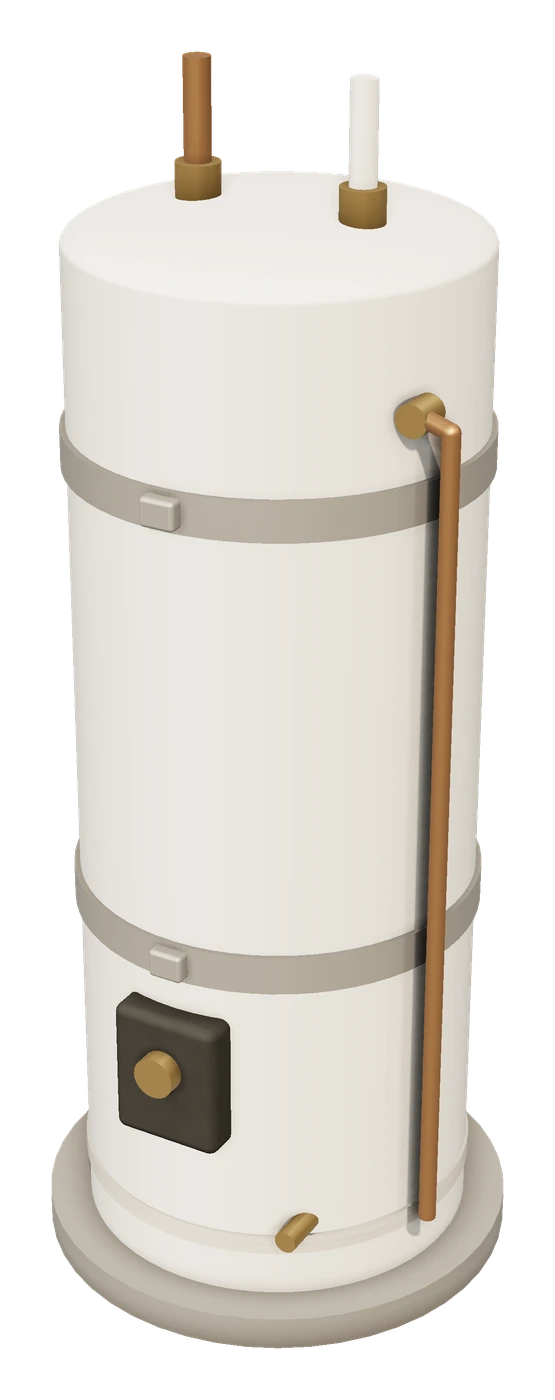
Gas tank
A like-for-like gas tank is the lowest-cost option and is still allowed. On an older Phoenix install, the replacement may need to be brought up to current code: an expansion tank on a closed system, a relief valve line run outside, a pan and drain where one existed, and, in a garage, the ignition source raised 18 inches above the floor unless the unit is flammable-vapor ignition-resistant.
Gas tankless
A tankless heater fires only when a tap is open, so there is no tank of water kept hot all day. Most of the cost is the install. A tankless burner may need a larger gas line and new venting. In Phoenix's hard water, a tankless unit also needs a flush and descale at least once a year, and more often if your water is at the high end of the scale. Without the flush, scale builds in the heat exchanger until the unit stops heating.
Heat pump
A heat pump water heater pulls heat from the air around it, so it needs space and air movement. It also needs a dedicated circuit and a drain for condensate. In Phoenix, the garage is the usual spot. A heat pump cools the room it sits in, which is welcome in July, but the unit works well where the temperature stays moderate all year. An attic is usually the wrong spot because summer attic heat makes the unit work harder. A garage or a large utility room is the better fit. If your panel needs work first, the new circuit is part of the project.
Hard water and how long your heater lasts
Phoenix water is hard. Chandler's numbers show how hard. For City of Chandler water customers, hardness ranges from 5 to 20 grains per gallon, averaging 16.5 across the city, according to Water Heater Warehouse AZ. By the usual scale, under 4 grains per gallon is soft, 7 to 10 is hard and over 10 is very hard. Most of the East Valley sits in the very hard range.
What that does to a heater:
- In a tank, minerals settle as sediment on the bottom. That causes the rumbling, wastes gas or electricity, and corrodes the lower element on electric tanks.
- In a tankless unit, scale builds up in the heat exchanger and cuts flow and temperature.
- In both, the anode rod wears out faster, and once it is gone the tank steel starts to corrode.
These habits help:
- Drain at least 5 gallons from the drain valve every six months, which is what Scottsdale's water heater handout recommends for high-mineral water.
- Check the anode rod every couple of years and replace it when it is mostly gone.
- Descale a tankless unit at least once a year.
A water softener reduces scale. Some softeners have a built-in check valve, which can make your system closed and trigger the expansion tank rule.
Do you need a permit?
It depends on the city. Arizona adopts building codes locally, so each city sets its own permit rules.
| City | Water heater replacement permit | Where to file |
|---|---|---|
| Phoenix | Required. The in-kind exemption applies only when a licensed contractor does the work, so a homeowner swap needs a permit. | Phoenix Planning & Development, over the counter or online; 602-262-7811 |
| Scottsdale | Required, even for a like-for-like swap. Homeowner or licensed contractor may obtain it. | Scottsdale SPUR, or the One Stop Shop at 7447 E. Indian School Road |
| Mesa | Not required for residential like-for-like replacement of gas and electric heaters of equal or lesser rating. | Mesa |
| Tempe | Required unless the new heater matches the old one in type, fuel, location and amperage, with only minor connection changes. | Tempe Citizen Access Portal; 480-350-4311 |
| Chandler | Like-for-like replacement of residential water heaters is exempt from a building permit. | Chandler Development Services; 480-782-3000 |
| Peoria | Required. A homeowner replacing a water heater needs a permit. | Peoria Development Services online portal; (623) 773-7225 |
| Gilbert | Confirm with the city before installation. | Gilbert |
| Glendale | Confirm with the city before installation. | Glendale |
| Unincorporated Maricopa County | Not required if the work follows the manufacturer's specifications, but you may apply for a permit if you want the County to inspect. | Maricopa County Permit Center; 602-506-3301 |
Sources: Phoenix over-the-counter permit guide, Scottsdale water heater handout, PermitRoadmap on Tempe, HQ Plumbing and Air, Chandler permit manual via Water Heater Warehouse AZ, Peoria plan review and permits, Maricopa County construction permit information.
Switching between gas and electric, relocating the unit, or moving to a tankless system usually adds electrical, gas or venting work and extra review. In Phoenix, projects that add electric sub-panels or new mechanical equipment go to plan review rather than over the counter. Gas piping changes are handled under residential plan review.
What the inspector checks
Seismic strapping is not a Phoenix concern. The inspector checks these:
- Expansion tank: required when a check valve, pressure-reducing valve or backflow preventer closes the system.
- Relief valve line: a minimum 3/4 inch line that ends outside the building, 6 to 24 inches above grade, pointing down, per Scottsdale's handout.
- Pan and drain: a replacement heater does not need a pan drain if one was not previously installed.
- Garage height: the ignition source at least 18 inches above the floor unless the unit is flammable-vapor ignition-resistant.
- Gas shutoff valve: in the same room, within 6 feet of the appliance.
- Location: a gas water heater cannot go in a bedroom or a closet that opens only through a bedroom or bathroom. Direct vent units can.
In Phoenix, replacement equipment may run in an occupied home if an inspection is requested within 72 hours of completing the work and before it is concealed.
How to check a water heater installer before you hire
Water heater work in Arizona is contractor work, and the installer needs a license from the Arizona Registrar of Contractors. The ROC licenses and regulates over 60,000 residential and commercial contractors. Any business that contracts to repair or improve a building must be licensed, and contractors must be licensed before they bid.
- Look up the license number on the ROC site and confirm it is active and in the company's name.
- Ask who pulls the permit and books the inspection. It should be the installer, and in Phoenix a licensed contractor is the only one who can use the in-kind exemption.
- Get the price in writing with the expansion tank, pan, haul-away and permit listed.
- Ask whether the quote includes the gas connector and the relief valve line, because those are the items inspectors flag most.
- For a heat pump, ask who handles the new circuit and whether the panel has room.
The ROC investigates and works to resolve complaints against licensed pros and unlicensed entities, so a license number is also your route to a remedy if the job goes wrong.
Every installer in the GOLDGCP network passes a license check, insurance verification, a background check and reference calls before getting a job. Read more about the vetting process.
Areas we cover
GOLDGCP water heater pros work across the Phoenix metro:
- Phoenix
- Scottsdale
- Mesa
- Tempe
- Chandler
- Gilbert
- Glendale
- Peoria
Enter your ZIP code to find a vetted installer near you.
How GOLDGCP works
- Tell us what's happening through the form, a call or WhatsApp. Include the tank's age, size and fuel if you know them.
- We match you with up to 3 vetted, licensed pros and show prices for your ZIP code before anyone visits.
- The installer pulls the permit where the city requires one, does the work and books the inspection.
- You pay in milestones, each one after you approve that stage.
If you have no hot water and a leak on the floor, call the 24/7 emergency line at the top of the page. For general plumbing work, see our Phoenix plumbing guide.
Frequently asked questions
How much does water heater repair cost in Phoenix?
Most repairs run $135 to $675. A thermocouple or igniter, a gas control valve, an anode rod and a tankless repair all fall inside that range. A tank that leaks from the body needs replacing, not repair.
Should I repair or replace my water heater in Phoenix?
Replace it if it is more than 10 years old, if the tank itself leaks, or if the repair costs more than half the price of a new heater. Phoenix's hard water pushes many tanks toward the low end of the 8 to 12 year range, so age matters more here than in softer-water cities.
Do I need a permit to replace a water heater in Phoenix?
In the City of Phoenix, yes. The in-kind exemption only applies when a licensed contractor does the work, so a homeowner swap needs a permit. Scottsdale and Peoria require one too. Mesa and Chandler exempt like-for-like residential replacement, and unincorporated Maricopa County no longer requires one.
Is a heat pump water heater worth it in Phoenix?
It can be, if you have a garage or large utility room and panel capacity for a dedicated circuit. It cools the space it sits in, which helps in summer, and an attic is usually a poor location because of the heat. Compare the installed price, $1,800 to $4,150, against a gas tank before you decide.
Why does my water heater rumble?
Sediment. Phoenix water is hard, and minerals settle on the bottom of the tank and cook there. The rumbling is that layer boiling. Draining at least 5 gallons from the drain valve every six months slows it down. If the rumbling is loud and the hot water is short, the tank is near the end.
How often should a tankless heater be flushed in Phoenix?
At least once a year, and more often if your water is at the high end of the hardness scale. Chandler averages 16.5 grains per gallon, which is very hard, and scale builds in the heat exchanger and cuts flow and temperature. A flush and descale falls inside the $135 to $675 repair range.
How do I check a water heater installer's license in Arizona?
Look up the license number on the Arizona Registrar of Contractors site and confirm it is active and in the company's name. Ask who pulls the permit, and get the price in writing with the expansion tank, pan and haul-away listed. The ROC handles complaints against licensed and unlicensed pros.
How we calculate these prices
GOLDGCP starts from national price ranges for each job, taken from published 2026 cost guides and checked against local price guides where they exist. To get a local price, we multiply the national range by the construction cost factor for the metro from the U.S. Army Corps of Engineers Area Cost Factors (US average = 1.00). Where that table has no entry for a metro, we use the nearest listed location or the state value. For ZIP codes outside the 50 largest metros, the cost estimator uses the state's price level from the Bureau of Economic Analysis Regional Price Parities. Ranges include labor and standard materials but not unusual site conditions, so a written quote after an inspection is always the final price.
Sources

About this guide
Written by the GOLDGCP editorial team. Prices come from national cost guides adjusted with official construction cost factors for Phoenix; rules and statistics come from the agencies and reports linked in the text. We update this page when prices or codes change.