

The short answer
A standard renovation of a 1,500-square-foot Phoenix house runs about $54,000 to $135,000, and a gut remodel $81,000 to $202,500. Additions cost more per square foot. In Phoenix, multi-trade work needs an Arizona contractor license. The city or county that reviews your plans depends on where the house sits.
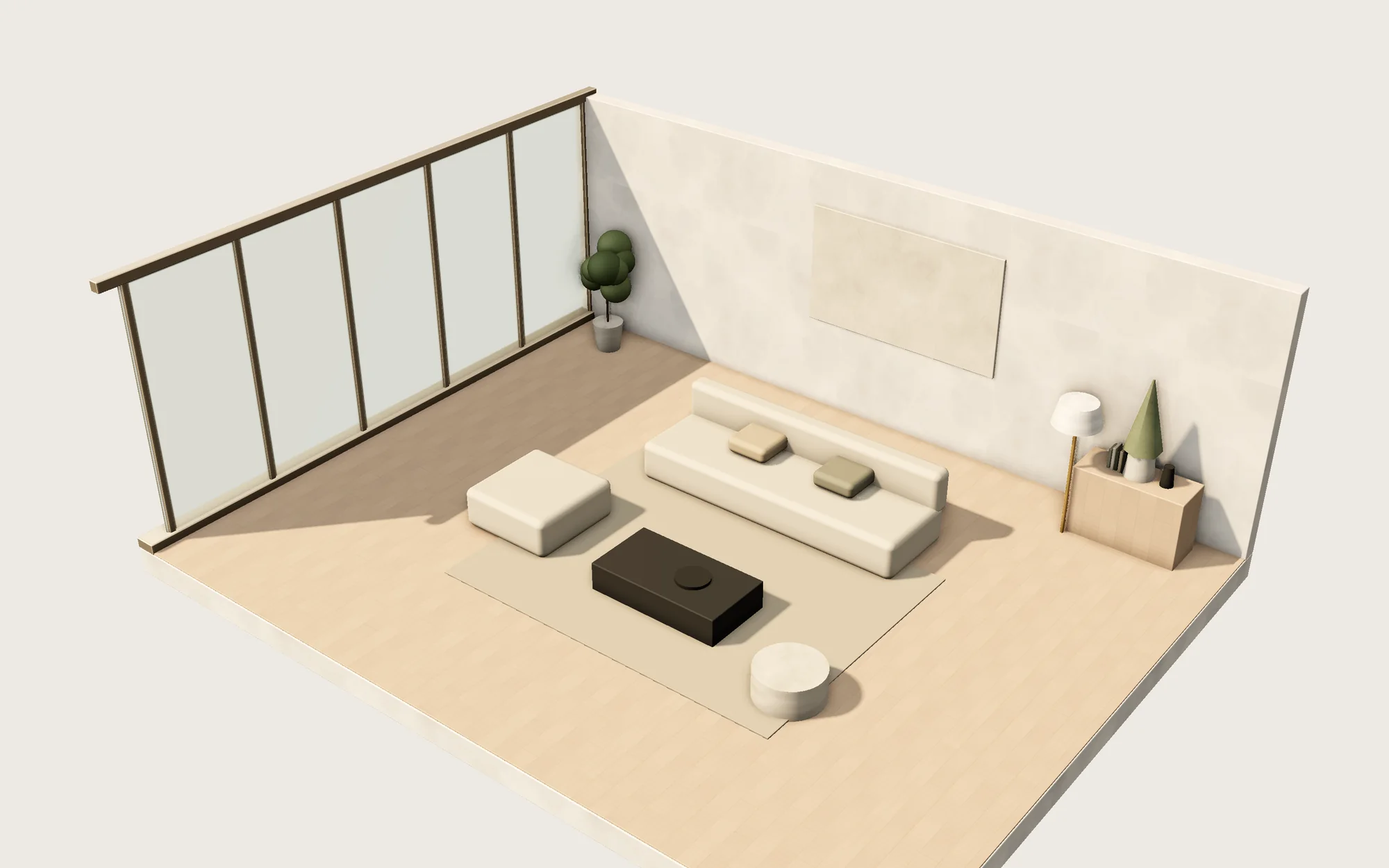
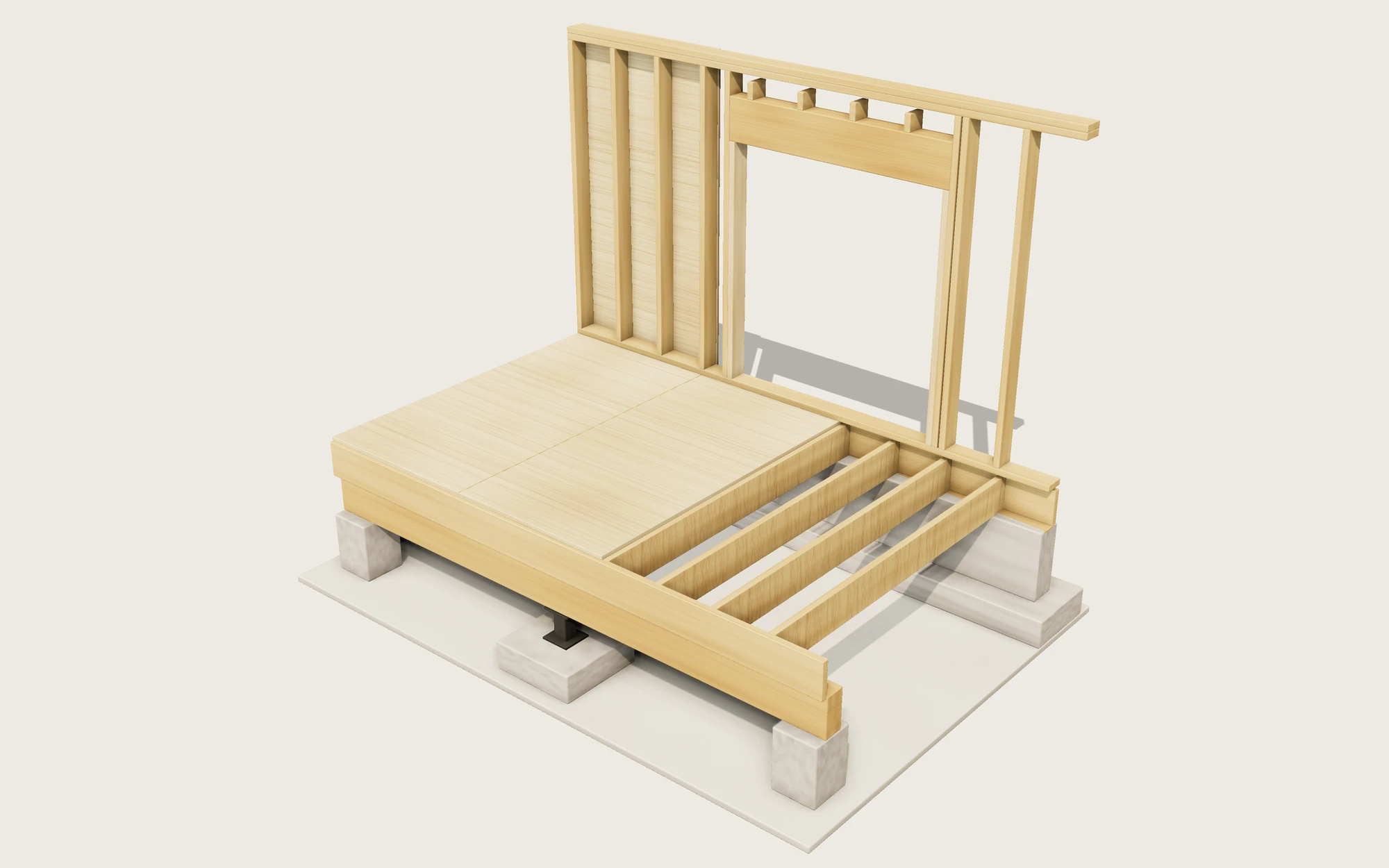
What a remodel costs in Phoenix
The ranges start from national remodeling data and apply the Phoenix area cost factor of 0.90 from the U.S. Army Corps of Engineers. They cover labor, materials and the general contractor's markup for a typical single-family home.
| Job | Phoenix (typical range) | US average |
|---|---|---|
| Cosmetic update, 1,500 sq ft home | $20,250–$54,000 | $22,500–$60,000 |
| Standard renovation, 1,500 sq ft home | $54,000–$135,000 | $60,000–$150,000 |
| Gut renovation, 1,500 sq ft home | $81,000–$202,500 | $90,000–$225,000 |
| Kitchen remodel, mid-range, 150 sq ft | $20,250–$33,750 | $22,500–$37,500 |
| Full bathroom remodel, mid-range | $8,100–$25,200 | $9,000–$28,000 |
| Bedroom or living room refresh | $1,350–$9,000 | $1,500–$10,000 |
| Basement or attic finish | $18,000–$67,500 | $20,000–$75,000 |
| Exterior update | $5,400–$18,000 | $6,000–$20,000 |
| Roof replacement, 2,000 sq ft, asphalt | $6,300–$12,600 | $7,000–$14,000 |
Estimates for 2026, including labor and standard parts. Phoenix prices use the metro's construction cost factor of 0.90 (US average = 1.00) from the U.S. Army Corps of Engineers Area Cost Factors. Your quote depends on access, materials and the condition of the home.
Local bids can land above these figures. An older house often needs its electrical panel, plumbing or roof brought up to current code once the walls open. That work is not part of the cosmetic remodel. Slab-on-grade floors mean new plumbing lines are cut into concrete or run overhead, which adds cost to any bathroom or kitchen move.
Use the cost estimator for a figure based on your ZIP code and scope. National averages by room are in our home remodeling cost guide.
Price it now
Cost estimators for each room
Price the parts of your project for your ZIP code: kitchen, bathroom, flooring, painting, roofing, windows and doors, or open all cost estimators.
Additions and conversions per square foot
| Project | Typical Phoenix cost per sq ft |
|---|---|
| Room addition, ground floor | Priced per project |
| Bump-out of an existing room | Priced per project |
| Garage conversion | $50 to $200 |
| Attic conversion | $50 to $150 |
| Second-story addition | $200 to $500 |
These are national figures before the 0.90 factor. A second story costs the most because the existing foundation and walls have to carry new loads, which brings in an engineer. Our guide to designing an addition covers design fees, and structural engineer coordination explains when stamped calculations are needed.
What the general contractor's share pays for
A general contractor runs the schedule, hires the trades, buys materials, pulls permits, meets inspectors and fixes what goes wrong between trades. That share is a line item in the bid. Ask each bidder to break it out so you can compare like with like.
What a general contractor does, and when you need one
A general contractor runs a project that involves several trades. A typical Phoenix kitchen and bath remodel can need demolition, framing, plumbing, electrical, drywall, stucco patching, cabinets and paint. The GC hires and sequences those trades so one trade does not wait on another and no trade covers an uninspected drain.
The Arizona Registrar of Contractors (AZ ROC) says any business that contracts to build, alter, repair, add to, improve, move, wreck or demolish a building or structure must be a licensed contractor. Contractors must be properly licensed before submitting bids. The AZ ROC licenses and regulates over 60,000 residential and commercial contractors.
Hire a licensed general contractor for a whole-house remodel, an addition, a garage conversion or a casita. Hire the specialty trade directly for single-trade work, such as a plumber in Phoenix for a repipe.
What the license classes mean
Arizona licenses contractors by classification, and the class has to match the work. A residential general contractor can build and remodel houses, a commercial general contractor works on commercial buildings, and specialty classes cover single trades. Ask for the license number and the classification before you sign, and check that the classification covers the scope in the bid.
Do you need a permit?
For almost any real remodel in the Phoenix metro, yes. A building permit is required before construction. The county describes it as your reassurance that inspectors will check the plans and the structure for minimum code safety.
If the house is inside a city, permitting starts with that city. If it sits in unincorporated Maricopa County, the county Planning and Development Department handles it. The county's Permit Center is the online system for Planning and Development, Environmental Services, Flood Control and Transportation permits, and all new permit and plan applications go through it.
How each city handles plan review
| City | Where permits go | What to know |
|---|---|---|
| Phoenix | City of Phoenix | Uses the 2018 Phoenix Building Construction Code, which includes amendments to the 2018 IBC and the 2017 National Electrical Code |
| Tempe | Tempe Citizen Access Portal | All applications online, registered account required; remodels and accessory structures need plan approval before permits issue |
| Chandler | Chandler Development Services | Walk-in plan review Monday to Friday, 8 a.m. to 4:30 p.m., for most residential additions and renovations; free Pre-technical Review required for a substantial addition |
| Peoria | Peoria Development Services portal | Most projects need plans reviewed before a building permit issues; submittals need a Submittal Complete Affidavit |
| Scottsdale, Mesa, Gilbert, Glendale | Each city's own building department | Each runs its own review, fees and inspection schedule |
Chandler has adopted the 2024 International Codes with the 2023 National Electrical Code. Plans submitted on or after July 1, 2025 must comply with those editions. Tempe requires all new construction, additions and renovations to meet its adopted codes. Arizona adopts codes locally, so the edition in force depends on the city.
Unincorporated county rules
In unincorporated Maricopa County, a site plan is required with the residential application, and you should know your project's lot coverage. Drainage regulations and floodplain clearances apply. Minor permits are processed in 1 to 2 business days. Electrical service over 200 amps, roof-mounted HVAC and roof-mounted solar need technical review with a site plan.
The county also warns that new residential land uses are not permitted in the High Noise or Accident Potential Zone of Luke Air Force Base and its auxiliary airfields. You can check a parcel on PlanNet.
Inspections and permit housekeeping
Schedule inspections through your Permit Center account or by calling 602-506-3301. Tempe inspects requests received before midnight the following business day between 6:30 a.m. and 3:30 p.m. Chandler schedules inspections through an automated line at 480-782-3100.
A county permit can be extended once for 180 days free if you ask within 180 days of expiration, and renewed if it has been expired more than 180 days but less than 365 days. A minor residential modification costs a $30 administrative review fee, and inspections are suspended while a modification is under review.
Maricopa County will never request payment by wire transfer. All payments go through Permit Center, and you can verify a suspicious message at 602-506-3301.
Additions, casitas and guest houses
Zoning first, drawings second
Setbacks, height and lot coverage come from the city's zoning ordinance, and they set what you can build before any design work starts. Peoria publishes its General Plan, Zoning Ordinance and Community Design Guidelines for reference. In unincorporated county land, lot coverage is part of the application. Check the numbers before you pay for drawings.
HOA review runs alongside the permit
In Scottsdale, Gilbert and the other suburbs, many neighborhoods have HOAs. The county says to review your CC&Rs before any modification or new construction. It is the property owner's responsibility, and a building permit does not stop an HOA from enforcing its rules. City approval does not settle the HOA question.
Casitas and guest houses
A detached guest house or casita is an accessory structure, and Tempe lists accessory structures among the projects that need plan approval before permits issue. Treat it as a small building project: it needs its own foundation, utilities and inspections.
What the desert does to a remodel
Monsoon wind and dust
The monsoon typically runs from the latter half of June through September. Downburst winds can reach 50, 60 and 70 mph, and in rare cases exceed 100 mph, and they topple trees, fences and utility poles. If your remodel adds a patio cover, a carport or new windows, the wind load matters. Dust storms can cut visibility to near zero, which stops exterior work and coats an open house.
Heat and the building envelope
Phoenix's 1991-2020 average annual rainfall is 7.22 inches, and the Southwest is drier under the current normals. Arizona has seen half a century of increasing annual temperatures. That combination means air sealing, insulation and shade are worth more here than in a mild climate. A remodel that opens walls is the cheapest time to fix duct sealing and attic insulation.
Slab foundations, stucco and flat roofs
Most Phoenix houses sit on slab-on-grade, so moving a drain means cutting concrete. Exterior walls are usually stucco over frame or block, and patching stucco to match is its own trade. Flat and low-slope roofs need careful flashing where an addition meets the old roof. Roof replacement on a 2,000-square-foot house with asphalt runs about $6,300 to $12,600 in Phoenix.
Contracts and payments in Arizona
Arizona sets a rule for progress payments on construction contracts. The owner must make progress payments within seven days after the billing or estimate is certified and approved, unless the contract says otherwise. If the owner pays late, interest runs at 1.5% per month on the unpaid balance, or a higher agreed rate.
The owner may withhold a reasonable amount for retention, and may decline to certify a billing for reasons that include unsatisfactory progress, defective work, disputed work, contract noncompliance, unpaid labor or materials, or evidence the contract cannot be finished for the unpaid balance. Final payment is due within seven days after the final billing is certified and approved.
Pay against written milestones, inspect the work before you certify a billing, and keep a paper trail. Our guide to paying a contractor walks through milestone schedules and lien waivers.
How to check a remodeling contractor before you hire
- Get the license number and look it up on the AZ ROC license search. Confirm the license is active and the classification covers your project.
- Make sure the business name on the license matches the name on the contract.
- Ask about the license bond. Arizona requires applicants to obtain and submit proof of a license bond.
- Check for complaints. AZ ROC investigates and works to resolve complaints against licensed pros and unlicensed entities.
- If the company is an LLC or corporation, confirm it is registered and in good standing with the Arizona Corporation Commission, which the state requires to hold and renew a license.
- Ask for references from similar Phoenix-area projects and call them.
Every contractor in the GOLDGCP network passes our six-step vetting: state license verification, an insurance check, a background and business check, a portfolio review, client reference calls, and onboarding with a quality score.
Areas we cover
GOLDGCP matches homeowners with licensed remodeling contractors across the Phoenix metro, including:
- Phoenix
- Scottsdale
- Mesa
- Tempe
- Chandler
- Gilbert
- Glendale
- Peoria
Enter your ZIP code to see local prices and contractors who serve your area.
How GOLDGCP works
- Describe your project online, by phone or on WhatsApp. You see prices for your ZIP code before anyone visits.
- We match you with up to 3 vetted, licensed pros. For projects that need drawings, our in-house architects can prepare the plans for your city or the county.
- You compare written bids and choose one.
- You pay in milestones, and you pay each one only after you approve that stage. You can follow the schedule, photos and payments in the client portal.
Frequently asked questions
How much does a home remodel cost in Phoenix?
A standard renovation of a 1,500-square-foot Phoenix house runs about $54,000 to $135,000, and a gut remodel $81,000 to $202,500. A mid-range kitchen remodel runs $20,250 to $33,750, and a full bathroom $8,100 to $25,200. Phoenix prices run about 10% below the national average.
Do I need a licensed general contractor for a remodel in Phoenix?
Yes, if the job involves more than one trade. Arizona requires any business that contracts to build, alter, repair or improve a structure to be licensed. Contractors must be licensed before they bid. Ask for the license number and check the classification on the AZ ROC site.
Does a remodel in Phoenix need a permit?
Almost always. A building permit is required before construction. If the house is inside Phoenix, Scottsdale, Mesa, Tempe, Chandler, Gilbert, Glendale or Peoria, that city reviews the plans. If it sits in unincorporated Maricopa County, the county handles it through its Permit Center.
How long does plan review take in Chandler?
Chandler offers walk-in plan review Monday to Friday, 8 a.m. to 4:30 p.m., and most residential additions and renovations can use it. A substantial addition needs the free Pre-technical Review first. Other cities publish their own review times. Ask your contractor which queue your project lands in.
Can I build a casita or guest house on my lot in the Phoenix metro?
Often, if zoning allows it. Setbacks, height and lot coverage come from the city's zoning ordinance. A detached guest house needs plan approval and its own permits. If you have an HOA, review the CC&Rs first, because a city permit does not override HOA rules.
How should I stage payments on a Phoenix remodel?
Pay against written milestones and certify each billing only after you inspect the work. Arizona requires progress payments within seven days after a billing is certified and approved. It lets you withhold a reasonable retention. Keep change orders in writing before the work is done.
What should I watch for in a Phoenix remodel bid?
Ask how the bid handles slab work, stucco patching and roof flashing, since those are the desert-specific costs that get left out. Ask whether permit fees are included and who pulls the permit. Compare the general contractor's share across bids so you compare the same scope.
How we calculate these prices
GOLDGCP starts from national price ranges for each job, taken from published 2026 cost guides and checked against local price guides where they exist. To get a local price, we multiply the national range by the construction cost factor for the metro from the U.S. Army Corps of Engineers Area Cost Factors (US average = 1.00). Where that table has no entry for a metro, we use the nearest listed location or the state value. For ZIP codes outside the 50 largest metros, the cost estimator uses the state's price level from the Bureau of Economic Analysis Regional Price Parities. Ranges include labor and standard materials but not unusual site conditions, so a written quote after an inspection is always the final price.
Sources

About this guide
Written by the GOLDGCP editorial team. Prices come from national cost guides adjusted with official construction cost factors for Phoenix; rules and statistics come from the agencies and reports linked in the text. We update this page when prices or codes change.