
The short answer
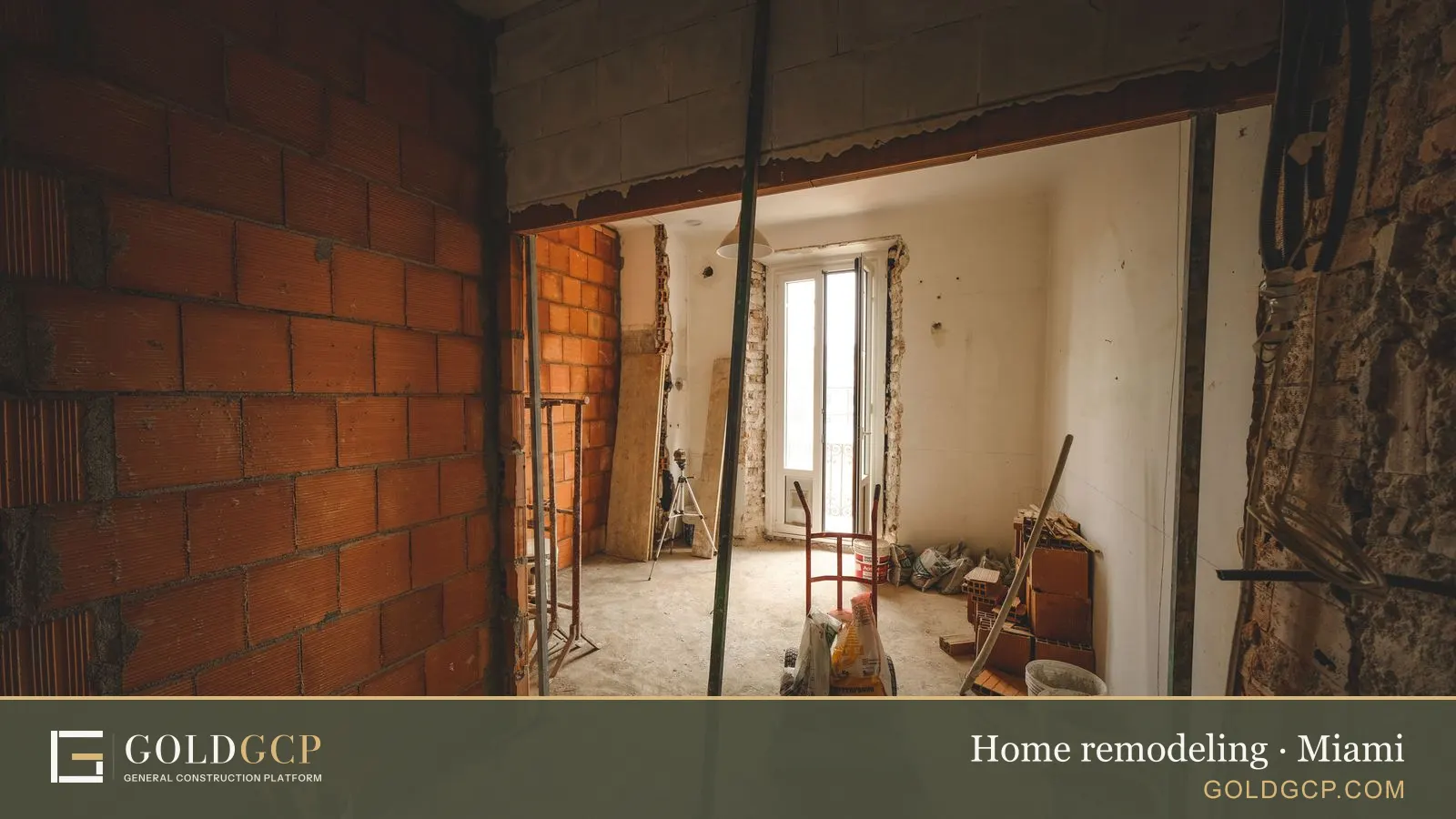
A standard renovation of a 1,500-square-foot Miami house runs about $55,800 to $139,500, and a gut remodel $83,700 to $209,250. The hurricane zone drives much of the cost: Miami-Dade and Broward are in the High-Velocity Hurricane Zone, so windows, doors and roofing need approved products, and the contractor needs the right license.
What a remodel costs in Miami
The ranges below start from national remodeling data and apply the Miami Area cost factor of 0.93 from the U.S. Army Corps of Engineers. They cover labor, materials and the general contractor's markup for a typical single-family home.
| Job | Miami (typical range) | US average |
|---|---|---|
| Cosmetic update, 1,500 sq ft home | $20,950–$55,800 | $22,500–$60,000 |
| Standard renovation, 1,500 sq ft home | $55,800–$139,500 | $60,000–$150,000 |
| Gut renovation, 1,500 sq ft home | $83,700–$209,250 | $90,000–$225,000 |
| Kitchen remodel, mid-range, 150 sq ft | $20,950–$34,900 | $22,500–$37,500 |
| Full bathroom remodel, mid-range | $8,350–$26,050 | $9,000–$28,000 |
| Bedroom or living room refresh | $1,400–$9,300 | $1,500–$10,000 |
| Basement or attic finish | $18,600–$69,750 | $20,000–$75,000 |
| Exterior update | $5,600–$18,600 | $6,000–$20,000 |
| Roof replacement, 2,000 sq ft, asphalt | $6,500–$13,000 | $7,000–$14,000 |
Estimates for 2026, including labor and standard parts. Miami prices use the metro's construction cost factor of 0.93 (US average = 1.00) from the U.S. Army Corps of Engineers Area Cost Factors. Your quote depends on access, materials and the condition of the home.
Miami bids sometimes land above these figures. Opening walls in a house built before 1980 often turns up cast iron drains under the slab, termite damage in the framing or electrical work that was never permitted. Any of those adds a change order to the job. Condo units add another step. The association has to approve the work and schedule the elevator and the service entrance.
Use the cost estimator for a figure based on your ZIP code and scope. National averages by room are in our home remodeling cost guide.
Price it now
Cost estimators for each room
Price the parts of your project for your ZIP code: kitchen, bathroom, flooring, painting, roofing, windows and doors, or open all cost estimators.
Additions and second stories
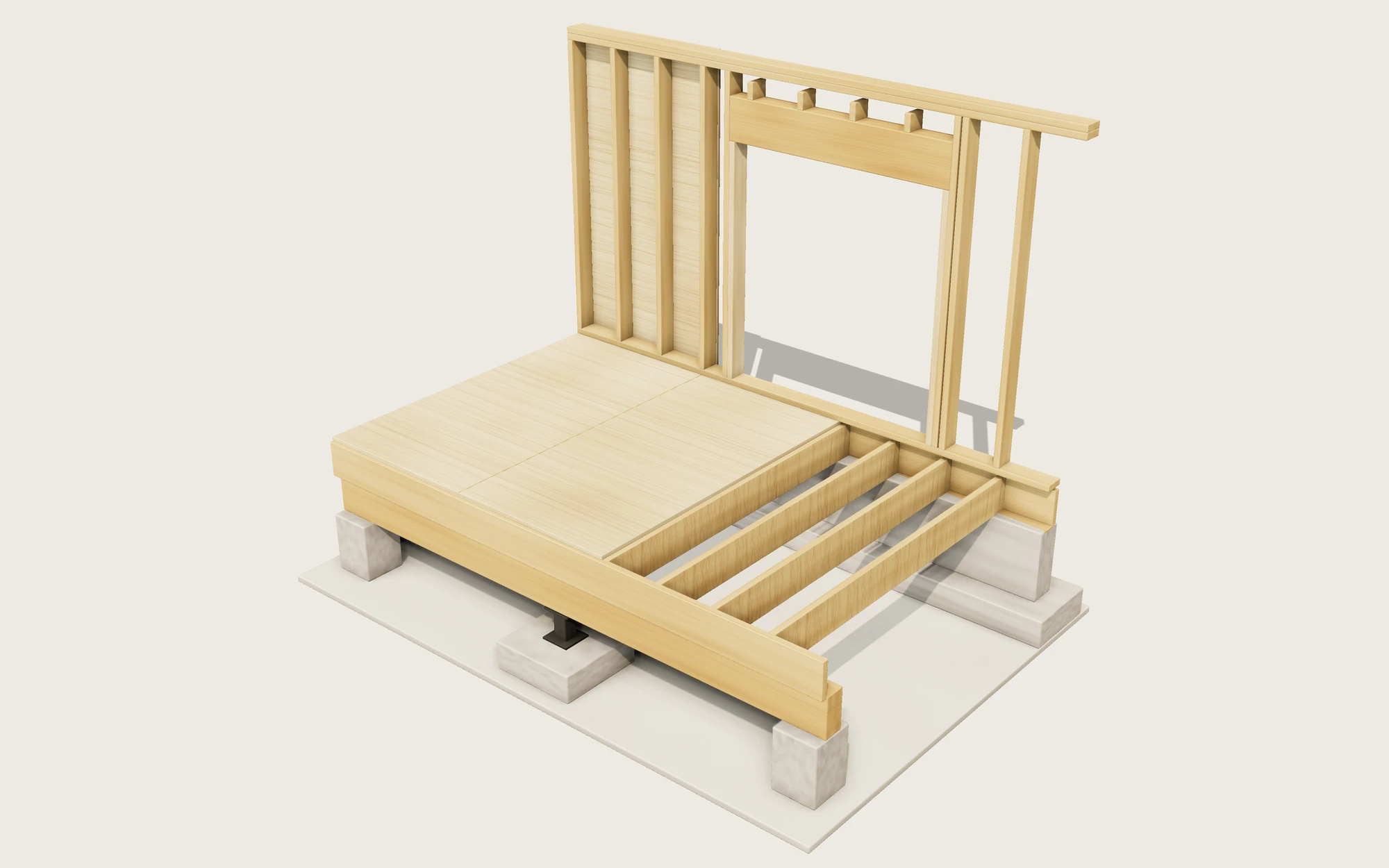
An addition is priced by the square foot. Building up costs more than building out. A second story has to be carried by the existing foundation and walls, which brings in a structural engineer and usually means new footings or a new frame. In the hurricane zone the new roof, windows and doors all need approved products, which adds cost that a room addition on the ground floor does not carry.
Our guide to designing an addition covers the design side. Structural engineer coordination explains when stamped calculations are needed.
What the general contractor's share pays for
The GC's markup covers scheduling the trades, buying materials, pulling permits, meeting inspectors, carrying insurance and fixing problems between trades. On a $100,000 remodel, a 10% to 20% markup is $10,000 to $20,000 of the total. You pay that share when you hire a GC instead of hiring four separate trades yourself.
What a general contractor does, and when you need one
A general contractor runs a project that involves several trades. A whole-house remodel in Miami might need demolition, framing, plumbing, electrical, drywall, tile, cabinets, impact windows and paint. The GC hires and sequences those trades. The electrician does not wait on the framer, and the tile setter does not work over an uninspected drain.
Florida licenses contractors through the Department of Business and Professional Regulation (DBPR) and its Construction Industry Licensing Board. These license types matter on a remodel:
| License | Scope |
|---|---|
| General contractor (CG) | Unlimited as to the type of work, height, area or complexity |
| Building contractor (CB) | Commercial and residential buildings up to three stories; remodeling of any size building if the work does not affect structural members |
| Residential contractor (CR) | One-, two- and three-family homes up to two habitable stories, plus accessory structures |
A certified contractor holds a state certificate and can contract anywhere in Florida. A registered contractor met one local jurisdiction's requirements and can contract only there. Miami-Dade County also issues its own certificates of competency through its Construction Trades Qualifying Board, under Chapter 10 of the county code.
For a whole-house remodel, an addition or a second story, hire a general contractor. For single-trade work, hire the trade directly, such as a plumber in Miami for a repipe.
The $2,500 limit for unlicensed work
Florida exempts work "of a casual, minor, or inconsequential nature" with an aggregate contract price under $2,500, labor and materials included. The exemption disappears when the work is part of a larger job, is split into small contracts to get around the law, or is done by someone who advertises as a contractor. Few remodels qualify for the exemption. Contracts with an unlicensed contractor are unenforceable by that contractor under Florida Statute 489.128.
Do you need a permit?
Most real remodels need a permit. Moving a wall, adding a window, enlarging a bathroom, converting a garage or building an addition all need a building permit from the city or county building department. Each city in the metro runs its own department, including Miami, Miami Beach, Coral Gables, Fort Lauderdale, Hollywood, Boca Raton and West Palm Beach. Unincorporated Miami-Dade is permitted by the county.
Miami-Dade County revised its building permit fee schedule effective October 1, 2025. The county had not raised the fees in more than 17 years. Permit fees are based on the project's valuation and include fees from other agencies, such as the water and sewer department, fire rescue and the state. Fee sheets must be submitted with electrical, mechanical and plumbing permit applications. Fees can be paid online through the county's ePayment service.
Palm Beach County publishes an online Building Fee Estimator, and inspections are scheduled online or by phone at 561-233-5170. Reactivating an inactive permit costs $75 within 180 days, and 30% of the original fee (minimum $75) after that.
The 2026 small-work exemption
From July 1, 2026, work valued under $7,500 on single-family homes, duplexes and townhouses can qualify for a simplified no-building-permit process in Miami-Dade. It does not apply to units in multifamily buildings or to properties in a flood hazard area, and electrical, plumbing, structural, mechanical and gas work still needs a permit. Projects may not be split to avoid permits.
Inspections
| Stage | When to call the inspector |
|---|---|
| Foundation | After footings and steel are set, before concrete is poured |
| Rough | After framing, piping, wiring and ducts are in, before anything is covered |
| Final | When construction is done and fixtures are installed |
Keep the approved plans on site during construction. A failed inspection is billed again as a re-inspection. Miami-Dade lets you pay those online with the permit number.
Hurricane zone rules for additions and second stories
Miami-Dade and Broward are the High-Velocity Hurricane Zone under the Florida Building Code. Every other Florida county, including Palm Beach, is outside it. Inside the zone, windows, exterior doors, shutters, roofing products and structural components need a Miami-Dade Notice of Acceptance (NOA) or an HVHZ-rated Florida Product Approval. Ask for the approval number on every product in the quote, because the inspector checks it.
Palm Beach County is outside the zone but sits in the wind-borne debris region, so opening protection still matters there. The non-HVHZ product rules apply there.
Flood zones and the 50% rule
If your house is in a flood zone, an improvement costing 50% or more of the building's market value (land excluded) triggers the substantial improvement rule. The whole structure then has to meet current floodplain rules. That can mean raising it. Miami-Dade has collected elevation certificates as a permit requirement since 1995, so owners of older homes may need to hire a surveyor. Check your zone on FEMA's map service before you design.
Older buildings and recertification
Miami-Dade recertifies buildings at 30 years of age. Coastal condo and co-op buildings three stories or taller within three miles of the coastline are recertified at 25 years. Single-family homes, duplexes and buildings with an occupant load of 10 or less and 2,000 square feet or less are exempt. If you own a condo unit, the association's recertification and milestone inspection schedule can affect when your own work can proceed.
Contracts and deposits under Florida law
Florida Statute 489.126 sets the main rule on deposits. If a contractor takes an initial payment of more than 10% of the contract price for residential work, the contractor must apply for the necessary permits within 30 days and start work within 90 days after the permits are issued. A contractor who misses those deadlines can be prosecuted for theft. Penalties rise with the amount. A first-degree misdemeanor applies under $1,000, a third-degree felony from $1,000 to $20,000, a second-degree felony from $20,000 to $200,000, and a first-degree felony at $200,000 or more.
If the contractor misses those deadlines, send a written demand by certified mail, return receipt requested, to the address in the contract. If the contract has no address, send it to the licensing address on file with DBPR or the local licensing board. A contractor who does not apply for permits, start work or refund within 30 days of that demand may be treated as lacking just cause. Licensed pros who take money and do not perform can also face claims against the Florida Homeowners' Construction Recovery Fund.
Our guide to paying a contractor walks through milestone schedules and lien releases.
How to check a remodeling contractor before you hire
- Get the license number and look it up on the DBPR license verification. For a whole-house remodel, look for a certified general contractor (CG) or building contractor (CB) with active status.
- Make sure the business name on the license matches the contract.
- Check workers' compensation coverage through the Florida Department of Financial Services, Division of Workers' Compensation.
- Confirm the contractor carries liability insurance and ask for a certificate.
- Ask for three local references from similar projects and call them.
- Check that every subcontractor on the job holds the right license for their trade.
Every contractor in the GOLDGCP network passes our six-step vetting. The steps are license verification, an insurance check, a background and business check, a portfolio review, client reference calls, and onboarding with a quality score.
Areas we cover
GOLDGCP matches homeowners with licensed remodeling contractors across the Miami metro, including:
- Miami and Miami Beach
- Coral Gables
- Fort Lauderdale and Hollywood
- Boca Raton and West Palm Beach
Enter your ZIP code to see local prices and contractors who serve your area.
How GOLDGCP works
- Describe your project online, by phone or on WhatsApp. You see prices for your ZIP code before anyone visits.
- We match you with up to 3 vetted, licensed pros. For projects that need drawings, our in-house architects can prepare the plans for your city's building department.
- You compare written bids and choose one.
- You pay in milestones, and you pay each one only after you approve that stage. You can follow the schedule, photos and payments in the client portal.
Frequently asked questions
How much does a general contractor charge in Miami?
Most general contractors charge a markup of 10% to 20% of construction cost on large remodels. A standard renovation of a 1,500-square-foot Miami house runs about $55,800 to $139,500 in total, including that markup. A gut remodel runs about $83,700 to $209,250.
Do I need a certified general contractor for a remodel in Miami?
Yes, if the job involves several trades and structural work. A certified general contractor (CG) has unlimited scope. A building contractor (CB) is limited to buildings up to three stories, and a residential contractor (CR) to one- to three-family homes up to two habitable stories. Check the license on the DBPR site.
How much can a contractor ask as a deposit in Florida?
There is no flat cap. If the contractor takes more than 10% of the contract price up front, Florida Statute 489.126 requires permits within 30 days and work to start within 90 days after the permits are issued. A contractor who does not can be prosecuted for theft.
What is the High-Velocity Hurricane Zone and does it affect my remodel?
Miami-Dade and Broward are the High-Velocity Hurricane Zone under the Florida Building Code. Windows, exterior doors, shutters and roofing products need a Miami-Dade Notice of Acceptance or an HVHZ-rated Florida Product Approval. Palm Beach County is outside the zone but still in the wind-borne debris region.
Do I need a permit for a small remodel in Miami-Dade?
From July 1, 2026, work valued under $7,500 on single-family homes, duplexes and townhouses can qualify for a simplified no-building-permit process. It does not apply to multifamily units or flood hazard areas, and electrical, plumbing, structural, mechanical and gas work still needs a permit.
How long does a whole-house remodel take in Miami?
The time depends on the scope and the permit review. A standard renovation of a 1,500-square-foot house typically takes several months. A gut remodel or an addition takes longer. Hurricane season runs from June 1 to November 30 and can slow exterior work and inspections.
Can I add a second story to my house in Miami?
Often yes, if your lot's zoning allows the added floor area and the existing foundation and walls can carry the new loads. A second story needs structural engineering, full plan check and HVHZ-approved products for the new roof, windows and doors. A second story usually costs more per square foot than building out.
How we calculate these prices
GOLDGCP starts from national price ranges for each job, taken from published 2026 cost guides and checked against local price guides where they exist. To get a local price, we multiply the national range by the construction cost factor for the metro from the U.S. Army Corps of Engineers Area Cost Factors (US average = 1.00). Where that table has no entry for a metro, we use the nearest listed location or the state value. For ZIP codes outside the 50 largest metros, the cost estimator uses the state's price level from the Bureau of Economic Analysis Regional Price Parities. Ranges include labor and standard materials but not unusual site conditions, so a written quote after an inspection is always the final price.
Sources
- myfloridalicense.com
- The Florida Senate
- Miami-Dade County · Building Fee Schedules, Refunds &…
- Miami-Dade County · Building permit fees to increase Oct. 1
- Miami-Dade County · Building Contractor Licenses
- U.S. Army Corps of Engineers
- U.S. Bureau of Economic Analysis

About this guide
Written by the GOLDGCP editorial team. Prices come from national cost guides adjusted with official construction cost factors for Miami; rules and statistics come from the agencies and reports linked in the text. We update this page when prices or codes change.