The short answer
Replacement windows in Miami cost about $325 to $1,100 each in vinyl and $560 to $1,850 in fiberglass, so ten vinyl windows run roughly $3,250 to $11,150. Product approval matters most. Miami-Dade and Broward sit in the High-Velocity Hurricane Zone, so every window needs a Miami-Dade NOA or a Florida Product Approval before the permit is issued.
What window replacement costs in Miami
The table starts from national installed prices and adjusts them for the local market. The U.S. Army Corps of Engineers puts construction costs in the Miami area at 0.93 times the national average, so a window that costs $1,000 to install in an average US city tends to cost about $930 here.
| Job | Miami (typical range) | US average |
|---|---|---|
| Vinyl window, installed | $325–$1,100 | $350–$1,200 |
| Fiberglass window, installed | $560–$1,850 | $600–$2,000 |
| Wood window, installed | $745–$2,800 | $800–$3,000 |
| Aluminum window, installed | $165–$930 | $175–$1,000 |
| Composite window, installed | $370–$2,150 | $400–$2,300 |
| 10 vinyl windows, installed | $3,250–$11,150 | $3,500–$12,000 |
| Bay window, vinyl | $1,050–$3,550 | $1,100–$3,850 |
| New trim, per window | $37–$110 | $40–$120 |
Estimates for 2026, including labor and standard parts. Miami prices use the metro's construction cost factor of 0.93 (US average = 1.00) from the U.S. Army Corps of Engineers Area Cost Factors. Your quote depends on access, materials and the condition of the home.
These prices assume an insert (pocket) replacement in a standard opening. A full-frame replacement, where the installer takes the old frame out down to the block, costs more, and in Miami it usually means patching stucco around every opening. Ask whether the quote includes that patch and the paint.
What raises a Miami window quote:
- Impact glass. A window rated for wind-borne debris costs more than a standard insulated unit, and in Miami-Dade and Broward it is what the code expects unless you have rated shutters.
- Stucco and concrete block walls. CBS walls are common across South Florida, and opening one for a full-frame job takes more time than cutting into wood siding.
- Second-story and condo access. Ladders, scaffolding and building protection add setup time. High-rise work brings its own rules, covered below.
- Size and shape. Large picture windows, arched tops and bay windows cost much more than a standard slider. A vinyl bay window runs $1,050 to $3,550 here.
- Lead-safe work. In a house built before 1978, the crew has to follow EPA lead-safe rules, which adds setup and cleanup time.
Price your own project with the cost estimator below, or open the full window cost estimator. Both use the rate for your ZIP code. For national prices and how window styles compare, see our window replacement cost guide.
Which window frame suits a Miami house?
About half of the homes in Miami-Dade and Broward were built before 1980. The share is higher in Hollywood (74.7%), Miami Beach (67.3%), Fort Lauderdale (65.1%) and Coral Gables (61.1%) (Census Reporter, ACS 2020 to 2024). Houses from that era often still have single-pane aluminum sliders, which are the usual reason owners start shopping.
| Frame | Miami installed price per window | Where it fits in Miami |
|---|---|---|
| Vinyl | $325 to $1,100 | Most concrete-block houses and condos; the usual value pick |
| Fiberglass | $560 to $1,850 | East- and west-facing walls with strong sun and salt air; holds its shape in heat |
| Wood or clad wood | $745 to $2,800 | Coral Gables and historic districts where the original look matters |
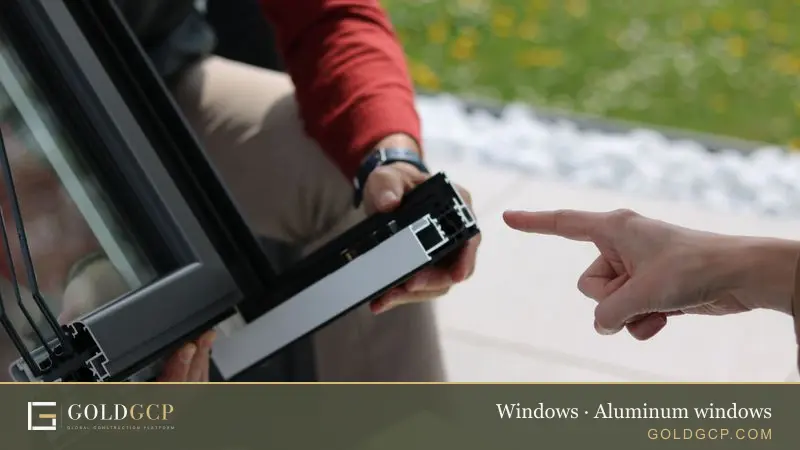
| Aluminum | $165 to $930 | Slim modern frames; choose a thermally broken model |
| Composite | $370 to $2,150 | Wood look with less upkeep |
Vinyl costs the least of the insulated frames, and our vinyl windows guide covers lifespan and color choices. For a wall that faces the afternoon sun and the ocean breeze, compare it with fiberglass windows, which cost more but stay stable through heat and salt. Owners of older Mediterranean Revival houses in Coral Gables often want wood windows to keep the original look. If you like the thin lines of mid-century aluminum, read our aluminum windows guide about thermal breaks before you buy.
Salt air matters near the coast. It attacks hinges, locks, screws and any steel reinforcement in the frame. Ask what the hardware is made of and whether the fasteners are stainless.
Glass ratings for the Miami climate
Miami is a cooling climate. The window's main job is to keep summer heat out, and in the HVHZ it also has to keep wind and flying debris out. Two numbers on the NFRC label tell you how well the glass handles heat:
- U-factor measures heat loss. Lower is better.
- Solar heat gain coefficient (SHGC) measures how much of the sun's heat comes through the glass. Lower is better in a cooling climate like Miami.
The ENERGY STAR zone for Miami
Miami-Dade, Broward and Palm Beach counties sit in IECC climate zone 1A, the hottest and most humid zone in the country. ENERGY STAR maps that zone to its South climate region, and a window certified for the South carries a U-factor and SHGC that meet the program's limits for that region. Ask the installer for the ENERGY STAR label for your zone, not just the brand's general claim. Our energy-efficient windows guide explains the labels in more detail.
What the Florida Building Code requires
Florida's energy code sets its own floor for replacement windows, and the 2023 Florida Building Code, 8th Edition, took effect December 31, 2023 (ICC). The 9th Edition takes effect December 31, 2026, so a job permitted around that date should confirm with the local building department which edition applies.
In Miami-Dade and Broward, wind matters more than heat. The Florida Building Code makes every county except Miami-Dade and Broward a non-HVHZ area, and those two counties are the High-Velocity Hurricane Zone (Miami-Dade Product Control). In the HVHZ, every window, door, shutter and skylight needs a Miami-Dade Notice of Acceptance or an HVHZ-rated Florida Product Approval, and the product has to carry a design pressure rating that meets the pressures calculated for your opening.
Palm Beach County is outside the HVHZ, so products there do not need a Miami-Dade NOA and statewide Florida Product Approval is accepted. Much of the county is still a wind-borne debris region, so impact-rated or protected openings are required, and every product must carry a design pressure rating that meets the pressures calculated for your specific opening (Powerful Impact Solutions).
Impact glass or shutters
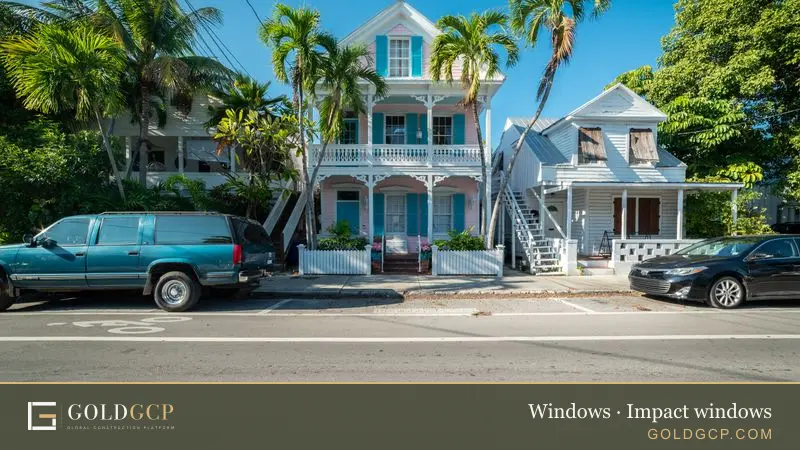
You have two ways to protect an opening: impact glass, or a non-impact window plus a rated shutter system. Impact glass costs more up front and needs no storm prep. Shutters cost less per opening but have to be closed before every storm, and they need their own permit and product approval. Our impact windows guide compares the two.
Budget without a federal tax credit. The credit for energy-efficient windows does not apply to windows placed in service after December 31, 2025.
Do you need a permit to replace windows in Miami?
Yes, almost everywhere in the metro. Miami-Dade County lists window, shutter, door and security bar work as permit work, with its own application forms, checklists and standard details (Miami-Dade Building). The county's 2026 simplified no-permit process for work under $7,500 on single-family homes, duplexes and townhouses does not cover structural work, and it lists windows and doors as still needing a permit. It also does not apply to properties partly or fully in a flood hazard area (Miami-Dade).
| Area | Permit office | What to expect |
|---|---|---|
| Miami | City of Miami Building Department | Its own forms and fees; the county list does not automatically apply |
| Miami Beach | City of Miami Beach Building Department | Its own forms and fees |
| Coral Gables | City of Coral Gables Development Services | Its own forms and fees |
| Unincorporated Miami-Dade | Miami-Dade County | County forms, product approval and inspections |
| Fort Lauderdale | City of Fort Lauderdale Building Services | Broward County sits in the HVHZ; BORA amendments apply |
| Hollywood | City of Hollywood Building Division | Broward County sits in the HVHZ |
| Boca Raton | City of Boca Raton Building Permits and Inspections | Palm Beach County, outside the HVHZ |
| West Palm Beach | City of West Palm Beach Building Division | Palm Beach County, outside the HVHZ |
The whole metro is in one state, so one set of state license rules and one statewide building code apply everywhere. Permits are issued by each city, or by the county for unincorporated areas.
Product approval: what to ask to see
Miami-Dade County requires product approval for building materials used for the protection of the building envelope, mainly windows, exterior glazing, wall cladding, roofing, exterior doors, skylights, glass block, siding and shutters (Miami-Dade Product Approval). You can search the county database by file number, or filter by category, material, impact rating and maximum design pressure (Product Control Search).
Before you sign, ask the installer for:
- The NOA or Florida Product Approval number for every window on the quote, and the approval and expiration dates.
- The design pressure rating of each unit, matched to the opening it goes into.
- The Florida Product Approval number if the job is in Palm Beach County.
The permit inspector checks these, so a quote without them is incomplete.
Condo associations and high-rise rules
Many Miami homes are in large buildings. Buildings with 50 or more units hold 48.6% of homes in Miami Beach and 40.1% in the City of Miami, and only 8.8% of Miami Beach homes are detached houses (Census Reporter, above). If you own a condo, the association usually has to approve the change before you apply for a permit, and it may require a specific window color or product line to keep the facade uniform.
High-rise work brings extra rules. Miami-Dade defines a threshold building as any building more than three stories, more than 50 feet tall, or an assembly occupancy over 5,000 square feet with more than 500 occupants. Installing windows and doors in a threshold building requires a threshold inspection by a State of Florida certified Special Inspector plus a special inspection plan from the engineer of record, and the permit needs wind calculations for all openings (Miami-Dade Windows, Shutters, Doors and Security Bars). The county also requires milestone inspections for condo and cooperative buildings three stories and taller.
Flood zones and the 50% rule
If your house is in a flood zone, the window job may trigger more than a window permit. An improvement costing 50% or more of the building's market value before the work requires the whole structure to meet current floodplain rules, which can mean raising it. Miami-Dade has collected FEMA Elevation Certificates as a permit requirement since 1995, so owners of homes built before then may need to hire a surveyor (Miami-Dade Elevation Certificates). Look up your zone at FEMA before you order.
Bedroom egress and security bars
Every sleeping room needs an operable emergency escape and rescue opening that opens directly to a public way or to a yard or court that opens to a public way. The opening needs at least 5.7 square feet of clear space (5 square feet at ground level), a clear height of 24 inches, a clear width of 20 inches, and a sill no more than 44 inches above the floor. It must open from inside without keys, tools or special knowledge (Pinellas County, 2023 Florida Building Code).
Homes built before 1973 may never have had an egress opening, and they must now meet current standards. Replacement windows get some relief: owners with already permitted replacement windows have up to one year to comply. If old fixed bars sit in front of a bedroom window you are replacing, price quick-release hardware or new bars in the same job.
Lead-safe work in older Miami homes
With about half the housing in Miami-Dade and Broward built before 1980, much of the metro went up before 1978, when lead paint was banned for homes. The EPA's Renovation, Repair and Painting rule says any paid work that disturbs paint in a pre-1978 home must be done by a certified firm using lead-safe practices (EPA). Window replacement is always covered, with no small-job exemption. Expect plastic sheeting and careful cleanup around each opening, and ask for the firm's certification before work starts. Our Miami painting guide covers the lead rules for trim and stucco work.
When to schedule the work
Hurricane season in Miami-Dade runs from June 1 to November 30 (Miami-Dade Building). Openings are exposed for a few hours during a change-out, and a tropical system can arrive with little warning, so many owners schedule window work in the drier winter months. The wet season is real: Miami International averages 10.51 inches in June and 10.22 inches in September, against 1.83 inches in January (NOAA NCEI normals). Custom impact windows can take weeks to arrive after ordering, so order early if you want them in before the season.
Permit timing varies by city. Boca Raton permit processing typically takes 2 to 4 weeks and West Palm Beach 2 to 5 weeks. Projects needing HOA approval should plan an extra 1 to 3 weeks before permit submission (Powerful Impact Solutions, above).
How to check a window installer before you hire
Florida licenses contractors through the Department of Business and Professional Regulation. A certified contractor holds a state certificate of competency and may contract anywhere in Florida; a registered contractor may contract only in the jurisdiction where it registered (DBPR). Window work is usually pulled by a general, building or residential contractor, or by a specialty contractor holding a local certificate of competency. Miami-Dade's Construction Trades Qualifying Board issues local certificates in categories that include Glass and Glazing, Door Contractor, and Metal Awning and Storm Shutter (Miami-Dade).
- Look up the license on the DBPR license search. Check that it is active and that the business name matches the bid.
- For a Miami-Dade contractor, also search the county's Certificate of Competency database, which shows status and any complaints.
- For a pre-1978 house, ask for the firm's EPA lead-safe certification.
- Get the window line, frame material, U-factor, SHGC, design pressure and NOA number in writing.
- Ask who pulls the permit and who handles condo association approval if you need it.
- Do not make final payment until the permit is closed and the final inspection passes.
A contract with an unlicensed contractor is unenforceable by that contractor under Florida law, and unlicensed contracting during a declared state of emergency is a third-degree felony (F.S. 489.128, F.S. 489.127). The state's minor work exemption for jobs under $2,500 does not help here, because a window change-out needs a permit.
Every installer in the GOLDGCP network passes six-step vetting: license verification, an insurance check, a background and business check, a portfolio review, client reference calls, and onboarding with a quality score. You pay in milestones, each one after you approve that stage. Read more about how milestone payments work.
Areas we cover
GOLDGCP window installers work across Miami-Dade, Broward and Palm Beach counties:
- Miami
- Miami Beach
- Coral Gables
- Fort Lauderdale
- Hollywood
- Boca Raton
- West Palm Beach
Enter your ZIP code to see window prices for your street and get matched with a local installer.
How GOLDGCP works
- Tell us about the windows: how many, the frame you have now, and any that stick, leak or won't lock. Use the form, call or send a WhatsApp message.
- See prices for your ZIP code, then get matched with up to 3 vetted, licensed installers.
- Your installer measures each opening, confirms the NOA or Florida Product Approval and pulls the permit.
- You pay by milestone, for example after the windows arrive and after the final inspection, and follow the job in the client portal.
For new doors at the same time, see our Miami door installation guide. If a storm has already damaged your windows or roof, our Miami emergency repairs page covers what to do first, and our Miami roofing guide covers roof damage and insurance claims.
Frequently asked questions
How much does window replacement cost in Miami?
A vinyl replacement window costs about $325 to $1,100 installed in Miami, fiberglass $560 to $1,850 and wood $745 to $2,800. Ten vinyl windows run about $3,250 to $11,150. Impact glass and full-frame work cost more, and bay or custom windows cost more again.
Do I need a permit to replace windows in Miami?
Yes, almost everywhere in the metro. Miami-Dade County lists window work as permit work, and the 2026 no-permit process for work under $7,500 does not cover windows or properties in a flood hazard area. Miami, Miami Beach, Coral Gables, Fort Lauderdale, Hollywood, Boca Raton and West Palm Beach each issue their own permits.
What is a Miami-Dade NOA and why do I need one?
A Notice of Acceptance is the document Miami-Dade's Product Control Section issues when a product is approved for use in the county. In the High-Velocity Hurricane Zone, which covers Miami-Dade and Broward, every window needs a current NOA or an HVHZ-rated Florida Product Approval before the permit is issued. Ask for the number and expiration date.
Do I need impact windows in Miami?
In Miami-Dade and Broward, yes, unless you have a rated shutter system covering the opening. Palm Beach County is outside the HVHZ but much of it is a wind-borne debris region, so impact-rated or protected openings are required there too. Impact glass costs more up front and needs no storm prep.
What U-factor do replacement windows need in Miami?
ENERGY STAR's South climate region, which covers Miami, sets U-factor and SHGC limits for a certified window, and the label for your zone shows whether a unit meets them. The Florida Building Code sets its own energy limits, and the wind rating matters more here than the heat numbers.
Do bedroom windows have to meet egress rules in Miami?
A bedroom needs an escape opening of at least 5.7 square feet, 24 inches high and 20 inches wide, with the sill no more than 44 inches up, and it must open from inside without keys or tools. Homes built before 1973 may never have had one and must now meet current standards.
Do window installers need a license in Florida?
Yes. Florida licenses contractors through DBPR, and a certified contractor may work anywhere in the state while a registered contractor may work only in the jurisdiction where it registered. Miami-Dade also issues local certificates of competency for glass and glazing work. Check the license before you sign.
How we calculate these prices
GOLDGCP starts from national price ranges for each job, taken from published 2026 cost guides and checked against local price guides where they exist. To get a local price, we multiply the national range by the construction cost factor for the metro from the U.S. Army Corps of Engineers Area Cost Factors (US average = 1.00). Where that table has no entry for a metro, we use the nearest listed location or the state value. For ZIP codes outside the 50 largest metros, the cost estimator uses the state's price level from the Bureau of Economic Analysis Regional Price Parities. Ranges include labor and standard materials but not unusual site conditions, so a written quote after an inspection is always the final price.
Sources
- Census Reporter
- ENERGY STAR
- International Code Council
- wwwx.miamidade.gov
- Powerful Impact Solutions
- irs.gov
- Miami-Dade County · Building Homepage
- Miami-Dade County · Miami-Dade County
- Miami-Dade County · Product Approval
- Miami-Dade County · Product Control Search - Miami-Dade County
- Miami-Dade County · Windows, Shutters, Doors and Security Bars
- Miami-Dade County · Miami-Dade County
- FEMA
- Pinellas County
- U.S. EPA
- NOAA
- www2.myfloridalicense.com
- Miami-Dade County · Miami-Dade County
- myfloridalicense.com
- Miami-Dade County Building and Neighborhood Compliance Office
- leg.state.fl.us · leg.state.fl.us
- leg.state.fl.us · leg.state.fl.us
- U.S. Army Corps of Engineers
- U.S. Bureau of Economic Analysis

About this guide
Written by the GOLDGCP editorial team. Prices come from national cost guides adjusted with official construction cost factors for Miami; rules and statistics come from the agencies and reports linked in the text. We update this page when prices or codes change.