The short answer
A replacement window in Chicago costs about $420 to $1,450 installed in vinyl and $720 to $2,400 in fiberglass, so ten vinyl windows run roughly $4,200 to $14,400. Climate zone 5A winters make the U-factor the number to check, and the permit answer changes from city to city.
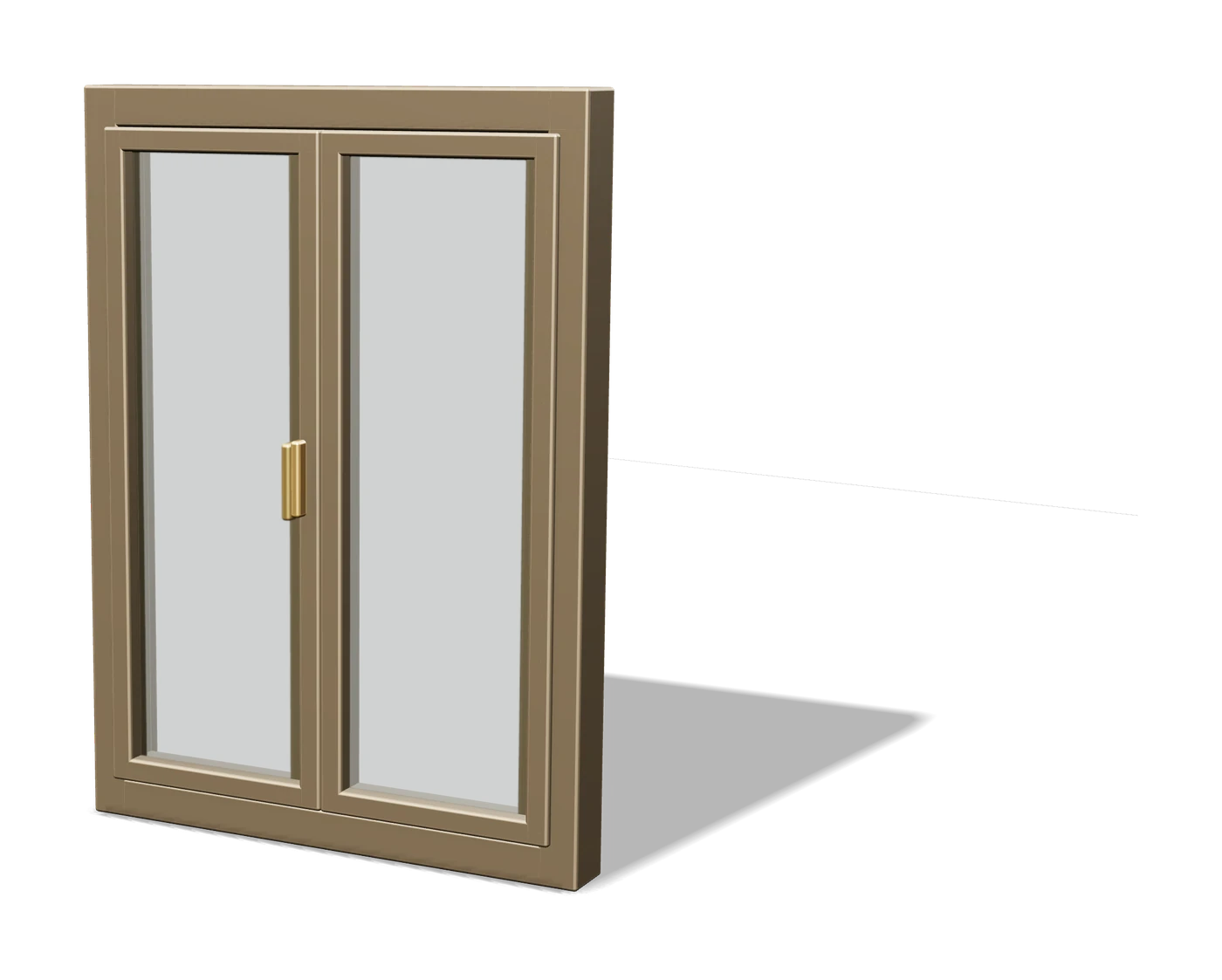
What window replacement costs in Chicago
The table starts from national installed prices and adjusts them for Chicago. The U.S. Army Corps of Engineers puts construction costs in the Chicago area at 1.20 times the national average (Great Lakes, North Chicago), so a window that costs $1,000 to install in an average US city costs about $1,200 here.
| Job | Chicago (typical range) | US average |
|---|---|---|
| Vinyl window, installed | $420–$1,450 | $350–$1,200 |
| Fiberglass window, installed | $720–$2,400 | $600–$2,000 |
| Wood window, installed | $960–$3,600 | $800–$3,000 |
| Aluminum window, installed | $210–$1,200 | $175–$1,000 |
| Composite window, installed | $480–$2,750 | $400–$2,300 |
| 10 vinyl windows, installed | $4,200–$14,400 | $3,500–$12,000 |
| Bay window, vinyl | $1,350–$4,600 | $1,100–$3,850 |
| New trim, per window | $48–$145 | $40–$120 |
Estimates for 2026, including labor and standard parts. Chicago prices use a construction cost factor of 1.20 (US average = 1.00) from the U.S. Army Corps of Engineers Area Cost Factors, based on Great Lakes (NTC), North Chicago. Your quote depends on access, materials and the condition of the home.
These prices assume an insert (pocket) replacement in a standard opening. A full-frame replacement, where the installer takes the old frame out and opens the wall around it, costs more. On a Chicago bungalow with a brick exterior, that means masonry work and a patch, so ask whether the quote includes it.
What raises a Chicago window quote
- Full-frame work in a brick or masonry wall. The opening has to be finished and the exterior made weathertight again.
- Third-floor and attic-level access. Bungalows and two-flats often have windows high off the ground, and scaffolding or a lift adds cost.
- Size and shape. A vinyl bay window runs $1,350 to $4,600 here. New trim adds $48 to $145 per window.
- Lead-safe work. In a house built before 1978, the crew has to follow EPA lead-safe rules, which adds setup and cleanup time at every opening.
- Historic review. A landmark district or a local historic district can require a specific window profile, which costs more than an off-the-shelf unit.
Price your own project with the cost estimator below, or open the full window cost estimator. Both use the rate for your ZIP code. For national prices and how window styles compare, see our window replacement cost guide.
Which window frame suits a Chicago house?
Chicago's housing stock splits sharply: the city, Evanston and Oak Park are old and dense. 75.2% of Chicago housing units were built before 1980, 76.2% in Evanston and 86.1% in Oak Park (Census Reporter, ACS 2024 5-year). Naperville is the opposite: 25.8% of its units predate 1980, and the median home went up in 1990. That means two different jobs. In the city and the inner suburbs you are usually replacing original double-hung wood windows. In Naperville, Schaumburg and Aurora you are usually replacing builder-grade vinyl from the 1980s and 1990s.
| Frame | Chicago installed price per window | Where it fits here |
|---|---|---|
| Vinyl | $420 to $1,450 | Most bungalows, two-flats and suburban houses; the usual value pick |
| Fiberglass | $720 to $2,400 | South- and west-facing walls; holds its shape through freeze-thaw |
| Wood or clad wood | $960 to $3,600 | Landmark districts, Oak Park and Evanston historic blocks |
| Aluminum | $210 to $1,200 | Slim frames; choose a thermally broken model in this climate |
| Composite | $480 to $2,750 | Wood look with less upkeep |
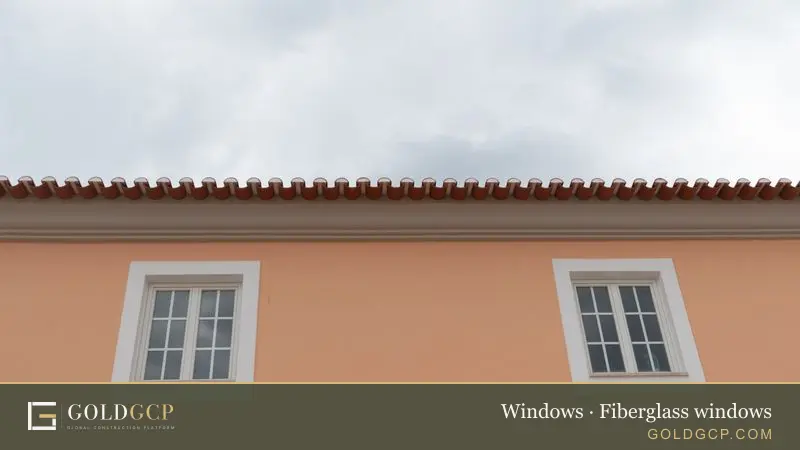
Vinyl costs the least of the insulated frames. Our vinyl windows guide covers lifespan and color choices. Fiberglass costs more but expands and contracts less through the freeze-thaw cycle. Chicago has 121 days a year at or below freezing (NWS Chicago normals). Owners of original bungalows and houses in historic districts often want wood windows to keep the look. If you like thin aluminum lines, read our aluminum windows guide about thermal breaks before you buy. Our fiberglass windows guide compares the two mid-range options.
Road salt on the South Side and near the lake is hard on aluminum and on hardware. Rinse the frames and moving parts each spring.
Glass ratings for the Chicago climate
Chicago is in IECC climate zone 5A, "Cold," for Cook and DuPage counties in Illinois and Porter County in Indiana (DOE Building America climate guide). The window's main job here is keeping winter heat in, so the U-factor matters more than the solar heat gain coefficient.
- U-factor measures heat loss. Lower is better.
- Solar heat gain coefficient (SHGC) measures how much of the sun's heat comes through the glass. In a cold climate you can accept a higher number, because winter sun helps.
What the energy code requires
Illinois adopts the Illinois Energy Conservation Code statewide, and the 2024 IECC as amended took effect November 30, 2025 (Capital Development Board). The City of Chicago runs its own Chicago Energy Transformation Code, based on the 2021 IECC, for projects whose first permit application started on or after November 1, 2022 (City of Chicago). Replacement windows have to meet the code's limits for the home's climate zone, and the permit application asks for an energy and water efficiency compliance form.
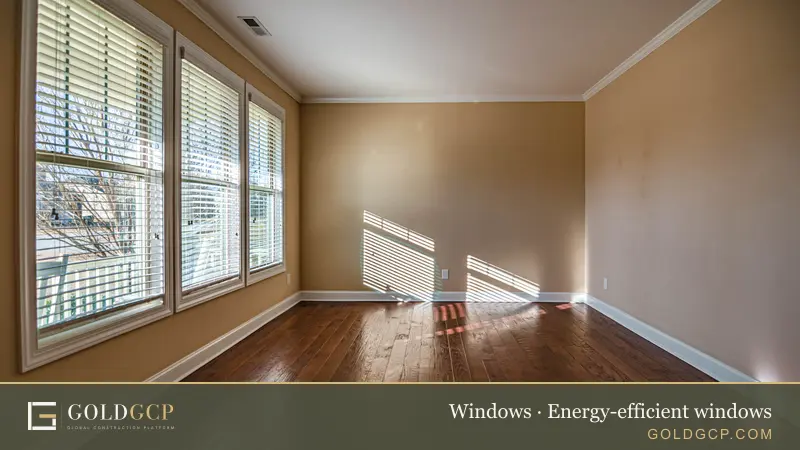
Ask the installer for the NFRC label on the actual unit. Our energy-efficient windows guide explains the labels in more detail.
Condensation in January
January averages a high of 31.6°F and a low of 18.8°F at O'Hare, and 43 days a year stay at or below freezing all day (NWS Chicago normals). On a single-pane window that means condensation, then frost, then a wet sill. A double-pane unit with a low U-factor keeps the interior glass warmer and cuts the sweating. If a new window still fogs between the panes, the seal has failed and the unit should be replaced under its manufacturer warranty.
Budget without a federal tax credit. The credit for energy-efficient windows does not apply to windows placed in service after December 31, 2025 (IRS).
Do you need a permit to replace windows in Chicago?
It depends on where you live and what you are changing.
City of Chicago
A building permit is not required for replacing an existing ground-level window in kind, including the frame, as long as no part of the exterior wall has to be cut away or removed. In residential buildings up to four stories above grade, the same in-kind rule covers repairing or replacing an exterior window or skylight in the existing opening. Replacing glass in an existing sash, repairing a damaged window, and installing or removing a storm window also need no permit (City of Chicago, work not requiring a permit). "In-kind" means the same type, size and shape.
When a permit is needed, Chicago runs an Express Permit Program for exterior window and door replacement. It asks for a photo and an energy and water efficiency compliance form, and buildings taller than seven stories need drawings (Chicago EPP window and door replacement). Any Express Permit for condominium property, including work inside an owned unit, needs a condominium association approval letter signed by the property manager or an officer.
Two more Chicago rules matter
- Landmarks. The permit exceptions may not apply to a property that is a proposed or designated Chicago Landmark or part of a landmark district. The Commission on Chicago Landmarks reviews permit applications for designated and proposed landmarks and for work in landmark districts, and must approve proposed work before the City issues permits. In 2024 it reviewed 1,584 permit applications (Commission on Chicago Landmarks 2024 annual report). The FAQ says most are approved in one day (Landmarks FAQ).
- Lead paint. Work must follow lead-safe practices, and a Lead-based Paint Renovation, Repair and Painting Form may have to be filed with the Chicago Department of Public Health before work involving lead-based paint.
Chicago also waives 100% of building permit fees for long-term senior homeowners age 65 and older who meet income-eligibility criteria, for work on 1 to 3 unit residential buildings they live in (City of Chicago). Ask before the fee is paid.
Oak Park and Evanston
Oak Park's Historic Preservation Commission reviews exterior changes visible from the street for landmarks and properties in local and National Register historic districts (Village of Oak Park). A Certificate of Appropriateness is generally required for projects that need a building permit on a Historic Landmark. Ordinary maintenance and repairs that need no building permit are exempt, but interior alterations that affect the exterior, such as window alterations, are not (Oak Park architectural review guidelines).
For window work, Oak Park's guidelines say replacement should match the original material, size, scale, finish, profile, detailing and texture as closely as possible. Nearly 95% of projects are reviewed by staff and never come before the commission, and most building permit applications are reviewed within five business days. If the commission does review it, plan about thirty days, because it meets monthly. A Certificate of Appropriateness stays valid for one year. Work without the necessary approvals can carry fines up to $500 per day.
Evanston runs its own historic preservation review. Check with the city before you order windows for a house in one of its districts.
Naperville, Schaumburg, Aurora and Joliet
Naperville requires building permits before starting construction projects, and the property owner is responsible for code-compliant installation even when no permit is required (City of Naperville). Naperville reviews plans under the Illinois Energy Conservation Code, current edition. Inspections must be scheduled at least 72 hours in advance, and the permit has to be posted at the work site.
Joliet is explicit. Roofing, siding and window work require a permit issued by the City of Joliet Building Department, and most residential permits also get review from the Planning & Zoning Department (City of Joliet). Incomplete submissions are returned.
Across DuPage and Will counties, adding windows or doors requires a permit in most municipalities. Each city or village processes its own under its own fee schedule (SilverBullet Inc.). Schaumburg and Aurora each run their own building department. Call before you order.
Northwest Indiana
Lake and Porter counties enforce the Indiana building code through the city, town or county building department. The 2020 Indiana Residential Code, based on the 2018 IRC with Indiana amendments, applies to one- and two-family dwellings (Indiana DHS). Gary, Hammond, Merrillville and Valparaiso each have their own building department, so ask the city or town where the house sits.
Bedroom windows, safety glass and condo approval
Egress windows in bedrooms
Every sleeping room needs a window or door a person can climb out of in a fire. The opening needs enough clear space, a minimum clear height and width, and a sill low enough to reach. Older bedroom windows in bungalows and two-flats often fall short, especially where a previous owner added a window air conditioner frame or a deep sill. Ask the installer to measure the clear opening, not the rough opening, before you order.
Where safety glass is required
Large, low windows need tempered or laminated glass. A window near a door, a tub or a shower has its own rule. Your installer should mark these windows on the order, and the glass should carry a permanent label.
Condos and two-flats
In a condo, the first question is who owns the window. The association's declaration usually answers it, and the architectural review committee approves the spec. In the City of Chicago, any Express Permit for condominium property needs a condominium association approval letter. In a two-flat where you rent out one unit, treat the window replacement as a building project and keep the paperwork.
Lead-safe work in older Chicago homes
Lead paint dust is a major cause of lead poisoning in Chicago, and homes built before 1978 should be assumed to have lead paint unless tested (Lead Safe Chicago). That covers most of the city, Evanston and Oak Park.
The EPA's Renovation, Repair and Painting rule says anyone paid to disturb painted surfaces in homes, child care facilities and preschools built before 1978 must be certified (EPA). Window replacement is always covered, with no small-job exemption. Expect plastic sheeting, HEPA vacuuming and careful cleanup around each opening, and ask for the firm's EPA certification before work starts. Our Chicago painting guide covers the same rules for trim and siding.
How to check a window installer before you hire
Illinois has no statewide window-installer license, but there is still plenty to check.
- City of Chicago general contractor license. Most building construction, alteration and repair work in the city requires one, issued by the Department of Buildings in five classes by project value. Class E covers projects up to $500,000 with no demolition and requires $1 million in general liability insurance; the 2026 fee is $300 (City of Chicago). Look the license up in the DOB contractor lookup at webapps1.chicago.gov/licensedcontractors.
- Local registration in the suburbs. Many suburbs require contractors to register with the village or city. Ask the building department whether your installer is on the list.
- Indiana. There is no statewide general contractor license. Unincorporated Lake County requires contractors and specialty contractors to be licensed by the county board, with proof of liability insurance of at least $500,000 per occurrence (Lake County contractor licensing ordinance). Cities such as Gary, Hammond and Valparaiso license or register contractors through their own building departments.
- Insurance and a written contract. Illinois requires a written contract for home repair or remodeling work over $1,000, with the total cost, parts and materials, and the business name and address (Home Repair and Remodeling Act, 815 ILCS 513). In Indiana, home improvement contracts over $150 must be in writing, and the Attorney General advises paying no more than one third as a down payment (Indiana Attorney General).
- The window spec in writing. Get the frame material, the U-factor and SHGC, the NFRC label, and whether the job is insert or full-frame.
Every installer in the GOLDGCP network passes six-step vetting: license verification, an insurance check, a background and business check, a portfolio review, client reference calls, and onboarding with a quality score. You pay your pro directly, stage by stage. Read more about how milestone payments work.
Areas we cover
GOLDGCP window installers work across the Chicago metro in Illinois and Northwest Indiana
- Chicago
- Evanston
- Naperville
- Schaumburg
- Oak Park
- Aurora
- Joliet
- Northwest Indiana, including Gary, Hammond and Valparaiso
Enter your ZIP code to see window prices for your street and get matched with a local installer.
How GOLDGCP works
- Tell us about the windows: how many, the frame you have now, and any that stick, fog or leak air. Use the form, call or send a WhatsApp message.
- See prices for your ZIP code, then get matched with up to 3 vetted, licensed installers.
- Your installer measures each opening, confirms the glass ratings and pulls the permit your city requires.
- You pay by milestone, for example after the windows arrive and after the final inspection, and follow the job in the client portal.
For new doors at the same time, see our entry doors guide and our patio doors guide. If the window work is part of a larger project, our Chicago architecture page covers drawings and permits, and our Chicago roofing guide covers the roof above.
Frequently asked questions
How much does window replacement cost in Chicago?
A vinyl replacement window costs about $420 to $1,450 installed in Chicago, fiberglass $720 to $2,400 and wood $960 to $3,600. Ten vinyl windows run about $4,200 to $14,400. Full-frame replacement costs more than an insert, and bay or custom windows cost more again.
Do I need a permit to replace windows in Chicago?
In the City of Chicago, an in-kind replacement in the existing opening needs no building permit in residential buildings up to four stories, unless the property is a landmark or in a landmark district. When a permit is needed, the Express Permit Program handles exterior window replacement. Naperville and Joliet require permits for window work.
What U-factor do replacement windows need in Chicago?
Chicago is in IECC climate zone 5A, so the U-factor matters more than solar heat gain. The Illinois Energy Conservation Code and the Chicago Energy Transformation Code set the limits, and the permit application asks for an energy compliance form. Ask for the NFRC label on the actual unit.
Can I replace windows in an Oak Park historic district?
Yes, but review comes first. Oak Park's Historic Preservation Commission reviews exterior changes visible from the street, and window work should match the original material, size, profile and detailing. Staff review most projects within five business days; commission review takes about thirty days.
Do window installers need a license in Illinois?
Illinois has no statewide window-installer license. In the City of Chicago, most construction work requires a city general contractor license, which you can look up in the DOB contractor lookup. Many suburbs require local registration, and unincorporated Lake County, Indiana licenses contractors through the county board.
Do bedroom windows have to meet egress rules in Chicago?
Yes. A bedroom needs an escape opening with enough clear space, height and width, and a sill low enough to reach. Older bungalow and two-flat windows often fall short. Ask the installer to measure the clear opening before you order.
When should I replace windows in Chicago?
Late spring through early fall. Chicago gets 38.4 inches of snow a year and January highs average 31.6°F, and openings are exposed for a few hours during each change-out. Custom windows can take weeks to arrive, so order early if you want them in before winter.
How we calculate these prices
GOLDGCP starts from national price ranges for each job, taken from published 2026 cost guides and checked against local price guides where they exist. To get a local price, we multiply the national range by the construction cost factor for the metro from the U.S. Army Corps of Engineers Area Cost Factors (US average = 1.00). Where that table has no entry for a metro, we use the nearest listed location or the state value. For ZIP codes outside the 50 largest metros, the cost estimator uses the state's price level from the Bureau of Economic Analysis Regional Price Parities. Ranges include labor and standard materials but not unusual site conditions, so a written quote after an inspection is always the final price.
Sources
- Census Reporter
- National Weather Service
- energy.gov
- cdb.illinois.gov
- City of Chicago Department of Buildings · City of Chicago Department of Buildings
- irs.gov
- City of Chicago
- City of Chicago Department of Buildings · City of Chicago Department of Buildings
- City of Chicago Department of Buildings · City of Chicago Department of Buildings
- City of Chicago Department of Buildings · City of Chicago Department of Buildings
- City of Chicago Department of Buildings · Permits
- Village of Oak Park Historic Preservation Commission
- Village of Oak Park - Historic Preservation Commission
- City of Naperville, IL
- City of Joliet
- SilverBullet Inc.
- secure.in.gov
- leadsafechicago.org
- U.S. EPA
- City of Chicago Department of Buildings · City of Chicago Department of Buildings
- webapps1.chicago.gov
- lakecountyin.gov
- ilga.gov
- in.gov
- U.S. Army Corps of Engineers
- U.S. Bureau of Economic Analysis

About this guide
Written by the GOLDGCP editorial team. Prices come from national cost guides adjusted with official construction cost factors for Chicago; rules and statistics come from the agencies and reports linked in the text. We update this page when prices or codes change.