The short answer
Replacement windows in Atlanta cost about $300 to $1,000 each in vinyl and $510 to $1,700 in fiberglass, so ten vinyl windows run roughly $3,000 to $10,200. Metro Atlanta sits in IECC climate zone 3A, where summer heat drives the choice. In most homes here, a low solar heat gain coefficient matters more than a low U-factor.
What window replacement costs in Atlanta
The table starts from national installed prices adjusted for the local market. The U.S. Army Corps of Engineers puts construction costs in the Atlanta area at 0.85 times the national average, so a window that costs $1,000 to install in an average US city tends to cost about $850 here.
| Job | Atlanta (typical range) | US average |
|---|---|---|
| Vinyl window, installed | $300–$1,000 | $350–$1,200 |
| Fiberglass window, installed | $510–$1,700 | $600–$2,000 |
| Wood window, installed | $680–$2,550 | $800–$3,000 |
| Aluminum window, installed | $150–$850 | $175–$1,000 |
| Composite window, installed | $340–$1,950 | $400–$2,300 |
| 10 vinyl windows, installed | $3,000–$10,200 | $3,500–$12,000 |
| Bay window, vinyl | $950–$3,250 | $1,100–$3,850 |
| New trim, per window | $34–$100 | $40–$120 |
Estimates for 2026, including labor and standard parts. Atlanta prices use the metro's construction cost factor of 0.85 (US average = 1.00) from the U.S. Army Corps of Engineers Area Cost Factors. Your quote depends on access, materials and the condition of the home.
These prices assume an insert (pocket) replacement in a standard opening. A full-frame replacement, where the installer takes the old frame out down to the studs, costs more because the wall finish around each opening has to be opened and patched. On a brick ranch, that patch is masonry and mortar, so ask for it in writing.
What raises an Atlanta window quote:
- Full-frame work on a brick or brick-veneer wall. Many Cobb, DeKalb and Gwinnett ranches are brick veneer, and the return around each opening has to be rebuilt.
- Second-story and split-level access. Ladders and staging on a sloped lot take longer to set up.
- Size and shape. Large picture windows, arched tops and bay windows cost much more than a standard double-hung. A vinyl bay window runs $950 to $3,250 here.
- Lead-safe work. In a house built before 1978, the crew has to follow Georgia's lead-safe rules, which adds setup and cleanup time.
- Storm damage. If hail or a fallen limb broke glass or bent frames, the scope grows beyond a simple change-out.
Price your own project with the cost estimator below, or open the full window cost estimator. Both use the rate for your ZIP code. For national prices and how window styles compare, see our window replacement cost guide.
Which window frame suits an Atlanta house?
The metro's housing stock splits by age. Decatur has the oldest homes, with a median build year of 1975 and 53.9% of its housing built before 1980. DeKalb County is close behind at 44.1% before 1980. Gwinnett County and Alpharetta are mostly newer, with 64.8% and 70.3% of housing built in 1990 or later (Census Reporter, ACS 2020 to 2024). Older intown houses often still have original double-hung wood windows or early aluminum sliders. Newer suburban houses usually have builder-grade vinyl that is now fogging or sticking.
| Frame | Atlanta installed price per window | Where it fits in Atlanta |
|---|---|---|
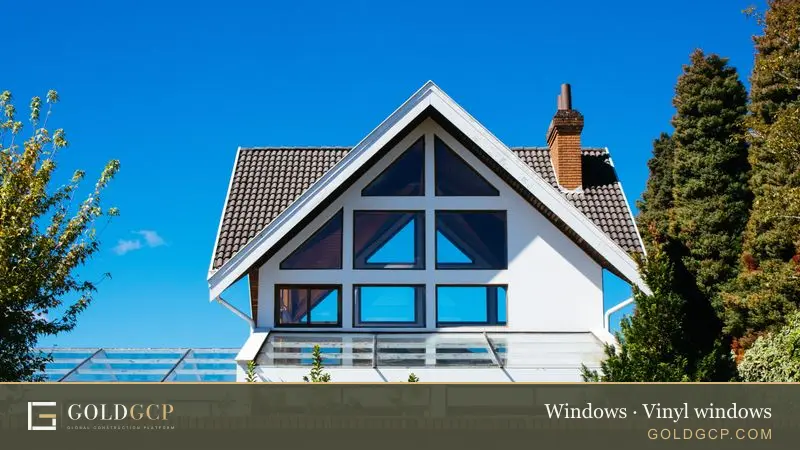
| Vinyl | $300 to $1,000 | Most brick ranches and suburban tract homes; the usual value pick |
| Fiberglass | $510 to $1,700 | West- and south-facing walls with strong afternoon sun; holds its shape in heat |
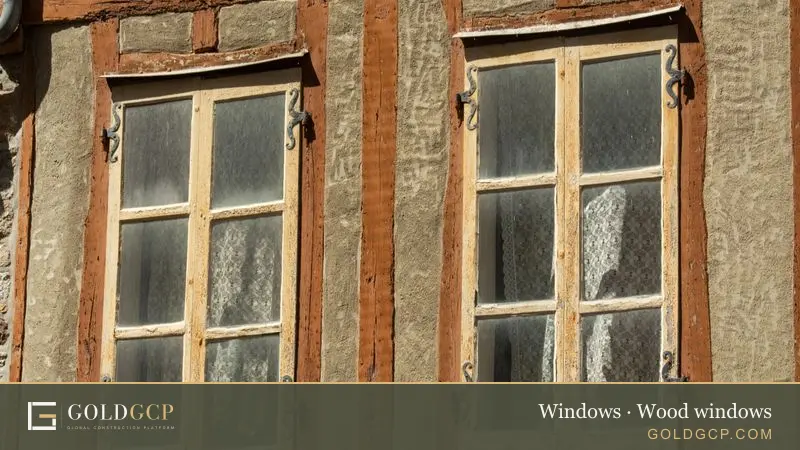
| Wood or clad wood | $680 to $2,550 | Craftsman bungalows, historic districts, intown houses |
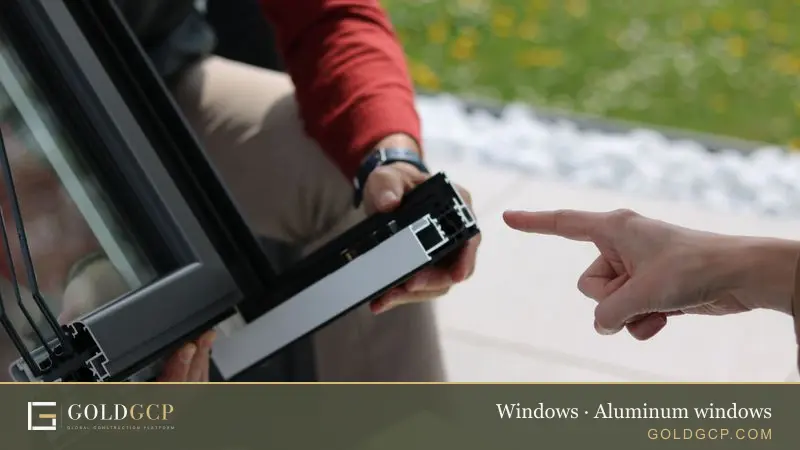
| Aluminum | $150 to $850 | Slim modern frames; choose a thermally broken model |
| Composite | $340 to $1,950 | Wood look with less upkeep |
Vinyl costs the least of the insulated frames, and our vinyl windows guide covers lifespan and color choices. For a wall that faces the afternoon sun, compare it with fiberglass windows, which cost more but stay stable through heat. Owners of older bungalows in Decatur or intown Atlanta often want wood windows to keep the original look. If you like the thin lines of mid-century aluminum, read our aluminum windows guide about thermal breaks before you buy.
Glass ratings for the Atlanta climate
Atlanta has both a cooling season and a heating season. The airport averages 47.1 days a year at 90°F or hotter and 35.7 nights at 32°F or colder, with 2,051 cooling degree days against 2,531 heating degree days (NOAA NCEI 1991 to 2020 normals). Both numbers matter, but summer heat is where the money goes in most homes.
Two numbers on the NFRC label tell you how a window performs:
- U-factor measures heat loss. Lower is better in winter.
- Solar heat gain coefficient (SHGC) measures how much of the sun's heat comes through the glass. Lower is better in summer.
The ENERGY STAR zone for Atlanta
Fulton, DeKalb, Cobb, Gwinnett, Clayton, Cherokee, Douglas, Fayette, Forsyth and Henry counties all sit in IECC climate zone 3A, warm-humid (Southface Georgia residential energy code field guide). ENERGY STAR maps zone 3 to its South-Central region, which asks for a U-factor of 0.28 or lower and an SHGC of 0.23 or lower. Ask the installer for the ENERGY STAR label for your zone. Our energy-efficient windows guide explains the labels in more detail.
What Georgia's energy code requires
Georgia's energy code for homes is the 2015 IECC with Georgia supplements and amendments (Georgia DCA). The 2024 ICC building codes took effect January 1, 2026, but the energy code is still the 2015 IECC with Georgia amendments. In the Georgia IRC amendments, IRC Chapter 11 is deleted and replaced by references to the state energy code. For a replacement window, aim for a unit that meets the zone 3A limits and carries an NFRC label. Ask the installer to show the label before you sign.
The federal tax credit for energy-efficient windows does not apply to windows placed in service after December 31, 2025 (IRS), so budget without it. Georgia's Home Energy Rebates program covers whole-home efficiency work, but the appliance portion was paused and set to reopen in October 2026 with limited measures (Georgia Energy Rebates). Check the current status before you count on a rebate.
Do you need a permit to replace windows in Atlanta?
It depends on which city or county issues the permit, and whether the opening changes. Check the parcel's jurisdiction first. Inside a city, the city issues permits. In unincorporated areas, the county does.
| Area | Permit office | Same-size window change-out |
|---|---|---|
| City of Atlanta | Office of Buildings | No permit for repair work under $10,000 total valuation, unless the house is in a historic or landmark district |
| Sandy Springs | Community Development | No permit for replacements within the existing framework |
| Brookhaven | City of Brookhaven | No permit for same-size replacements; a permit if the opening changes |
| Marietta | City of Marietta Permits and Inspections | A permit is required to alter a building; check with the city |
| Unincorporated Cobb | Cobb County Community Development | County permitting; check with the county |
| Unincorporated DeKalb | DeKalb Planning and Sustainability | A building permit application is required for all projects |
| Unincorporated Gwinnett | Gwinnett Planning and Development | Check with the county |
| Lawrenceville | City of Lawrenceville Planning and Development | Check with the city |
The City of Atlanta's "Work Exempt from Permit" list (version 3.22) exempts repair work under $10,000 total valuation in an existing one- or two-family home (City of Atlanta). That covers a same-size window change-out in an ordinary house. It does not cover exterior work in a landmark or historic district, where only repair work under $2,500 needs no certificate of appropriateness or permit.
Sandy Springs exempts "door and window replacements within the existing framework" from a permit (City of Sandy Springs). Brookhaven says the same: replacing doors and windows of the same size does not require a permit, but changing the size of the opening or adding a window does (City of Brookhaven).
DeKalb County takes the opposite approach for unincorporated addresses. Its permits page says a building permit application is required for all projects (DeKalb County). If your house is in unincorporated Decatur, ask the county before you assume a change-out is exempt.
Marietta requires a permit whenever an owner or contractor intends to alter or repair a building (City of Marietta). A window replacement counts as an alteration, so plan on a permit there. Cobb County issues permits for unincorporated addresses, and its fee schedule changed July 1, 2024 to square footage and flat fees (Cobb County).
A job that changes the opening needs a permit almost everywhere. Making a window bigger, adding a window, or converting a window to a door is structural work and goes through plan review.
Bedroom windows, safety glass and security bars
Egress windows in bedrooms
Every sleeping room needs a window or door a person can climb out of in a fire. The Georgia Residential Code follows the International Residential Code, which requires at least 5.7 square feet of clear opening, a clear height of 24 inches, a clear width of 20 inches, and a sill no higher than 44 inches above the floor. Older bedroom windows often fall short, especially in ranches with small double-hungs.
The code gives replacement windows some relief when the new unit is the manufacturer's largest standard size that fits the existing opening and is the same style, or a style that opens wider. A crank-out casement usually opens wider than a slider of the same size, which helps in a small bedroom.
Security bars
Bars, grilles and screens may cover a bedroom escape window only if they release from inside without a key, a tool or more force than it takes to open the window. If old fixed bars sit in front of a bedroom window you are replacing, price quick-release hardware or new bars in the same job.
Where safety glass is required
Large, low windows need tempered or laminated glass. A window is a hazardous location when the pane is larger than 9 square feet, its bottom edge is less than 18 inches above the floor, its top edge is more than 36 inches above the floor, and someone can walk within 36 inches of it. Windows near tubs and showers have their own rule. Your installer should mark these windows on the order.
Historic districts and HOA approval
City of Atlanta review
The City of Atlanta regulates historic buildings, landmark buildings, conservation districts, historic districts and landmark districts through the Urban Design Commission under Chapter 20 of the zoning ordinance (ATL311). Exterior work in a historic or landmark district needs a Certificate of Appropriateness before the permit, and the general permit exemptions do not apply there. Only repair work under $2,500 is exempt.
Check your address on the City's Property Info map at gis.atlantaga.gov/propinfo, which shows historic or landmark zoning. Questions go to the Office of Design, Historic Preservation at 404-546-0134. Each district has its own requirements, so read the window section before you order. Leave time in the schedule and ask the installer to hold the order until you have sign-off.
Other cities and HOAs
Decatur, Marietta, Roswell and Alpharetta run their own historic preservation review, and the rules differ by district. Ask your city's planning office whether the house is in a historic district before you order. In metro subdivisions, especially in Gwinnett, Cobb and north Fulton, the HOA architectural committee usually has to approve exterior changes. Read the covenants before you sign a window contract.
Lead-safe work in older Atlanta homes
Decatur's median build year is 1975, and 53.9% of its housing was built before 1980. DeKalb County is at 44.1% before 1980, and the City of Atlanta at 42.7% (Census Reporter). The Census bins end at 1979, so "before 1980" is the closest proxy for the pre-1978 lead paint cutoff.
Georgia runs its own Renovation, Repair and Painting program through the Georgia Environmental Protection Division. Companies doing work that disturbs lead-based paint in homes built before 1978 must be certified, use certified renovators and follow lead-safe work practices (Georgia EPD). Georgia received EPA authorization to run the program in 2011, and EPD does not accept EPA certifications, so ask for the Georgia certification. The program line is 404-363-7026.
Window replacement always disturbs paint around the opening, with no small-job exemption. Expect plastic sheeting and careful cleanup around each window. The firm must give you the "Renovate Right" pamphlet before it starts. Our Atlanta roofing guide covers storm repairs and insurance claims if a limb took out shingles along with the glass.
Storm and hail damage, and insurance claims
Atlanta gets hail and ice. State Farm paid nearly $110 million in Georgia hail claims in 2025, averaging about $17,000 per claim (Metro Atlanta CEO). The January 2005 ice storm brought down tree limbs and power lines across North and Central Georgia and knocked out power to more than a quarter of a million customers (NWS Peachtree City). The March 2008 downtown tornado blew out windows in towers and damaged at least 50 homes along a 6-mile path through the city (NWS Peachtree City).
If a storm broke glass or bent frames, document the damage with photos before anything is removed. Call your insurer before you sign a contract, and ask the installer to separate storm damage from the general replacement in the estimate. Georgia insurance complaints go to the Office of Insurance and Safety Fire Commissioner at 1-800-656-2298.
When to schedule the work
Atlanta gets 50.43 inches of rain a year, spread through the year: July 4.75 inches, March 4.68 inches, January 4.59 inches, and October the driest at 3.28 inches (NOAA NCEI). Openings are exposed for a few hours during a change-out, so a dry stretch in late spring or early fall is the easiest time. Custom windows can take several weeks to arrive after ordering, so order in late summer if you want the new windows in before the winter rain.
How to check a window installer before you hire
Georgia licenses residential and general contractors through the State Licensing Board for Residential and General Contractors. A "residential contractor" is anyone doing residential-basic work where the total value of the work exceeds $2,500 (O.C.G.A. 43-41-2). Window replacement in a house is residential-basic work, so a job over $2,500 needs a licensed residential or general contractor. A contract signed with an unlicensed contractor is unenforceable by that contractor, who also has no lien rights (O.C.G.A. 43-41-17).
- Look up the license on the Secretary of State's verification site at verify.sos.ga.gov. Check that it is active and that the business name matches the bid.
- For a pre-1978 house, ask for the firm's Georgia EPD lead-safe certification.
- Get the window line, frame material, U-factor and SHGC, and insert or full-frame method in writing.
- Ask who pulls the permit and who handles historic district review if your house needs it.
- Ask for the statutory lien waiver form with each payment. Georgia lien waivers must follow the statutory forms and cannot be waived in advance (O.C.G.A. 44-14-366).
Every installer in the GOLDGCP network passes six-step vetting: license verification, an insurance check, a background and business check, a portfolio review, client reference calls, and onboarding with a quality score. You pay in milestones, each one after you approve that stage. Read more about how milestone payments work.
Areas we cover
GOLDGCP window installers work across metro Atlanta:
- Atlanta
- Marietta
- Alpharetta
- Sandy Springs
- Decatur
- Roswell
- Lawrenceville
Enter your ZIP code to see window prices for your street and get matched with a local installer.
How GOLDGCP works
- Tell us about the windows: how many, the frame you have now, and any that fog, stick or leak air. Use the form, call or send a WhatsApp message.
- See prices for your ZIP code, then get matched with up to 3 vetted, licensed installers.
- Your installer measures each opening, confirms the glass ratings and pulls the permit if your city requires one.
- You pay by milestone, for example after the windows arrive and after the final inspection, and follow the job in the client portal.
For new doors at the same time, see our patio doors guide and entry doors guide. If a storm took off shingles along with the windows, our Atlanta roofing guide covers repairs and insurance claims. Our windows and doors showroom shows the product lines we work with.
Frequently asked questions
How much does window replacement cost in Atlanta?
A vinyl replacement window costs about $300 to $1,000 installed in Atlanta, fiberglass $510 to $1,700 and wood $680 to $2,550. Ten vinyl windows run about $3,000 to $10,200. Full-frame replacement costs more than an insert, and bay or custom windows cost more again.
Do I need a permit to replace windows in Atlanta?
It depends on your city. The City of Atlanta exempts repair work under $10,000 in an ordinary house, and Sandy Springs and Brookhaven exempt same-size replacements. DeKalb County requires a permit application for all projects. Changing the size of the opening needs a permit almost everywhere.
What U-factor and SHGC do replacement windows need in Atlanta?
Metro Atlanta is in IECC climate zone 3A. ENERGY STAR's South-Central region asks for a U-factor of 0.28 or lower and an SHGC of 0.23 or lower. Georgia's energy code is the 2015 IECC with Georgia amendments. Ask for the NFRC label before you sign.
Can I replace windows in an Atlanta historic district?
Yes, but the work needs a Certificate of Appropriateness first. Exterior work in a City of Atlanta historic or landmark district goes through the Urban Design Commission under Chapter 20, and the general permit exemptions do not apply there. Check your address on the City's Property Info map.
Do bedroom windows have to meet egress rules in Atlanta?
A bedroom needs an escape opening of at least 5.7 square feet, 24 inches high and 20 inches wide, with the sill no more than 44 inches up. Replacement windows get some relief if they are the largest standard size of the same or a wider-opening style that fits the opening.
Do window installers need a license in Georgia?
Yes, for jobs over $2,500. Window replacement in a house is residential-basic work, so the installer needs a residential or general contractor license from the State Licensing Board. A contract with an unlicensed contractor is unenforceable by that contractor. Check the license at verify.sos.ga.gov.
When should I replace windows in Atlanta?
A dry stretch in late spring or early fall. Atlanta gets about 50 inches of rain a year spread through the year, and openings are exposed for a few hours during each change-out. Custom windows can take several weeks to arrive, so order in late summer to beat the winter rain.
How we calculate these prices
GOLDGCP starts from national price ranges for each job, taken from published 2026 cost guides and checked against local price guides where they exist. To get a local price, we multiply the national range by the construction cost factor for the metro from the U.S. Army Corps of Engineers Area Cost Factors (US average = 1.00). Where that table has no entry for a metro, we use the nearest listed location or the state value. For ZIP codes outside the 50 largest metros, the cost estimator uses the state's price level from the Bureau of Economic Analysis Regional Price Parities. Ranges include labor and standard materials but not unusual site conditions, so a written quote after an inspection is always the final price.
Sources
- Census Reporter
- NOAA · NOAA
- southface.org
- Georgia DCA
- irs.gov
- energyrebates.georgia.gov
- City of Atlanta
- City of Sandy Springs, Georgia
- City of Brookhaven, GA
- DeKalb County, GA
- City of Marietta, GA
- Cobb County Government
- ATL311
- Georgia EPD
- Metro Atlanta CEO
- National Weather Service · National Weather Service
- National Weather Service · National Weather Service
- NOAA · NOAA
- FindLaw · FindLaw
- FindLaw · FindLaw
- Georgia Secretary of State
- FindLaw · FindLaw
- U.S. Army Corps of Engineers
- U.S. Bureau of Economic Analysis

About this guide
Written by the GOLDGCP editorial team. Prices come from national cost guides adjusted with official construction cost factors for Atlanta; rules and statistics come from the agencies and reports linked in the text. We update this page when prices or codes change.