The short answer
Replacement windows in the Washington DC metro cost about $365 to $1,250 each in vinyl and $625 to $2,100 in fiberglass, so ten vinyl windows run roughly $3,650 to $12,500. The permit rule, the license to check and the historic review depend on which of the three jurisdictions your house sits in.
What window replacement costs in Washington DC
The table uses national installed prices adjusted for this metro. The U.S. Army Corps of Engineers puts construction costs in the Washington area at 1.04 times the national average, so a window that costs $1,000 to install in an average US city tends to cost more here.
| Job | Washington DC (typical range) | US average |
|---|---|---|
| Vinyl window, installed | $365–$1,250 | $350–$1,200 |
| Fiberglass window, installed | $625–$2,100 | $600–$2,000 |
| Wood window, installed | $830–$3,100 | $800–$3,000 |
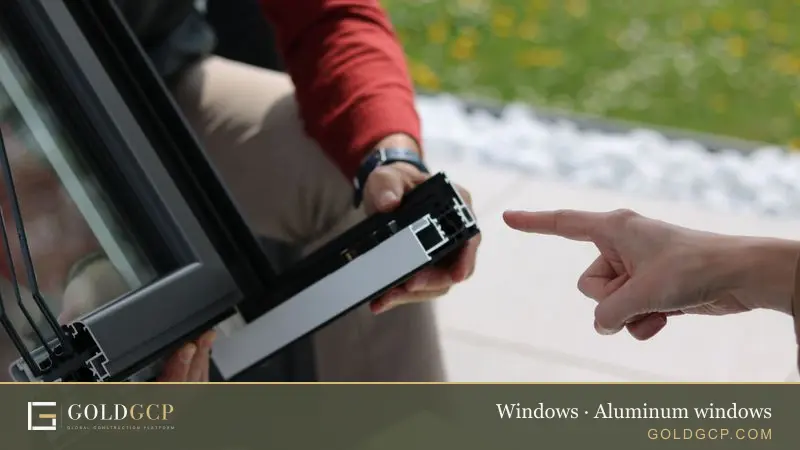
| Aluminum window, installed | $180–$1,050 | $175–$1,000 |
| Composite window, installed | $415–$2,400 | $400–$2,300 |
| 10 vinyl windows, installed | $3,650–$12,500 | $3,500–$12,000 |
| Bay window, vinyl | $1,150–$4,000 | $1,100–$3,850 |
| New trim, per window | $42–$125 | $40–$120 |
Estimates for 2026, including labor and standard parts. Washington DC prices use the metro's construction cost factor of 1.04 (US average = 1.00) from the U.S. Army Corps of Engineers Area Cost Factors. Your quote depends on access, materials and the condition of the home.
These prices are for an insert (pocket) replacement in a standard opening. A full-frame replacement costs more. The installer takes the old frame out and patches the wall around it, and on a brick rowhouse that patch is masonry. Ask whether the quote includes brick or trim repair and paint.
What raises a Washington window quote
Brick openings. DC rowhouses and many Bethesda and Arlington houses have double-wythe brick walls. A full-frame job means cutting and repointing brick around each opening, which takes a mason's time. Second-story and ladder access. Rowhouse upper floors and colonial second stories need ladders or scaffolding set up and moved. Size and shape. Large picture windows, arched tops and bays cost far more than a standard double-hung. A vinyl bay window runs $1,150 to $4,000 here. Lead-safe work. In a house built before 1978, the crew has to follow EPA lead-safe rules, which adds setup and cleanup time at every opening. Historic review. If the house is in a DC historic district or a locally designated district in Virginia, the approval step can add weeks and may limit the window style you can buy.
Price your own project with the cost estimator below, or open the full window cost estimator. Both use the rate for your ZIP code. For national prices and how window styles compare, see our window replacement guide.
Which window frame suits a Washington house?
The housing stock splits by age. In the District, 31.0% of homes were built before 1940 and 66.3% before 1980, and the median home dates to 1960 (Census Reporter, ACS 2024). Montgomery County's median is 1980, Arlington's 1976 and Fairfax County's 1984. So the inner core has original double-hungs and the suburbs have 1960s to 1980s aluminum sliders and wood double-hungs.
| Frame | Washington DC installed price per window | Where it fits here |
|---|---|---|
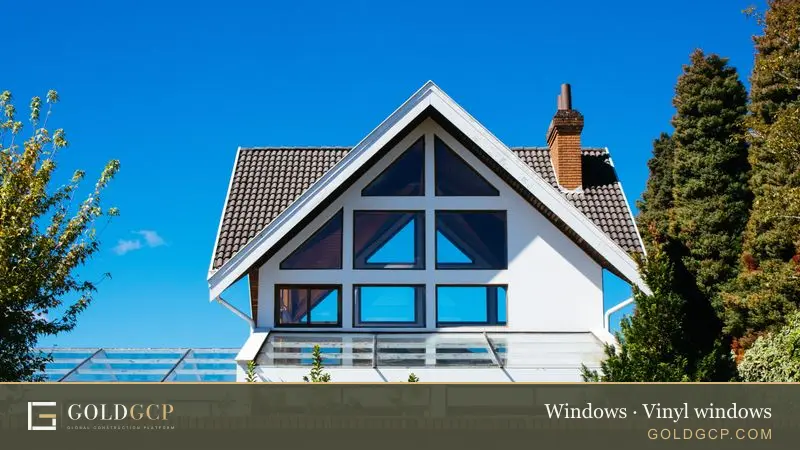
| Vinyl | $365 to $1,250 | Most colonials and townhouses; the usual value pick |
| Fiberglass | $625 to $2,100 | South- and west-facing walls; holds its shape through humid summers |
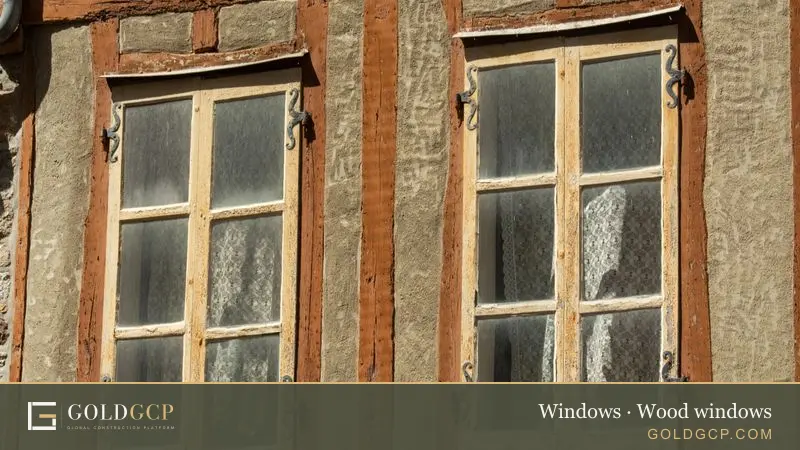
| Wood or clad wood | $830 to $3,100 | Older rowhouses, historic districts, Craftsman porches |
| Aluminum | $180 to $1,050 | Slim modern frames; choose a thermally broken model |
| Composite | $415 to $2,400 | Wood look with less upkeep |
Vinyl costs the least of the insulated frames, and our vinyl windows guide covers lifespan and color choices. For a wall that takes the afternoon sun, compare it with fiberglass windows, which cost more but stay stable through heat and humidity. Owners of older rowhouses often want wood windows to keep the original look, and historic review may push you that way anyway. If you like the thin lines of mid-century aluminum, read our aluminum windows guide about thermal breaks before you buy.
Glass ratings for the Washington climate
This metro sits in IECC climate zone 4A, mixed-humid, according to the DOE county guide (DOE). Both seasons matter here. Reagan National averages 3,769 heating degree days and 1,738 cooling degree days, with 40 days a year at 90°F or above (NOAA NCEI normals). Dulles, out in the suburbs, is colder: 4,604 heating degree days and 101.7 freezing nights.
Two numbers on the NFRC label tell you how a window handles that.
U-factor measures heat loss. Lower is better, and in this climate it matters most for winter bills. Solar heat gain coefficient (SHGC) measures how much of the sun's heat comes through the glass. A moderate SHGC lets winter sun in and still blocks some summer heat.
The code editions differ by jurisdiction
The three jurisdictions run different code editions, which matters if your installer cites a number.
| Jurisdiction | Energy code in force | Source |
|---|---|---|
| District of Columbia | 2015 IECC with amendments, effective 05/29/2020 | DOE energy codes |
| Maryland (Montgomery, Prince George's) | 2021 IECC, effective 05/29/2023 | COMAR 09.12.51 |
| Virginia (Arlington, Fairfax, Alexandria) | 2021 USBC, effective 01/18/2024 | DHCD |
Ask the installer for the NFRC label and the ENERGY STAR label for the Northern zone, not just the brand's general claim. Our energy-efficient windows guide explains the labels in more detail.
Budget without a federal tax credit. The credit for energy-efficient windows does not apply to windows placed in service after December 31, 2025 (IRS).
Do you need a permit to replace windows in Washington DC?
It depends on the address. The metro crosses three jurisdictions, and each one treats a window change-out differently.
District of Columbia
In DC, a same-size, same-type replacement is an Instant Permit job. The Department of Buildings lets owners of one- and two-family homes apply online for in-kind replacement of up to 15 windows, and the permit is applied for, paid and issued entirely online (DOB Instant Permits). In-kind means the new window matches the original in look, feel, material, design, detail, location and size. Fees average $36.30. A DOB inspection follows once the work is done.
Work outside that scope needs a standard building permit. The DOB Homeowner's Center handles window and door replacement and aims to issue permits within five business days (DOB Homeowner's Center). The general line is (202) 671-3500.
Two DC exceptions catch people.
Historic districts. In a historic district the no-permit list does not apply, and window replacement needs historic preservation approval before you apply. Check your property's status in Scout, the DOB database (DOB). The Office of Planning says the Historic Preservation Office's clearance of the DOB permit is the approval, and there is no separate preservation permit (DC Office of Planning). Public space. Any construction on public space needs a separate permit from DDOT.
Maryland: Montgomery and Prince George's counties
Montgomery County says a building permit may be required for altering a residential property, and changing the size of doors and windows or making new openings may require a building permit (Montgomery County 311). Apply online through the Department of Permitting Services, pay the filing fee, and request inspections at least 24 hours ahead (Montgomery DPS). DPS is at 2425 Reedie Drive in Wheaton and answers at 240-777-0311.
Prince George's County is explicit: exact window or door replacement with no structural change needs no permit, while a new opening or a structural change needs a building permit and plans (DPIE).
Virginia: Arlington, Fairfax and Alexandria
The Virginia Uniform Statewide Building Code exempts replacement windows and doors of similar operation and opening size without changing the framed opening, in one- and two-family homes and townhouses (13VAC5-63-80). Fairfax County confirms it does not require a permit for direct replacement of existing windows and doors (Fairfax LDS).
The exemption has an exception. The building official may still require a permit for replacement windows in a locally designated historic district, and for any exempt item in a special flood hazard area. Arlington issues permits through Permit Arlington, and Alexandria has its own building official under the same code.
| Job | DC | Montgomery County | Prince George's | Fairfax and Virginia |
|---|---|---|---|---|
| Same-size, same-type swap | Instant Permit, up to 15 windows | Permit may be required | No permit | No permit |
| Enlarging or adding a window | Standard permit | Building permit | Building permit and plans | Permit |
| Historic district | Preservation approval first | Check with DPS | Check with DPIE | Building official may require a permit |
Bedroom windows, safety glass and security bars
Egress windows in bedrooms
Every sleeping room needs a window or door a person can climb out of in a fire. The rule is in the residential code each jurisdiction enforces, and the dimensions are the same across the 2015, 2018 and 2021 editions: a clear opening of at least 5.7 square feet, with a clear height and clear width set by the code, and a sill no higher than the code's limit above the floor. Older bedroom windows in rowhouses and 1960s colonials often fall short on the sill height or the clear width.
Replacement windows get some relief. The code allows the new unit to be the manufacturer's largest standard size that fits the existing opening, in the same style or a style that opens wider. A casement usually opens wider than a slider of the same size, which helps in a small bedroom.
Security bars
Bars, grilles and screens may cover a bedroom escape window only if they release from inside without a key, a tool or more force than it takes to open the window. If old fixed bars sit in front of a bedroom window you are replacing, price quick-release hardware or new bars in the same job.
Where safety glass is required
Large, low windows need tempered or laminated glass. A window is a hazardous location when the pane is larger than 9 square feet, its bottom edge is less than 18 inches above the floor, its top edge is above the code's height limit above the floor, and there is a walking surface next to it. Windows near tubs and showers have their own rule. Your installer should mark these windows on the order.
Historic districts and lead paint
Historic review
DC has a formal review process, and Virginia's code lets the building official require a permit for window replacement in a locally designated historic district. Montgomery County historic area rules were not confirmed in this research, so ask DPS before you order. In DC, check the property in Scout first. If the house is in a historic district or a Commission of Fine Arts area, the approval comes before the permit application.
Lead-safe work in older homes
DC's median home dates to 1960, and two thirds of its housing was built before 1980. Arlington (52.7% before 1980), Alexandria (54.8%), Montgomery County (49.1%) and Prince George's (53.4%) are close behind. The EPA's Renovation, Repair and Painting rule says any paid work that disturbs paint in a pre-1978 home must be done by a certified firm using lead-safe practices (EPA). Window replacement is always covered, with no small-job exemption. Expect plastic sheeting and careful cleanup around each opening, and ask for the firm's certification before work starts. Our Washington DC painting guide covers the lead rules for trim and siding work.
When to schedule the work
Reagan National gets 41.82 inches of precipitation a year, with July the wettest month at 4.33 inches, and 13.7 inches of snow (NOAA NCEI). Dulles gets 21.0 inches of snow. Openings are exposed for a few hours during a change-out, so spring through fall is the easiest time. Custom windows can take several weeks to arrive after ordering, so order in late summer if you want them in before the cold.
The metro also gets big storms. The January 2016 blizzard dropped 29.3 inches at Dulles and 17.8 inches at Reagan National, with winds over 35 mph (NWS Service Assessment). The June 2012 derecho brought 71 mph gusts at Dulles and 70 mph at Reagan National (NWS Baltimore/Washington). If a storm is coming, wait. A window left open to the weather is worse than an old one.
How to check a window installer before you hire
The license you check depends on where the house is.
District of Columbia: a Home Improvement Contractor license from DLCP, which requires a $25,000 surety bond (DLCP). Verify the business license in Scout and the trade licenses in the Access DC license search. Complaints: (202) 671-4500. Maryland: an MHIC license from the Maryland Home Improvement Commission, with at least $500,000 in general liability insurance since June 1, 2024 (MHIC). Check the license at 410-230-6231 or 1-888-218-5925. Virginia: a DPOR Board for Contractors license, Class A, B or C. Class C covers contracts over $1,000 but under $30,000; Class B $30,000 to under $150,000; Class A $150,000 or more (Code of Virginia 54.1-1100). Fairfax County also requires a county Home Improvement Contractor license for Class C contractors (Fairfax). DPOR: (804) 367-8511.
Then:
- Look up the license and check that it is active and the business name matches the bid.
- For a pre-1978 house, ask for the firm's EPA lead-safe certification.
- Get the window line, frame material, U-factor and SHGC, and insert or full-frame method in writing.
- Ask who pulls the permit and who handles historic review if the house needs it.
- Keep the deposit small. Maryland caps a home improvement deposit at one-third of the contract price (Business Regulation 8-617). DC and Virginia have no statutory cap found in this research, so the contract terms carry the weight.
Every installer in the GOLDGCP network passes six-step vetting: license verification, an insurance check, a background and business check, a portfolio review, client reference calls, and onboarding with a quality score. You pay in milestones, each one after you approve that stage. Read more about how milestone payments work.
Areas we cover
GOLDGCP window installers work across the District and the close-in suburbs in Maryland and Virginia.
- Washington DC
- Arlington
- Alexandria
- Fairfax
- Bethesda
- Silver Spring
- Northern Virginia
- Montgomery County
Enter your ZIP code to see window prices for your street and get matched with a local installer.
How GOLDGCP works
- Tell us about the windows: how many, the frame you have now, and any that stick, leak or won't lock. Use the form, call or send a WhatsApp message.
- See prices for your ZIP code, then get matched with up to 3 vetted, licensed installers.
- Your installer measures each opening, confirms the ratings and pulls the permit for your jurisdiction.
- You pay by milestone, for example after the windows arrive and after the final inspection, and follow the job in the client portal.
For new doors at the same time, see our entry doors guide. For a roof that needs work alongside the windows, see roofing in Washington DC.
Frequently asked questions
How much does window replacement cost in Washington DC?
A vinyl replacement window costs about $365 to $1,250 installed in the Washington metro, fiberglass $625 to $2,100 and wood $830 to $3,100. Ten vinyl windows run about $3,650 to $12,500. Full-frame replacement costs more than an insert, and brick rowhouse openings cost more again.
Do I need a permit to replace windows in Washington DC?
In DC, a same-size swap of up to 15 windows is an Instant Permit, applied for online, with fees averaging $36.30. In Montgomery County a permit may be required, and in Prince George's and Fairfax a same-size replacement needs none. Enlarging a window needs a permit everywhere.
What U-factor do replacement windows need in the DC area?
The metro is in IECC climate zone 4A, mixed-humid. DC enforces the 2015 IECC with amendments, Maryland the 2021 IECC and Virginia the 2021 USBC. Ask for the NFRC label and the ENERGY STAR Northern zone label, and get the U-factor and SHGC in writing on the order.
Can I replace windows in a DC historic district?
Yes, but the work needs historic preservation approval before the permit application. In a DC historic district the usual no-permit list does not apply, and window replacement needs review. Check your property's status in Scout, the DOB database, before you order windows.
Do bedroom windows have to meet egress rules in the DC area?
A bedroom needs an escape opening of at least 5.7 square feet, with a clear height and clear width set by the residential code and a sill no higher than the code's limit. Replacement windows may be the manufacturer's largest standard size that fits the existing opening, in the same or a wider-opening style.
Do window installers need a license in the DC metro?
Yes. DC requires a Home Improvement Contractor license with a $25,000 bond, Maryland an MHIC license with $500,000 in liability insurance, and Virginia a DPOR Class A, B or C contractor license. Check the license for the state where the house sits before you sign.
When should I replace windows in Washington DC?
Spring through fall. Reagan National gets 41.82 inches of precipitation a year and 13.7 inches of snow, and openings are exposed for a few hours during each change-out. Custom windows can take several weeks to arrive, so order by late summer if you want them in before the cold.
How we calculate these prices
GOLDGCP starts from national price ranges for each job, taken from published 2026 cost guides and checked against local price guides where they exist. To get a local price, we multiply the national range by the construction cost factor for the metro from the U.S. Army Corps of Engineers Area Cost Factors (US average = 1.00). Where that table has no entry for a metro, we use the nearest listed location or the state value. For ZIP codes outside the 50 largest metros, the cost estimator uses the state's price level from the Bureau of Economic Analysis Regional Price Parities. Ranges include labor and standard materials but not unusual site conditions, so a written quote after an inspection is always the final price.
Sources
- Census Reporter
- energy.gov
- NOAA
- energycodes.gov
- labor.maryland.gov · labor.maryland.gov
- dhcd.virginia.gov
- irs.gov
- dob.dc.gov · dob.dc.gov
- dob.dc.gov · dob.dc.gov
- dob.dc.gov · dob.dc.gov
- planning.dc.gov
- Montgomery County, Maryland
- Montgomery County Department of Permitting Services
- princegeorgescountymd.gov
- law.lis.virginia.gov · law.lis.virginia.gov
- fairfaxcounty.gov · fairfaxcounty.gov
- U.S. EPA
- National Weather Service · National Weather Service
- National Weather Service · National Weather Service
- dlcp.dc.gov
- labor.maryland.gov · labor.maryland.gov
- law.lis.virginia.gov · law.lis.virginia.gov
- fairfaxcounty.gov · fairfaxcounty.gov
- mgaleg.maryland.gov
- U.S. Army Corps of Engineers
- U.S. Bureau of Economic Analysis

About this guide
Written by the GOLDGCP editorial team. Prices come from national cost guides adjusted with official construction cost factors for Washington DC; rules and statistics come from the agencies and reports linked in the text. We update this page when prices or codes change.