The short answer
A new entry door costs about $650 to $3,250 installed in Miami. A sliding patio door costs $1,100 to $3,700, and a garage door costs $650 to $3,250. Miami-Dade and Broward are in the High-Velocity Hurricane Zone. Every exterior door there needs a Miami-Dade NOA or Florida Product Approval that covers your opening.
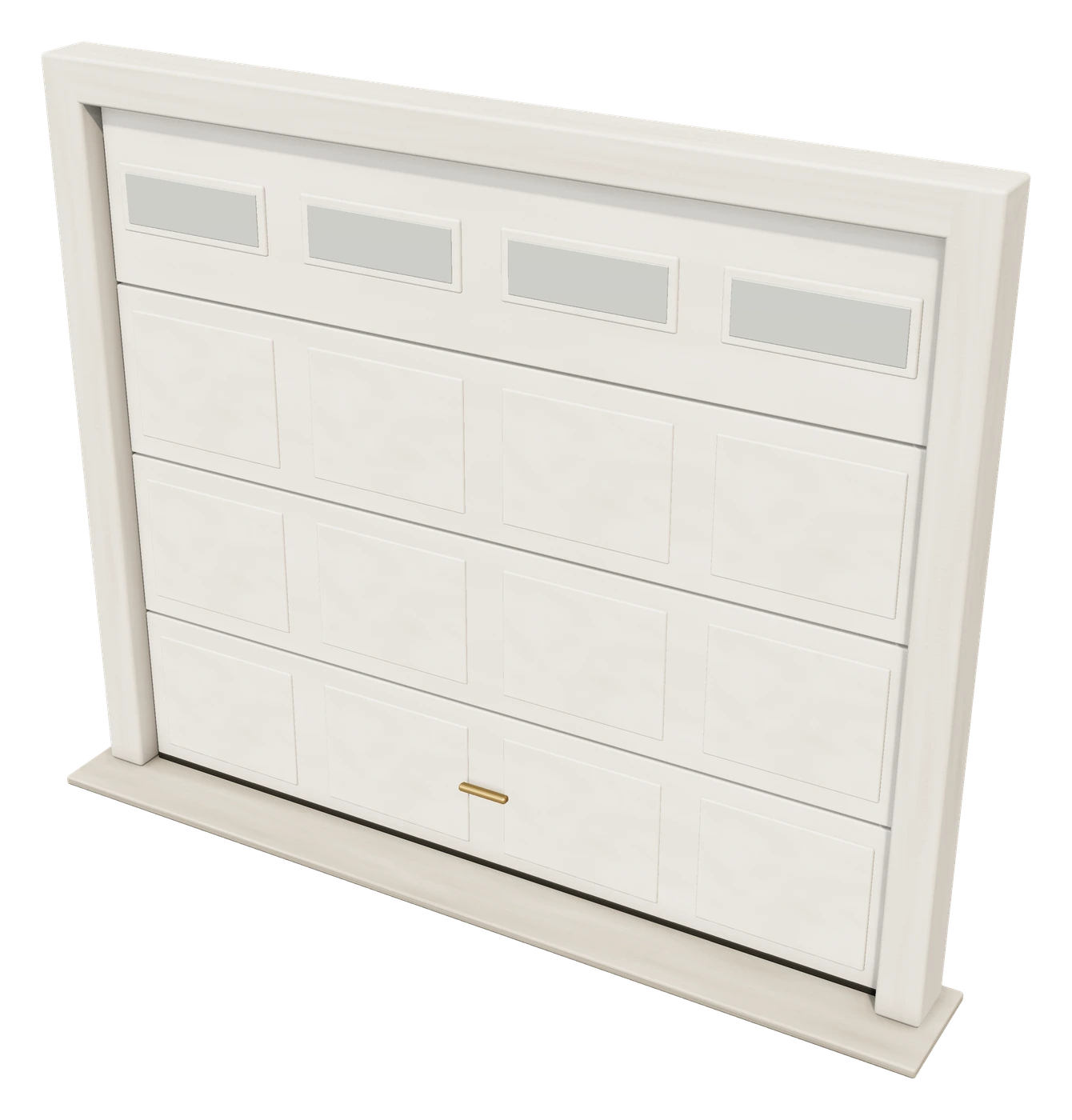
What door installation costs in Miami
The price table adjusts national installed prices for Miami. The U.S. Army Corps of Engineers puts construction costs in the Miami area at 0.93 times the national average, so a door priced for an average US city costs a little less here.
| Job | Miami (typical range) | US average |
|---|---|---|
| Entry door, installed | $650–$3,250 | $700–$3,500 |
| Double entry doors, installed | $1,400–$6,050 | $1,500–$6,500 |
| Patio sliding door | $1,100–$3,700 | $1,200–$4,000 |
| French doors | $1,200–$5,100 | $1,300–$5,500 |
| Multi-slide or bi-fold door | $4,650–$18,600 | $5,000–$20,000 |
| Garage door | $650–$3,250 | $700–$3,500 |
| Storm door | $370–$1,000 | $400–$1,100 |
| Interior door, installed | $110–$530 | $120–$570 |
| New door frame | $120–$560 | $130–$600 |
Estimates for 2026, including labor and standard parts. Miami prices use the metro's construction cost factor of 0.93 (US average = 1.00) from the U.S. Army Corps of Engineers Area Cost Factors. Your quote depends on access, materials and the condition of the home.
The entry door line covers a standard pre-hung door in an existing opening. Material changes the price: steel costs the least and solid wood the most, before you add impact glass.
Things that raise a door quote in Miami:
- Impact glass. An HVHZ-rated door with laminated impact glazing costs more than a standard door, and the approved product has to match your opening size and design pressure.
- A wider opening. Going from a single door to a double door, or from a slider to a multi-slide wall, means a new header, engineering and plan review.
- Rot at the sill. Salt air, sun and wind-driven rain wear out wood frames. A new door frame adds $120 to $560 at Miami prices.
- HOA and historic review. In Miami Beach and Coral Gables, approval can come before the permit and add weeks.
Price your own door with the cost estimator below, which uses the rate for your ZIP code. For national prices and how door types compare, see our door installation cost guide.
Door types for Miami homes
| Door | Miami installed price | What to know here |
|---|---|---|
| Entry door, single | $650 to $3,250 | Needs an HVHZ-approved product with a NOA number |
| Double entry doors | $1,400 to $6,050 | Usually means a wider opening and plan review |
| Sliding patio door | $1,100 to $3,700 | Glass and glazing contractor scope; check the NOA for the track and sill |
| French doors | $1,200 to $5,100 | Swing space and a sill that sheds summer rain |
| Multi-slide or bi-fold | $4,650 to $18,600 | Needs a structural header and engineering for the wide opening |
| Garage door | $650 to $3,250 | Wind-load rated and reinforced for the HVHZ |
| Storm or screen door | $370 to $1,000 | Light-duty, often on a back or side door |
| Interior door | $110 to $530 | The garage-to-house door has its own fire rules |
Entry doors
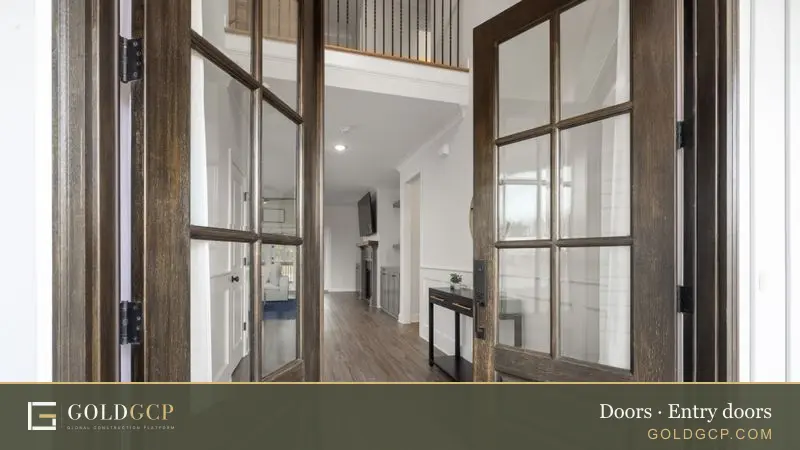
Fiberglass holds up to sun and salt air better than wood and can look like wood. Steel costs the least but dents and can rust where the finish breaks, which happens fast near the coast. Wood suits Mediterranean and Spanish-style houses but needs refinishing in this climate. Our entry doors guide covers materials and hardware. If the door faces west or south, ask what the finish warranty says about sun exposure.
Patio, French and multi-slide doors
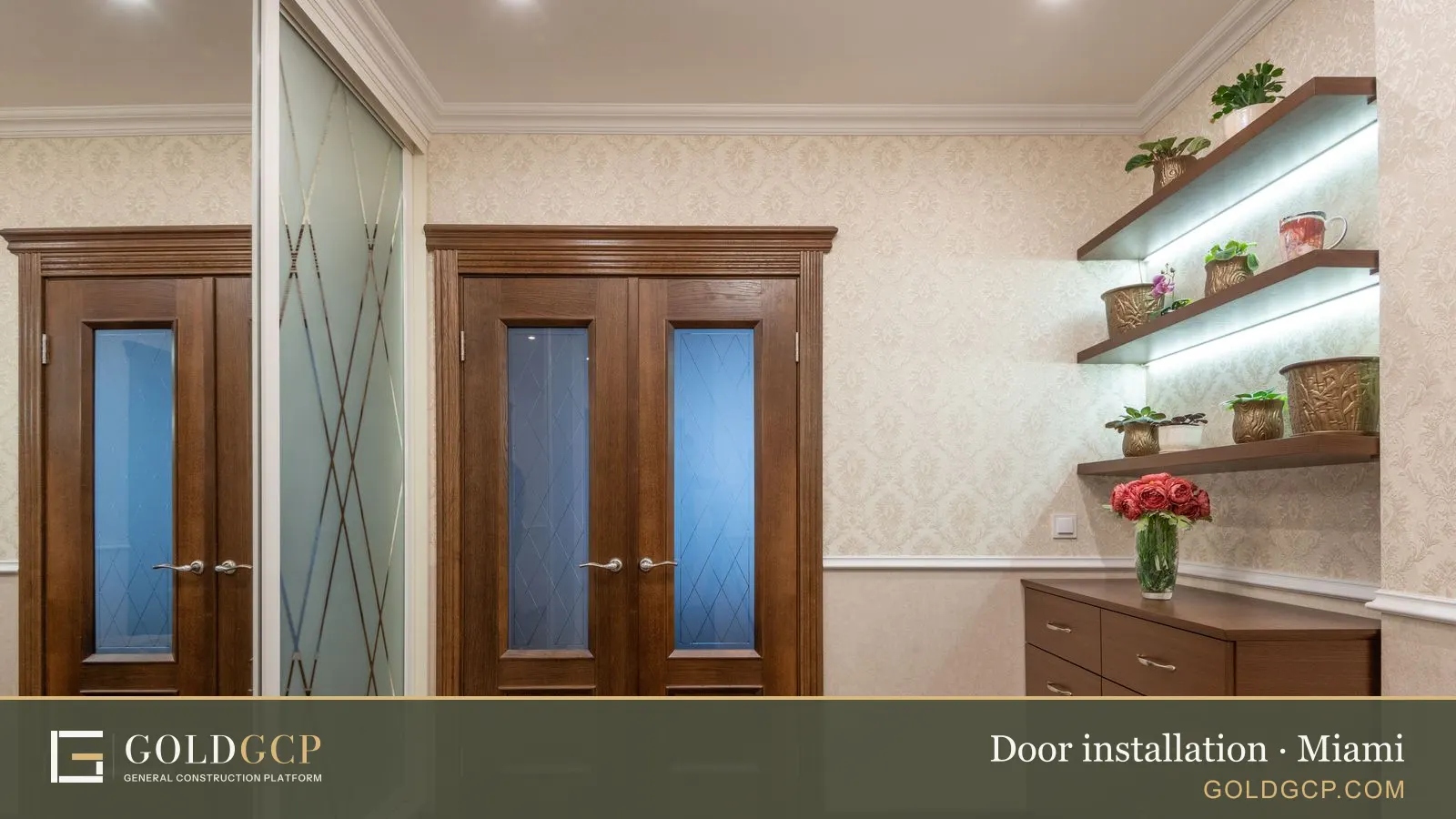
A sliding door saves floor space, French doors give a wide traditional opening, and multi-slide or bi-fold doors can open most of a wall. Compare them in our guides to patio doors, French doors and multi-slide doors.
Rain here comes hard and in bursts. Miami International averages 67.41 inches a year, with June at 10.51 inches and September at 10.22 inches, and the normal number of freezing nights is zero (NOAA NCEI normals). A wide door with a flush threshold needs a sill pan, flashing and drainage that can handle that kind of storm. Ask how the installer will handle water at the bottom of the opening.
Garage doors
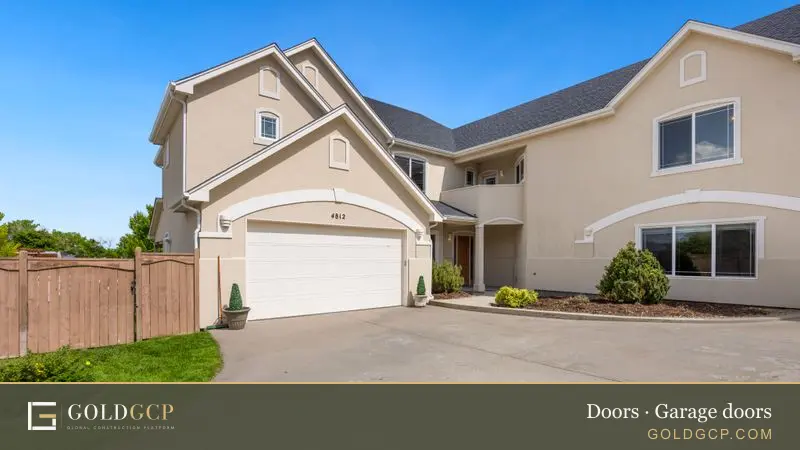
A garage door is one of the few projects that returns more than it costs at sale, according to national remodeling cost studies. Our garage doors guide covers materials and openers. In Miami-Dade and Broward the door itself has to be rated for the wind pressure at your address, covered below.
The High-Velocity Hurricane Zone rule
Miami-Dade and Broward are the only two Florida counties in the High-Velocity Hurricane Zone, the state's strictest building code standard. Every other county, including Palm Beach, is a non-HVHZ area (Miami-Dade Product Control).
Every exterior door on a Miami-Dade or Broward home needs one of two documents:
- A Miami-Dade Notice of Acceptance, or NOA. The NOA states the maximum product dimensions, design pressure rating, installation substrate and accepted fastening methods. Your installer has to check that the NOA covers the exact conditions of each opening.
- A Florida Product Approval issued under Rule 61G20-3. Once the Florida Building Commission approves a product, local jurisdictions must accept it (Palm Beach County Building Division).
The inspector checks the label. Ask for the NOA or approval number of every door on the quote, and check that the design pressure on the document meets or exceeds what the engineer calculated for your opening. A door rated below the required pressure fails inspection even if it is impact glass.
Palm Beach County is outside the HVHZ but still in the wind-borne debris region of the code, so doors there are rated too, under the non-HVHZ rules.
Glass in doors: impact, safety and egress
Impact glazing
Impact glass is laminated, so it cracks but stays in the frame when something hits it. In the HVHZ it is tested with a large missile and, for products installed above 30 feet that have no separate protection device, a small missile (Miami-Dade Product Testing). A specimen fails the small missile test if the missile goes through.
Safety glazing
Where impact glass is not required, glass in a swinging, sliding or bifold door is still a hazardous location under the Florida Building Code and needs tempered or laminated safety glass. Sidelights next to an entry door usually fall under the same rule. Ask for the glazing label on every panel.
Egress in bedrooms
Every sleeping room needs at least one operable emergency escape and rescue opening that opens directly to a public way, a yard or a court. It must open from the inside without keys, tools or special knowledge, with a net clear opening of at least 5.7 square feet (5 square feet at grade), at least 24 inches high and 20 inches wide, and a sill no more than 44 inches above the floor (Pinellas County, 2023 FBC). If a bedroom door or window is part of your project, check this before the permit.
Garage doors: wind rating and the door to the house
Wind-load rating
An HVHZ garage door needs a rated assembly, and many doors need horizontal or vertical reinforcement to reach the design pressure for a wide opening. The NOA or product approval states the maximum width and height at each pressure. A door sold as "hurricane rated" without a document for your size does not count.
Auto-reverse
Federal rules require automatic residential garage door openers to meet entrapment protection standards, which make the door stop and reverse. After installation, the installer should test the reversing function and the photo eyes in front of you.
The door between the garage and the house
The door from an attached garage into the house is a fire separation. The code allows a solid wood or steel door at least 1 3/8 inches thick, or a 20-minute fire-rated door, self-closing and self-latching. No door may open from a garage straight into a bedroom. A hollow-core interior door does not qualify, so check this when you replace it.
Do you need a permit for a new door in Miami?
Yes, in nearly every case. Miami-Dade County lists door installations under its windows, shutters, doors and security bars permit category, with its own application forms, checklists and standards (Miami-Dade Building). All impact window and door permits in Miami-Dade must be submitted by a properly licensed contractor.
A 2026 state law (HB 803, Chapter 2026-63) created a simplified no-permit process for work valued under $7,500 on single-family homes, duplexes and townhouses, but it does not cover structural work including windows and doors, and it does not apply to properties in a flood hazard area (Miami-Dade). Door replacements still need a permit.
| Job | What to expect |
|---|---|
| Swap a door in the same opening, same type | Permit with product approval; inspection of the opening |
| Widen an opening for double, French or multi-slide doors | Plan review for the new header and engineering |
| Garage door replacement | Permit; wind-load rating checked at inspection |
| Condo unit | Association approval plus the city or county permit |
| House in a flood zone | Floodplain review; the 50% rule can apply |
Who issues the permit
Most incorporated cities in Miami-Dade run their own building departments. Miami, Miami Beach, Coral Gables, Hialeah and Doral each have their own offices, portals and review staff. The county building department only issues permits for unincorporated areas. Fort Lauderdale, Hollywood, Boca Raton and West Palm Beach issue their own permits in Broward and Palm Beach counties.
Fees and timelines
Residential impact window and door permits in Miami-Dade typically cost $150 to $500, depending on scope, municipality and number of openings. County permits usually take 1 to 2 weeks from submission to approval, while the City of Miami can approach or exceed 6 weeks on standard projects. Miami-Dade adopted a revised building fee schedule on October 1, 2025, its first increase in more than 17 years (Miami-Dade). Fees can be paid online through the county's ePayment system.
HOA, historic and flood review
In HOA communities, approval usually has to come before the permit application and adds 1 to 3 weeks. Miami Beach properties in historic districts, especially South Beach, may need Historic Preservation Board approval, which can add 4 to 6 weeks. Coral Gables may require Architectural Review Board approval for street-facing doors, adding 2 to 4 weeks before permit submission.
If any part of the house is in a flood hazard area, the substantial improvement rule applies. Work costing 50% or more of the building's market value before the work triggers current floodplain rules, which can mean raising the structure. Check the flood zone before you plan a large door and window package.
The Notice of Commencement
A Notice of Commencement is required for projects over $2,500. It must be recorded and posted on the job site before the first inspection, and the form needs a notary's signature.
How to check a door installer before you hire
Florida licenses contractors through the Department of Business and Professional Regulation. A certified contractor holds a state certificate and may work anywhere in Florida. A registered contractor may work only in the jurisdiction where they registered (DBPR).
Doors fall under several licenses:
- Glass and Glazing Contractor. The Miami-Dade scope covers windows of any type and swinging or sliding glass doors, plus garage and industrial doors and shower and tub enclosure doors, with three years of experience required (Miami-Dade).
- A state general, building or residential contractor, for a door inside a larger project such as a new header or an addition.
- A local Miami-Dade certificate of competency, which the county's Construction Trades Qualifying Board issues after an open-book exam passed at 70% or above and proof of liability and workers' compensation insurance.
- Look up the license on the DBPR license search and check that it is active and the name matches the bid.
- Search the Miami-Dade contractor database for a county certificate of competency and any complaints.
- Get the door brand, model, NOA or Florida Product Approval number, design pressure and glass type in writing.
- Ask who pulls the permit and whether the price includes a new frame, sill pan and trim.
- Keep the deposit small and pay in stages. Read more about how milestone payments work.
Every installer in the GOLDGCP network passes six-step vetting: license verification, an insurance check, a background and business check, a portfolio review, client reference calls, and onboarding with a quality score.
Areas we cover
GOLDGCP door installers work across Miami-Dade, Broward and Palm Beach counties:
- Miami
- Miami Beach
- Coral Gables
- Fort Lauderdale
- Hollywood
- Boca Raton
- West Palm Beach
Enter your ZIP code to see door prices for your street and get matched with a local installer.
How GOLDGCP works
- Tell us about the door: entry, patio or garage, the size of the opening, and whether you want to widen it. Use the form, call or send a WhatsApp message.
- See prices for your ZIP code, then get matched with up to 3 vetted, licensed installers.
- Your installer measures, confirms the NOA or product approval and the design pressure, and pulls the permit.
- You pay your pro directly, stage by stage, for example after the door is delivered and after the final inspection, and follow the job in the client portal.
Replacing windows at the same time? See our Miami window replacement guide and our guide to impact windows. For a larger project that changes the opening, our structural coordination guide explains how the engineer and the door installer work together.
Frequently asked questions
How much does door installation cost in Miami?
An entry door costs about $650 to $3,250 installed in Miami. Double entry doors cost $1,400 to $6,050, a sliding patio door costs $1,100 to $3,700, and French doors cost $1,200 to $5,100. A garage door runs $650 to $3,250, and a new frame adds $120 to $560.
Do I need a permit to replace a door in Miami?
Yes. Miami-Dade lists door installations under its windows, shutters, doors and security bars permit category, and the permit must be submitted by a licensed contractor. The 2026 exemption for work under $7,500 does not cover doors. Fort Lauderdale, Hollywood, Boca Raton and West Palm Beach issue their own permits.
What is a Miami-Dade NOA, and why does my door need one?
A Notice of Acceptance is the county document that approves a product for the High-Velocity Hurricane Zone. It states the maximum size, design pressure, substrate and fastening methods. Your installer has to confirm the NOA covers your exact opening before applying for the permit, and the inspector checks the label.
Does a door in Palm Beach County need hurricane approval?
Palm Beach County is outside the High-Velocity Hurricane Zone, so the stricter Miami-Dade NOA rule does not apply. It is still in the wind-borne debris region of the Florida Building Code, so exterior doors are rated for wind pressure and need a Florida Product Approval.
What door is required between the garage and the house?
A solid wood or steel door at least 1 3/8 inches thick, or a 20-minute fire-rated door, self-closing and self-latching. No door may open from a garage directly into a bedroom. A standard hollow-core interior door does not meet the rule.
How long does a door permit take in Miami?
Miami-Dade County residential impact door permits usually take 1 to 2 weeks from submission to approval. The City of Miami can approach or exceed 6 weeks. HOA approval adds 1 to 3 weeks, Miami Beach historic review 4 to 6 weeks, and Coral Gables architectural review 2 to 4 weeks.
What license does a door installer need in Florida?
A Glass and Glazing Contractor license covers windows and swinging or sliding glass doors. In Miami-Dade it also covers garage doors. A state certified or registered general, building or residential contractor handles doors inside larger projects. Check the license on the DBPR site and the county certificate database.
How we calculate these prices
GOLDGCP starts from national price ranges for each job, taken from published 2026 cost guides and checked against local price guides where they exist. To get a local price, we multiply the national range by the construction cost factor for the metro from the U.S. Army Corps of Engineers Area Cost Factors (US average = 1.00). Where that table has no entry for a metro, we use the nearest listed location or the state value. For ZIP codes outside the 50 largest metros, the cost estimator uses the state's price level from the Bureau of Economic Analysis Regional Price Parities. Ranges include labor and standard materials but not unusual site conditions, so a written quote after an inspection is always the final price.
Sources
- NOAA
- wwwx.miamidade.gov
- discover.pbc.gov
- Miami-Dade County · Product Testing Inquiries
- Pinellas County
- federalregister.gov
- Miami-Dade County · Building Homepage
- Miami-Dade Department of Regulatory and Economic Resources
- Miami-Dade County · Building Fee Schedules, Refunds &…
- www2.myfloridalicense.com
- Miami-Dade County · Building Specialty Licenses
- myfloridalicense.com
- Miami-Dade County Building and Neighborhood Compliance Office
- Powerful Impact Solutions
- Town of Lauderdale-by-the-Sea
- U.S. Army Corps of Engineers
- U.S. Bureau of Economic Analysis

About this guide
Written by the GOLDGCP editorial team. Prices come from national cost guides adjusted with official construction cost factors for Miami; rules and statistics come from the agencies and reports linked in the text. We update this page when prices or codes change.