The short answer
A new entry door costs about $805 to $4,000 installed in Philadelphia, a sliding patio door $1,400 to $4,600, and a garage door $805 to $4,000. The metro spans three states with different permit rules, and most of the city's old housing has lead paint, so check both before you order.
What door installation costs in Philadelphia
The price table adjusts national installed prices for this market. The U.S. Army Corps of Engineers puts construction costs in the Philadelphia area at 1.15 times the national average, so a door that costs $2,000 to install in an average US city tends to cost more here.
| Job | Philadelphia (typical range) | US average |
|---|---|---|
| Entry door, installed | $805–$4,000 | $700–$3,500 |
| Double entry doors, installed | $1,700–$7,450 | $1,500–$6,500 |
| Patio sliding door | $1,400–$4,600 | $1,200–$4,000 |
| French doors | $1,500–$6,300 | $1,300–$5,500 |
| Multi-slide or bi-fold door | $5,750–$23,000 | $5,000–$20,000 |
| Garage door | $805–$4,000 | $700–$3,500 |
| Storm door | $460–$1,250 | $400–$1,100 |
| Interior door, installed | $140–$655 | $120–$570 |
| New door frame | $150–$690 | $130–$600 |
Estimates for 2026, including labor and standard parts. Philadelphia prices use the metro's construction cost factor of 1.15 (US average = 1.00) from the U.S. Army Corps of Engineers Area Cost Factors. Your quote depends on access, materials and the condition of the home.
The entry door line covers a standard pre-hung door in an existing opening. Material moves the price a lot. Steel costs the least, fiberglass sits in the middle, and solid wood costs the most.
What raises a door quote in Philadelphia:
- A wider opening. Going from a single door to a double door, or from a slider to a multi-slide wall, means a new header and plan review.
- Glass. More glass costs more, and in a historic district it means a different review.
- Rot at the sill or threshold. A new frame adds $150 to $690 at Philadelphia prices.
- Old walls. In a rowhouse built before 1940, the rough opening is rarely square, and the installer may need to reframe it.
Price your own door with the cost estimator below, which uses the rate for your ZIP code. For national prices and how door types compare, see our door installation cost guide.
Door types for Philadelphia-area homes
| Door | Philadelphia installed price | What to know here |
|---|---|---|
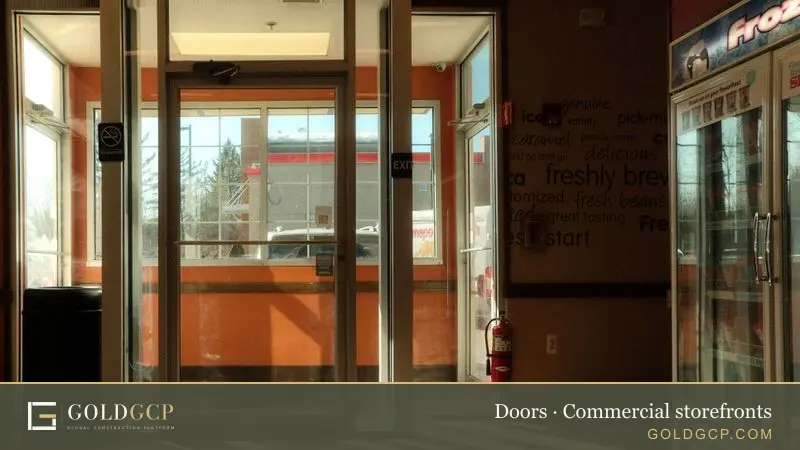
| Entry door, single | $805 to $4,000 | The most common job; check lead paint and historic rules first |
| Double entry doors | $1,700 to $7,450 | Usually means a wider opening and a permit |
| Sliding patio door | $1,400 to $4,600 | Same-size swap is often ordinary maintenance in NJ |
| French doors | $1,500 to $6,300 | Needs swing space and a sill that sheds rain and snow |
| Multi-slide or bi-fold | $5,750 to $23,000 | Needs a structural header for the wide opening |
| Garage door | $805 to $4,000 | Check the opener's safety reverse after installation |
| Storm door | $460 to $1,250 | Common on Philadelphia rowhouse fronts |
| Interior door | $140 to $655 | The garage-to-house door has its own fire rules |
Entry doors
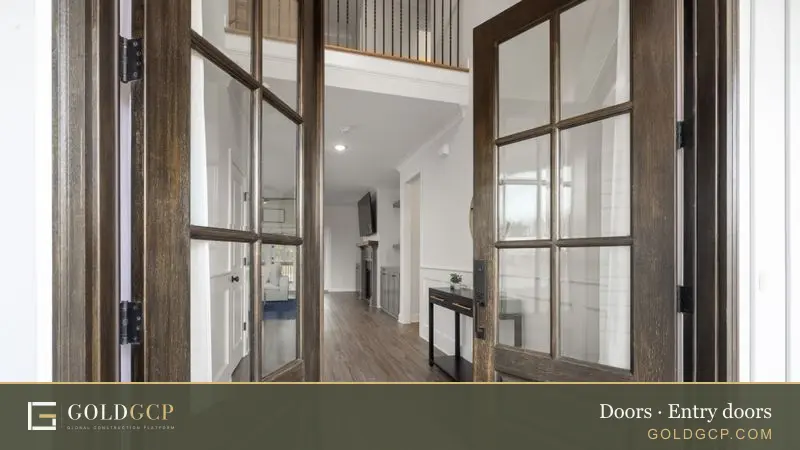
Fiberglass resists dents and can look like wood. Steel costs the least. Wood suits the stone houses of the Main Line and the brick rowhouses of South Philadelphia. Our entry doors guide covers materials and hardware. A dark-painted door facing south or west takes a beating from summer sun, so ask what the finish warranty says.
Patio, French and multi-slide doors
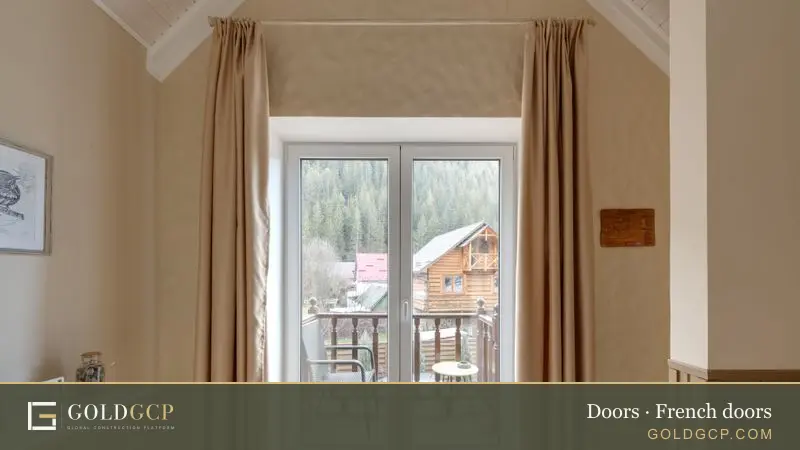
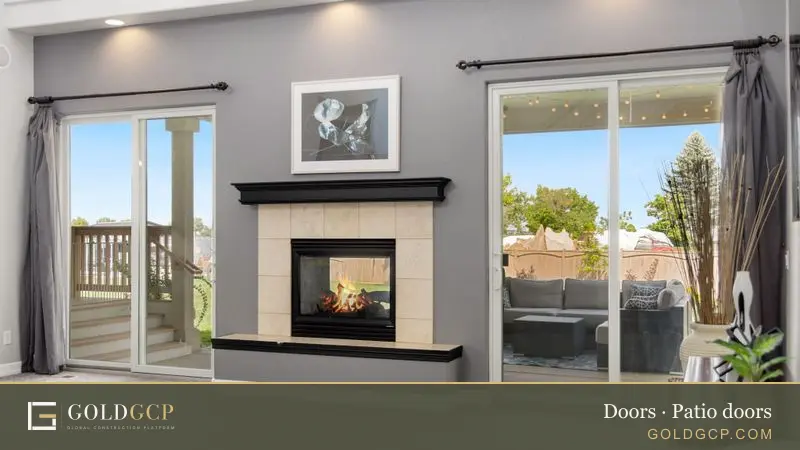
A sliding door saves floor space, French doors give a wide traditional opening, and multi-slide or bi-fold doors can open most of a wall. Compare them in our guides to patio doors, French doors and multi-slide doors.
Philadelphia gets 44.11 inches of precipitation a year, and September is the wettest month at 4.40 inches (NOAA NCEI normals). Wilmington gets 45.33 inches. A wide door with a flush threshold needs a sill pan, flashing and drainage that can handle a heavy fall storm. Ask how the installer will handle water at the bottom of the opening.
Garage doors
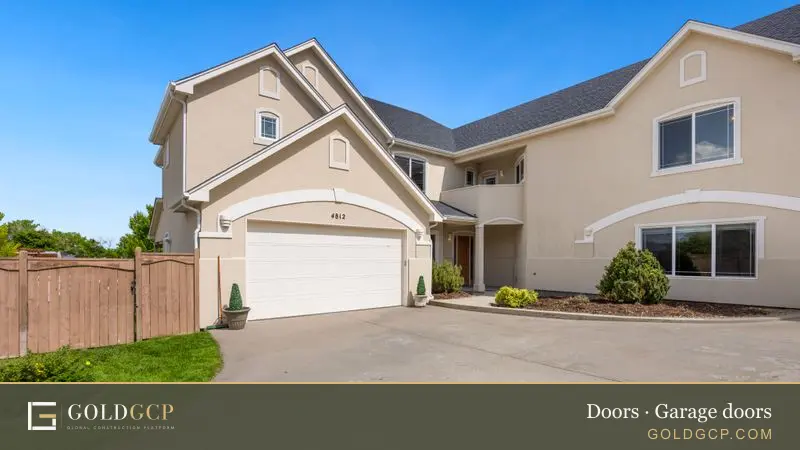
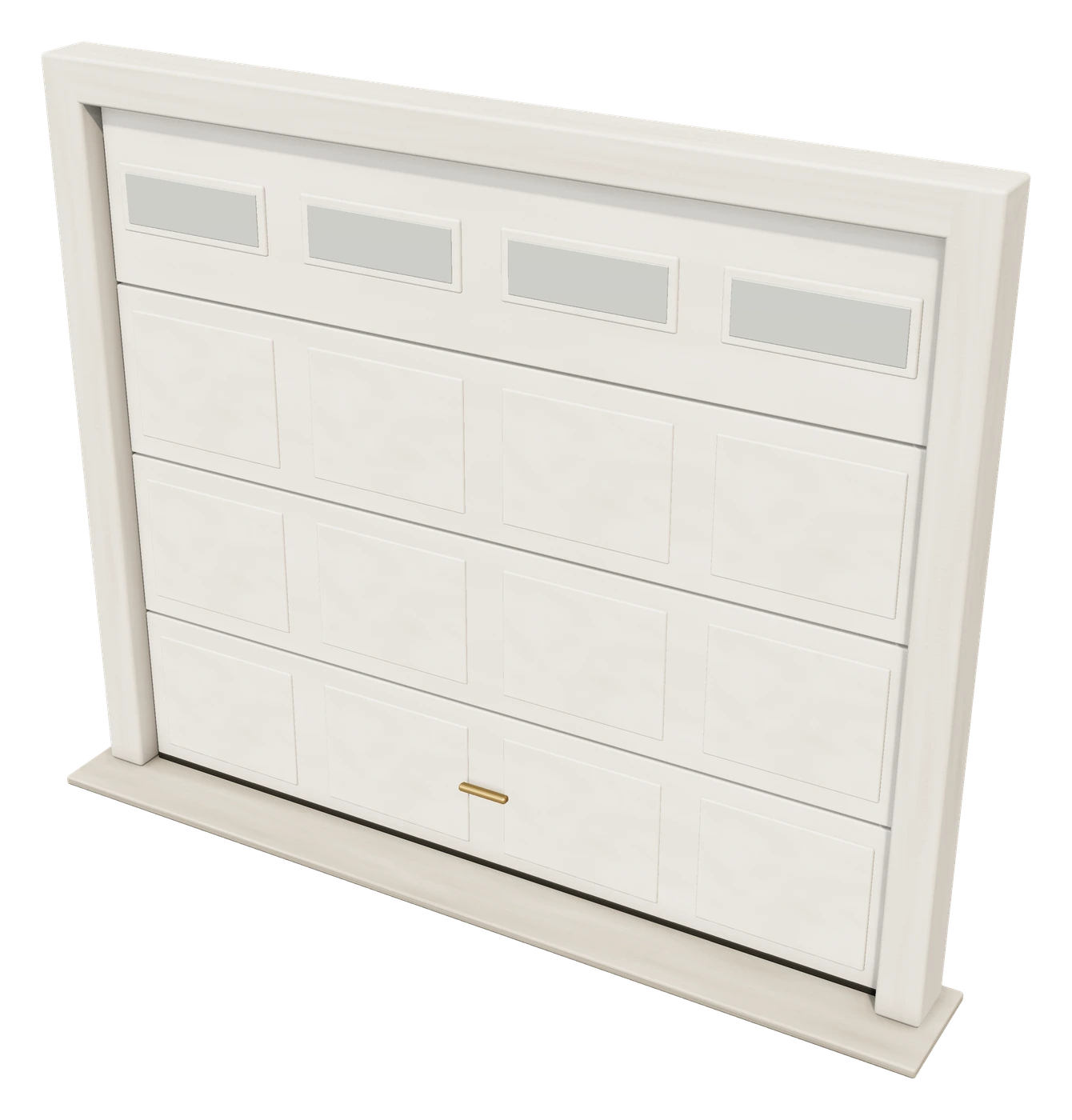
A garage door replacement often returns more than it costs at resale. Our garage doors guide covers materials and openers. Automatic residential garage door openers must meet federal entrapment protection standards, which make the door stop and reverse. After installation, the installer should test the reversing function and the photo eyes in front of you.
Storm and interior doors
A storm door adds a layer against wind-driven rain and cuts drafts on an old front door. An interior door is the cheapest line on the table, but the door from an attached garage into the house is a fire separation, not a finish item. Check what the local code office requires before you swap it for a hollow-core door.
Climate: what a Philadelphia door has to survive
Philadelphia International Airport averages 56.3°F a year, with a January low averaging 26.0°F and 77.3 nights at or below freezing (NOAA NCEI). Wilmington is colder at night, with 91.6 freezing nights. Annual snowfall is 23.1 inches at the airport and 20.2 inches at Wilmington, and February is the snowiest month at the airport with 8.4 inches.
That means freeze-thaw cycles at the threshold, ice pushing at the bottom rail, and wind-driven rain in nor'easters. A door that fits loosely in July will leak air in January. Look for:
- A thermal break in a metal door, so the frame does not conduct cold inside.
- An adjustable threshold with a good sweep, not a fixed saddle.
- Weatherstripping that can be replaced without replacing the door.
- Glass rated for the climate. DOE puts Philadelphia, Bucks, Chester, Delaware and Montgomery counties, Camden, Burlington and Gloucester counties in New Jersey, and New Castle County in Delaware in climate zone 4A, mixed-humid (DOE climate guide).
Summer matters too. The airport averages 29.7 days at 90°F or above, so a west-facing glass door without a low-solar-gain coating will heat the room behind it.
Lead paint around old door frames
The median Philadelphia home was built in 1949, and 81.6% of the city's housing was built before 1980 (ACS 2024, Census Reporter). Delaware County is close behind at 77.3%, and Camden County, NJ at 69.7%.
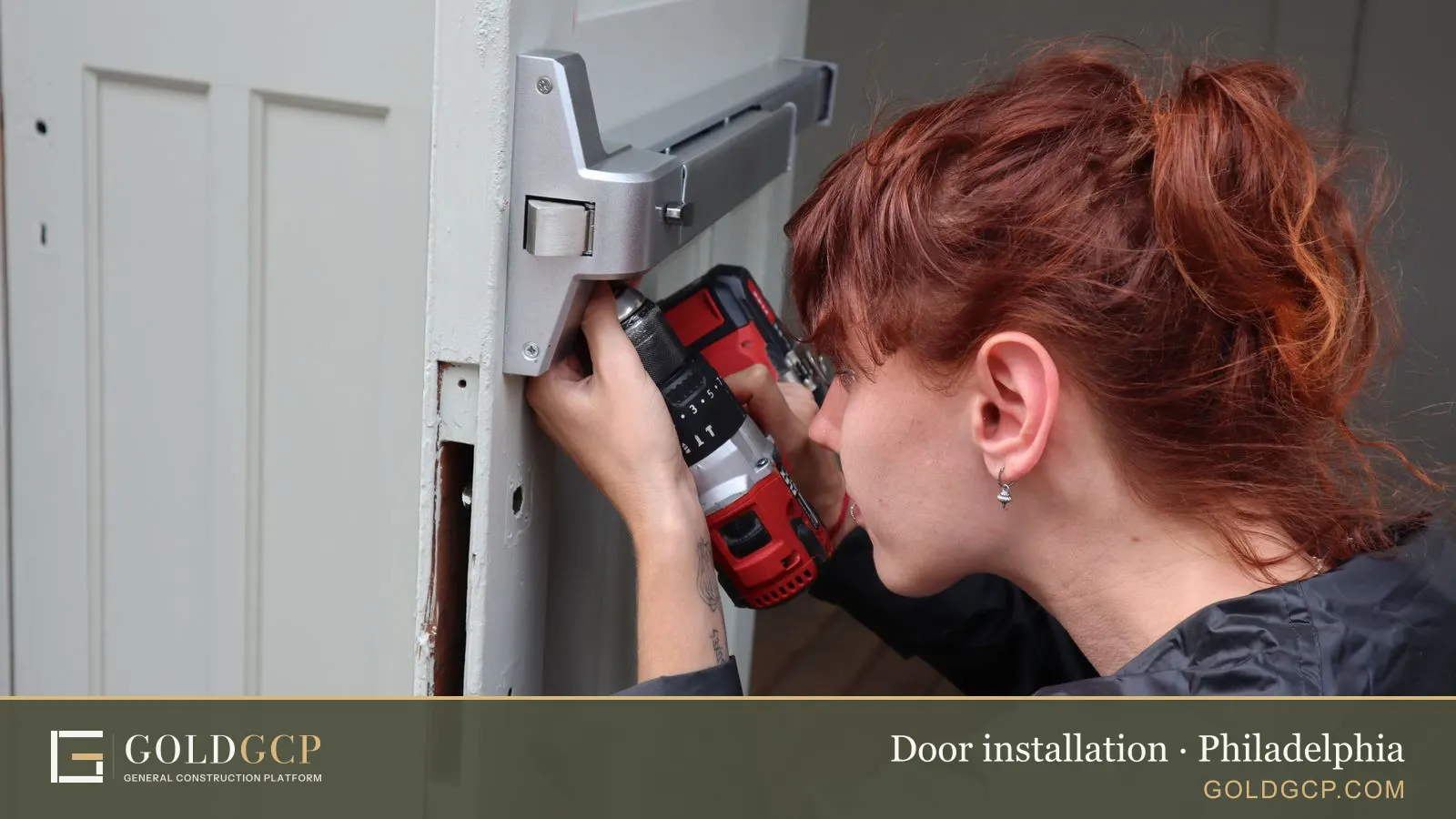
Under the EPA's Renovation, Repair and Painting rule, anyone paid to disturb painted surfaces in homes built before 1978 must be certified (EPA). Pulling an old door frame and its casing disturbs a lot of painted wood. Ask your installer for the firm's RRP certification before work starts.
If you rent out a pre-1978 unit in Philadelphia, the city's lead law adds a step: landlords need a lead-safe or lead-free certificate to get or renew a rental license, and lead-safe certificates completed after February 1, 2020 are valid for four years (City of Philadelphia). Dust-wipe testing after the work may be needed.
Historic districts and HOA rules
If a property is on the Philadelphia Register of Historic Places, the Historical Commission must approve changes that require a building permit and any work that alters the exterior (Philadelphia Historical Commission). L&I will not issue a building permit for a listed property without that approval. Commission staff approve over 90% of building permit applications without referral to a committee, and the office is at (215) 686-7660.
A new front door on a listed rowhouse is exterior work, so check before you order. The same applies to a door in a historic district on the Main Line or in a South Jersey borough with its own review.
Outside historic districts, deed restrictions and HOA rules can still control door color and style. New Castle County tells owners it is their responsibility to review deed restrictions before submitting a permit application (New Castle County). Read yours before the door is ordered.
Do you need a permit for a new door in Philadelphia?
The answer depends on which of the three states you live in.
City of Philadelphia
L&I does not require a permit to replace doors and windows in one- and two-family dwellings, as long as the property is not on the Philadelphia Register of Historic Places (City of Philadelphia). A same-size door swap with no structural change is the easy case.
If you widen the opening, add a new door where there was none, or change the means of egress, that is a building permit. Exterior window and door replacement with no change in size can go through an EZ permit, which is approved within 5 business days and sometimes issues immediately when filed by a contractor with current credentials (L&I EZ permits). The filing fee is $25 for one- and two-family homes.
Suburban Pennsylvania
Pennsylvania's Uniform Construction Code exempts alterations to homes that make no structural change or change to means of egress, and a minor framing change to replace an existing door is not a structural change (34 Pa. Code 403.1). But each township or borough can require permits on top of that. In an opt-out municipality, a certified third-party agency hired by the owner enforces the residential code.
Call the township before work starts. Some suburban offices, like Chadds Ford in Delaware County, do not accept applications electronically and require an appointment for multi-component permits (Chadds Ford Township).
South Jersey
New Jersey's UCC treats window and door replacement in the same opening without framing changes as ordinary maintenance, which needs no permit (N.J.A.C. 5:23-2.7). Widening an opening or changing the framing is a construction permit from the municipal construction official, filed on UCC Form F100 with the building subcode section (NJ DCA). Cherry Hill publishes its own fee schedule (Cherry Hill Township).
New Jersey also requires the contractor to be registered, and unregistered contractors will not be issued municipal construction permits (NJ Division of Consumer Affairs).
Wilmington and New Castle County, Delaware
New Castle County requires a building permit for relocating or creating new windows, doors, or steps of any kind (New Castle County). A same-size replacement is generally exempt, but confirm with the county before you order. Permits go through the county's eServices and ePlans system, and inspections can be scheduled online (New Castle County).
City of Wilmington addresses go through the city's Department of Licenses and Inspections instead.
How to check a door installer before you hire
There is no single door installer license in this metro. What you check depends on the state.
Pennsylvania. Home improvement contractors must register with the Attorney General's office under the Home Improvement Consumer Protection Act if they do at least $5,000 of home improvements a year (PA Office of Attorney General). Search the registration at hicsearch.attorneygeneral.gov. Registration is not an endorsement of quality. In Philadelphia, a registered home improvement contractor does not need a city Contractor License for work on existing one- and two-family homes, but must still show its registration and insurance to get permits (City of Philadelphia).
New Jersey. Contractors must hold an annual HIC registration with the Division of Consumer Affairs and carry at least $500,000 per occurrence in general liability insurance (NJ Division of Consumer Affairs). The registration number must appear in ads and contracts.
Delaware. Contractors need a Delaware business license from the Division of Revenue, and a contractor registry is at contractorregistry.delaware.gov.
Then check the contract rules, which differ by state:
- Pennsylvania: a home improvement contract over $500 must be in writing with the registration number, dates, a description of the work, and the deposit listed separately. You have three business days to cancel. On a contract over $5,000, the deposit cannot exceed one-third of the price (HICPA).
- New Jersey: contracts over $500 must be in writing with the registration number and a three-day right to cancel. The state warns against paying more than one third up front (NJ Division of Consumer Affairs).
- Delaware: the Home Improvement Services Regulation requires a written contract with all material terms and the price filled in before you sign, and the contractor may not ask you to sign a certificate of completion before the work is done (Delaware DOJ).
Every installer in the GOLDGCP network passes six-step vetting: license verification, an insurance check, a background and business check, a portfolio review, client reference calls, and onboarding with a quality score. You pay in milestones, each one after you approve that stage. Read more about how milestone payments work.
Areas we cover
GOLDGCP door installers work across greater Philadelphia and the surrounding counties in three states:
- Philadelphia
- The Main Line
- Bucks County
- Delaware County
- Cherry Hill
- South Jersey
- Wilmington
Enter your ZIP code to see door prices for your street and get matched with a local installer.
How GOLDGCP works
- Tell us about the door: entry, patio, French or garage, the size of the opening, and whether you want to widen it. Use the form, call or send a WhatsApp message.
- See prices for your ZIP code, then get matched with up to 3 vetted, licensed installers.
- Your installer measures, confirms the lead paint and historic rules, and pulls the permit where one is needed.
- You pay by milestone, for example after the door is delivered and after the final inspection, and follow the job in the client portal.
Replacing windows at the same time? See our Philadelphia window replacement guide. Planning a bigger project around the new door? Our home remodeling guide for Philadelphia covers whole-house work.
Frequently asked questions
How much does door installation cost in Philadelphia?
An entry door costs about $805 to $4,000 installed in Philadelphia, double entry doors $1,700 to $7,450, a sliding patio door $1,400 to $4,600 and French doors $1,500 to $6,300. A garage door runs $805 to $4,000. A new frame adds $150 to $690.
Do I need a permit to replace a front door in Philadelphia?
In the City of Philadelphia, replacing a door in a one- or two-family home needs no permit unless the property is on the Philadelphia Register of Historic Places. Widening the opening or adding a new door does need one. In the suburbs, call the township, because rules vary.
Do I need a permit for a door in South Jersey?
New Jersey treats door replacement in the same opening without framing changes as ordinary maintenance, so no permit is needed. Widening an opening is a construction permit from the municipal construction official. The contractor must be registered with the state.
What about Wilmington and New Castle County?
New Castle County requires a building permit for creating or relocating doors. A same-size replacement is generally exempt, but confirm with the county before ordering. City of Wilmington addresses go through the city's own permit office.
Does a door installer need a license in Pennsylvania?
Pennsylvania has no statewide door installer license. Home improvement contractors doing at least $5,000 of work a year must register with the Attorney General under HICPA. Check the registration at the AG's online search before you sign.
Will lead paint be an issue when my door is replaced?
Probably, if your house was built before 1978. Most Philadelphia homes were, with a median build year of 1949. Paid work that disturbs painted surfaces needs an EPA-certified firm using lead-safe practices. Ask for the certification before work starts.
Can I replace a door in a Philadelphia historic district?
Yes, but the Historical Commission must approve exterior changes to a property on the Philadelphia Register of Historic Places. L&I will not issue a building permit without that approval. Check whether your house is listed before you order a door.
How we calculate these prices
GOLDGCP starts from national price ranges for each job, taken from published 2026 cost guides and checked against local price guides where they exist. To get a local price, we multiply the national range by the construction cost factor for the metro from the U.S. Army Corps of Engineers Area Cost Factors (US average = 1.00). Where that table has no entry for a metro, we use the nearest listed location or the state value. For ZIP codes outside the 50 largest metros, the cost estimator uses the state's price level from the Bureau of Economic Analysis Regional Price Parities. Ranges include labor and standard materials but not unusual site conditions, so a written quote after an inspection is always the final price.
Sources
- NOAA · NOAA
- federalregister.gov
- NOAA · NOAA
- energy.gov
- Census Reporter
- U.S. EPA
- City of Philadelphia Department of Licenses and Inspections · City of Philadelphia Department of Licenses…
- City of Philadelphia Department of Licenses and Inspections · City of Philadelphia Department of Licenses…
- New Castle County, DE · Figure Out What Permits You Need
- City of Philadelphia Department of Licenses and Inspections · City of Philadelphia Department of Licenses…
- City of Philadelphia Department of Licenses and Inspections · City of Philadelphia Department of Licenses…
- pacodeandbulletin.gov
- Chadds Ford Township
- New Jersey Department of Community Affairs · New Jersey Department of Community Affairs
- New Jersey Department of Community Affairs · New Jersey Department of Community Affairs
- Cherry Hill Township, NJ
- njconsumeraffairs.gov · njconsumeraffairs.gov
- New Castle County
- New Castle County, DE · Get a Permit
- Pennsylvania Office of Attorney General · Home Improvement Contractor Registration
- Pennsylvania Office of Attorney General · Home Improvement Contractor Search
- City of Philadelphia Department of Licenses and Inspections · City of Philadelphia Department of Licenses…
- njconsumeraffairs.gov · njconsumeraffairs.gov
- contractorregistry.delaware.gov
- Pennsylvania Office of Attorney General · Pennsylvania Office of Attorney General
- attorneygeneral.delaware.gov
- U.S. Army Corps of Engineers
- U.S. Bureau of Economic Analysis

About this guide
Written by the GOLDGCP editorial team. Prices come from national cost guides adjusted with official construction cost factors for Philadelphia; rules and statistics come from the agencies and reports linked in the text. We update this page when prices or codes change.