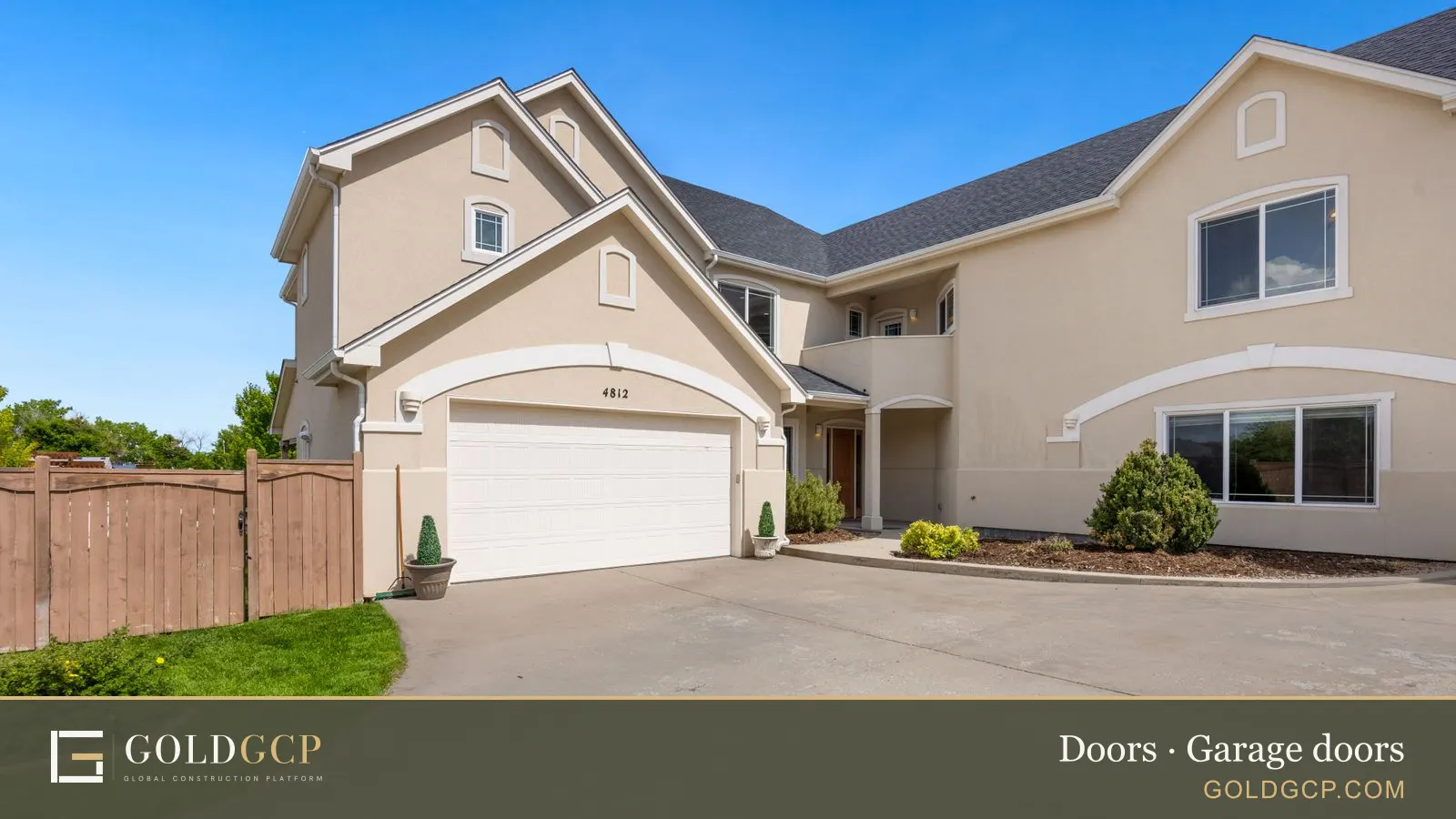
How much does a new garage door cost?
Quick answer
HomeGuide puts garage door replacement at $700 to $3,500 installed. A single-car door runs $700 to $2,700 and a two-car door $1,000 to $3,500. A new opener adds $300 to $900. Insulation, windows, wood or composite skins and hurricane ratings push the price higher.
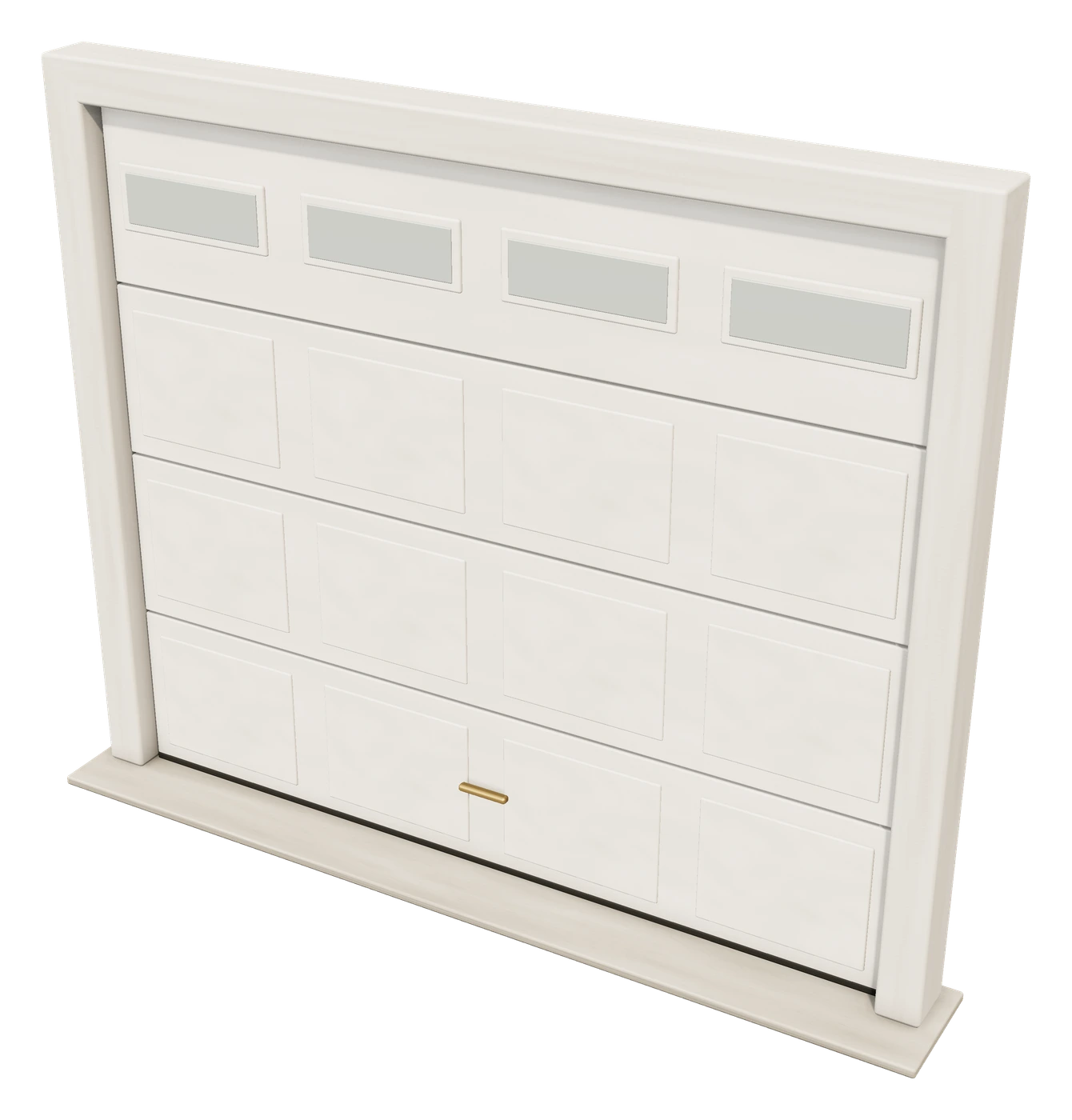
GOLDGCP's national planning ranges for garage doors and other door types appear below and adjust to your ZIP code.
| Job | US average (typical range) | Typical |
|---|---|---|
| Entry door, installed | $700–$3,500 | $1,600 |
| Double entry doors, installed | $1,500–$6,500 | $4,000 |
| Patio sliding door | $1,500–$6,000 | $3,000 |
| French doors | $2,000–$7,500 | $4,000 |
| Multi-slide or bi-fold door | $5,000–$22,000 | $10,000 |
| Garage door | $900–$4,000 | $1,800 |
| Storm door | $400–$1,100 | $750 |
| Interior door, installed | $120–$570 | $350 |
| New door frame | $130–$600 | $320 |
US national averages for 2026, labor and standard materials included, from published cost guides (sources at the end of this page). Local prices differ: see the city table below, or enter your ZIP code in the calculator.
Cost by garage size
| Garage | Typical installed cost |
|---|---|
| Single-car door | $700 to $2,700 |
| Two-car door | $1,000 to $3,500 |
| Three-car garage (one single plus one double door) | $1,700 to $6,200 |
Common sizes are 8 by 7 or 9 by 7 feet for a single door and 16 by 7 or 16 by 8 feet for a double. A door built for an odd-sized opening has to be custom made, which raises both the door price and the labor.
Line-item breakdown
| Item | Typical cost |
|---|---|
| Door and hardware | $400 to $2,500 |
| Installation labor | $200 to $500 |
| Removing the old door | $50 to $250 |
| Permit and inspection, where required | $50 to $250 |
| Painting, optional | $100 to $700 |
| New opener, optional | $300 to $900 |
Cost by style
Prices are for the door alone, from HomeGuide.
| Style | Door price | Notes |
|---|---|---|
| Single tilt-up | $400 to $1,000 | One solid panel that tilts up in one piece |
| Standard raised or recessed panel | $400 to $1,400 | The most common sectional look |
| Single roll-up | $600 to $1,500 | Rolls up in sections and saves space |
| Standard with windows | $600 to $2,500 | Adds light to the garage |
| Carriage house | $600 to $3,500 | Looks like old swing-out barn doors |
| Glass roll-up | $800 to $3,500 | Modern look with full glass panels |
| Double roll-up | $900 to $3,000 | Roll-up door sized for two cars |
| Sliding | $500 to $2,500 | Moves sideways where headroom is short |
| Walk-through | $1,000 to $3,000 | Has a built-in door for people |
| French style | $1,200 to $3,500 | Two swinging doors |
Cost by material
| Material | Installed cost | Good fit for |
|---|---|---|
| Steel | $700 to $2,500 | Most homes; durable and low maintenance; the most common choice |
| Aluminum | $800 to $2,500 | Coastal areas, since it resists rust; dents more easily |
| Fiberglass | $1,000 to $2,100 | Salt air and humidity; less durable in extreme cold |
| Wood | $1,200 to $4,000 | Traditional or high-end homes; needs regular maintenance |
| Composite | $1,200 to $2,800 | Wood look with less upkeep; resists rot and splitting |
| Glass | $2,500 to $6,000 | Modern designs; less insulation and privacy |
Insulation: reading R-value and U-factor
An insulated door makes sense when the garage is attached to the house, shares a wall with bedrooms or living space, or doubles as a workshop. It also cuts noise. The hard part is comparing ratings, because garage door makers quote two different numbers.
Calculated R-value
Most brochures list an R-value. According to the Door & Access Systems Manufacturers Association (DASMA), that figure is calculated for a single door section, through its center. It leaves out the joints between sections, the end stiles, hardware and perimeter seals, and DASMA describes those parts as thermal shortcuts around the insulation. DASMA's own example: a steel door with 1.75 inches of polyurethane foam rated R-7 per inch works out to a section R-value of 13.1.
The foam matters. In DASMA's figures, polyurethane has a thermal conductivity of 0.13 to 0.18, while expanded polystyrene runs 0.235 to 0.265. Lower conductivity means better insulation, so a polyurethane door can reach a given R-value with a thinner core.
Tested U-factor
The more useful number is the U-factor of the whole installed door, tested under ANSI/DASMA 105. That is the test method the International Energy Conservation Code names for garage doors. Lower is better, and DASMA notes that a door with a U-factor of 0.20 is twice as efficient as one at 0.40. A tested U-factor is not simply one divided by the R-value, so don't try to convert one into the other. DASMA runs a verification program with ICC-ES for sectional doors with windows on no more than 16% of their area; ask whether the door you are pricing is listed.
Garage door openers
| Drive type | Unit price | What to know |
|---|---|---|
| Chain drive | $150 to $250 | Affordable and reliable, but the loudest |
| Belt drive | $200 to $450 | Quieter; many offer battery backup |
| Screw drive | $200 to $500 | Quiet and reliable |
| Direct drive | $300 to $500 | Quietest and lowest maintenance |
Installed, an opener usually costs $300 to $900, with labor at $150 to $400. Most openers are 1/2 horsepower. A light aluminum door may need only 1/3 horsepower, while a large, heavy or wood door may need 3/4. Doors taller than 7 to 8 feet may need an extension kit, about $50 to $100. If the garage has no power where the opener mounts, running a circuit costs about $10 to $25 per linear foot.
The federal safety-reverse rule
Under 16 CFR Part 1211, every residential garage door opener made on or after January 1, 1993 must protect against entrapment. A closing door has to start reversing within 2 seconds of hitting an obstruction, and openers use external devices such as photoelectric eyes near the floor or sensing edges on the door bottom. If your opener predates that rule or its sensors are missing, replace it with the door. New sensors alone run about $25 to $100.
Openers last about 10 to 15 years. If the old opener is near that age, replacing it at the same time saves a second service call.
Wind-load and hurricane-rated garage doors
In hurricane-prone areas, local code may require a door rated for wind pressure. Wind-load-rated doors use heavier materials, extra bracing, thicker tracks and heavy-duty hinges and rollers. Any windows in them should be impact-resistant.
| Hurricane-rated door | Typical installed cost |
|---|---|
| Single door | $1,200 to $6,000 |
| Double door | $2,000 to $10,000 |
For a double door alone, HomeGuide lists steel at $1,200 to $7,500, aluminum $1,400 to $7,800, composite $1,500 to $8,000 and wood $2,000 to $8,500 or more.
Two terms come up in quotes. WindCode ratings, from W-1 to W-9, describe how much wind pressure a door is built to resist. Exposure categories come from ASCE standards and describe the site: Exposure B is urban or wooded land that breaks the wind, while Exposure D is open terrain or coastline where wind travels unobstructed. Your building department decides which rating your address needs. A heavier rated door may also need a stronger opener. For the glass side of storm protection, see our guide to impact windows.
Does a new garage door pay off?
In the 2025 Cost vs. Value report, garage door replacement was the top project nationally for return at resale.
| Project | Job cost | Value at resale | Cost recouped |
|---|---|---|---|
| Garage door replacement | $4,672 | $12,507 | 268% |
The report's model project was a 16 by 7 foot, four-section steel door, foam insulated to at least R-12, on new galvanized tracks, reusing the existing opener.
Repair or replace?
Garage door repairs usually cost $150 to $350, and a single damaged panel $300 to $1,200 or more. Replacement makes more sense when the door is older than 15 to 20 years, has dents, cracks or rust across several sections, sags, or keeps breaking down. Most garage doors last 15 to 30 years.
Springs are the one repair you should never try yourself. They are under a great deal of tension and can cause serious injury. A pro typically charges $120 to $300 to replace them.
Find a garage door installer near you
Enter your ZIP code to see garage door prices near you and get matched with vetted, licensed garage door installers.
Compare door styles at the windows and doors showroom, or price your project with the door cost calculator.
How to hire a garage door installer
- Ask for an itemized quote that separates the door, labor, removal, opener, permit and any electrical work.
- Ask for the tested U-factor, not only the R-value, if insulation matters to you.
- In wind zones, ask for the door's wind-load rating and confirm it meets your local code.
- Confirm the opener's reversing sensors will be installed and tested before the crew leaves.
- Ask what the warranty covers on the door, springs, opener and labor, and get it in writing.
GOLDGCP matches you with 3 vetted, licensed pros. Each has passed state license verification, an insurance check, a background and business check, a portfolio review, client reference calls and onboarding with a quality score. You see prices for your ZIP code before anyone visits, and you pay in milestones, each one only after you approve that stage. For the rest of the house, see entry doors, patio doors and the doors overview.
Frequently asked questions
How much does it cost to replace a two-car garage door?
HomeGuide puts a two-car garage door at $1,000 to $3,500 installed. A new opener adds $300 to $900. Insulated, wood, composite or glass doors cost more, and a hurricane-rated double door runs $2,000 to $10,000 installed.
What R-value should a garage door have?
There is no single right number, and the advertised R-value is calculated for the center of one section only. DASMA describes the tested U-factor of the whole door, under ANSI/DASMA 105, as closer to real-world performance; lower is better. The 2025 Cost vs. Value model door was insulated to at least R-12.
How much does a garage door opener cost to install?
About $300 to $900 installed, with $150 to $500 for the unit and $150 to $400 for labor. Chain drives are cheapest and loudest; belt, screw and direct-drive openers are quieter. Most homes need a 1/2 horsepower unit.
Do garage door openers have to auto-reverse?
Yes. Federal rule 16 CFR Part 1211 covers residential openers made on or after January 1, 1993. A closing door must begin to reverse within 2 seconds of contacting an obstruction, and openers use photo eyes or sensing edges as added protection.
What is a wind-load rated garage door?
It is a door reinforced and tested to resist set wind pressures, with heavier materials, bracing and stronger tracks. Ratings such as WindCode W-1 to W-9 describe its strength. Local building codes decide what rating your home needs, especially in hurricane regions.
How long does it take to replace a garage door?
A same-size replacement usually takes 3 to 6 hours. A different size or style, new framing, or a new opener can add time. Installing an opener alone takes about 2 to 6 hours.
Does a new garage door add value to a home?
In the 2025 Cost vs. Value report, a garage door replacement cost $4,672 on average and added $12,507 at resale, recovering 268% of its cost. It was the highest return of any project in the report.
How we calculate these prices
GOLDGCP starts from national price ranges for each job, taken from published 2026 cost guides and checked against local price guides where they exist. To get a local price, we multiply the national range by the construction cost factor for the metro from the U.S. Army Corps of Engineers Area Cost Factors (US average = 1.00). For ZIP codes outside the 50 largest metros, the calculator uses the state's price level from the Bureau of Economic Analysis Regional Price Parities. Ranges include labor and standard materials but not unusual site conditions, so a written quote after an inspection is always the final price.
Sources
- Garage door replacement cost · HomeGuide
- Garage door opener installation cost · HomeGuide
- Hurricane garage door cost · HomeGuide
- TDS 163: R-Value and U-Factor as Applied to a Garage Door · DASMA
- TDS 196: U-factor on Garage Doors and the DASMA Thermal Performance Verification Program · DASMA
- 16 CFR Part 1211, Safety Standard for Automatic Residential Garage Door Operators · U.S. Consumer Product Safety Commission (eCFR)
- 2025 Cost vs. Value Report · JLC / Zonda

About this guide
Written by the GOLDGCP editorial team. Prices come from national cost guides; rules and statistics come from the agencies and reports linked in the text. We update this page when prices or codes change.