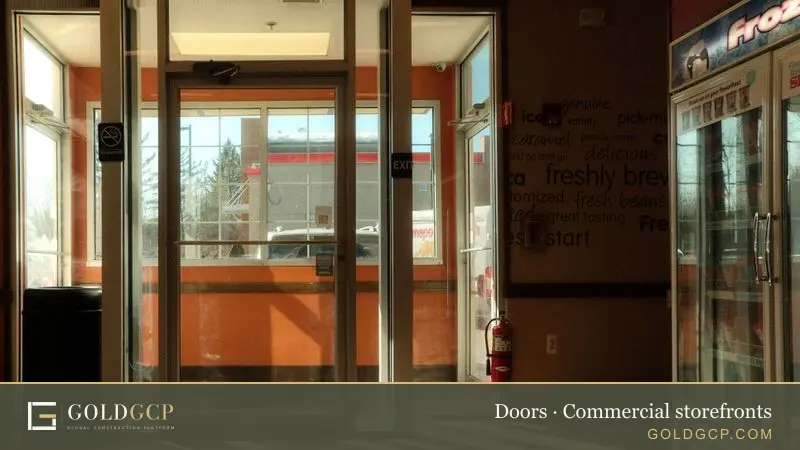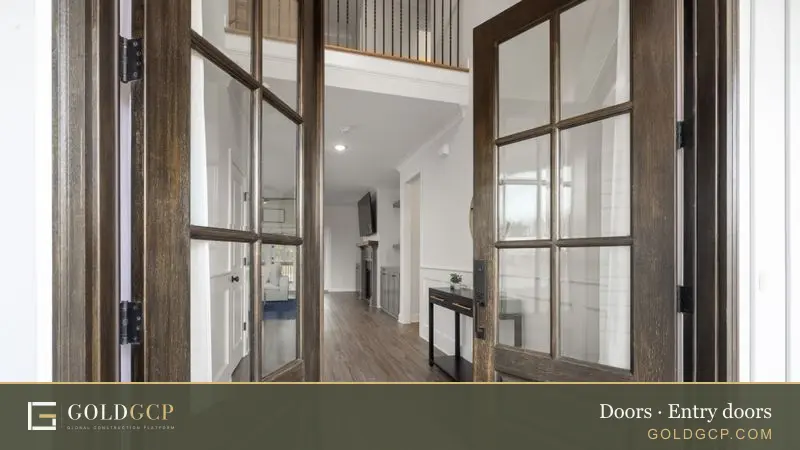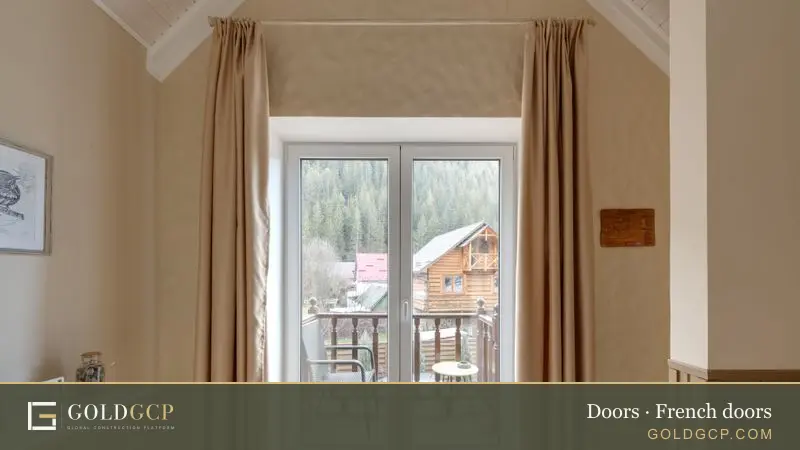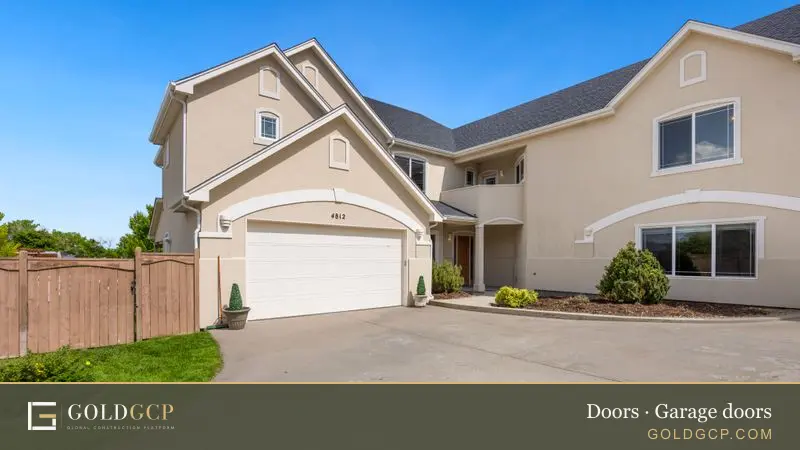
The short answer
A new entry door costs about $860 to $4,300 installed in Boston. A sliding patio door costs $1,500 to $4,900, and a garage door $860 to $4,300. Many door frames in this metro sit in older homes. Cambridge, Somerville, Newton and Brookline enforce the state's stricter energy codes.
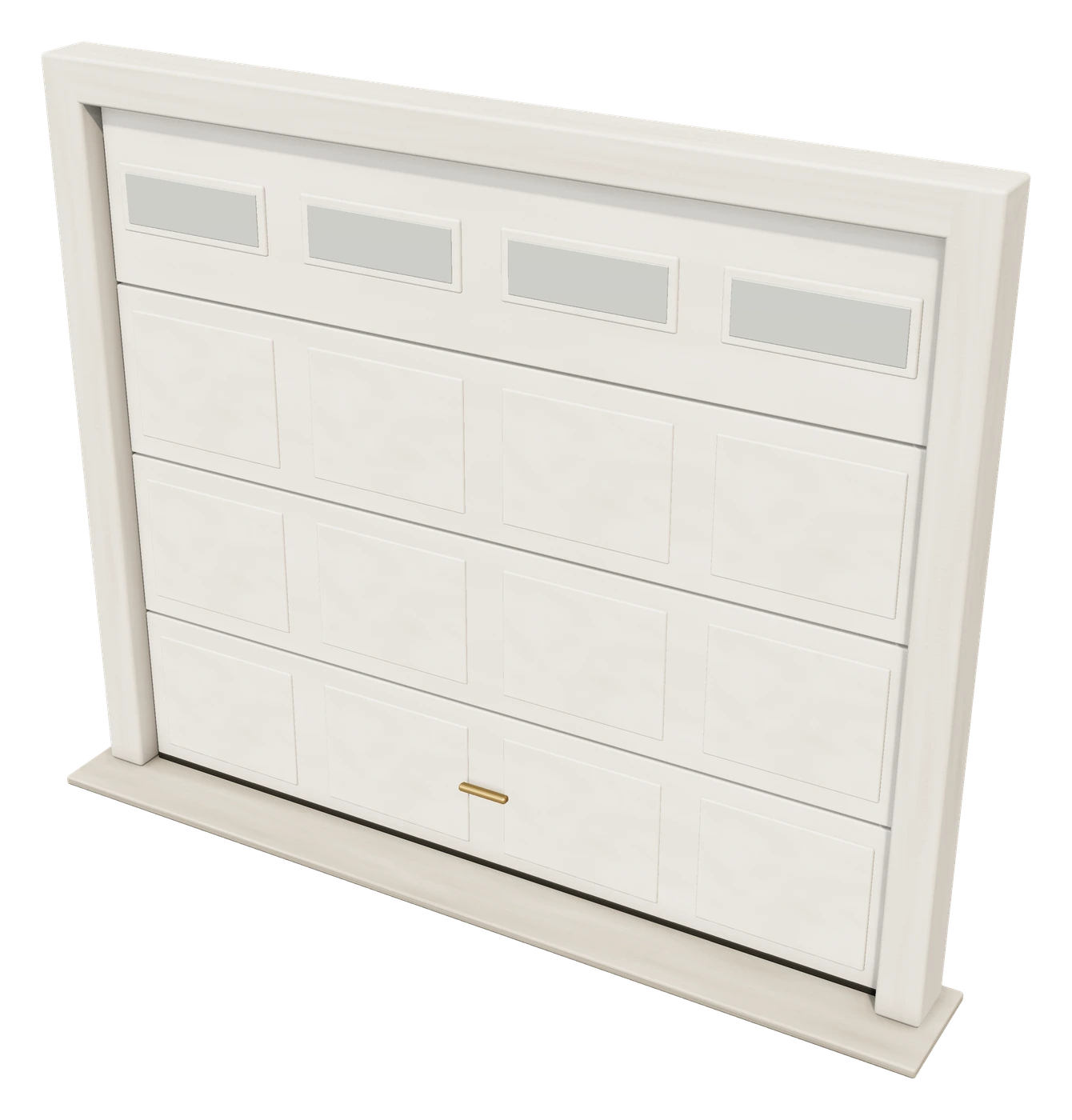
What door installation costs in Boston
The price table adjusts national installed prices for the local market. The U.S. Army Corps of Engineers puts construction costs in the Boston area at 1.23 times the national average, so a door that costs less to install in an average US city tends to cost about a quarter more here.
| Job | Boston (typical range) | US average |
|---|---|---|
| Entry door, installed | $860–$4,300 | $700–$3,500 |
| Double entry doors, installed | $1,850–$8,000 | $1,500–$6,500 |
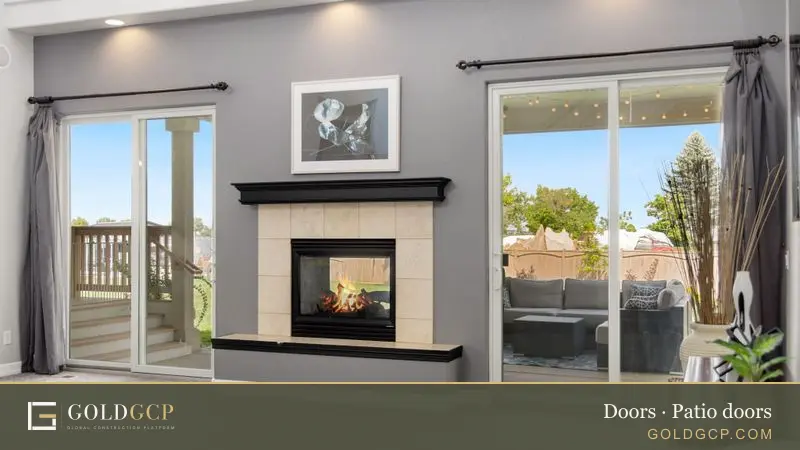
| Patio sliding door | $1,500–$4,900 | $1,200–$4,000 |
| French doors | $1,600–$6,750 | $1,300–$5,500 |
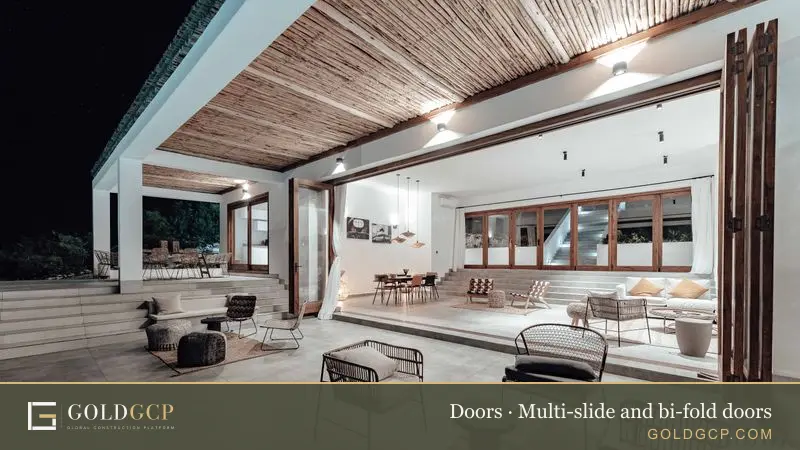
| Multi-slide or bi-fold door | $6,150–$24,600 | $5,000–$20,000 |
| Garage door | $860–$4,300 | $700–$3,500 |
| Storm door | $490–$1,350 | $400–$1,100 |
| Interior door, installed | $150–$700 | $120–$570 |
| New door frame | $160–$740 | $130–$600 |
Estimates for 2026, including labor and standard parts. Boston prices use the metro's construction cost factor of 1.23 (US average = 1.00) from the U.S. Army Corps of Engineers Area Cost Factors. Your quote depends on access, materials and the condition of the home.
The entry door line covers a standard pre-hung door in an existing opening. A steel door sits near the bottom of that range, fiberglass in the middle, and solid wood at the top. A stained wood door with sidelights can pass the top of the range on its own.
Things that raise a door quote in Boston:
- A wider opening. Going from a single door to a double door, or from a slider to a multi-slide wall, means a new header, plans and plan review.
- Rot at the sill and threshold. Snow, ice and salt sit against the bottom of a door for months. A new frame adds $160 to $740 at Boston prices.
- Lead-safe work. Pulling the casing and frame in an older house adds containment, cleaning and paperwork.
- Historic review. A front door on a house in a Cambridge or Newton historic district may need approval before you order.
Price your own door with the cost estimator below, or open the full door cost estimator. Both use the rate for your ZIP code. Our door installation cost guide has national prices and a comparison of door types.
The same estimator has its own page, easy to share or bookmark: Door replacement cost estimator.
Door types for Boston-area homes
| Door | Boston installed price | What to know here |
|---|---|---|
| Entry door, single | $860 to $4,300 | Storm door season runs November to April; a wood door needs a finish that survives freeze-thaw |
| Double entry doors | $1,850 to $8,000 | Usually means a wider opening, a new header and plan review |
| Sliding patio door | $1,500 to $4,900 | The track has to drain meltwater and driving rain |
| French doors | $1,600 to $6,750 | Swing space inside, and a threshold that sheds snow |
| Multi-slide or bi-fold | $6,150 to $24,600 | Needs a structural header for the wide opening |
| Garage door | $860 to $4,300 | Steel doors take road salt on the bottom panel |
| Storm or screen door | $490 to $1,350 | The cheapest way to cut drafts on an old entry |
| Interior door | $150 to $700 | The garage-to-house door has its own fire rules |
Entry doors
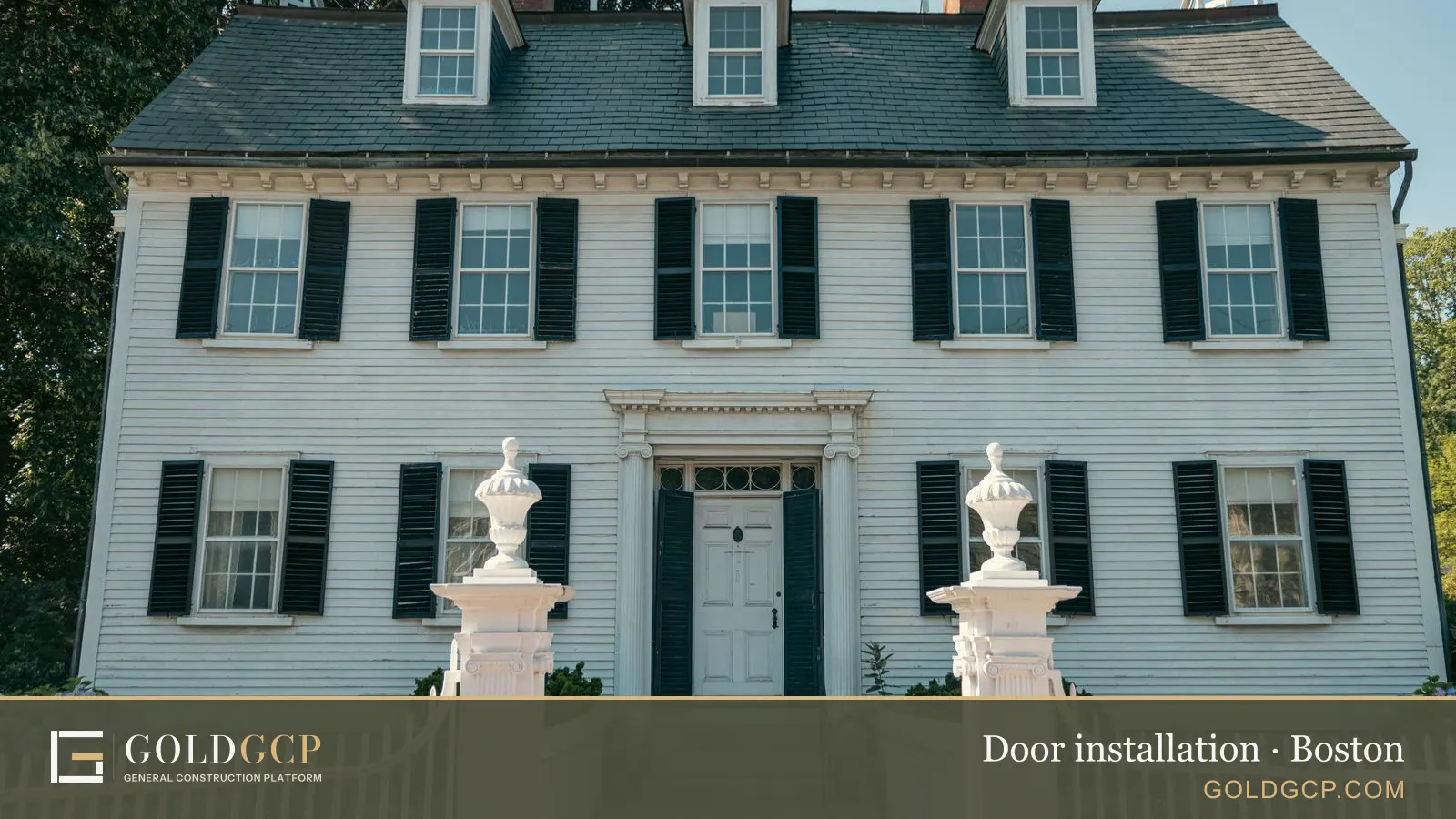
Fiberglass resists dents and handles wet weather without swelling. Steel costs less but dents and can rust where salt sits. Wood suits the Colonial, Victorian and triple-decker stock across Boston, Cambridge and Somerville. Our entry doors guide covers materials and hardware. On a north-facing entry that never dries out, ask what the finish warranty says about moisture.
Storm doors
A storm door adds a second barrier against wind and snow. It lets you open the main door on a mild day without losing heat, and it protects a wood door's finish from the freeze-thaw cycle. It is also the least expensive line in the table. If your entry door is sound but the vestibule is cold, price a storm door before you price a new door.
Patio, French and multi-slide doors
A sliding door saves floor space. French doors give a wide traditional opening. Multi-slide or bi-fold doors can open most of a wall. Compare them in our guides to patio doors, French doors and multi-slide doors. A wide door with a flush threshold needs a sill pan and flashing that can handle snowmelt and a driving rainstorm. Ask how the installer will handle water at the bottom of the opening, and where it drains.
Garage doors
A garage door often returns more than it costs at sale. Our garage doors guide covers materials and openers. In this metro the bottom panel takes the worst of it from slush, road salt and plow spray. Ask for a door with a corrosion-resistant bottom section and a bottom seal that can be replaced on its own.
Climate, old houses and the energy code
Why an old door leaks here
Massachusetts is in climate zone 5A (225 CMR 22), which means a real heating season and a real cooling season. A door in an old triple-decker or a Colonial has usually been planed, painted over and rehung more than once. The frame is out of square, the threshold has no sill pan, and the weatherstripping is original. That is why the draft comes back a year after a cheap swap: the door was replaced, but the opening was not fixed.
What a replacement door must meet
The base energy code for Massachusetts is IECC 2021 with state amendments, under 780 CMR Chapter 11R for residential (Mass.gov). The Department of Energy Resources also adopts the Stretch Code and the Specialized Code in 225 CMR 22.00, and your city or town decides which one applies (Mass.gov). Over 270 cities and towns have adopted the Stretch Code, including Boston, Cambridge, Newton and Quincy. More than 50 have adopted the Specialized Code, including Cambridge, Brookline, Somerville and Newton (SOCOTEC).
For a door, check the fenestration U-factor. In climate zone 5 the code sets a maximum U-factor of 0.30 for fenestration (225 CMR 22). Ask your installer for the door's NFRC label and check the U-factor against that limit before you order. A glazed door with a low U-factor costs more than a solid one, and a cheap glazed door can fail the number.
The Specialized Code's electrification rules apply to new construction, not to a door swap (SOCOTEC). But Brookline's Fossil Fuel Free bylaw, in effect since February 20, 2024, and Newton's Fossil Fuel-Free Ordinance, in effect since January 1, 2025, shape what a larger project can include (Home Energy Efficiency Consultants, Brookline, Newton). If the door is part of an addition or a major renovation, ask the building department which path applies before the plans are drawn.
Historic buildings
Historic buildings may be exempt from Stretch Code compliance where compliance would compromise the historic character of the building, if that is demonstrated to the code official or the historic preservation authority (SOCOTEC). That exemption is not automatic. It takes a conversation with the local historic commission, and it is worth having before you order a door that does not match the district.
Glass, egress and the garage door
Safety glass
Glass in a swinging, sliding or bifold door is a hazardous location under the residential code, so it must be tempered or laminated safety glass. Sidelights within 24 inches of the door and less than 60 inches above the floor usually fall under the same rule. A glass storm door is a separate panel in front of the main door, and it should be safety glass too. Ask for the glazing label on the door and on the storm door.
Egress from bedrooms
A bedroom needs a way out that a person can use without special tools. A door counts, and so does a window that meets the size and sill-height rules. If you are replacing a bedroom door, keep the clear opening the same or larger. If you are replacing a bedroom window at the same time, see our Boston window replacement guide and the energy-efficient windows guide.
The door between the garage and the house
The door from an attached garage into the house is a fire separation. A hollow-core interior door does not meet it. Ask for a solid wood or steel door of the required thickness, or a fire-rated door, with self-closing hardware, and confirm that no door opens from the garage straight into a bedroom. This is a common miss on a garage door project, because the big door gets the attention and the little one gets whatever was on the truck.
Do you need a permit for a new door in Boston?
Section 110.0 of the Massachusetts State Building Code (780 CMR) requires a building permit before constructing, altering, repairing or demolishing a structure. Ordinary repairs as defined in the code do not need one. (City of Cambridge). A same-size, same-type door change-out is usually treated as an ordinary repair. Widening an opening, adding a header, or changing the door type is an alteration, and that needs a permit and often plan review.
| Job | What to expect |
|---|---|
| Swap a door in the same opening, same type | Usually no permit; confirm with your city or town |
| Widen an opening for double, French or multi-slide doors | Building permit and plan review for the new header |
| Door as part of an addition or major renovation | Building permit, energy code documentation, inspections |
| Work in a historic district | Added review by the local historic commission |
| Garage-to-house door replacement | Confirm the fire rating with the inspector |
Each city runs its own process:
- Boston. The Inspectional Services Department issues permits for work from home repairs to demolition, and you can check a permit's status in the city's Permit Finder. Questions go to (617) 635-5300.
- Cambridge. Apply through the city's online permitting system. Building permit fees are $20 per $1,000 of construction cost with a $50 minimum, and work started before a permit is issued is charged triple the fee (Cambridge Inspectional Services). Work in a historic district or neighborhood conservation district needs Cambridge Historical Commission approval (City of Cambridge).
- Somerville. Apply through the CitizenServe portal. A building permit is required for all interior and exterior work except painting, tiling and flooring, and a 3-family or larger property needs a licensed contractor to pull it (Somerville ISD). Fees run $20 per $1,000 up to $100,000 and $21 per $1,000 above, with a $50 minimum (Home Energy Efficiency Consultants).
- Newton. Apply through NewGov. Fees are $20 per $1,000 of estimated cost, rounded up, with a $50 minimum, and every residential building permit gets Fire Department review (Newton fee schedule, Home Energy Efficiency Consultants). Exterior changes in Auburndale, Chestnut Hill, Newton Upper Falls and Newtonville go to the Historic District Commission.
- Quincy. All building permits can be applied for online, and the city runs free walk-in clinics for homeowners every Thursday from 2 to 4 PM at 55 Sea Street (City of Quincy).
- Brookline. Apply through the Accela portal. Fees are $20 per $1,000 of project value with a $50 minimum, and the town enforces a Residential Stretch Energy Code for low-rise residential buildings (Brookline Building Department, Home Energy Efficiency Consultants).
The North Shore and South Shore towns have their own building departments and fee schedules. The state code applies everywhere in the metro, so the glass, egress and garage rules above are the same in every town.
Lead paint around old door frames
Much of the housing in Boston, Cambridge, Somerville and Brookline is old, and door frames and trim carry paint from earlier decades. Massachusetts runs its own lead-safe renovation program. Paid renovation, repair and painting work in a home built before 1978 must be done by a licensed lead-safe renovation contractor when it disturbs more than 6 square feet of painted surface per room inside, or more than 20 square feet outside. Pulling an old frame and its casing often goes over those limits, and so does sanding a door down to bare wood.
A licensed contractor must have a certified lead-safe renovation supervisor on staff, and the supervisor has to be on site while the work is going on. Ask your installer for the license and the supervisor's name, and ask how they will contain dust in a house where children live. You can look up licensed pros in the Mass.gov directory, and the Department of Labor Standards answers questions at (617) 626-6030.
How to check a door installer before you hire
Massachusetts does not have a single door-installer license. Two credentials cover the work:
- Home Improvement Contractor (HIC) registration. Contractors, subcontractors, partnerships and corporations that solicit, bid on or perform work on an existing, owner-occupied residential property with one to four units must be registered as an HIC (Mass.gov). The registration costs $150 and renews every two years. The HIC program also runs an arbitration program and can compensate eligible homeowners up to $25,000 from the Guaranty Fund for unpaid judgments against contractors (Mass.gov).
- Construction Supervisor License (CSL). An HIC registration and a CSL are different and are not interchangeable (Mass.gov). A CSL is what the person pulling the building permit holds, and in Cambridge the state license is only valid for structures under 35,000 cubic feet (City of Cambridge).
- The building code. The current code is the Tenth edition of the Massachusetts State Building Code (780 CMR), based on modified 2021 International Codes (Mass.gov).
How to check:
- Look up the HIC registration and the CSL in the state's eLIPSE platform. You can search by license number, name, license type or business (Mass.gov).
- Get the door brand, material, glass type and NFRC U-factor in writing, along with whether the price includes a new frame, sill pan and trim.
- Ask who pulls the permit and who pays the fee. In Somerville, a 3-family or larger property needs a licensed contractor to pull it.
- If the house was built before 1978, ask for the Massachusetts lead-safe renovation contractor license.
- Keep the deposit small and put the payment schedule in the contract.
Every installer in the GOLDGCP network passes six-step vetting: license verification, an insurance check, a business and public-records check, a portfolio review, client reference calls, and onboarding with a quality score. You pay in milestones, each one after you approve that stage. Read more about how milestone payments work.
Areas we cover
GOLDGCP door installers work across greater Boston:
- Boston
- Cambridge and Somerville
- Newton and Brookline
- Quincy
- the North Shore
- the South Shore
Enter your ZIP code to see door prices for your street and get matched with a local installer.
How GOLDGCP works
- Tell us about the door: entry, patio, French or garage, the size of the opening, and whether you want to widen it. Use the form, call or send a WhatsApp message.
- See prices for your ZIP code, then get matched with up to 3 vetted, licensed installers.
- Your installer measures, confirms the U-factor and any lead-safe or historic requirements, and pulls the permit.
- You pay by milestone, for example after the door is delivered and after the final inspection, and follow the job in the client portal.
If you are replacing windows too, see our Boston window replacement guide. If you are planning a bigger change at the same time, our Boston home remodeling page and architecture in Boston cover additions and plan review.
Frequently asked questions
How much does door installation cost in Boston?
An entry door costs about $860 to $4,300 installed in Boston. Double entry doors cost $1,850 to $8,000, a sliding patio door $1,500 to $4,900, and French doors $1,600 to $6,750. A garage door runs $860 to $4,300, and a new frame adds $160 to $740.
Do I need a permit to replace a door in Boston?
A same-size, same-type door change-out is usually treated as an ordinary repair and needs no permit. Widening an opening, adding a header or changing the door type is an alteration, which needs a building permit and often plan review. Confirm with your city or town before work starts.
What energy code applies to a new door in Cambridge or Brookline?
Cambridge, Brookline, Somerville and Newton have adopted the state's Specialized Code, and Boston, Cambridge, Newton and Quincy are on the Stretch Code. For a door, check the fenestration U-factor, which the code caps at 0.30 in climate zone 5. Ask for the NFRC label.
Does a glass door need tempered glass in Massachusetts?
Yes. Glass in a swinging, sliding or bifold door is a hazardous location under the residential code, so it must be tempered or laminated safety glass. Sidelights within 24 inches of the door and less than 60 inches above the floor usually need it too.
What door is required between the garage and the house?
A solid wood or steel door of the required thickness, or a fire-rated door, with self-closing hardware. A hollow-core interior door does not meet the fire separation rule. No door may open from the garage straight into a bedroom.
What registration does a door installer need in Massachusetts?
A contractor working on an owner-occupied home of one to four units must hold Home Improvement Contractor registration, and the person pulling the building permit holds a Construction Supervisor License. The two are not interchangeable. Check both in the state's eLIPSE platform.
Is lead paint a problem on an old door frame?
Often, yes. In a home built before 1978, paid work that disturbs more than 6 square feet of painted surface per room inside or 20 square feet outside must be done by a licensed lead-safe renovation contractor. Massachusetts runs this program itself. Pulling an old frame and casing usually goes over those limits, so ask for the license before work starts.
How we calculate these prices
GOLDGCP starts from national price ranges for each job, taken from published 2026 cost guides and checked against local price guides where they exist. To get a local price, we multiply the national range by the construction cost factor for the metro from the U.S. Army Corps of Engineers Area Cost Factors (US average = 1.00). Where that table has no entry for a metro, we use the nearest listed location or the state value. For ZIP codes outside the 50 largest metros, the cost estimator uses the state's price level from the Bureau of Economic Analysis Regional Price Parities. Ranges include labor and standard materials but not unusual site conditions, so a written quote after an inspection is always the final price.
Sources
- mass.gov · mass.gov
- mass.gov · mass.gov
- mass.gov · mass.gov
- socotec.us
- Home Energy Efficiency Consultants LLC · What You Need for a Building Permit in…
- Home Energy Efficiency Consultants LLC · What You Need for a Building Permit in…
- City of Cambridge, Massachusetts
- permitfinder.boston.gov
- Inspectional Services Department, Cambridge, Massachusetts
- City of Somerville
- Home Energy Efficiency Consultants LLC · What You Need for a Building Permit in…
- City of Newton Inspectional Services Department
- City of Quincy Inspectional Services Department
- Town of Brookline, MA Building Department
- Massachusetts Department of Labor Standards
- mass.gov · mass.gov
- mass.gov · mass.gov
- occupationallicensingandpermitting.mass.gov
- mass.gov · mass.gov
- U.S. Army Corps of Engineers
- U.S. Bureau of Economic Analysis

About this guide
Written by the GOLDGCP editorial team. Prices come from national cost guides adjusted with official construction cost factors for Boston; rules and statistics come from the agencies and reports linked in the text. We update this page when prices or codes change.