
The short answer
A new asphalt shingle roof on a 2,000-square-foot Boston roof costs about $8,600 to $17,200. Metal runs $12,300 to $39,350, and most leak repairs land between $185 and $1,250. The ice barrier matters most. Massachusetts code requires membrane from the eave to at least 24 inches inside the exterior wall, and new membrane means stripping the old shingles to the deck.
What roofers charge in Boston
The table uses national cost data adjusted for Boston. The U.S. Army Corps of Engineers puts construction costs in the Boston area at 1.23 times the national average. A roof that costs $10,000 elsewhere tends to cost around $12,300 here.
| Job | Boston (typical range) | US average |
|---|---|---|
| Asphalt shingle roof, 2,000 sq ft | $8,600–$17,200 | $7,000–$14,000 |
| Metal roof, 2,000 sq ft | $12,300–$39,350 | $10,000–$32,000 |
| Tile roof, 2,000 sq ft | $17,200–$61,500 | $14,000–$50,000 |
| Flat roof, 1,000 sq ft | $3,700–$13,550 | $3,000–$11,000 |
| Tear-off of one old layer, 2,000 sq ft | $2,450–$4,900 | $2,000–$4,000 |
| Vent boot repair | $92–$185 | $75–$150 |
| Replace up to 25 shingles | $125–$370 | $100–$300 |
| Flashing repair | $245–$615 | $200–$500 |
| Minor leak repair | $185–$1,250 | $150–$1,000 |
| Leak with water damage | $1,250–$7,400 | $1,000–$6,000 |
| Roof deck repair, per 100 sq ft | $245–$615 | $200–$500 |
Estimates for 2026, including labor and standard parts. Boston prices use the metro's construction cost factor of 1.23 (US average = 1.00) from the U.S. Army Corps of Engineers Area Cost Factors. Your quote depends on access, materials and the condition of the home.
What pushes a quote up in Boston:
- Ice and water shield. The membrane runs about $1.20 to $1.60 per square foot of covered deck.
- Tear-off. New membrane cannot go over old shingles, so the crew has to strip to the deck. One old layer on 2,000 square feet adds $2,450 to $4,900.
- Deck repairs. Rot shows up after tear-off on older triple-deckers and Victorians, at $245 to $615 per 100 square feet.
- Access. Tight lots in Somerville and narrow North Shore streets make staging and dumpster placement slower.
- Historic review. A roof on a designated property in Cambridge can need a Certificate before work starts.
Run your own numbers with the cost estimator below, or open the full roofing cost estimator. Both use the rate for your ZIP code. For national prices and how roofers measure a roof, see our roofing cost guide.
Roofing materials that suit Boston
These are the common choices at Boston prices for 2,000 square feet of roof:
| Material | Boston installed cost, 2,000 sq ft | Notes for this climate |
|---|---|---|
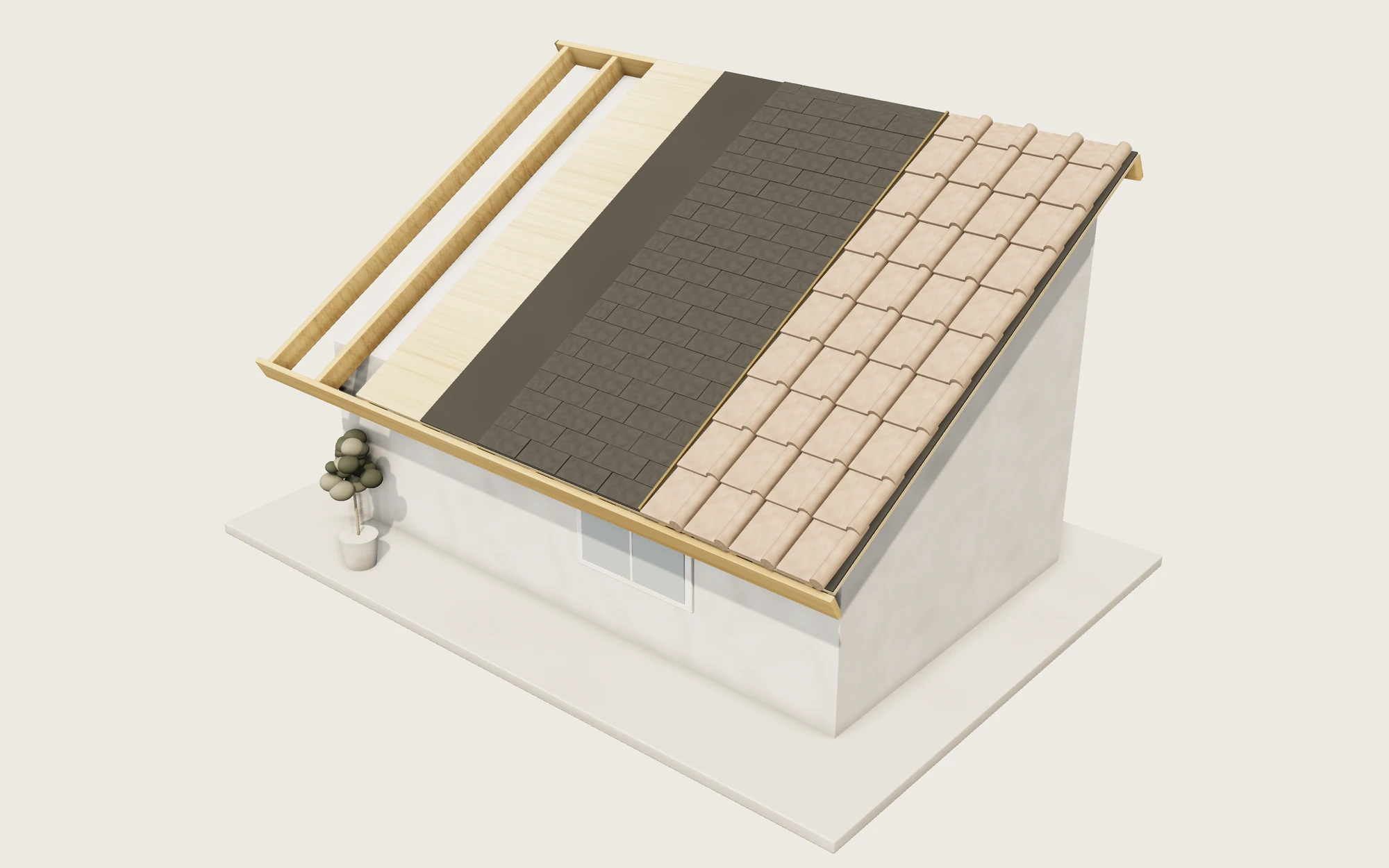
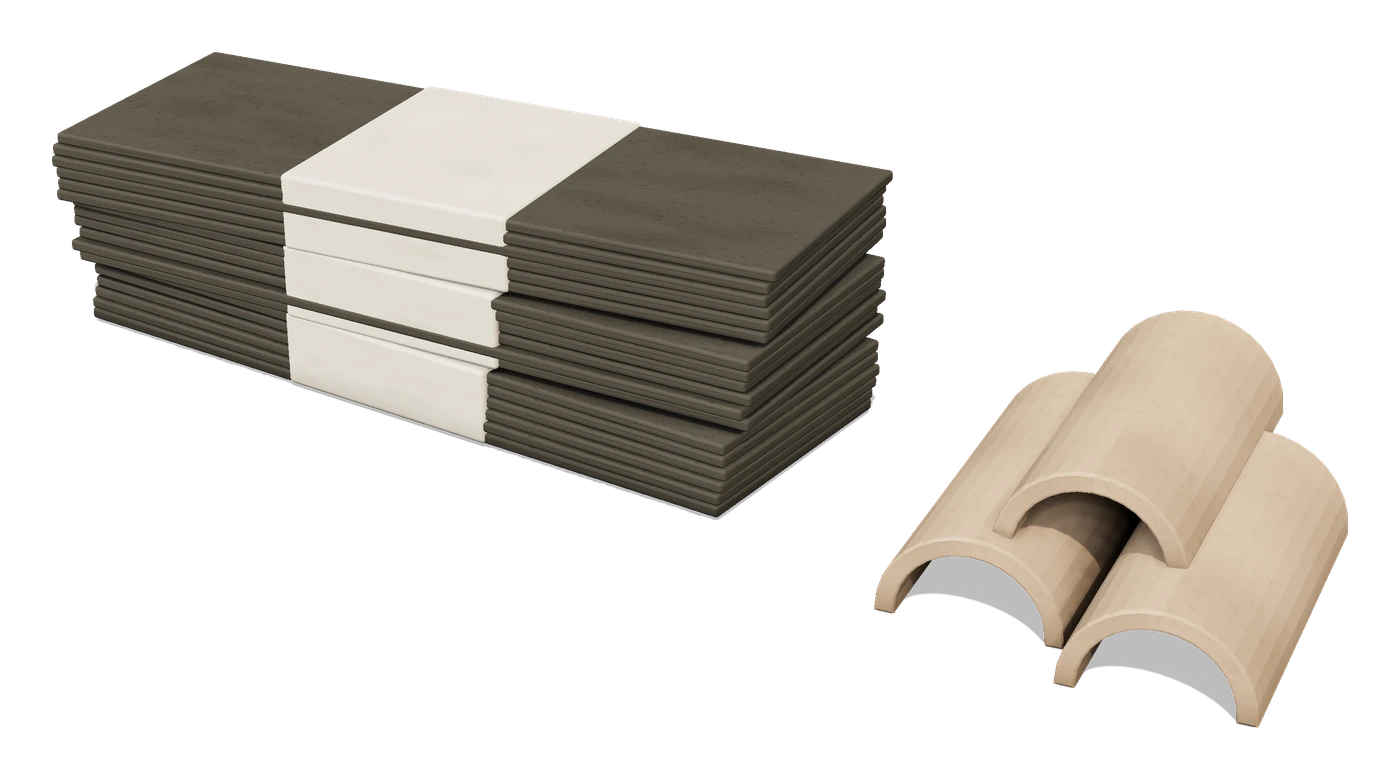
| Asphalt (composition) shingles | $8,600 to $17,200 | Only on slopes of 2:12 or steeper; double underlayment from 2:12 to 4:12 |
| Metal | $12,300 to $39,350 | Sheds snow well; costs more up front |
| Tile | $17,200 to $61,500 | Heavy; the underlayment under it wears out first |
| Low-slope (flat) roof, 1,000 sq ft | $3,700 to $13,550 | Common on additions, porches and flat-roofed triple-deckers |
Massachusetts code is specific about shingles. They may only be used on roof slopes of 2:12 or greater. Slopes from 2:12 up to 4:12 need double underlayment (780 CMR 1500). Nails must be galvanized, stainless, aluminum or copper, at least 12 gauge with a 0.375-inch head, and long enough to reach 0.75 inch into the sheathing. Drip edge is required at eaves and gables, and a cricket is required on the ridge side of any chimney wider than 30 inches.
Slate and the older housing stock
Much of Boston's housing is old, and some of it still carries original slate. Slate is not in the price table because the cost depends on the condition of each piece. The pattern is the same as tile: the slate can outlast the underlayment beneath it. A lift and relay is often the middle option between a repair and a full replacement. The crew removes the covering, replaces the underlayment and flashing, and resets the same pieces.
Flat roofs
Low-slope roofs are common on rear additions, porches and some triple-deckers. Code requires positive drainage: the roof has to drain within 48 hours of precipitation once deck loading deflection is accounted for. Ponding water is a design problem.
Why Boston roofs fail
Boston roofs take snow load, nor'easters, freeze-thaw cycles and coastal salt air. The damage usually shows up at the edges.
The ice dam is the classic failure. Heat escaping through a warm attic melts snow on the upper roof. The water runs down, refreezes at the cold eave, and backs up under the shingles. Massachusetts code addresses this directly. Where the average January daily temperature is 25°F or less, or where ice may form at the eaves, an ice dam membrane must run from the eave edge to at least 24 inches inside the exterior wall line (780 CMR 1500).
The membrane itself has to be right. Code accepts a self-adhering polymer-modified bitumen sheet meeting ASTM D1970, or two layers of Type I underlayment cemented together. SBS-modified membranes stay flexible down to about -20°F, which suits a Massachusetts winter. Careful crews also lap the membrane at least 6 inches at the sides and 3 inches at the ends, run it the full length of every valley about 36 inches wide, and patch it around every vent, skylight and chimney. OSB deck usually needs primer before the membrane goes down; APA-rated plywood usually does not.
Coastal salt air shortens the life of fasteners and metal flashing. Code already requires corrosion-resistant metal flashing at least 0.019 inch thick, which is No. 26 galvanized sheet. On the South Shore and the North Shore, ask what grade of fastener the crew is using.
Wind matters too. Where the basic wind speed is 110 mph or greater, asphalt shingles need special fastening methods tested to ASTM D3161 modified to 110 mph. Ask the crew which fasteners they use before the nor'easter season.
Ice dams, ventilation and the ice barrier
The ice barrier is half the fix. The other half is keeping the attic cold, which is a ventilation and insulation question as much as a roofing one.
What to ask for in a Boston reroof:
- Membrane from the eave to at least 24 inches inside the exterior wall line, the state minimum.
- Full-length membrane in every valley and a 36-inch patch around every penetration.
- Primer on OSB deck before the membrane.
- Drip edge at eaves and gables, overlapped at least 2 inches.
- A cricket behind any chimney wider than 30 inches.
- Flashing at wall and roof intersections, at gutters, wherever the slope or direction changes, and around every roof opening.
If ice dams have been a recurring problem, the roofer should also look at attic insulation and ventilation before quoting. A new roof over a warm attic will grow the same dams.
What changes in a historic district
Cambridge has two Historic Districts and four Neighborhood Conservation Districts, plus individual landmarks and properties under preservation easements (Cambridge Historical Commission). Work on a designated property cannot begin before a Certificate is issued by the appropriate Commission. The Historical Commission staff reviews exterior alterations.
Most applications for repairs in kind that match existing conditions can be approved administratively by staff without a commission hearing (Cambridge Historical Commission permits). A reroof in the same material and color usually fits that path. A change of material, a different shingle profile or a new color is a different conversation.
Two practical steps:
- Check whether the property has a historic designation using the My Cambridge address tool, or call 617-349-4683.
- Meet with Historical Commission staff before applying so they can review the scope and say what type of review is required.
In Boston, the Landmarks Commission publishes Homeowner Handbooks for neighborhoods listed in the National Register of Historic Places, and the city runs an Article 85 Demolition Delay process (Boston Landmarks Commission). A reroof is not a demolition. A designated property still needs the right review before work starts.
Do you need a permit?
Yes, almost always. A building permit is required before beginning most construction, demolition, modification and repair work in Boston, and permits must meet the minimum safety standards of the State Building Code (Analyze Boston). Boston's Inspectional Services Department issues the permit. You can check its status in the city's Permit Finder tool, and ISD can be reached at (617) 635-5300 (Boston Permit Finder).
In Cambridge, a building permit is required under Section 110.0 of the Massachusetts State Building Code (780 CMR) before constructing, altering, repairing or demolishing a structure, and it must be posted at the job site (City of Cambridge). Ordinary repairs as defined in the code do not need one.
Cambridge permit fees for new construction and alterations are $15 per $1,000 of value for three or fewer residential units, with a $50 minimum (Ordinance 1394, 2017). ISD must act on an application within 30 days of filing, and minor projects may be issued at acceptance (Home Energy Efficiency Consultants).
A few Cambridge rules that affect a roofing crew's schedule:
- Work must start within six months of permit issuance and then proceed continuously to completion.
- Residential construction is allowed Monday through Friday 7:00 a.m. to 6:00 p.m. and Saturdays 9:00 a.m. to 6:00 p.m. Sunday and holiday work needs a special permit from the Police Department.
- Permits are issued to construction supervisors licensed by the City of Cambridge or the State of Massachusetts. The state license is only valid for structures under 35,000 cubic feet.
Newton, Brookline, Quincy, Somerville and the other towns in the metro run their own building departments with their own forms and fees. The state provides a standard one- and two-family dwelling permit application that municipalities may use or adapt. The process is administered locally, not by the state (Mass.gov).
The current code is the 10th edition of the Massachusetts State Building Code, effective October 11, 2024, based on the 2021 International Codes (Mass.gov). A permit pulled today is reviewed against it.
Repair or replace?
Repair makes sense when the damage is local. At Boston prices:
| Job | Boston cost |
|---|---|
| Vent boot repair | $92 to $185 |
| Replace up to 25 shingles | $125 to $370 |
| Flashing repair | $245 to $615 |
| Minor leak repair | $185 to $1,250 |
| Leak with water damage | $1,250 to $7,400 |
| Roof deck repair, per 100 sq ft | $245 to $615 |
Replacement starts to make sense when leaks show up in more than one place after the same storm, when shingles are curling or losing granules across large areas, when the underlayment under slate or tile is failing, or when the roof is near the end of its material's life.
New ice and water shield cannot be installed over existing shingles. It has to go directly on a clean deck. A repair that only touches a small area is fine. Any plan that involves new membrane at the eaves means a tear-off to the deck in that area.
Storm and insurance claims
After a nor'easter or an ice dam leak, photograph the damage inside and out before anyone climbs up, and call your insurer to open a claim. Get the adjuster's scope in writing and compare it line by line with the roofer's estimate. Be careful with anyone who knocks on doors after a storm.
How to check a roofer before you hire
Massachusetts does not license roofers under a single trade license. It requires registration and, for the person pulling the permit, a license.
- Home Improvement Contractor registration. Contractors, subcontractors, partnerships and corporations that solicit, bid on or perform work on an existing, owner-occupied residential property with one to four units must be registered as a Home Improvement Contractor with the state (Mass.gov). New registration costs $150, plus a Guaranty Fund payment of $100 to $500 depending on employee count. Registration renews every two years. An expired registration can affect the contractor's ability to pull municipal permits.
- Construction Supervisor License. An HIC registration is not the same as a CSL and the two are not interchangeable. The person who pulls the building permit needs a CSL, and in Cambridge the state CSL is only valid for structures under 35,000 cubic feet, so larger buildings need a Cambridge-licensed supervisor.
- Look both up. The state's license lookup runs through the eLIPSE platform, and you can search by license number, name, license type or business name (Mass.gov). The Division of Occupational Licensure can be reached at 617-701-8600.
- Ask for the certificate of insurance. Roofing is fall work, so workers' compensation matters.
- Get a written contract that names the shingle line, the membrane product and its ASTM rating, the underlayment, the flashing and who pulls the permit.
- Know your protection. The HIC program processes complaints, runs an arbitration program and can compensate eligible homeowners up to $25,000 from the Guaranty Fund for unpaid judgments against contractors (Mass.gov).
GOLDGCP puts every roofer through six-step vetting before they join: state license verification, an insurance check, a background and business check, a portfolio review, client reference calls, and onboarding with a quality score. Payment is split into milestones, each one after you approve that stage. Read more about how milestone payments work.
Areas we cover
Roofers in the GOLDGCP network work across greater Boston:
- Boston, including the neighborhoods inside the city's historic districts
- Cambridge, where the Historical Commission reviews work on designated properties
- Somerville
- Newton
- Quincy
- Brookline
- The North Shore
- The South Shore
Enter your ZIP code to see roofing prices for your street and get matched with a local roofer.
How GOLDGCP works
- Tell us about the roof: material, rough size, the leak or the plan. Use the form, call or send a WhatsApp message.
- You see prices for your ZIP code, then we match you with up to 3 vetted, licensed roofers.
- Your roofer inspects, gives a written estimate, pulls the permit from Boston ISD, Cambridge ISD or your town's building department, and orders the right membrane and shingle product.
- You pay by milestone: for example after tear-off and deck inspection, and after the final inspection. Track it all in the client portal.
For an active leak during a storm, call the 24/7 emergency line.
Frequently asked questions
How much does a new roof cost in Boston?
For about 2,000 square feet of roof, expect $8,600 to $17,200 in asphalt shingles, $12,300 to $39,350 in metal and $17,200 to $61,500 in tile. A flat roof on 1,000 square feet runs $3,700 to $13,550. Tear-off of an old layer adds $2,450 to $4,900.
How much does roof repair cost in Boston?
Small fixes such as a vent boot, a few shingles or a flashing repair cost about $92 to $615. A minor leak runs $185 to $1,250. If water has already damaged the deck or a ceiling, plan on $1,250 to $7,400.
Do I need a permit to replace my roof in Boston?
Yes. Boston's Inspectional Services Department requires a building permit before most construction, modification and repair work. Cambridge requires one under 780 CMR Section 110.0, and ordinary repairs as defined in the code are exempt. Newton, Brookline, Quincy and Somerville issue their own permits through their own building departments.
How much ice and water shield does my Boston roof need?
State code requires membrane from the eave to at least 24 inches inside the exterior wall line, where the average January temperature is 25°F or less or ice can form at the eaves. Many roofers also run membrane the full length of every valley and around each vent, skylight and chimney; ask for that in the written contract.
Does my Cambridge roof need historic approval?
If the property is in one of Cambridge's two Historic Districts or four Neighborhood Conservation Districts, is a designated landmark, or has a preservation easement, yes. Call 617-349-4683 to check. Repairs in kind that match existing conditions can usually be approved administratively without a hearing.
What registration does a Boston roofer need?
A Home Improvement Contractor registration from the state for work on owner-occupied homes of one to four units, and a Construction Supervisor License for whoever pulls the building permit. The two are not interchangeable. Check both on the state's eLIPSE lookup.
When should I fix my roof in Boston?
Late summer and early fall, before the first nor'easter and before ice dams form. A roofer can check the membrane at the eaves, reseal flashing and clear the valleys before the season fills up. After a storm, crews are booked for weeks.
How we calculate these prices
GOLDGCP starts from national price ranges for each job, taken from published 2026 cost guides and checked against local price guides where they exist. To get a local price, we multiply the national range by the construction cost factor for the metro from the U.S. Army Corps of Engineers Area Cost Factors (US average = 1.00). Where that table has no entry for a metro, we use the nearest listed location or the state value. For ZIP codes outside the 50 largest metros, the cost estimator uses the state's price level from the Bureau of Economic Analysis Regional Price Parities. Ranges include labor and standard materials but not unusual site conditions, so a written quote after an inspection is always the final price.
Sources
- Office of Consumer Affairs and Business Regulation, Commonwealth of Massachusetts · Office of Consumer Affairs and Business…
- RoofVista
- City of Cambridge Historical Commission
- City of Cambridge, Massachusetts · City of Cambridge, Massachusetts
- City of Boston
- data.boston.gov
- permitfinder.boston.gov
- City of Cambridge, Massachusetts · Building Permits
- Home Energy Efficiency Consultants LLC
- Office of Consumer Affairs and Business Regulation, Commonwealth of Massachusetts · Office of Consumer Affairs and Business…
- Office of Consumer Affairs and Business Regulation, Commonwealth of Massachusetts · Office of Consumer Affairs and Business…
- Office of Consumer Affairs and Business Regulation, Commonwealth of Massachusetts · Home Improvement Contractor Registration and…
- Office of Consumer Affairs and Business Regulation, Commonwealth of Massachusetts · Office of Consumer Affairs and Business…
- Office of Consumer Affairs and Business Regulation, Commonwealth of Massachusetts · Office of Consumer Affairs and Business…
- U.S. Army Corps of Engineers
- U.S. Bureau of Economic Analysis

About this guide
Written by the GOLDGCP editorial team. Prices come from national cost guides adjusted with official construction cost factors for Boston; rules and statistics come from the agencies and reports linked in the text. We update this page when prices or codes change.