The short answer
An entry door costs about $835 to $4,150 installed in San Diego, a sliding patio door $1,450 to $4,750, and a garage door $835 to $4,150. Sun, salt air and the marine layer wear out finishes and frames faster than in most of the country. The door and the flashing around it matter as much as the style.
What door installation costs in San Diego
The price table adjusts national installed prices for San Diego. The U.S. Army Corps of Engineers puts construction costs in the San Diego area at 1.19 times the national average, so a door that costs $2,000 to install in an average US city costs more here.
| Job | San Diego (typical range) | US average |
|---|---|---|
| Entry door, installed | $835–$4,150 | $700–$3,500 |
| Double entry doors, installed | $1,800–$7,750 | $1,500–$6,500 |
| Patio sliding door | $1,450–$4,750 | $1,200–$4,000 |
| French doors | $1,550–$6,550 | $1,300–$5,500 |
| Multi-slide or bi-fold door | $5,950–$23,800 | $5,000–$20,000 |
| Garage door | $835–$4,150 | $700–$3,500 |
| Storm door | $475–$1,300 | $400–$1,100 |
| Interior door, installed | $145–$680 | $120–$570 |
| New door frame | $155–$715 | $130–$600 |
Estimates for 2026, including labor and standard parts. San Diego prices use the metro's construction cost factor of 1.19 (US average = 1.00) from the U.S. Army Corps of Engineers Area Cost Factors. Your quote depends on access, materials and the condition of the home.
The entry door line covers a standard pre-hung door in an existing opening. Material changes the price a lot. Steel costs the least, fiberglass sits in the middle, and solid wood costs the most.
Things that raise a door quote in San Diego:
- A wider opening. Going from a single door to a double door, or from a slider to a multi-slide wall, means a new header and plan review.
- Glass. More glass means more safety glazing and a higher-rated unit.
- A new frame. Rot at the sill or frame adds $155 to $715 at San Diego prices, and coastal houses see it more often.
- A historic district. A house in a designated historic district or a designated historical resource needs a Historical Review even when the scope would otherwise qualify for a No-Plan permit (City of San Diego).
Price your own door with the cost estimator below, or open the full door cost estimator. Both use the rate for your ZIP code. For national prices and how door types compare, see our door installation cost guide.
The same estimator has its own page, easy to share or bookmark: Door replacement cost estimator.
Door types for San Diego homes
| Door | San Diego installed price | What to know here |
|---|---|---|
| Entry door, single | $835 to $4,150 | Glass must be safety glazed; historic review in a designated district |
| Double entry doors | $1,800 to $7,750 | Usually means a wider opening and plan review |
| Sliding patio door | $1,450 to $4,750 | A same-size swap is the simplest permit case |
| French doors | $1,550 to $6,550 | Needs swing space and a sill that sheds rain |
| Multi-slide or bi-fold | $5,950 to $23,800 | Needs a structural header for the wide opening |
| Garage door | $835 to $4,150 | Opener must reverse; the house door needs a fire rating |
| Storm or screen door | $475 to $1,300 | Light-duty, often on a back or side door |
| Interior door | $145 to $680 | The garage-to-house door has its own rules |
Entry doors
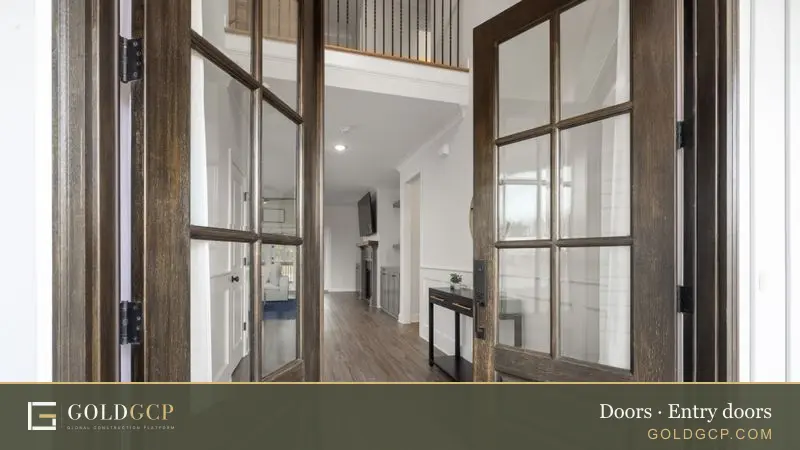
Fiberglass resists dents and can look like wood. Steel costs the least. Wood suits the Craftsman bungalows in North Park and the older houses in La Jolla, but it needs refinishing. Our entry doors guide covers materials and hardware. A west-facing dark door in El Cajon or Escondido takes strong summer sun, and a door a few blocks from the water in Oceanside or Carlsbad takes salt air. Ask what the finish warranty covers for sun and salt.
Patio, French and multi-slide doors
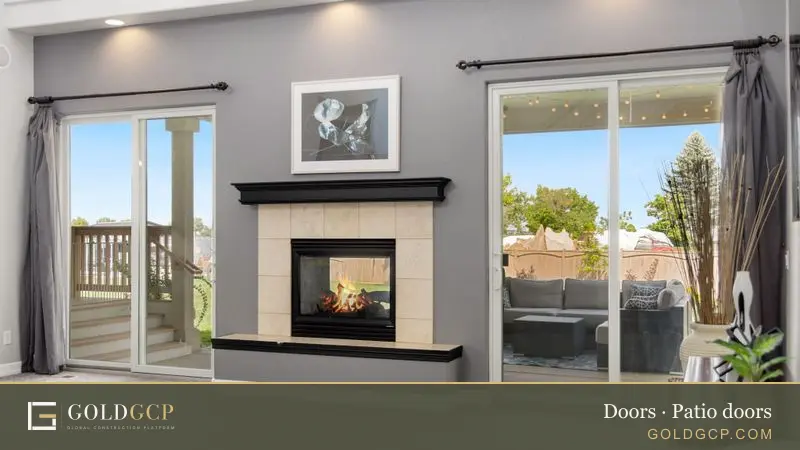
Each style solves a different problem. A slider keeps floor space free. French doors open wide in the traditional way. Multi-slide and bi-fold units can clear most of a wall. Our guides compare patio doors, French doors and multi-slide doors. Rain here arrives in bursts, mostly from November through March. When a wide door sits on a flush threshold, the sill pan, flashing and drainage all have to handle a heavy storm. Before you sign, ask the installer how water will be managed at the bottom of the opening.
Garage doors
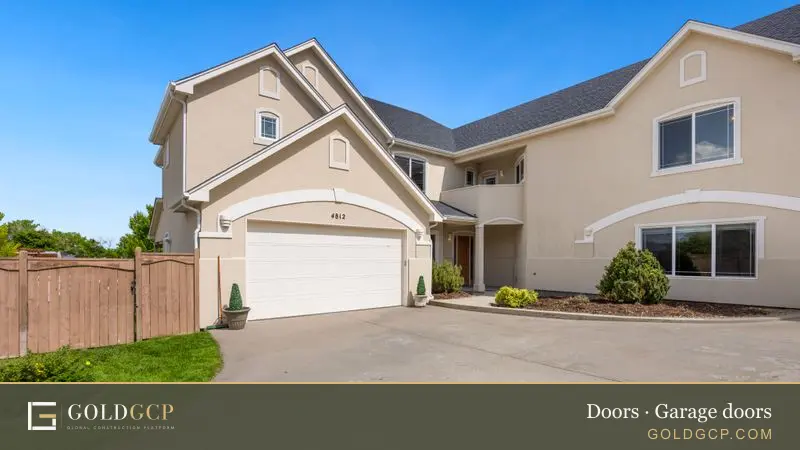
At resale, a new garage door often brings back more than it cost. Materials and openers are covered in our garage doors guide. Every install has to meet two federal rules: the opener must reverse, and the door from the garage into the house must act as a fire separation.
Glass in doors: safety rules
Any glass in a swinging, sliding or bifold door counts as a hazardous location under the California Residential Code, so it has to be tempered or laminated safety glass. Two exceptions apply: decorative glass, and openings too small for a 3-inch ball to pass through. A second rule covers glass within 24 inches of either side of a door when its bottom edge sits less than 60 inches above the floor. Sidelights beside an entry door often fall under it. The code text is in Chapter 3 of the 2022 California Residential Code.
Fire and coastal rules for exterior doors
San Diego County has large areas mapped as Fire Hazard Severity Zones. The wildland areas around Escondido, El Cajon and the backcountry are where the door rules bite.
- In the fire hazard zones, the code requires exterior doors to have a noncombustible or ignition-resistant surface, or be solid core wood with stiles and rails at least 1 3/8 inches and panels at least 1 1/4 inches, or carry a 20-minute fire rating, or pass ASTM E2707.
- Glazed doors and glazed openings in exterior doors and garage doors in those zones need multipane glass with at least one tempered pane, glass block, a 20-minute rating, or compliance with SFM 12-7A-2.
- Escondido publishes its Wildland-Urban Interface Code requirements and fire resistive construction requirements for homeowners (City of Escondido). El Cajon residents can view the fire hazard severity zone maps for their area (City of El Cajon).
If your house sits near a canyon or open brush, ask the installer which door construction the zone requires before you order.
Garage door rules
Auto-reverse
Automatic residential garage door openers must meet federal entrapment protection standards, which means the door stops and reverses. Once the job is done, have the installer test the reversing function and the photo eyes while you watch.
The door between the garage and the house
The door that connects an attached garage to the house works as a fire separation. Under the code it can be solid wood or steel at least 1 3/8 inches thick, or a 20-minute fire-rated door, and it has to close and latch on its own. A door from the garage straight into a bedroom is not allowed. A hollow-core interior door fails the rule, so check the door before you replace it.
Do you need a permit for a new door in San Diego?
It depends on which city issues the permit for your address. Inside a city, the city issues permits. In unincorporated areas, the County of San Diego does. Check the parcel's jurisdiction first.
| Job | What to expect |
|---|---|
| Swap a door in the same opening, same type | City of San Diego lists in-kind door replacement as a No-Plan Building Permit |
| Widen an opening for double, French or multi-slide doors | Building permit with plan review for the new header |
| Replace a garage door | Usually no building permit; the opener still must reverse |
| Exterior door in a designated historic district | Historical Review before the permit |
| Door on a house in unincorporated San Diego County | County permit through the County Permit Center |
City of San Diego
The City lists in-kind door and window replacement among the typical residential permits that qualify for a No-Plan Building Permit (City of San Diego). Only buildings that were legally permitted, constructed and passed final inspections are eligible. The inspector can still require full plans if the work turns out to be more extensive (Information Bulletin 203). Maintenance repairs under $1,000 of like-for-like replacement are exempt. Permits are still required in historic districts and environmentally sensitive lands for exterior door and window replacements (when-is-a-permit-required.pdf). Fees vary with the size and complexity of the project (City of San Diego). In-person payments are made at the Mission Valley location by appointment (City of San Diego).
Chula Vista
Chula Vista requires a building permit for work that physically changes or adds structures, even if you can't see the change from outside. The city asks homeowners to contact staff to confirm before starting (City of Chula Vista). Work exempt from permits is listed in Form 4551. Plan review status can be checked around the clock through the city's Citizen Access program (City of Chula Vista). The Development Services office is at 276 Fourth Avenue.
Carlsbad
Carlsbad requires a building permit when you add new structures or physically change existing ones. For permits that need plan check, reviews do not begin until fees are paid (City of Carlsbad). Exempt work is listed in Carlsbad Municipal Code section 18.04.015. Exempt work must still meet the building codes (City of Carlsbad). Plan check runs one year from submittal and expires if reviews are not completed (City of Carlsbad). The Building & Permits office is at 1635 Faraday Ave.
Oceanside
Oceanside issues building permits only to California licensed pros of the appropriate classification or to owner-builders. An owner-builder must have owned the property for the last 12 months (City of Oceanside). Since January 2, 2025, applications with plan submittals go through the web-based process and paper plans are not accepted. A permit expires if the work is not completed within three calendar years. A one-time six-month extension costs $100. Exempt work is listed in handout IB 116.
Escondido
Escondido accepts plans only in electronic format. Plan review takes about 30 calendar days for each review cycle after a complete set of documents arrives (City of Escondido). Residential alteration and remodel permits are applied for through the city portal. Inspections are scheduled and tracked online only. A permit is valid for one year after issuance and extends 180 days after inspection. Plan check fees run 75% of the building permit fee, plus a 20% state energy plan check surcharge and a 20% state energy inspection surcharge (Escondido Fee Guide).
El Cajon and unincorporated San Diego County
El Cajon's Project Assistance Center combines Planning, Engineering and Building in one place. Applicants use the PACO portal to submit projects, pay for permits, schedule inspections and check status (City of El Cajon). Building staff can be reached at 619-441-1726. In unincorporated areas, the County of San Diego issues the permit through the County Permit Center. The Building Division hotline is (858) 565-5920 (San Diego County). County plan review fees run 65% of the building permit fee (County of San Diego).
How to check a door installer before you hire
California licenses contractors through the Contractors State License Board. Door installation usually falls under a specialty classification. A company that manages several trades on a bigger job may hold a Class B general building license. Since January 1, 2025, the only exemption from licensing is minor work under $1,000 in labor and materials that needs no building permit and is done without employees (CSLB).
- Look up the license at Check A License. A California license number has no letters and is no more than 8 digits. The database is down Sundays 8 p.m. through Monday 6 a.m.
- Check the classification, bond, workers' compensation and any complaint disclosure on the same page.
- Get the door brand, material, glass type and whether it is pre-hung in writing.
- Ask who pulls the permit, and whether the quote covers a new frame, sill pan and trim.
- If the job is a garage door, make sure the installer will test the auto-reverse.
- Keep the deposit small. California caps the down payment at $1,000 or 10 percent of the contract price, whichever is less. A written contract is required for home improvement work over $500 (CSLB). Payments after that must match work already completed or materials delivered to your home.
GOLDGCP vets every installer in its network in six steps: license verification, an insurance check, a business and public-records check, a portfolio review, client reference calls, and onboarding with a quality score. Payment goes in milestones, and each one comes due only after you approve that stage. Read more about how milestone payments work.
Areas we cover
GOLDGCP door installers work across San Diego County:
- San Diego
- Chula Vista
- Carlsbad
- Oceanside
- Escondido
- La Jolla
- El Cajon
Type in your ZIP code to see door prices for your street and get matched with a local installer.
How GOLDGCP works
- Describe the door to us: entry, patio or garage, the size of the opening, and whether you want it widened. Use the form, call or send a WhatsApp message.
- Prices for your ZIP code appear first, then you get matched with up to 3 vetted, licensed installers.
- Your installer measures, confirms the glass and any historic district or fire zone rules, and pulls the permit.
- Payment is by milestone, for example once the door is delivered and again after the final inspection, and you follow the job in the client portal.
Replacing windows too? See our San Diego window replacement guide. Our windows and doors showroom shows the doors we supply.
Frequently asked questions
How much does door installation cost in San Diego?
An entry door costs about $835 to $4,150 installed in San Diego, double entry doors $1,800 to $7,750, a sliding patio door $1,450 to $4,750 and French doors $1,550 to $6,550. A garage door runs $835 to $4,150. A new frame adds $155 to $715.
Do I need a permit to replace a door in San Diego?
It depends on the city that issues permits for your address. The City of San Diego lists in-kind door replacement as a No-Plan Building Permit, and maintenance repairs under $1,000 of like-for-like work are exempt. Widening the opening needs a building permit with plan review for the new header.
Does a glass door need tempered glass in California?
Yes. Under the California Residential Code, glass in swinging, sliding and bifold doors is a hazardous location, so it has to be safety glass, tempered or laminated. The same usually applies to sidelights within 24 inches of the door whose bottom edge is less than 60 inches above the floor.
What door is required between the garage and the house in San Diego?
It has to be solid wood or steel at least 1 3/8 inches thick, or a 20-minute fire-rated door, and it must close and latch on its own. A door that opens from the garage directly into a bedroom is not allowed. A standard hollow-core door does not meet the rule.
Do I need historic approval for a new front door in San Diego?
If the house is a designated historical resource or sits in a designated historic district, yes. A Historical Review may be required even when the scope qualifies as a No-Plan Building Permit. Most reviews need a photographic survey and a building record from the County Assessor.
What license does a door installer need in California?
A CSLB license is required for nearly all construction work. Door installation usually falls under a specialty classification. A company managing several trades may hold a Class B general building license. Check it at cslb.ca.gov under Check A License before you sign.
How long does door installation take in San Diego?
Once the door is on site, a same-size entry or patio swap usually takes one day. Widening an opening for a new header adds time, because plan review can run several weeks in some county permit offices. Order the door first and get the lead time confirmed in writing.
How we calculate these prices
GOLDGCP starts from national price ranges for each job, taken from published 2026 cost guides and checked against local price guides where they exist. To get a local price, we multiply the national range by the construction cost factor for the metro from the U.S. Army Corps of Engineers Area Cost Factors (US average = 1.00). Where that table has no entry for a metro, we use the nearest listed location or the state value. For ZIP codes outside the 50 largest metros, the cost estimator uses the state's price level from the Bureau of Economic Analysis Regional Price Parities. Ranges include labor and standard materials but not unusual site conditions, so a written quote after an inspection is always the final price.
Sources
- City of San Diego Development Services · No-Plan Building Permit
- UpCodes
- City of Escondido Building Division
- City of El Cajon, CA · City of El Cajon, CA
- City of San Diego Development Services · What Permits Do I Need?
- City of San Diego Development Services · when-is-a-permit-required.pdf
- City of San Diego Development Services Department
- City of San Diego Development Services · City of San Diego Development Services
- City of Chula Vista · Permit Information
- City of Chula Vista · City of Chula Vista
- carlsbadca.gov · carlsbadca.gov
- carlsbadca.gov · carlsbadca.gov
- carlsbadca.gov · carlsbadca.gov
- City of Oceanside, CA
- City of Escondido Building Division, Community Development Department
- City of El Cajon, CA · Project Assistance Center
- County of San Diego, Planning & Development Services · County of San Diego, Planning & Development…
- County of San Diego, Planning & Development Services · Building Construction Permit Fees (PDS613)
- California CSLB · California CSLB
- California CSLB · California CSLB
- U.S. Army Corps of Engineers
- U.S. Bureau of Economic Analysis
- Contractors State License Board

About this guide
Written by the GOLDGCP editorial team. Prices come from national cost guides adjusted with official construction cost factors for San Diego; rules and statistics come from the agencies and reports linked in the text. We update this page when prices or codes change.