
The short answer
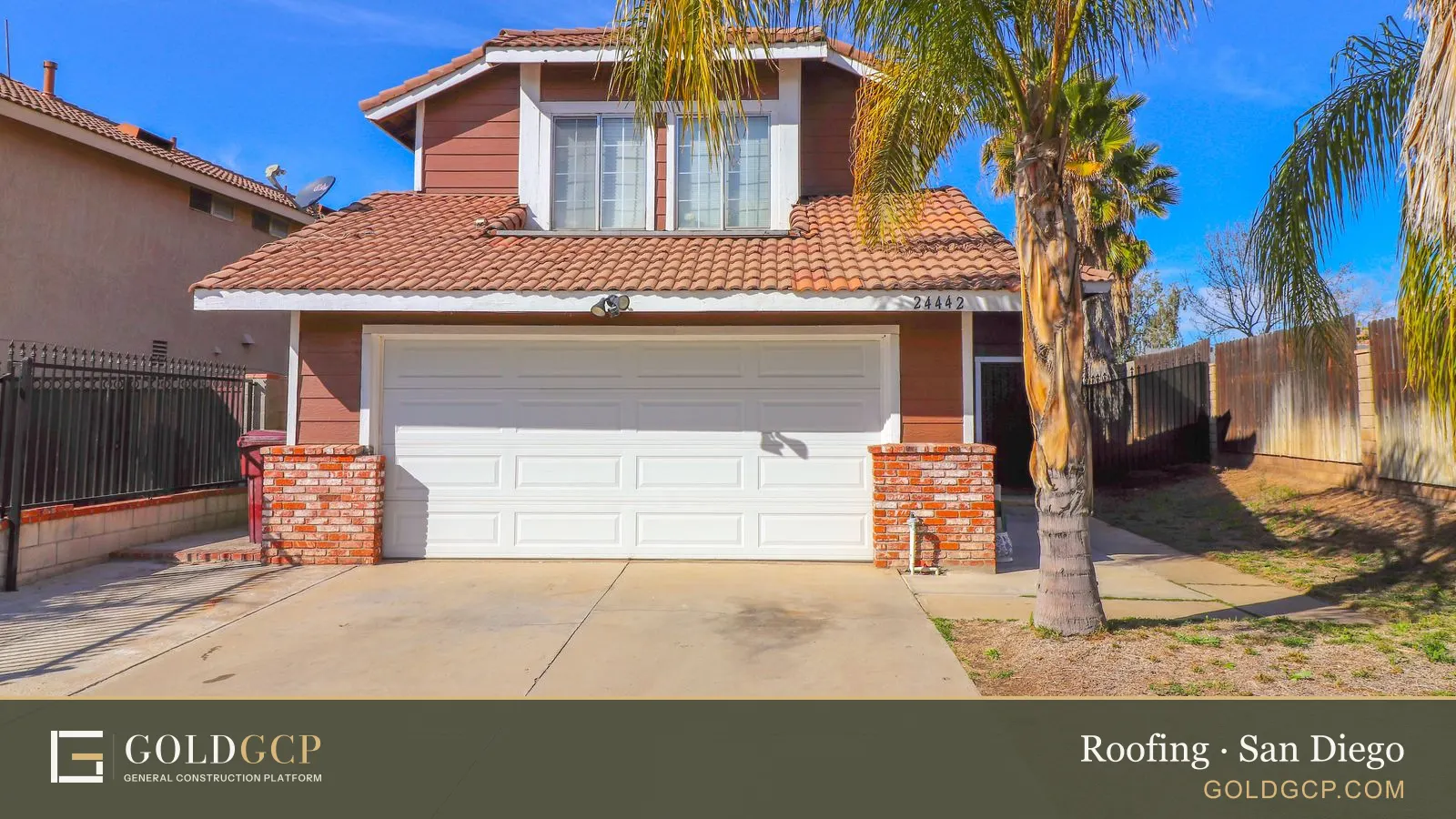
A new asphalt shingle roof on a typical San Diego house costs about $8,350 to $16,650, and tile runs $16,650 to $59,500. Most leak repairs land between $180 and $1,200. In San Diego, permits and code rules often decide the job. Most reroofs need a city permit, a cool roof product under Title 24, and Class A materials in the fire zones.
What roofers charge in San Diego
The table uses national cost data adjusted for San Diego. The U.S. Army Corps of Engineers puts construction costs in the San Diego area at 1.19 times the national average, so a roof that costs $10,000 elsewhere tends to cost around $11,900 here.
| Job | San Diego (typical range) | US average |
|---|---|---|
| Asphalt shingle roof, 2,000 sq ft | $8,350–$16,650 | $7,000–$14,000 |
| Metal roof, 2,000 sq ft | $11,900–$38,100 | $10,000–$32,000 |
| Tile roof, 2,000 sq ft | $16,650–$59,500 | $14,000–$50,000 |
| Flat roof, 1,000 sq ft | $3,550–$13,100 | $3,000–$11,000 |
| Tear-off of one old layer, 2,000 sq ft | $2,400–$4,750 | $2,000–$4,000 |
| Vent boot repair | $89–$180 | $75–$150 |
| Replace up to 25 shingles | $120–$355 | $100–$300 |
| Flashing repair | $240–$595 | $200–$500 |
| Minor leak repair | $180–$1,200 | $150–$1,000 |
| Leak with water damage | $1,200–$7,150 | $1,000–$6,000 |
| Roof deck repair, per 100 sq ft | $240–$595 | $200–$500 |
Estimates for 2026, including labor and standard parts. San Diego prices use the metro's construction cost factor of 1.19 (US average = 1.00) from the U.S. Army Corps of Engineers Area Cost Factors. Your quote depends on access, materials and the condition of the home.
A same-size, same-material roof costs roughly $1,000 to $3,000 more in San Diego County than in LA County. Permit fees, local labor rates and disposal costs cause most of that gap, not the shingles (Helios Energy Global). Roofing labor across Southern California runs about $2.00 to $4.50 per square foot, with the high end in coastal San Diego.
What pushes a quote up in San Diego:
- Tile. Clay and concrete tile is heavy, and the crew handles every piece. Resetting old tile on new underlayment is priced as its own job.
- Coastal access. Tight lots and steep driveways in La Jolla, Carlsbad and Oceanside make it harder to stage materials and haul away debris.
- Code items. A cool roof product, a Class A assembly in a fire zone, and decking repairs found after tear-off all add cost.
- Old layers. Each layer of roofing that has to come off adds about $2,400 to $4,750 on a 2,000-square-foot roof.
- Disposal. San Diego County's solid waste fees add an estimated $200 to $600 to tear-off disposal compared with LA County.
Run your own numbers with the cost estimator, or open the full roofing cost estimator. Both use the rate for your ZIP code. For national prices and how roofers measure a roof, see our roofing cost guide.
The same estimator has its own page, easy to share or bookmark: Roof replacement cost estimator.
Roofing materials that suit San Diego
Here is how the common roofing choices compare at San Diego prices for 2,000 square feet of roof:
| Material | San Diego installed cost, 2,000 sq ft | Typical lifespan | San Diego notes |
|---|---|---|---|
| Asphalt (composition) shingles | $8,350 to $16,650 | 20 to 30 years (architectural) | Must meet the cool roof rule on a reroof in most climate zones |
| Metal | $11,900 to $38,100 | Longest of the common choices | Light; costs more up front but lasts longest |
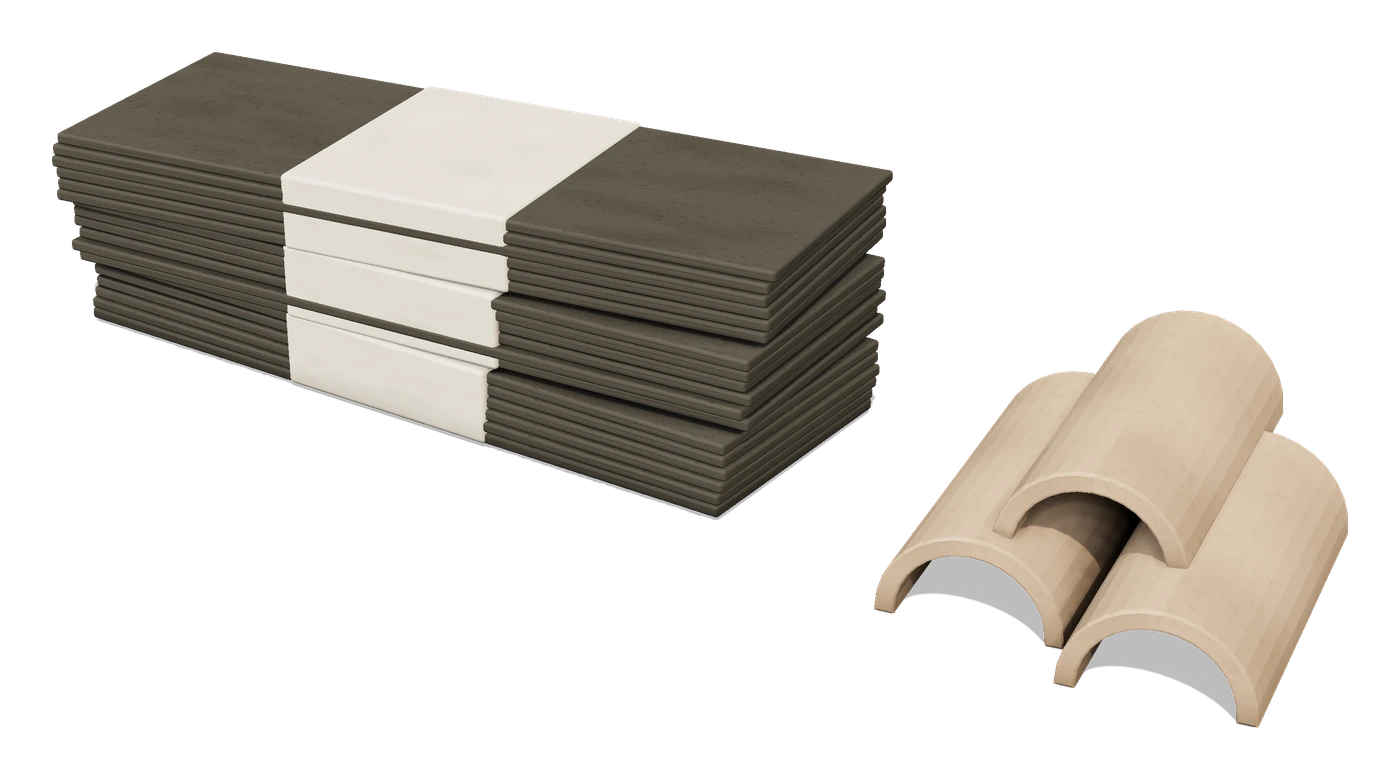
| Concrete or clay tile | $16,650 to $59,500 | 30 to 100+ years | Heavy; the layer under the tile wears out first |
| Low-slope (flat) roof, 1,000 sq ft | $3,550 to $13,100 | Varies widely by membrane type | Strictest cool roof rule: aged reflectance of 0.63 |
Lifespans come from HomeGuide's material table. Wood shakes are not in the table. California only allows wood roofing that the State Fire Marshal has approved after a long weathering test, and in very high fire hazard zones the roof must be Class A, so most San Diego roofers steer owners to other materials.
Tile roofs: the underlayment is the weak spot
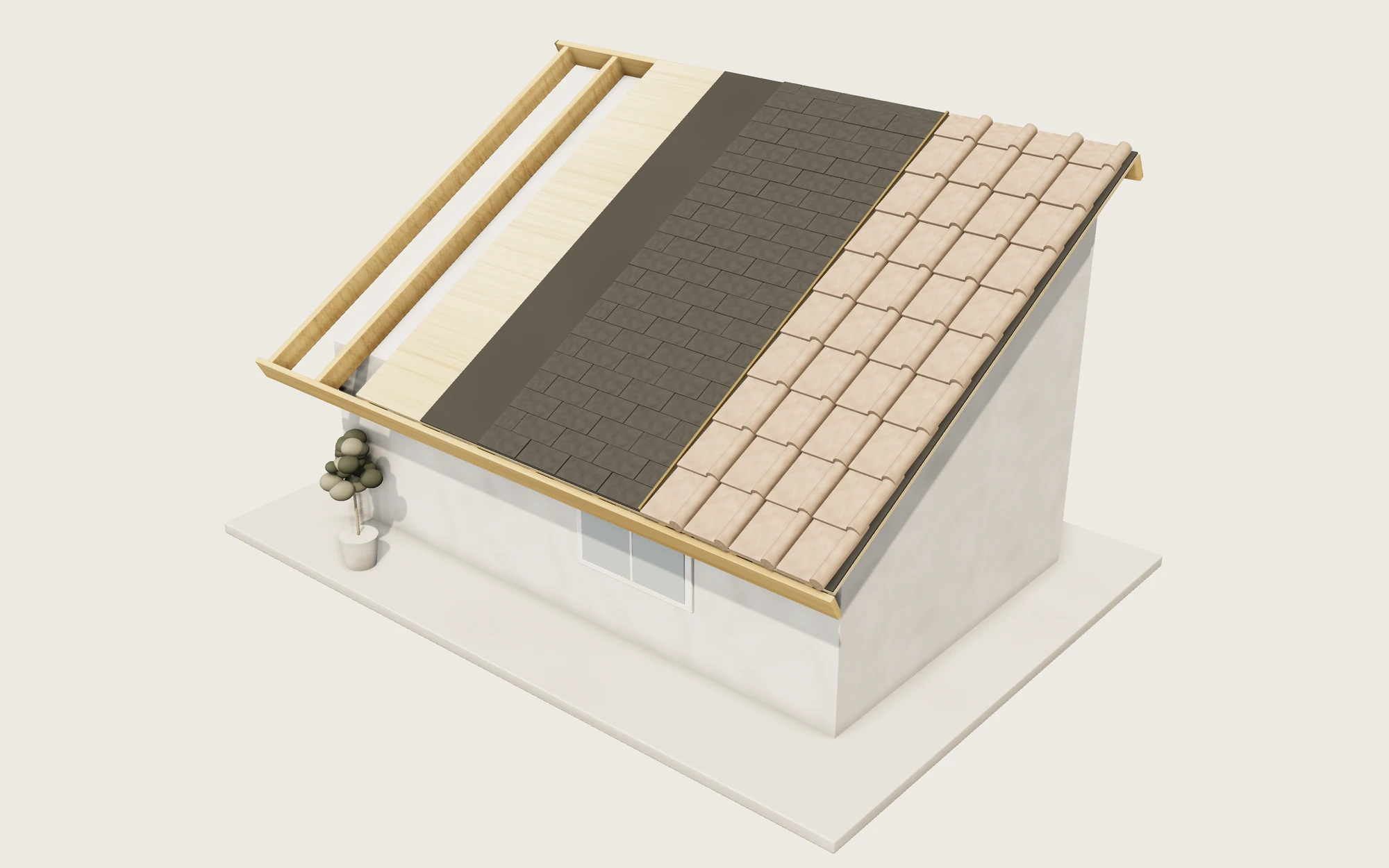
Tile can last a very long time. The felt or synthetic layer under it wears out much sooner. Once that layer dries out and cracks, water that slips between the tiles reaches the deck. The fix is often a "lift and relay": the crew removes the tiles, puts down new underlayment and flashing, then resets the same tiles and replaces broken ones. Chula Vista requires structural calculations when clay or concrete tile weighs more than 6 pounds per square foot (City of Chula Vista).
Flat roofs on mid-century homes
Low-slope roofs face the tightest cool roof rule in Title 24: a three-year aged solar reflectance of at least 0.63. That usually means a white or very light membrane or coating. California requires all new or replacement low-slope roofs to be cool roofs under the Title 24 energy standards (CoolCalifornia).
Why San Diego roofs leak when they do
San Diego gets most of its rain in a short window, and the marine layer keeps roofs damp for weeks at a time. A roof can sit dry for months with a cracked vent boot or a slipped tile, and nobody notices until the first big storm.
Plan inspections and repairs for late summer and fall, before the rain starts. A roofer can reseal flashing, replace cracked tiles, clear valleys and gutters, and check the underlayment at the eaves while the schedule is open. If a storm is already on its way and the roof is leaking, call our 24/7 emergency line.
Salt air near the coast in La Jolla, Oceanside and Carlsbad eats at metal flashing and fasteners faster than inland. Santa Ana winds push water uphill under shingles and lift tiles. In the back country around Escondido and El Cajon, wildfire is the bigger risk.
Cool roof rules for a reroof
California's Title 24 Building Energy Efficiency Standards require that most residential re-roofs use cool-roof-rated materials, surfaces with a minimum Solar Reflectance Index that reduces heat absorption. The rule applies across San Diego County (Helios Energy Global).
The state Energy Code sets the numbers. In California, all new or replacement low-slope roofs must be cool roofs under Title 24, and steep-slope roofs must be cool roofs in several California climate zones (CoolCalifornia). California has 16 climate zones for state codes and standards.
The zone goes by ZIP code. The Cool Roof Rating Council (CRRC) runs a third-party rating program that rates and publishes a roof product's solar reflectance and thermal emittance, and its online Rated Products Directory lets you check whether a product complies with Title 24 (CoolCalifornia). CRRC tests products both new and aged. Aged products are weathered outside for three years, because some products become less reflective over time.
Upgrading to a Title 24-compliant cool roof adds roughly $0.50 to $1.50 per square foot in material cost (Helios Energy Global). The cool-roof requirements generally apply when you are replacing more than 50% of the roof surface.
No standalone cool-roof tax credit or rebate is widely available in 2026 for residential projects in Southern California, so do not count on one when you budget. For more on how energy rules shape a project, see our Title 24 guide.
Fire zones and Class A roofs
Wildfire shapes roofing rules across the hills and back country of San Diego County. California's rules for high fire hazard severity zones call for a fire retardant Class A roof, as a Los Angeles County city's handout lays out (City of Rancho Palos Verdes). The same handout spells out the details: vents may not be installed on the underside of eaves or cornices unless special eave vents that resist flames and burning embers are accepted by the Building Official, and attic or foundation ventilation openings must not be within 18 inches, measured vertically, of rakes, soffits, balconies, decks or similar exterior overhangs.
Escondido publishes Wildland-Urban Interface Code requirements and fire resistive construction requirements for homeowners (City of Escondido), and El Cajon homeowners can view fire hazard severity zone maps for their area (City of El Cajon). Check your address before you choose a material.
Shingles or tiles alone don't carry the Class A rating. The rating comes from a fire test of the whole roof build, underlayment and installation method included, so get the listing for your exact combination from the roofer before you sign.
Do you need a permit?
A full re-roof (tear-off and replacement) requires a building permit in every jurisdiction across LA, Orange and San Diego counties (Helios Energy Global). San Diego city and county re-roof permit fees frequently run $400 to $1,200 or more for a full re-roof with structural review.
Each city runs its own building department with its own rules:
| Authority | Reroof rule |
|---|---|
| City of San Diego | A permit is not required for roof covering renewal where the existing roof structure, including roof diaphragm, is not altered. A permit is required when structural framing, sheathing, support elements, lateral-resisting elements or foundation work is needed, when wood shakes, wood shingles or asphalt shingles are removed and replaced with a new roofing material weighing more than 6 pounds per square foot, and when spaced "skip" sheathing is removed and new sheathing is installed. A permit is always required if the site contains a designated historical resource or is within an adopted historic district (City of San Diego). |
| City of Chula Vista | Permits are required for reroofing, except for detached single family dwellings or duplexes and their accessory structures when the reroofing work consists of less than 500 square feet or less than 50% of the roof covering replacement. No more than two overlays of asphalt shingles are allowed, and all roofing materials must be fire retardant with wood shingles or shakes pressure treated to a Class C minimum. Applications go through the Citizen Access platform (City of Chula Vista). |
| City of Carlsbad | Re-roofing generally triggers a building permit. State and city ordinances require construction design to be approved through plan check before a permit can be issued, and the plan check process lasts one year from the date of submittal (City of Carlsbad). |
| City of Oceanside | Re-roof projects require a separate permit, applied for through the eTRAKiT portal. Contractors must provide their state license number, City Business License and current workers' compensation certificate. Building permits are only issued to California licensed pros of the appropriate classification or to owner-builders who have owned the residential property for the last 12 months (City of Oceanside). |
| City of Escondido | Residential re-roof permits must be applied for through the online portal, and plan review takes approximately 30 calendar days for each review cycle (City of Escondido). |
| City of El Cajon | El Cajon's Project Assistance Center combines Planning, Engineering and Building services, and applicants can use the PACO portal to submit for certain project types, pay for permits, schedule inspections and get status updates (City of El Cajon). |
| Unincorporated San Diego County | The County Planning & Development Services reviews permits to meet the California Building Standards, and interactive building permit applications cover projects in the unincorporated areas (San Diego County). |
A permit brings an inspector to check the deck, underlayment, flashing and the cool roof label. It also creates the record a buyer's inspector or your insurer will look for later. A standard re-roof on a 2,000 sq ft home takes 1 to 3 days of active work, and San Diego permit inspections can run 1 to 2 weeks (Helios Energy Global).
Solar panels on the roof
If you have solar panels, plan the sequence. Replacing the roof after panels are installed means paying to remove and reinstall the array, typically $5,000 to $7,000 for a 20-panel array ($250 to $350 per panel) (Helios Energy Global). Do the roof first if it is near the end of its life.
Repair or replace?
Repair makes sense when the damage is local: a cracked vent boot, a few broken tiles, a lifted shingle tab, or failed flashing at a chimney or skylight. At San Diego prices those run from about $89 to $595. A leak that has already soaked the deck or a ceiling costs $1,200 to $7,150.
Replacement starts to make sense when:
- Leaks show up in more than one place after the same storm
- Shingles are bald, curled or brittle over large areas
- The tile is fine but the underlayment is failing across the roof (a relay may be the middle option)
- The roof is near the end of its material's lifespan
- You live in a fire zone and the current roof is not Class A
Keep the 50% line in mind. Replacing more than half the roof triggers the cool roof requirement, and in a high fire hazard severity zone, the Class A rule.
Storm and fire insurance claims
Before calling a roofer about storm or fire damage, photograph the damage inside and out and call your insurer to open a claim. Get the adjuster's scope in writing and compare it line by line with the roofer's estimate. Be careful with anyone who knocks on doors after a disaster. In California, contractors must use a fixed-price contract for disaster-related home improvement work, and time-and-materials and cost-plus contracts are not allowed (CSLB).
How to check a roofer before you hire
California licenses roofers under the C-39 Roofing classification of the Contractors State License Board. A C-39 contractor installs and repairs roofing and waterproofing, from shingles and tile to metal and membranes.
- Look up the license number on the CSLB website. The status should be active and the business name should match. A California contractor license number contains no alphabetic characters and is no more than 8 digits.
- Ask for proof of workers' compensation coverage. The CSLB requires it of roofing contractors even when the owner works alone, so a C-39 license can't be exempt on the grounds of having no staff (CSLB).
- Read the complaint and disciplinary history on the same page.
- Get a written contract that names the product line, the CRRC rating, the underlayment, the flashing and who pulls the permit. In California, a written contract is required for all home improvement projects over $500 (CSLB).
- Keep the deposit small. California caps a home improvement down payment at $1,000 or 10% of the price, whichever is less, and payments beyond the down payment must be based on work already completed or materials delivered to your home.
The $1,000 handyman exception rarely helps with roofs, since it only covers work that needs no permit and is done by one person with no employees.
Roofers join GOLDGCP only after six checks: we verify the state license and the insurance, look at business and public records, review past work, call former clients, and score them during onboarding. You pay the roofer directly in stages, and each stage is paid only once you approve it. Read more about how milestone payments work.
Areas we cover
Roofers in the GOLDGCP network work across San Diego County:
- San Diego, from the coast to the inland neighborhoods
- Chula Vista
- Carlsbad
- Oceanside
- Escondido
- La Jolla
- El Cajon
Enter your ZIP code to see roofing prices for your street and get matched with a local roofer.
How GOLDGCP works
- Tell us about the roof: material, rough size, the leak or the plan. Use the form, call or send a WhatsApp message.
- You see prices for your ZIP code, then we match you with up to 3 vetted, licensed roofers.
- Your roofer inspects, gives a written estimate, pulls the city or county permit and orders the right cool roof or Class A product.
- You pay by milestone: for example after tear-off and deck inspection, and after the final inspection. Track it all in the client portal.
For an active leak during a storm, call our 24/7 emergency line.
Frequently asked questions
How much does a new roof cost in San Diego?
For about 2,000 square feet of roof, expect $8,350 to $16,650 in asphalt shingles, $11,900 to $38,100 in metal and $16,650 to $59,500 in tile. A same-size, same-material roof costs roughly $1,000 to $3,000 more in San Diego County than in LA County. Coastal lots, tear-off of old layers and deck repairs push the price up.
How much does roof repair cost in San Diego?
Small fixes such as a vent boot, a few shingles or a flashing repair cost about $89 to $595. A minor leak runs $180 to $1,200. If water has already damaged the deck, insulation or a ceiling, plan on $1,200 to $7,150.
Do I need a permit to replace my roof in San Diego?
It depends on the city. In the City of San Diego, a permit is not required where the existing roof structure is not altered, but it is required for structural work, for new material weighing more than 6 pounds per square foot, and always in a historic district. Chula Vista, Carlsbad, Oceanside and Escondido each require a permit for a reroof.
Does a new roof in San Diego have to be a cool roof?
If you replace more than 50% of a home's roof, Title 24 requires a cool-roof-rated product. All new or replacement low-slope roofs must be cool roofs, and steep-slope roofs must be cool roofs in several California climate zones. Check the product in the Cool Roof Rating Council's Rated Products Directory.
What roof is required in a San Diego fire zone?
In a high fire hazard severity zone, roofing must be fire retardant Class A. Vents may not be installed on the underside of eaves or cornices unless special eave vents that resist flames and burning embers are accepted by the Building Official. Check your address on the fire hazard severity zone maps before you choose a material.
When should I fix my roof in San Diego?
Late summer and fall, before the rain. San Diego gets most of its rain in a short winter window, so problems often stay hidden until the first storm. Booking an inspection in September or October avoids the post-storm rush.
What license does a roofer need in California?
In California the license class is C-39 Roofing, issued by the Contractors State License Board. Look the number up at cslb.ca.gov, where the record also shows the workers' compensation policy. Roofers need that coverage even with no employees.
How we calculate these prices
GOLDGCP starts from national price ranges for each job, taken from published 2026 cost guides and checked against local price guides where they exist. To get a local price, we multiply the national range by the construction cost factor for the metro from the U.S. Army Corps of Engineers Area Cost Factors (US average = 1.00). Where that table has no entry for a metro, we use the nearest listed location or the state value. For ZIP codes outside the 50 largest metros, the cost estimator uses the state's price level from the Bureau of Economic Analysis Regional Price Parities. Ranges include labor and standard materials but not unusual site conditions, so a written quote after an inspection is always the final price.
Sources
- Helios Energy Global
- City of Chula Vista
- coolcalifornia.arb.ca.gov
- City of Rancho Palos Verdes Community Development Building and Safety Department
- escondido.gov
- elcajon.gov · elcajon.gov
- City of San Diego Development Services
- City of Carlsbad, CA
- City of Oceanside, CA
- elcajon.gov · elcajon.gov
- San Diego County Planning & Development Services
- California CSLB · California CSLB
- California CSLB · California CSLB
- California CSLB · California CSLB
- California CSLB · California CSLB
- U.S. Army Corps of Engineers
- U.S. Bureau of Economic Analysis

About this guide
Written by the GOLDGCP editorial team. Prices come from national cost guides adjusted with official construction cost factors for San Diego; rules and statistics come from the agencies and reports linked in the text. We update this page when prices or codes change.