How much do bi-fold and multi-slide doors cost?
Quick answer
Bi-fold patio doors typically cost $800 to $2,000 per linear foot, or about $5,000 to $20,000 installed for a 6- to 10-foot opening, according to HomeGuide. Multi-slide glass walls run about $900 to $1,500 per linear foot. Cutting a new opening with a structural header can double or triple the project cost.
The table below gives GOLDGCP's national planning ranges for each door type, large multi-panel systems included. Add your ZIP code for local figures.
| Job | US average (typical range) | Typical |
|---|---|---|
| Entry door, installed | $700–$3,500 | $1,600 |
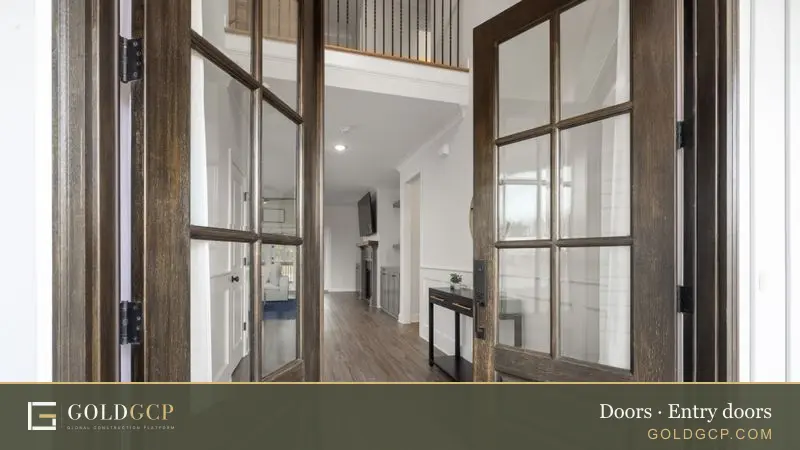
| Double entry doors, installed | $1,500–$6,500 | $4,000 |
| Patio sliding door | $1,200–$4,000 | $2,200 |
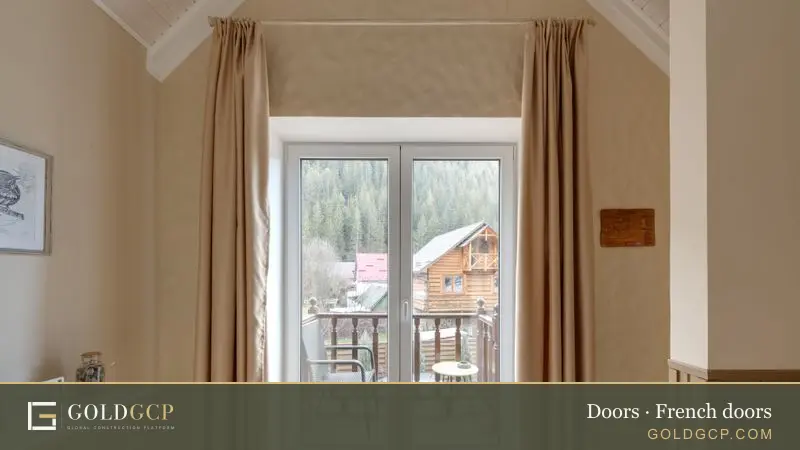
| French doors | $1,300–$5,500 | $2,700 |
| Multi-slide or bi-fold door | $5,000–$20,000 | $10,000 |
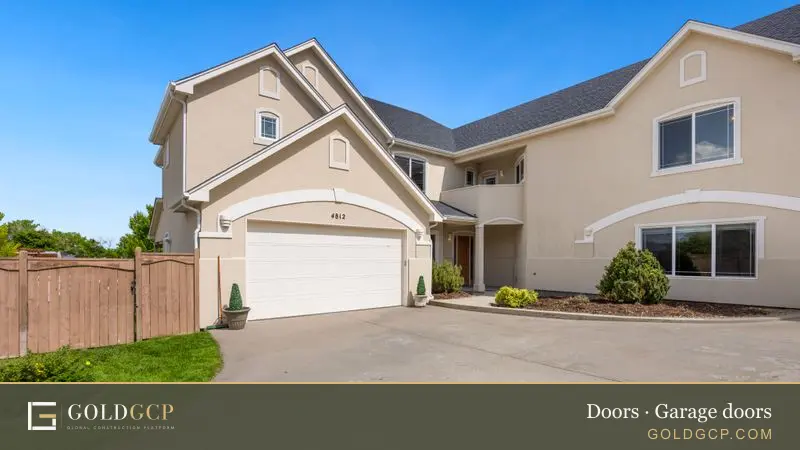
| Garage door | $700–$3,500 | $1,600 |
| Storm door | $400–$1,100 | $750 |
| Interior door, installed | $120–$570 | $350 |
| New door frame | $130–$600 | $320 |
US national averages for 2026, labor and standard materials included, from published cost guides (sources at the end of this page). Local prices differ: see the city table below, or enter your ZIP code in the cost estimator.
Three ways to open a wall
Each of these systems turns a large section of wall into an opening. What separates them is how the panels move and where they end up.
| System | How the panels move | Where they end up | Typical installed cost |
|---|---|---|---|
| Bi-fold (folding, accordion) | Panels are hinged together and fold along a track | Stacked flat at one or both ends | $800 to $2,000 per linear foot |
| Multi-slide, stacking | Each panel slides on its own track | Lined up behind one another at the side | $900 to $1,500 per linear foot for a glass wall |
| Multi-slide, pocketing | Panels slide into a cavity built into the wall | Hidden inside the wall | Same systems plus the cost of building the pocket |
| Telescoping slider | Two or more panels all move and stack | At the side or in a pocket | $1,500 to $5,000 installed |
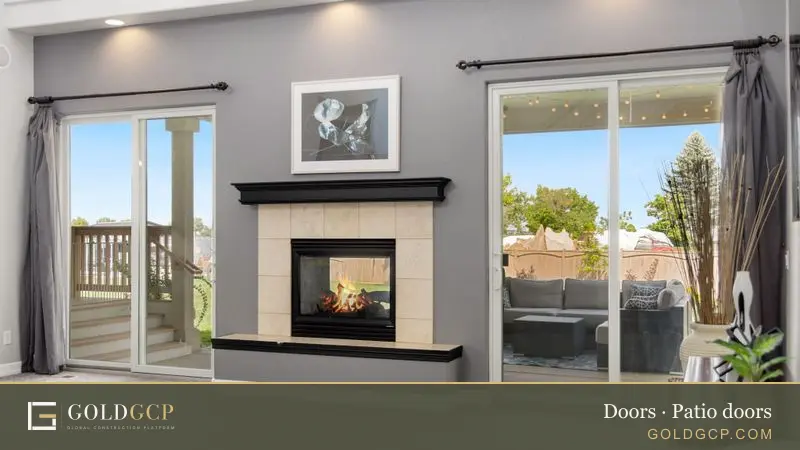
An ordinary two-panel patio slider opens only half its width, since one panel is fixed. Folding systems clear nearly the whole opening. Stacking sliders leave the width of the stacked panels covered unless they pocket into the wall. Standard two-panel doors are covered on our sliding patio door page.
Bi-fold doors
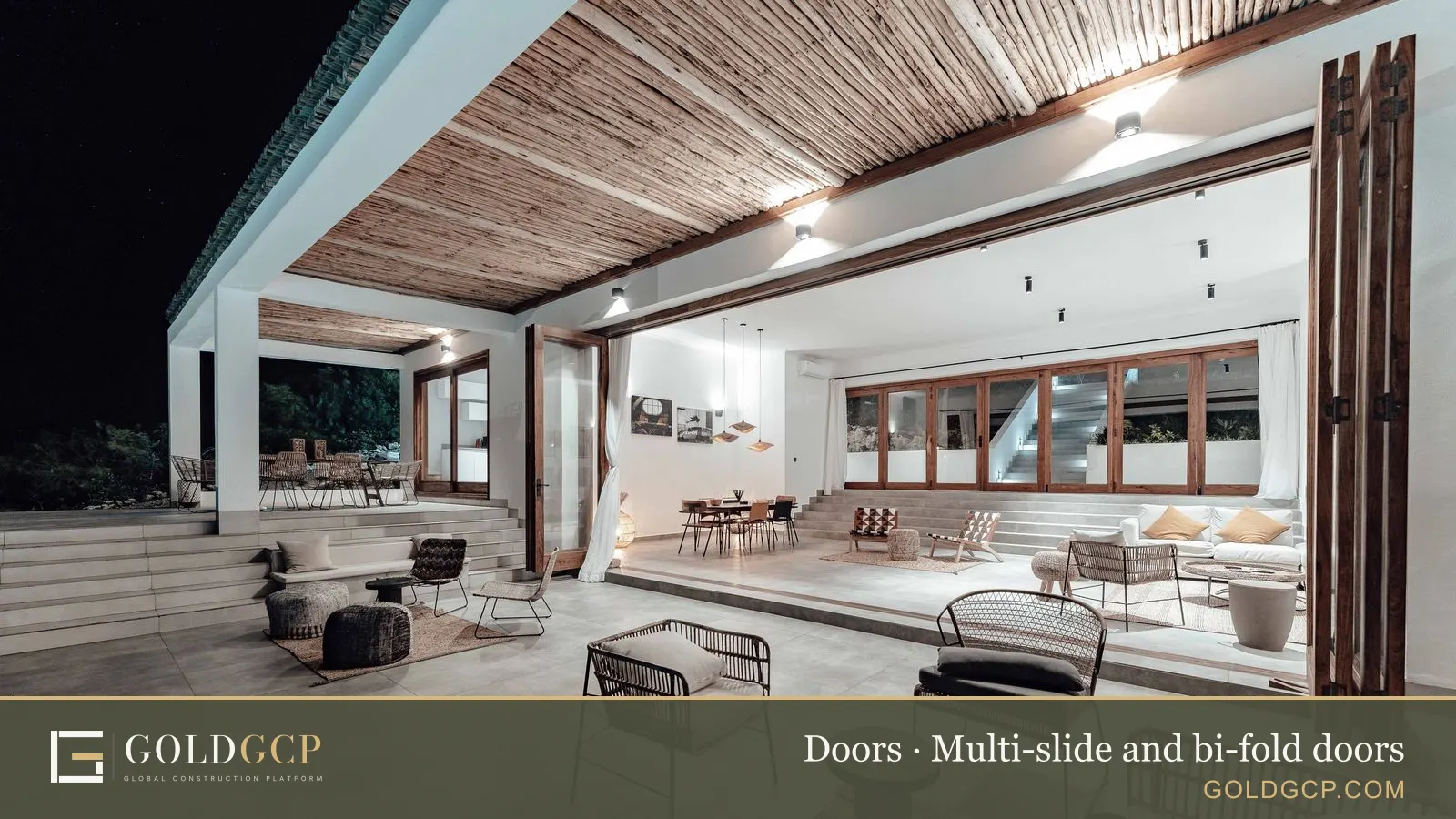
A bi-fold system has 2 to 7 or more panels joined by hinges. Pull the end panel and the rest fold up behind it like an accordion. Many systems can include a swing panel, a single leaf that opens like a normal door, so you can step outside without folding the whole wall. Folding glass doors are made up to about 10 feet tall and 48 feet wide.
Stacking and pocketing multi-slide doors
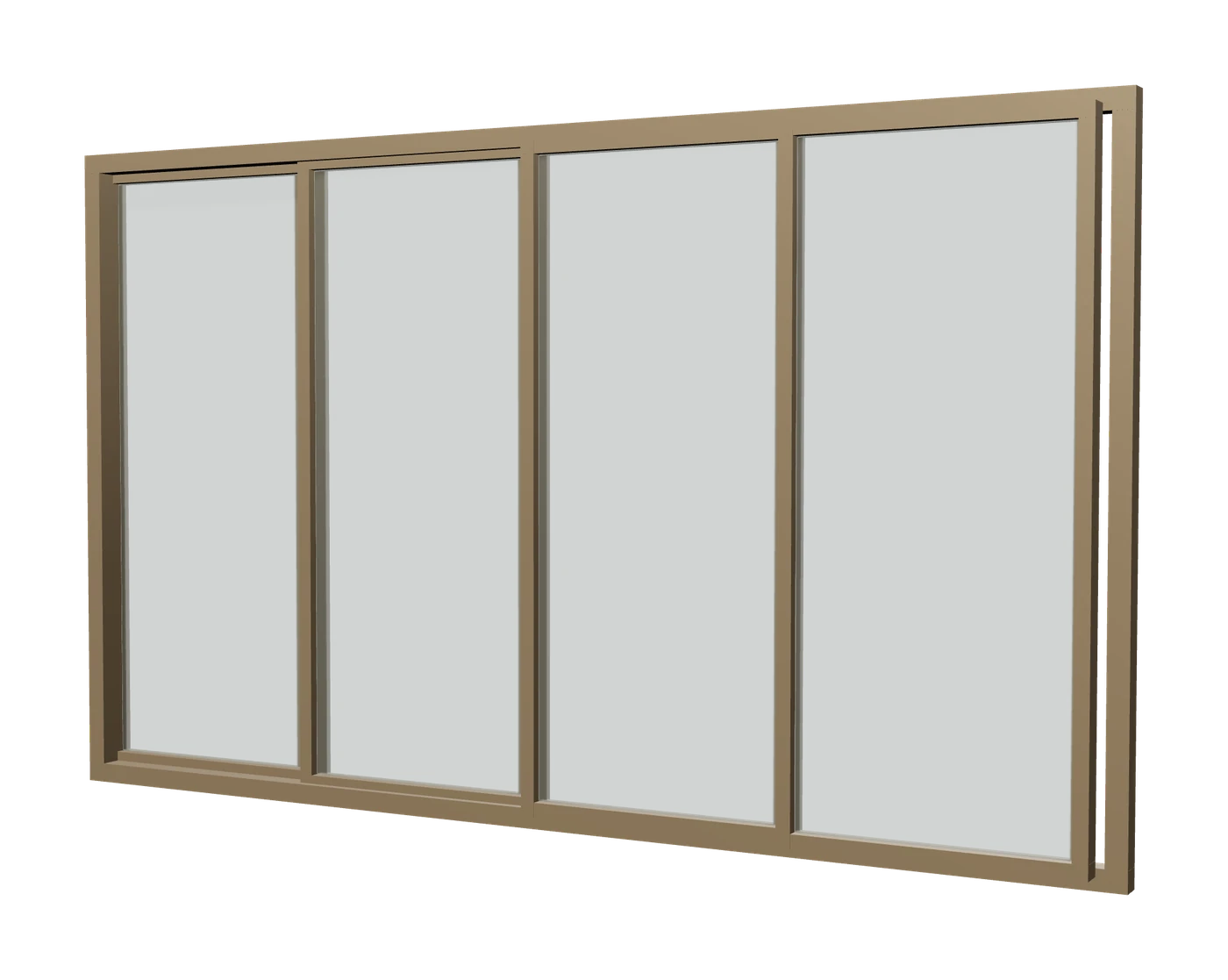
In a multi-slide door, several large panels glide past one another. Each panel in a stacking system runs on its own track. In a pocketing system the panels slide out of sight into the wall, which usually takes at least three sections and a thicker wall built to hold them. HomeGuide lists sliding glass walls up to 50 feet wide and 10 feet tall, with single panels up to 60 inches wide.
Lift-and-slide doors
Lift-and-slide is sliding hardware for very large, heavy panels. Turning the handle raises the panel slightly off its weather seals onto rollers, and it glides with little effort. Turn the handle back and the panel drops onto the seals and closes tight against the weather. Manufacturers cite the tighter seal and the ability to carry bigger glass. On the other side, lift-and-slide costs more, needs a more exacting installation, and has tracks and hardware that need regular cleaning and lubrication.
Cost by opening width
HomeGuide's installed prices for folding patio doors, labor and materials included:
| Opening width | Typical installed cost |
|---|---|
| 6 feet | $4,800 to $12,000 |
| 8 feet | $6,400 to $16,000 |
| 9 feet | $7,200 to $18,000 |
| 10 feet | $8,000 to $20,000 |
| 12 feet | $9,600 to $24,000 |
| 15 feet | $12,000 to $30,000 |
Top-tier custom aluminum, fiberglass or hardwood systems can pass $2,500 per linear foot. A large conventional slider 8 to 12 feet wide, by comparison, runs about $4,000 to $7,000, and custom oversized sliders cost $900 to $1,200 per linear foot plus at least $100 per linear foot to install.
The same estimator has its own page, easy to share or bookmark: Door replacement cost estimator.
What drives the price
- Width and panel count. Width is the largest single factor, and more panels mean more hardware, glass and labor.
- Height. Stock folding doors are usually 7 or 8 feet tall. Some makers offer 10-foot doors for tall ceilings, at a premium.
- Frame material. Vinyl costs the least and aluminum is durable and low maintenance. Steel gives the slimmest, strongest frames, and wood insulates naturally and looks warm.
- Glass. Double-pane is standard; triple-pane, impact-rated, tinted or decorative glass costs more.
- Motorization. Motor-driven panels cost more than manual ones.
- The opening. Putting a system into an existing opening of the right size is the simplest job, and creating a new opening is where the money goes.
The header and structural work
A wide opening in an exterior wall needs a beam above it sized to carry the roof or floor load across the full span. Because that is a structural change, expect an engineer's design, a permit and a framing crew on top of the door installer. HomeGuide notes that cutting a new opening, adding headers and beams and moving wiring or plumbing can double or triple the cost compared with a simple replacement. Permits for folding door installs usually cost $100 to $500.
Installation labor for exterior bi-fold systems runs about $600 to $2,500 or more. Lift-and-slide panels are heavy, and some homes need added structural support for them, so ask the manufacturer for panel weights early.
Timeline
| Scope | Typical time on site |
|---|---|
| New system in an existing opening of the right size | 1 to 2 days |
| New opening with header, framing and finish trim | 3 to 5 days or longer |
Large systems are usually made to order. Get a delivery date in writing from each supplier before you schedule the framing work.
Locks, screens and thresholds
Folding exterior doors usually have a keyed lock on the main swing panel that drives several locking points around the frame, with shoot bolts or two-point locks on the other panels. Lift-and-slide panels lock at several points when the handle is lowered.
Most buyers want screens. HomeGuide notes that a bi-fold security screen lets you leave the glass open in warm months and still keep bugs out. Ask whether the screen is retractable and where it stores when you are not using it.
Look closely at the threshold. A flush or low sill makes the indoor and outdoor floors read as one surface, so ask the installer how it will be drained and flashed. Also ask what water resistance the system was tested to and whether that rating applies to the sill you are buying.
Energy and safety glass rules
ENERGY STAR defines a sliding glass door as one with one or more manually operated glass panels that slide, so multi-slide and lift-and-slide systems fall under the sliding door rules. Under Version 7.0 they must meet the window limits for your climate zone: a U-factor of 0.22 or lower in the Northern zone, 0.25 in North-Central, 0.28 in South-Central and 0.32 in the Southern zone, with air leakage of 0.3 cfm per square foot or less. The specification has no separate category for folding doors, so ask for the NFRC label on any bi-fold system you price and hold its U-factor to the same numbers.
The International Building Code treats glass in all fixed and moving panels of swinging, sliding and bi-fold doors as a hazardous location, so every pane in these systems must be safety glazing. In hurricane regions, look for impact-rated units. Our guide to impact windows explains the ratings, and the windows overview goes further into glass packages.
Is a bi-fold or multi-slide door worth it?
These systems are among the most expensive door projects in a house. They pay off best when the room opens onto a patio, deck or pool area you use often and the wall can take a wide opening without major rework. On a tight budget, a pair of French doors or a three- or four-panel slider gives a wide opening for much less. If other changes to the house are planned too, GOLDGCP's in-house architects can help check whether a wide opening fits the structure before you order.
Find a bi-fold and multi-slide door installer near you
Enter your ZIP code to see installed prices for your area and get matched with vetted, licensed installers who handle large door systems.
Door systems are on display in our windows and doors showroom, and the door cost estimator prices a project.
How to hire an installer for a large door system
- Ask how many folding or multi-slide systems the installer has put in, and ask to see one.
- Get a quote that separates the door system, the structural work, the permit, finish carpentry and any electrical work for motors.
- Confirm who designs the header and who pulls the permit.
- Get the panel count, configuration, glass, frame finish, NFRC ratings and water rating in writing.
- Ask how the sill will be flashed and drained, and how the track is kept level across the full width.
- Agree on a payment schedule tied to stages: framing, door installation and final adjustment.
GOLDGCP matches you with up to 3 vetted, licensed pros. Every one has passed state license verification, an insurance check, a business and public-records check, a portfolio review, client reference calls and onboarding with a quality score. You see ZIP code pricing before anyone visits and pay in milestones, each after you approve that stage. The rest of the house is covered in our entry door and garage door guides and the doors overview.
Frequently asked questions
How much do bi-fold patio doors cost?
HomeGuide puts bi-fold patio doors at $800 to $2,000 per linear foot installed, or about $6,400 to $16,000 for an 8-foot opening and $9,600 to $24,000 for a 12-foot opening. Custom high-end systems can pass $2,500 per linear foot.
What is the difference between a bi-fold and a multi-slide door?
Bi-fold panels are hinged together and fold like an accordion to one or both sides. Multi-slide panels each ride on their own track and slide behind one another, or into a pocket in the wall. Folding systems clear nearly the whole opening, while stacking sliders leave the stacked panels in view.
What is a lift-and-slide door?
Its handle lifts the panel off its seals onto rollers so it can move, then lowers it back onto the seals when closed. That design allows very large, heavy panels and a tight weather seal, but it costs more and needs careful installation and regular track cleaning.
Do I need a permit for a bi-fold door?
Usually, if the work creates a new opening or changes the structure. A wider opening needs a properly sized header, which most building departments review. HomeGuide puts permit fees for folding door installations at about $100 to $500, depending on the city.
How long does it take to install a multi-slide door?
About 1 to 2 days in an existing opening of the right size. When a new opening and header are needed, plan for 3 to 5 days or longer on site. Custom systems are made to order, so ask about delivery time before you book the work.
Are bi-fold doors energy efficient?
They can be, with double-pane or triple-pane low-E glass and good seals. Ask for the NFRC label on the exact system you are pricing. For sliding systems, ENERGY STAR Version 7.0 requires a U-factor between 0.22 and 0.32 depending on climate zone.
How we calculate these prices
GOLDGCP starts from national price ranges for each job, taken from published 2026 cost guides and checked against local price guides where they exist. To get a local price, we multiply the national range by the construction cost factor for the metro from the U.S. Army Corps of Engineers Area Cost Factors (US average = 1.00). Where that table has no entry for a metro, we use the nearest listed location or the state value. For ZIP codes outside the 50 largest metros, the cost estimator uses the state's price level from the Bureau of Economic Analysis Regional Price Parities. Ranges include labor and standard materials but not unusual site conditions, so a written quote after an inspection is always the final price.
Sources
- HomeGuide · Folding patio doors cost
- HomeGuide · Bifold doors cost
- HomeGuide · Sliding glass door prices
- HomeGuide · Patio door installation cost
- Panda Windows & Doors
- ENERGY STAR / U.S. EPA
- International Code Council

About this guide
Written by the GOLDGCP editorial team. Prices come from national cost guides; rules and statistics come from the agencies and reports linked in the text. We update this page when prices or codes change.