
The short answer
A licensed electrician in Miami charges $47 to $120 an hour, plus a $93 to $185 service call. A 200-amp panel upgrade runs $1,200 to $2,600, and a Level 2 EV charger $700 to $2,400 installed. The utility that serves your address, FPL or a city electric department, sets the paperwork for any job that touches the meter.
What electricians cost in Miami
The table covers labor and standard materials for a single-family home. The figures start from national cost data adjusted by the Miami factor of 0.93 from the U.S. Army Corps of Engineers Area Cost Factors. Construction costs here run about 7% below the US average.
| Job | Miami (typical range) | US average |
|---|---|---|
| Hourly rate (licensed electrician) | $47–$120/hr | $50–$130/hr |
| Service call | $93–$185 | $100–$200 |
| Small repair, outlet or switch | $140–$370 | $150–$400 |
| Replace an outlet with a GFCI | $84–$185 | $90–$200 |
| New GFCI outlet | $140–$325 | $150–$350 |
| Ceiling fan installation | $140–$325 | $150–$350 |
| Light fixture or chandelier | $205–$3,150 | $220–$3,400 |
| Dedicated circuit | $235–$835 | $250–$900 |
| EV charger installation | $700–$2,400 | $750–$2,600 |
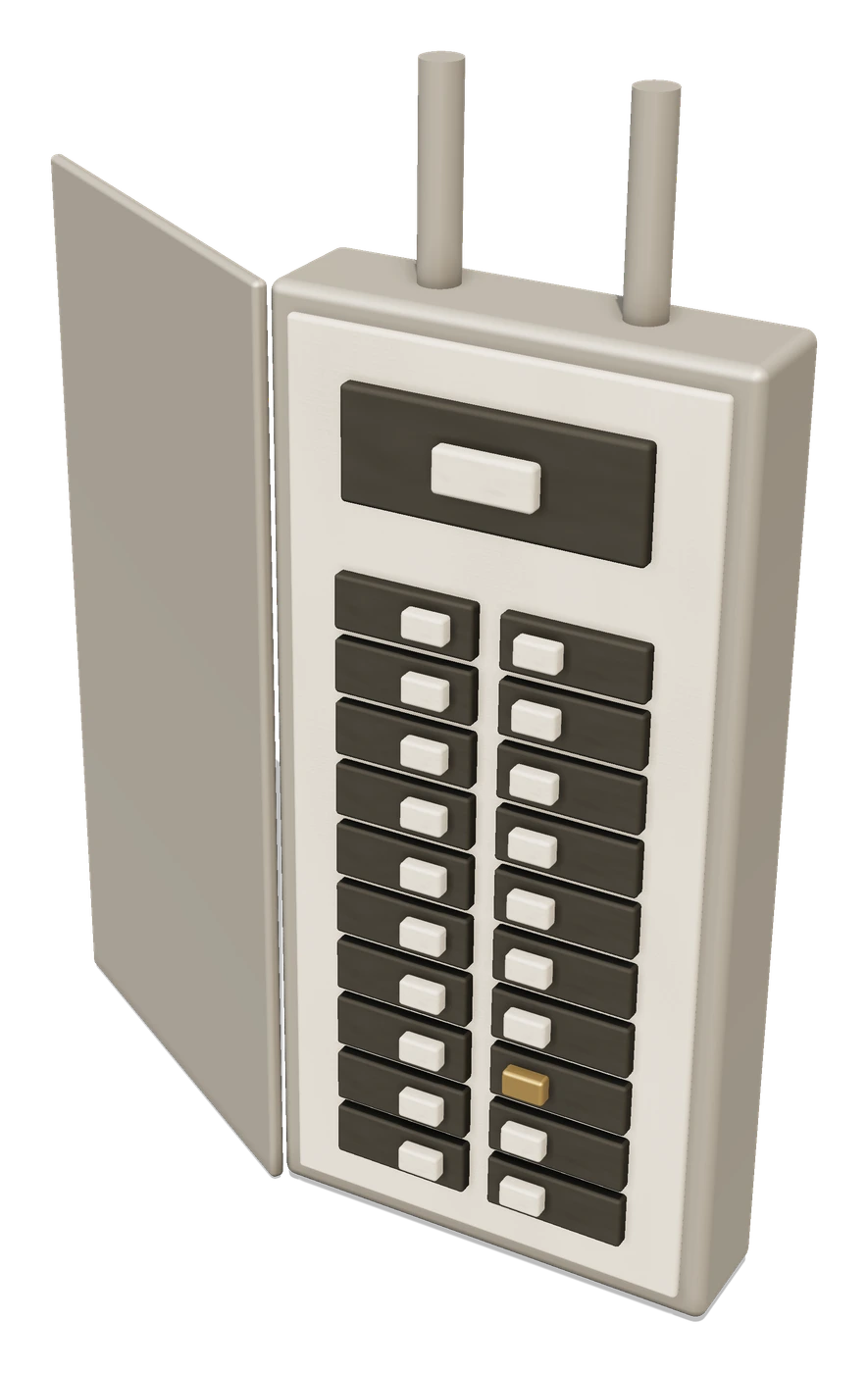
| Panel upgrade to 200 amps | $1,200–$2,600 | $1,300–$2,800 |
| Rewiring or grounding a house | $1,850–$9,300 | $2,000–$10,000 |
| Electrical permit | $47–$325 | $50–$350 |
Estimates for 2026, including labor and standard parts. Miami prices use the metro's construction cost factor of 0.93 (US average = 1.00) from the U.S. Army Corps of Engineers Area Cost Factors. Your quote depends on access, materials and the condition of the home.
Small jobs, like replacing a switch or adding a GFCI outlet near a sink, are mostly the service call plus an hour of time. A panel upgrade takes most of a day on site. The permit office and the utility set the rest of the schedule. In Miami-Dade, the county charges a revised fee schedule that took effect October 1, 2025, the first increase in more than 17 years, according to Miami-Dade County.
The cost estimator gives a figure based on your ZIP code and your job.
FPL or a city utility: which one serves you
Most of the metro gets power from Florida Power & Light (FPL). A few cities run their own electric departments. Which one serves you changes the paperwork for any job that touches the meter. A new panel, a meter change, a solar system or a battery needs the utility's approval as well as a building permit. Rebates come from the utility too. Check the name on your power bill before you collect quotes, and tell the electrician which utility you have.
| Where you live | Electric utility |
|---|---|
| Miami, Miami Beach, Coral Gables, Fort Lauderdale, Hollywood, Boca Raton, West Palm Beach and most of the metro | FPL (check your bill) |
| A few cities with municipal electric departments | The city utility (check your bill) |
Panel upgrades for EV chargers, generators and heat pumps
About half of the homes in Miami-Dade and Broward were built before 1980, according to Census Reporter, so many panels were sized for a household without a car charger, generator or heat pump. If you plan to add more than one, ask the electrician to do a load calculation for everything at once. One upgrade costs less than two.
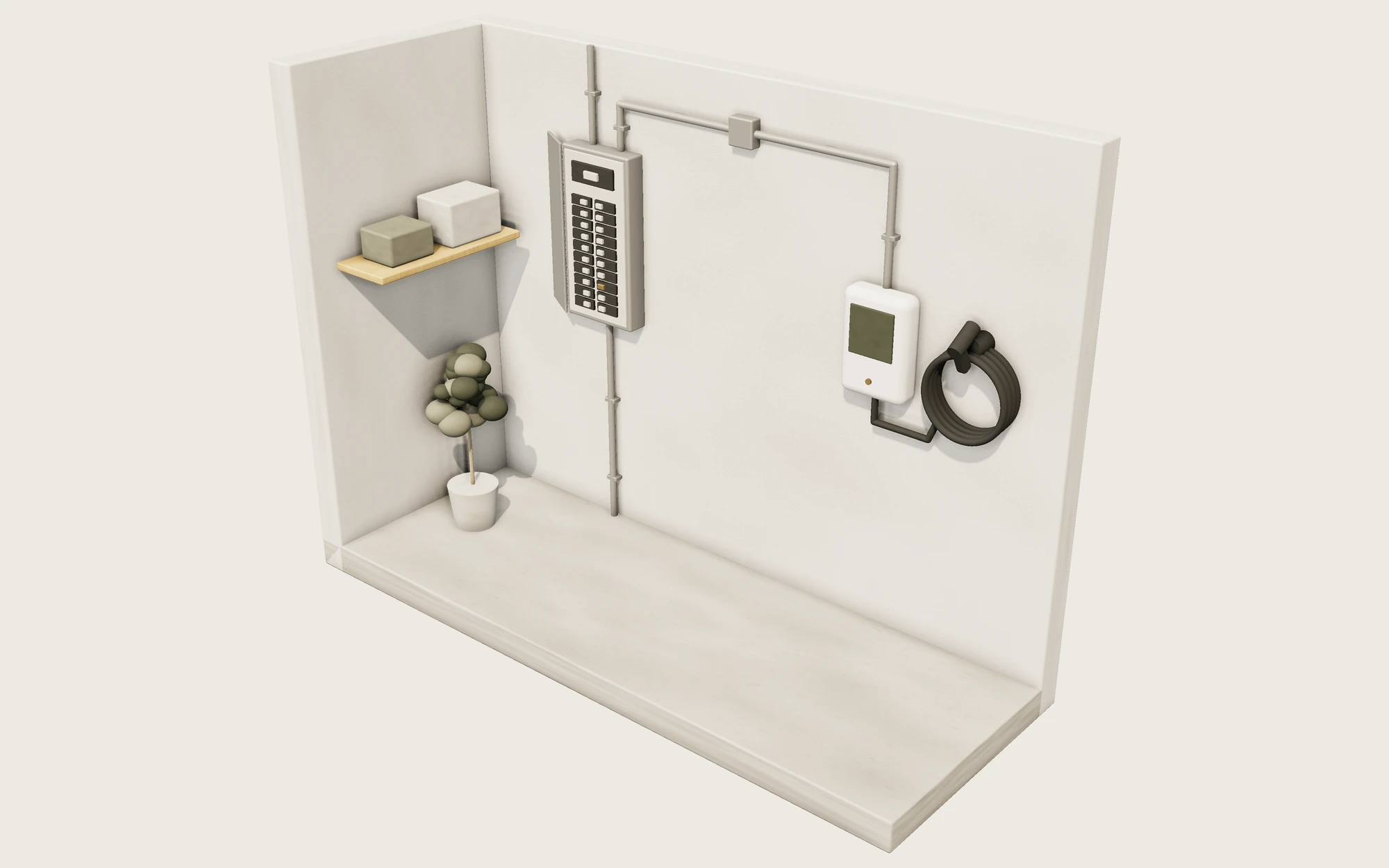
A panel upgrade to 200 amps runs $1,200 to $2,600 here. A Level 2 EV charger adds $700 to $2,400 installed. A dedicated circuit for a generator inlet or a heat pump runs $235 to $835.
How it works with FPL
FPL handles the meter and the service. If your job needs a new service or a meter change, the electrician coordinates with FPL, and the utility sets its own schedule. FPL also runs the solar interconnection process.
Rebates and credits in 2026
FPL's clean energy pages describe its net metering and SolarTogether programs. This page could not confirm a current FPL EV charger rebate amount. Ask FPL and your electrician what is open when you get quotes, and do not count on a rebate until you see it in writing. The federal residential solar and battery credit ended for spending after December 31, 2025, so a 2026 quote should not subtract it.
Solar and batteries in Miami
FPL customers who want rooftop solar must apply to become a net metering customer before installing the system, according to FPL. After you apply, FPL replaces the electric meter with one that measures excess power sent to the grid. Power your system sends back is deducted from your monthly bill or credited toward a future bill within the same calendar year. FPL points customers to its Net Metering Guidelines and to Florida's Interconnection and Net Metering Rule before installation.
FPL also offers SolarTogether, a subscription to a solar farm. It involves no panel installation, has no upfront costs and no cancellation fees, and is open to renters and owners.
Miami-Dade County requires an electrical permit for electrical work and says all permitted projects must comply with the Florida Building Code, according to Miami-Dade County. A battery system needs a permit and an inspection.
Do you need a permit?
Yes, for nearly anything beyond replacing a fixture or a device. Miami-Dade County says an electrical permit is required for electrical work. The application needs a completed Building Permit Application (the yellow form) plus an Electrical Fee Sheet that breaks the cost down by category, according to Miami-Dade County.
The county lists a few narrow exceptions in its minor repair rules. Replacing an electric water heater of 4,500 W or less and up to 50 gallons needs no electrical permit, but a higher-wattage replacement does. Licensed electrical contractors may do repairs up to $500 without a permit, and replacing 15 to 20 amp, 120 V switches and receptacles needs no permit regardless of value, according to Miami-Dade County.
A new state exemption took effect July 1, 2026. Work valued under $7,500 on single-family homes, duplexes and townhouses can qualify for a simplified no-building-permit process. Electrical work still needs a permit, and the exemption does not apply to properties in a flood hazard area. Projects may not be split to avoid permits, according to Miami-Dade County.
Permit fees and inspections
Electrical permit fees run $47 to $325 in Miami. Miami-Dade adopted a revised building fee schedule effective October 1, 2025. Permit fees include charges from other agencies such as the Department of Transportation and Public Works, DERM, Fire Rescue and WASD, according to Miami-Dade County. Refunds are not granted for permit fees of $130 or less, for expired permits, or once work has started.
Inspections must be requested one day before the date you want. Approved stamped plans and the permit card must be at the site, and the address must be posted and visible from the street, according to Miami-Dade County. Virtual electrical inspections are available using WhatsApp or Microsoft Teams on a smartphone. Qualified contractors can submit applications, pay fees and print permit cards through e-permitting.
The cities and counties
Miami, Miami Beach and Coral Gables run their own building departments, so the unincorporated-county rules do not automatically apply inside them. Fort Lauderdale and Hollywood issue permits through the City of Fort Lauderdale Building Services and the City of Hollywood Building Division. Boca Raton and West Palm Beach issue permits through their own building departments. Palm Beach County's Permit Center handles the unincorporated area and publishes an online Building Fee Estimator, and its South County office is at 345 S. Congress Avenue in Delray Beach, according to Palm Beach County.
When the county finds unpermitted electrical work, the permit taken out after the fact costs more and the inspection record follows the property. Ask for the permit as its own line on the estimate.
How to check a electrician before you hire
Florida licenses electrical contractors through the Department of Business and Professional Regulation (DBPR) and its Electrical Contractors' Licensing Board, according to DBPR. The license codes:
- EC is a certified electrical contractor, who may contract anywhere in Florida for electrical wiring, fixtures, appliances, raceways and conduit, including alarm systems and specialty categories.
- ER is a registered electrical contractor, who may contract only in the cities or counties of the registration and may not contract for alarm systems.
- ES and ET are certified and registered specialty contractors, with specialties including residential electrical contracting (class code 043) and low-voltage systems (069).
Miami-Dade County also licenses contractors through its Contractor Licensing Section and the Construction Trades Qualifying Board. An electrical contractor must have a master electrician as a qualifying agent, according to Miami-Dade County. Journeymen must have three years of proven experience in the trade. They may only work for a contractor holding a certificate of competency in the field in which the journeyman is certified. There must be at least one journeyman for every three trainees on a job site that requires a permit.
Before you sign, check four things:
- Look up the license number on the DBPR verification portal at myfloridalicense.com. Check that the name matches and the status is active.
- Check that workers' compensation is on file through the Florida Department of Financial Services, Division of Workers' Compensation, at myfloridacfo.com.
- Ask whether the people doing the wiring are journeymen or working under one.
- Get a written price that lists the permit and, for panel or solar work, who handles the utility paperwork.
A handyman without a license can take work of a casual, minor or inconsequential nature under $2,500 total, but not when it is part of a larger job, is split into small contracts to evade the law, or is done by someone who advertises as a contractor, according to Florida Statutes 489.103. A new circuit, a panel, a charger or solar all need permits, so they need a licensed electrical contractor. Contracts with an unlicensed contractor are unenforceable by that contractor under Florida Statutes 489.128, and unlicensed contracting during a state of emergency declared by the Governor is a third-degree felony under Florida Statutes 489.127.
GOLDGCP checks each electrician's state license, insurance, background and references before they get a job. You pay in milestones as the work is approved.
Common electrical jobs in Miami homes
| Job | Miami price range | Permit and utility steps |
|---|---|---|
| New GFCI outlet | $140 to $325 | Usually no utility involvement |
| Ceiling fan installation | $140 to $325 | Permit if new wiring is run |
| Dedicated circuit | $235 to $835 | Permit; space in the panel |
| Level 2 EV charger | $700 to $2,400 | Permit; FPL coordination if the service changes |
| Panel upgrade to 200 amps | $1,200 to $2,600 | Permit; the utility may change the meter |
| Rewiring or grounding a house | $1,850 to $9,300 | Permit and inspections |
| Solar or solar plus battery | Quoted per system | Permit; FPL net metering application first |
Storm season and your electrical system
Miami-Dade and Broward are in the High-Velocity Hurricane Zone, the strictest wind zone in the Florida Building Code. Hurricane Irma in 2017 knocked out power to more than three-quarters of South Florida electric customers, and about 95% of power in the east coast metro areas of Miami-Dade, Broward and Palm Beach was restored within a week, according to the National Weather Service. A generator inlet and transfer switch, installed by a licensed electrician with a permit, lets you run selected circuits safely during an outage. Never backfeed a house through an outlet or a dryer plug.
For water damage after a storm, see our Miami plumbing guide. For a heat pump water heater, which needs a dedicated high-voltage supply and sometimes a panel change, ask your electrician to size the circuit and check the panel.
Areas we cover
GOLDGCP electricians work across Miami-Dade, Broward and Palm Beach counties:
- Miami
- Miami Beach
- Coral Gables
- Fort Lauderdale
- Hollywood
- Boca Raton
- West Palm Beach
Type your ZIP code to see whether a vetted electrician covers your street.
How GOLDGCP works
- Tell us about the job through the form, by phone or on WhatsApp. Mention your utility and your panel size if you know it.
- We match you with up to 3 vetted, licensed electricians and show prices for your ZIP code before anyone visits.
- The electrician you pick pulls the permit from your city or county and coordinates with FPL or your city utility.
- You pay in milestones, each one after you approve that stage, and the last after the final inspection.
For a burning smell, sparking, a downed line or a shock, use the 24/7 emergency line. If a line is down, call FPL or your local emergency number first.
Frequently asked questions
How much does an electrician cost per hour in Miami?
Usually $47 to $120 an hour for a licensed electrician, plus a $93 to $185 service call. Rates here run about 7% below the national average. Evening, weekend and holiday calls cost more. Jobs that need a permit add the city or county fee.
How much does a panel upgrade cost in Miami?
Upgrading to 200 amps costs about $1,200 to $2,600 here. The utility may also need to change the meter, and Miami-Dade's revised fee schedule took effect October 1, 2025. Ask the electrician to do a load calculation for an EV charger, a generator and a heat pump at the same time.
Do I need a permit to install an EV charger in Miami?
Yes. Miami-Dade County requires an electrical permit for electrical work, and the application needs an Electrical Fee Sheet. The 2026 exemption for work under $7,500 does not cover electrical work. If the charger needs a service upgrade, the electrician also coordinates with FPL.
How does solar net metering work with FPL?
You must apply to become a net metering customer with FPL before installing the system. FPL then replaces the meter with one that measures excess power sent to the grid. That power is deducted from your monthly bill or credited toward a future bill within the same calendar year.
Does an electrician in Florida need a state license?
Yes. The company needs an EC (certified) or ER (registered) license from DBPR's Electrical Contractors' Licensing Board. An ER license works only in the city or county where it is registered. Miami-Dade also requires an electrical contractor to have a master electrician as a qualifying agent.
Can a handyman do electrical work in Miami?
Only very small jobs. Florida lets an unlicensed handyman take work under $2,500 total, and only when it is not part of a larger job and they do not advertise as a contractor. New circuits, panels, EV chargers and solar all need permits, so they need a licensed electrical contractor.
Is there still a federal tax credit for solar or EV chargers?
Not for new work. The federal residential solar and battery credit ended for spending after December 31, 2025, so a 2026 quote should not subtract it. Ask FPL and your electrician which utility programs are open before you sign.
How we calculate these prices
GOLDGCP starts from national price ranges for each job, taken from published 2026 cost guides and checked against local price guides where they exist. To get a local price, we multiply the national range by the construction cost factor for the metro from the U.S. Army Corps of Engineers Area Cost Factors (US average = 1.00). Where that table has no entry for a metro, we use the nearest listed location or the state value. For ZIP codes outside the 50 largest metros, the cost estimator uses the state's price level from the Bureau of Economic Analysis Regional Price Parities. Ranges include labor and standard materials but not unusual site conditions, so a written quote after an inspection is always the final price.
Sources
- Miami-Dade County · Building Fee Schedules, Refunds &…
- Census Reporter
- fpl.com
- Miami-Dade County · Electrical Permits
- Miami-Dade Department of Regulatory and Economic Resources
- Palm Beach County Planning, Zoning & Building
- www2.myfloridalicense.com
- Miami-Dade County · Electrical Licenses
- myfloridalicense.com
- myfloridacfo.com
- leg.state.fl.us · leg.state.fl.us
- leg.state.fl.us · leg.state.fl.us
- leg.state.fl.us · leg.state.fl.us
- National Weather Service
- U.S. Army Corps of Engineers
- U.S. Bureau of Economic Analysis

About this guide
Written by the GOLDGCP editorial team. Prices come from national cost guides adjusted with official construction cost factors for Miami; rules and statistics come from the agencies and reports linked in the text. We update this page when prices or codes change.