
The short answer
A licensed electrician in the New York metro typically charges $66 to $170 an hour, plus a $130 to $260 service call. A 200-amp panel upgrade costs about $1,700 to $3,650 and a Level 2 EV charger $985 to $3,400 installed. The one thing that matters most here is the license: in New York City, only a DOB Licensed Master Electrician can file the permit.
What electricians cost in New York
The table covers labor and standard materials for a home or apartment. We start from national cost data and apply the New York City factor of 1.31 from the U.S. Army Corps of Engineers Area Cost Factors, which puts construction costs here about 31% above the US average.
| Job | New York (typical range) | US average |
|---|---|---|
| Hourly rate (licensed electrician) | $66–$170/hr | $50–$130/hr |
| Service call | $130–$260 | $100–$200 |
| Small repair, outlet or switch | $195–$525 | $150–$400 |
| Replace an outlet with a GFCI | $120–$260 | $90–$200 |
| New GFCI outlet | $195–$460 | $150–$350 |
| Ceiling fan installation | $195–$460 | $150–$350 |
| Light fixture or chandelier | $290–$4,450 | $220–$3,400 |
| Dedicated circuit | $330–$1,200 | $250–$900 |
| EV charger installation | $985–$3,400 | $750–$2,600 |
| Panel upgrade to 200 amps | $1,700–$3,650 | $1,300–$2,800 |
| Rewiring or grounding a house | $2,600–$13,100 | $2,000–$10,000 |
| Electrical permit | $66–$460 | $50–$350 |
Estimates for 2026, including labor and standard parts. New York prices use the metro's construction cost factor of 1.31 (US average = 1.00) from the U.S. Army Corps of Engineers Area Cost Factors. Your quote depends on access, materials and the condition of the home.
Angi's New York City figures run higher than ours for labor. It reports $110 to $210 an hour, an average job of $393 and most jobs between $193 and $629, with a first hour that averages about $320 (Angi). Jobs in Manhattan apartment buildings, with parking and building rules to work around, are the ones most likely to reach Angi's upper end.
A panel upgrade takes most of a day on site, typically 8 to 10 hours according to HomeGuide. The permit office and the utility set the rest of the schedule, and HomeGuide puts a new utility meter, when one is needed, at $200 to $500 on its own.
Use the calculator for a figure based on your ZIP code and your job.
Which utility serves you
Three main electric utilities split the metro, and any job that touches the service or the meter goes through yours.
| Where you live | Electric utility |
|---|---|
| Manhattan, Brooklyn, Queens (except the Rockaways), the Bronx, Staten Island | Con Edison |
| Westchester | Con Edison |
| Nassau, Suffolk and the Rockaways | PSEG Long Island, operating for LIPA |
| Much of northern New Jersey, in counties including Bergen, Essex, Hudson, Passaic and Union | PSE&G (check your bill) |
| Other parts of northern and central New Jersey | JCP&L (check your bill) |
Sources: LIPA, PSE&G service territory, Con Edison.
Each utility has its own paperwork for a new service, a heavier service or a meter change, and the electrician files it. Con Edison asks that every electrical upgrade, including a Level 2 EV charger, be filed with it by your licensed contractor (Con Edison). PSEG Long Island and PSE&G both want proof that the wiring passed a local electrical inspection before they connect a changed service or set a new meter. Rebates also come from the utility, so neighbors on either side of the Nassau line or the Hudson can get very different help with the same job.
Panel upgrades for EV chargers and heat pumps
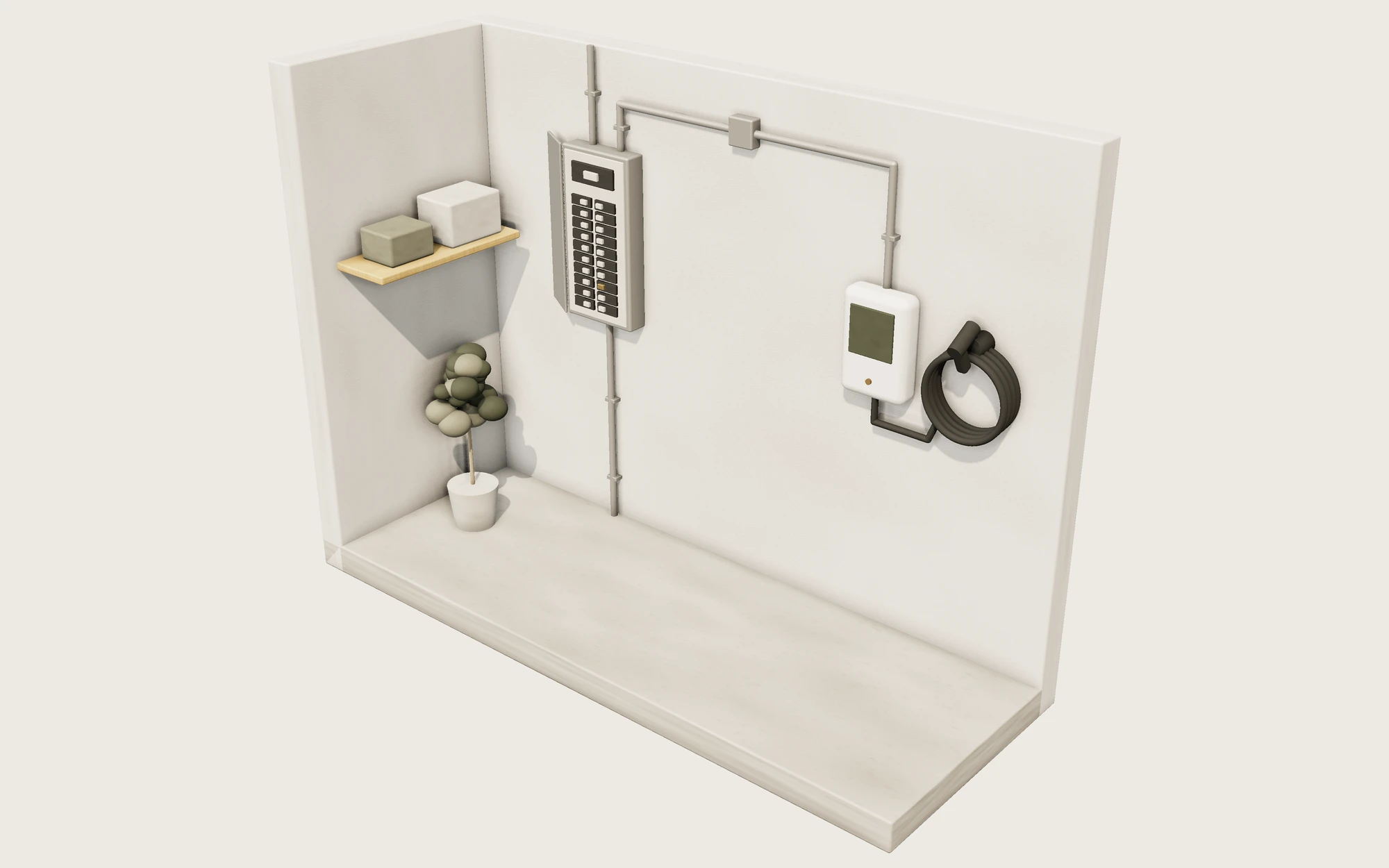
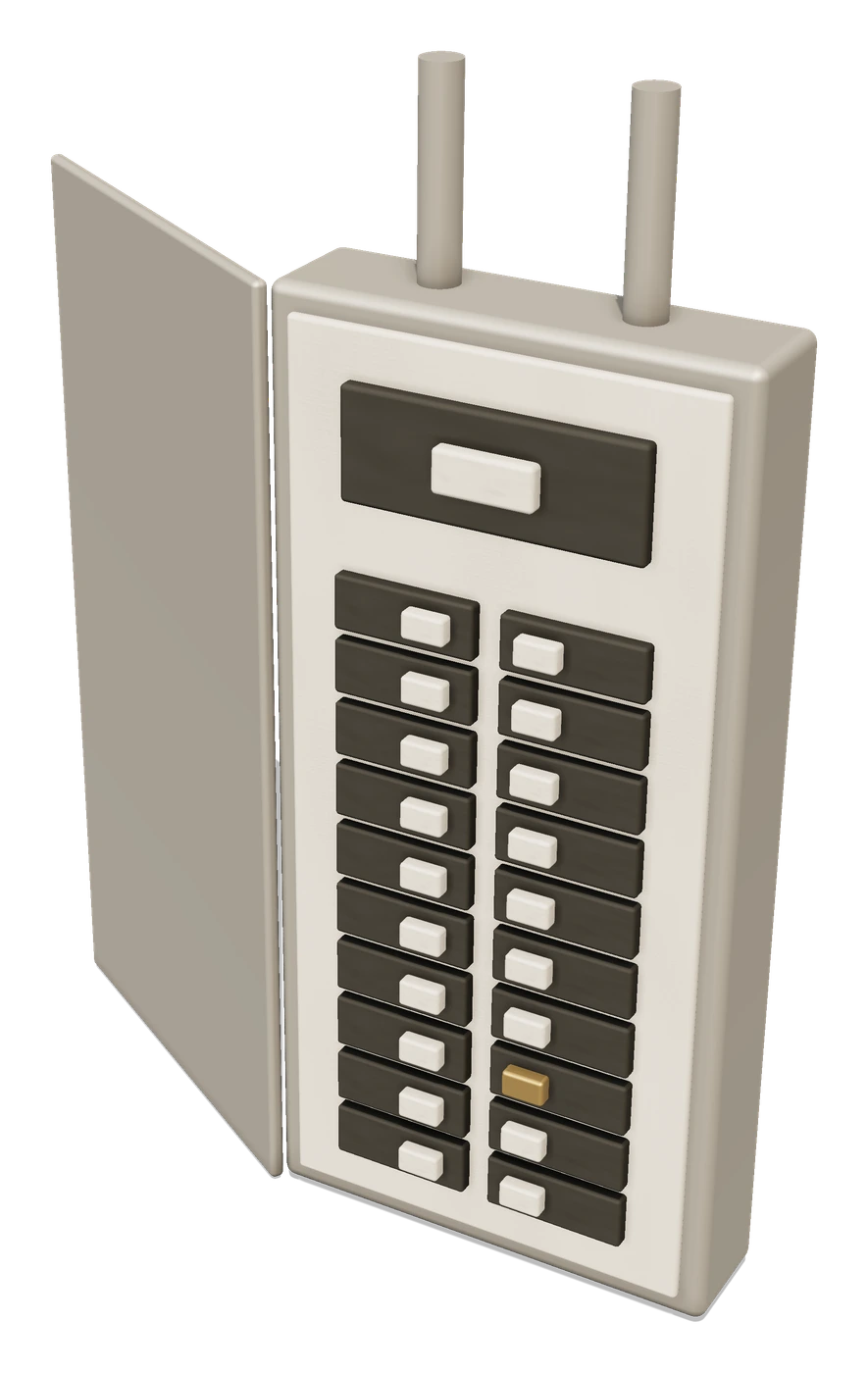
New York's housing is old. The median home in New York City was built in 1953, according to the Census Bureau's 2024 survey (Census Reporter), so many panels were sized long before anyone plugged in a car. PSEG Long Island notes that Level 2 chargers draw 30 to 80 amps, and that the size and age of your panel decide whether it needs an upgrade first (PSEG Long Island). A heat pump water heater needs a 240-volt supply and sometimes more panel capacity too, according to ENERGY STAR. If you plan both, ask for a single load calculation so you pay for one upgrade.
In an apartment, the limit is often the building rather than your panel. The feeder to your unit and the building's service are shared, so a co-op or condo board and the building's own electrician may need to sign off before a heavier circuit is added.
EV charging incentives in 2026
| Program | Who qualifies | What you get |
|---|---|---|
| Con Edison SmartCharge New York | EV drivers charging in Con Ed territory on a standard rate | 10 cents per kWh for charging between midnight and 8 a.m., a $25 bonus after 3 months, and $35 a month for skipping weekday 2 to 6 p.m. charging in summer |
| PSEG Long Island Residential Charger Rebate | PSEG LI customers buying a charger on the EPRI vetted list in 2026 | $100, or $400 in disadvantaged communities and on the Household Assistance Program |
| Charge Up New Jersey home charger incentive | New Jersey residents with an eligible networked Level 2 charger | Up to $250 while funds last |
| Federal EV charger credit (30C) | Ended | Not allowed for chargers placed in service after June 30, 2026 |
Sources: Con Edison, PSEG Long Island, Charge Up New Jersey, IRS. Con Edison says SmartCharge participants earn about $400 a year on average. Customers on a time-of-use rate cannot earn the SmartCharge incentives, so compare the two before you switch rates.
Heat pump rebates that touch the panel
Con Edison's Clean Heat rebates for a central air-source heat pump reach $10,000 for a weatherized single-family home and $7,000 at the standard tier, through a participating contractor. PSEG Long Island pays $4,000 to $7,500 for a whole-house heat pump, depending on income. In New Jersey, PSE&G offers interest-free on-bill repayment of up to $50,000 for a building decarbonization project, and up to $2,000 of that can go to electrical upgrades, with no cap for income-qualified customers (PSE&G). Federal credits for heat pumps and panels ended for equipment placed in service after December 31, 2025. For heat pump water heaters and their rebates, see our New York water heater guide.
New York's gas rules and what they mean for your wiring
Two laws push new buildings in New York toward all-electric heat and cooking.
- NYC Local Law 154 bans burning fossil fuel on site in new buildings and in gut rebuilds filed as new buildings. It has applied to buildings under seven stories since January 1, 2024, and covers hot water heating in all new buildings from July 2, 2027 (NYC DOB).
- The New York State All-Electric Buildings Act bans most new gas hookups in new buildings of seven stories or less from January 1, 2026. Enforcement was paused during a court challenge. A federal appeals court upheld the law on June 30, 2026, and the pause is set to end on October 28, 2026 unless the challengers take the case to the Supreme Court (Earthjustice).
Neither law applies to existing buildings. You can keep a gas stove, boiler or water heater and replace it with gas. The laws matter for wiring if you are building new, doing a gut rebuild in the city, or adding an ADU, because an all-electric plan needs a larger service from the start.
Solar and batteries
Solar panels and batteries connect through the same utilities, and each one has its own interconnection application that your installer files. The federal residential clean energy credit (25D) ended for spending after December 31, 2025, so a 2026 quote should not subtract it. In New York City, replacing an entire roof deck triggers the city's solar or green roof rule, which our New York roofing guide explains.
Do you need a permit?
For almost any wiring change, yes. Who files it depends on where you live.
New York City
Electrical work in the five boroughs needs a Licensed Master Electrician, and the electrician files the permit with the Department of Buildings in DOB NOW: Build. The DOB warns that work without a permit can bring violations, summonses, court appearances and fines for both the owner and the person who did the work (NYC DOB). Homeowners cannot pull the permit themselves.
DOB fees are set item by item in the city's rules (1 RCNY 101-03):
| Item | DOB fee |
|---|---|
| Electrical permit application | $40 |
| Minor work permit | $15 |
| Outlets and fixtures | First 10 free, then $0.25 each |
| Service switch, 101 to 200 amps | $30 |
| Service switch, 201 to 600 amps | $105 |
| Panel, single phase | $15 or $37.50 by size |
| Service entrance cables or feeders | $15 to $75 by wire size |
Added up, the city's own fees for a typical 200-amp service upgrade come to roughly $100 to $180, depending on the wire and panel size. The estimate's permit line may be higher because it includes the electrician's filing time.
Long Island and Westchester
Towns, villages and cities enforce the state Uniform Code and issue electrical permits through their building departments. The inspection may be done by an agency the town approves, and PSEG Long Island needs that inspection certificate before it connects a new or changed service. Ask your building department which inspectors it accepts.
New Jersey
Electrical permits come from the municipal construction office under the Uniform Construction Code, and the licensed electrical contractor signs and seals the application. Small jobs count as minor work: wiring for an air conditioner, dryer or range in a one- or two-family home, up to five new outlets where the existing circuits and service can carry the load, or like-for-like rewiring. Minor work can start after you notify the town, with the permit application filed within five business days and an inspection within three business days of the request (N.J.A.C. 5:23-2.17A). A panel upgrade or a new EV circuit needs a regular permit.
How to check an electrician before you hire
The license changes at each border in the metro.
| Where the work is | License to ask for | How to check |
|---|---|---|
| Five boroughs | NYC Master Electrician, licensed by the DOB | DOB license search or DOB Licensing, (212) 393-2259 |
| Westchester | Westchester County electrician license | Ask to see the county license card |
| Suffolk County | County master electrician license | Suffolk Consumer Affairs, (631) 853-4600 |
| Nassau County | License required by your town or village | Your town building department |
| New Jersey | NJ licensed electrical contractor | Board of Examiners of Electrical Contractors, (973) 504-6410 |
Sources: NYC Business, Westchester County, Suffolk County, NJ Board of Examiners of Electrical Contractors.
New Jersey has a single electrical contractor license. Applicants need a four-year apprenticeship plus a year as a journeyman and must pass a three-part exam, and the license renews every three years. A New Jersey homeowner may do electrical work on a house they live in themselves, but anyone you pay must be licensed.
Before you sign:
- Look up the license and check that the name matches the company on the estimate.
- Ask for the certificate of insurance. A co-op or condo may want it to name the building.
- Get a written price that lists the permit, the inspection and who handles the utility filing.
- For a panel or charger, ask whether the utility has to change the meter and how long it usually takes.
GOLDGCP checks each electrician's license, insurance, background, portfolio and references before they get a job, and you pay in milestones as each stage is approved.
Common electrical jobs in New York homes
| Job | New York price range | Permit and utility steps |
|---|---|---|
| New GFCI outlet | $195 to $460 | Permit in NYC; may be minor work in NJ |
| Ceiling fan installation | $195 to $460 | Permit if new wiring is run |
| Dedicated circuit | $330 to $1,200 | Permit; room in the panel and the building feeder |
| Level 2 EV charger | $985 to $3,400 | Permit; utility filing; SmartCharge or rebate forms |
| Panel upgrade to 200 amps | $1,700 to $3,650 | Permit and inspection; the utility may change the meter |
| Rewiring a house or apartment | $2,600 to $13,100 | Permit; co-op or condo approval in the city |
Areas we cover
GOLDGCP electricians work across the New York metro:
- Manhattan, Brooklyn and Queens
- The Bronx and Staten Island
- Long Island
- Westchester
- Newark, Jersey City and Northern New Jersey
Type your ZIP code below to see whether a vetted electrician covers your block.
How GOLDGCP works
- Tell us about the job through the form, by phone or on WhatsApp. Mention your utility and your panel size if you know them.
- We match you with 3 vetted, licensed electricians and show prices for your ZIP code before anyone visits.
- The electrician you choose files the permit with the DOB, your town or the New Jersey construction office, and handles the utility paperwork.
- You pay in milestones, each one after you approve that stage, with the last after the final inspection.
For a burning smell, sparking or a dead circuit, use the 24/7 emergency line, and see our New York emergency guide.
Frequently asked questions
How much does an electrician cost per hour in NYC?
Our New York range is $66 to $170 an hour plus a $130 to $260 service call. Angi reports $110 to $210 an hour in New York City, with emergency visits running $210 to $430. Manhattan buildings and after-hours work push the price up.
How much does a panel upgrade cost in New York?
About $1,700 to $3,650 for a 200-amp upgrade and $2,600 to $5,250 for 400 amps. In NYC, the DOB's own fees for a 200-amp service come to roughly $100 to $180. The utility may also need to change the meter, which HomeGuide puts at $200 to $500.
Do I need a permit to install an EV charger in New York City?
Yes. A Licensed Master Electrician files the permit with the DOB, and Con Edison asks that the charger be filed with it too. Once it is running, Con Ed's SmartCharge program pays 10 cents per kWh for charging between midnight and 8 a.m.
Can I do my own electrical work in New York?
Not in New York City, where electrical work and permits require a Licensed Master Electrician. In New Jersey, a homeowner may wire the house they live in, with a permit and inspection. Long Island and Westchester towns set their own rules, so ask the building department first.
Is New York banning gas stoves in existing homes?
No. NYC Local Law 154 and the state All-Electric Buildings Act apply to new buildings and city gut rebuilds filed as new buildings. You can keep and replace gas appliances in an existing home. The state law's court-ordered pause is set to end on October 28, 2026.
What license does an electrician need in New Jersey?
A license from the New Jersey Board of Examiners of Electrical Contractors. There is only one class. The licensed contractor must sign and seal the permit application, and you can verify the license through the board's licensee search or at (973) 504-6410.
Is there still a federal tax credit for EV chargers or solar?
No. The federal EV charger credit ended for equipment placed in service after June 30, 2026, and the home solar and battery credit ended for spending after December 31, 2025. Utility programs from Con Edison, PSEG Long Island and New Jersey are still open.
How we calculate these prices
GOLDGCP starts from national price ranges for each job, taken from published 2026 cost guides and checked against local price guides where they exist. To get a local price, we multiply the national range by the construction cost factor for the metro from the U.S. Army Corps of Engineers Area Cost Factors (US average = 1.00). For ZIP codes outside the 50 largest metros, the calculator uses the state's price level from the Bureau of Economic Analysis Regional Price Parities. Ranges include labor and standard materials but not unusual site conditions, so a written quote after an inspection is always the final price.
Sources
- Electrical Permit · NYC Department of Buildings
- 1 RCNY 101-03 Fees Payable to the Department of Buildings · NYC Department of Buildings
- SmartCharge New York · Con Edison
- Residential Charger Rebate Program · PSEG Long Island
- Home EV Charger Incentive · Charge Up New Jersey
- Electrical Contractors FAQ · NJ Board of Examiners of Electrical Contractors
- N.J.A.C. 5:23-2.17A Minor work · Cornell Legal Information Institute
- How Much Does It Cost to Hire an Electrician in New York City, NY? · Angi
- Area Cost Factors, PAX Newsletter 3.2.1 (2024) · U.S. Army Corps of Engineers
- Regional Price Parities by State · U.S. Bureau of Economic Analysis

About this guide
Written by the GOLDGCP editorial team. Prices come from national cost guides adjusted with official construction cost factors for New York; rules and statistics come from the agencies and reports linked in the text. We update this page when prices or codes change.