
The short answer
A licensed electrician in Austin charges $41 to $105 an hour, plus a service call of $82 to $165. A 200-amp panel upgrade runs $1,050 to $2,300, and a Level 2 EV charger $615 to $2,150 installed. In Austin, the permit and the utility matter too. Austin Energy controls the meter and the rebates.
What electricians cost in Austin
The table covers labor and standard materials for a single-family home. Figures start from national cost data with the Texas construction cost factor of 0.82 from the U.S. Army Corps of Engineers Area Cost Factors applied. Construction costs here run below the US average.
| Job | Austin (typical range) | US average |
|---|---|---|
| Hourly rate (licensed electrician) | $41–$105/hr | $50–$130/hr |
| Service call | $82–$165 | $100–$200 |
| Small repair, outlet or switch | $125–$330 | $150–$400 |
| Replace an outlet with a GFCI | $74–$165 | $90–$200 |
| New GFCI outlet | $125–$285 | $150–$350 |
| Ceiling fan installation | $125–$285 | $150–$350 |
| Light fixture or chandelier | $180–$2,800 | $220–$3,400 |
| Dedicated circuit | $205–$740 | $250–$900 |
| EV charger installation | $615–$2,150 | $750–$2,600 |
| Panel upgrade to 200 amps | $1,050–$2,300 | $1,300–$2,800 |
| Rewiring or grounding a house | $1,650–$8,200 | $2,000–$10,000 |
| Electrical permit | $41–$285 | $50–$350 |
Estimates for 2026, including labor and standard parts. Austin prices use the Texas statewide construction cost factor of 0.82 (US average = 1.00) from the U.S. Army Corps of Engineers Area Cost Factors, which have no separate Austin entry. Your quote depends on access, materials and the condition of the home.
Small jobs, like swapping a switch or adding a GFCI outlet in a bathroom, usually cost the service call plus an hour of time. A panel upgrade takes most of a day on site. The permit office and Austin Energy set the rest of the schedule.
Use the cost estimator for a figure based on your ZIP code and your job.
Who licenses electricians in Texas
Texas licenses electricians through the Texas Department of Licensing and Regulation (TDLR). The city does not license them. TDLR states that, with certain allowed exemptions, anyone who performs electrical work in the state must be licensed, and must do that work through a licensed electrical contractor.
Three license levels matter to a homeowner:
| License | What it means |
|---|---|
| Electrical Contractor | The business license. The company must employ a licensed Master Electrician to hold it. |
| Master Electrician | The top individual license. Requires at least two years as a Journeyman and 12,000 hours of on-the-job training under a Texas-licensed Master. |
| Journeyman Electrician | The working license most crews hold. |
The Electrical Contractor application fee is $110 and is non-refundable. The Master Electrician application fee is $45. Licenses last one year and must be renewed annually. TDLR runs criminal history background checks, including fingerprinting, on all applicants and renewals. A review can take one to six weeks.
An electrical contractor must carry business liability insurance of at least $300,000 per occurrence, $600,000 aggregate, and $300,000 aggregate for products and completed operations. The company must also show proof of workers' compensation, a self-insurance certificate, or a statement electing not to carry it.
A Master Electrician may only be assigned to one electrical contractor, unless the Master owns more than 50 percent of the business. If the Master of record leaves, the company must notify TDLR and name a new one within thirty business days. A company that lost its Master and did not replace one is out of compliance.
Do you need a permit?
Yes, for almost anything beyond replacing a fixture or a device. The City of Austin issues stand-alone electrical permits for repair work, upgrade work, new construction in the ETJ, auxiliary power, temporary loops and special inspections. These permits skip formal plan review, but the contractor must be registered with the city before applying.
Austin also requires an electrical auxiliary power permit for any generation facility that connects to Austin Energy's distribution system in their service area. That covers generators, solar and batteries tied to the grid.
Austin's fee schedule for fiscal year 2026-27 took effect October 1, 2026. If you pay by credit card, the city adds a 2.35% service fee with a $2.00 minimum. Paying online by eCheck or ACH avoids that fee. A $30 ACH return fee applies for insufficient funds. In-person credit card payments are accepted only for amounts under $10,000.
The city publishes a "Do I Need A Permit?" interactive tool that works out whether a project needs a permit based on jurisdiction, property type and permitting needs. Homeowners and small business owners can also get help from the city's Development Process Team. The Permitting and Development Center offers virtual or in-person appointments.
The homeowner exemption
Austin allows a homeowner to do electrical work without a license under a homestead permit, but the rules are narrow. You must have a homestead exemption filed with the county tax appraisal district where the property is located. The work cannot include the main electric service, and a homestead permit cannot be transferred. The building official may suspend or revoke it if anyone other than the permit holder does the work. You also cannot get a homestead permit for another residence within the prior 12-month period.
A homeowner can pull a permit to add an outlet or a circuit in their own home, but cannot touch the service. A panel upgrade, a service change, an EV charger circuit or a solar tie-in needs a licensed electrical contractor.
Permits in the suburbs
Each city in the metro runs its own building department, with its own portal and rules.
| City | Permit authority and notes |
|---|---|
| Austin | Austin Development Services. Stand-alone electrical permits; contractor must be registered. |
| Round Rock | Round Rock Building Inspection Division. A building permit is required for installation, alteration or repair of electrical systems in the city and in the Chandler Creek and Vista Oaks MUDs. Round Rock uses a one-permit system, so all relevant contractors must be on the application before it issues. Contractors must register, with no fee. |
| Cedar Park | Cedar Park Development Services, Building 1, 450 Cypress Creek Road. All contractors must register, and registration is free. Applications go through the MGO Connect portal. |
| Pflugerville | Pflugerville Building Inspections. The city has adopted the 2021 ICC codes and the 2020 National Electrical Code for the city and its ETJ. Applications go through the CityWorks PLL portal. |
| Leander | Leander Development Hub, a mostly paperless system for permits, inspections and compliance. |
| Georgetown | Georgetown has its own building department; confirm the current electrical permit path with the city before work starts. |
| Unincorporated Travis County | Travis County Development Services, 700 Lavaca, Suite 540. Basic development permits are applied for online at MyPermitNow.org, and technical review does not begin until the fee is paid. The permit desk is open Monday through Thursday, 9:00 AM to 2:00 PM, at (512) 854-4215. |
| Unincorporated Williamson County | Williamson County has not adopted residential building code standards for unincorporated areas and does not require new residential construction to conform to a building code. The county Fire Marshal has jurisdiction over unincorporated areas for fire code. Check with the county Engineer's office at 512-943-3330. |
Pflugerville schedules residential electrical inspections only in the afternoon, from noon to 4 pm. If your electrician is booking an inspection there, plan the day around it.
Panel upgrades and why older Austin homes need one
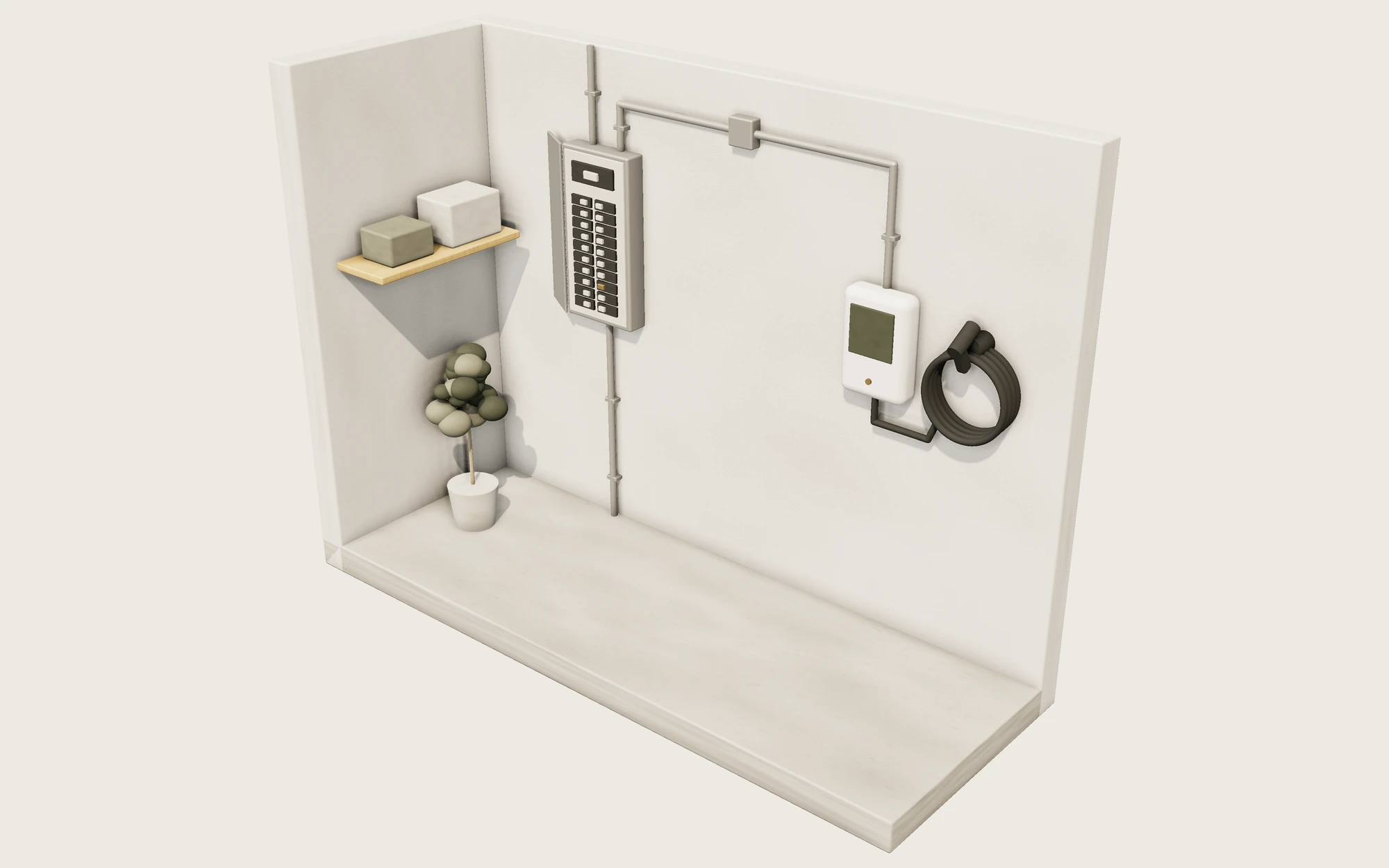
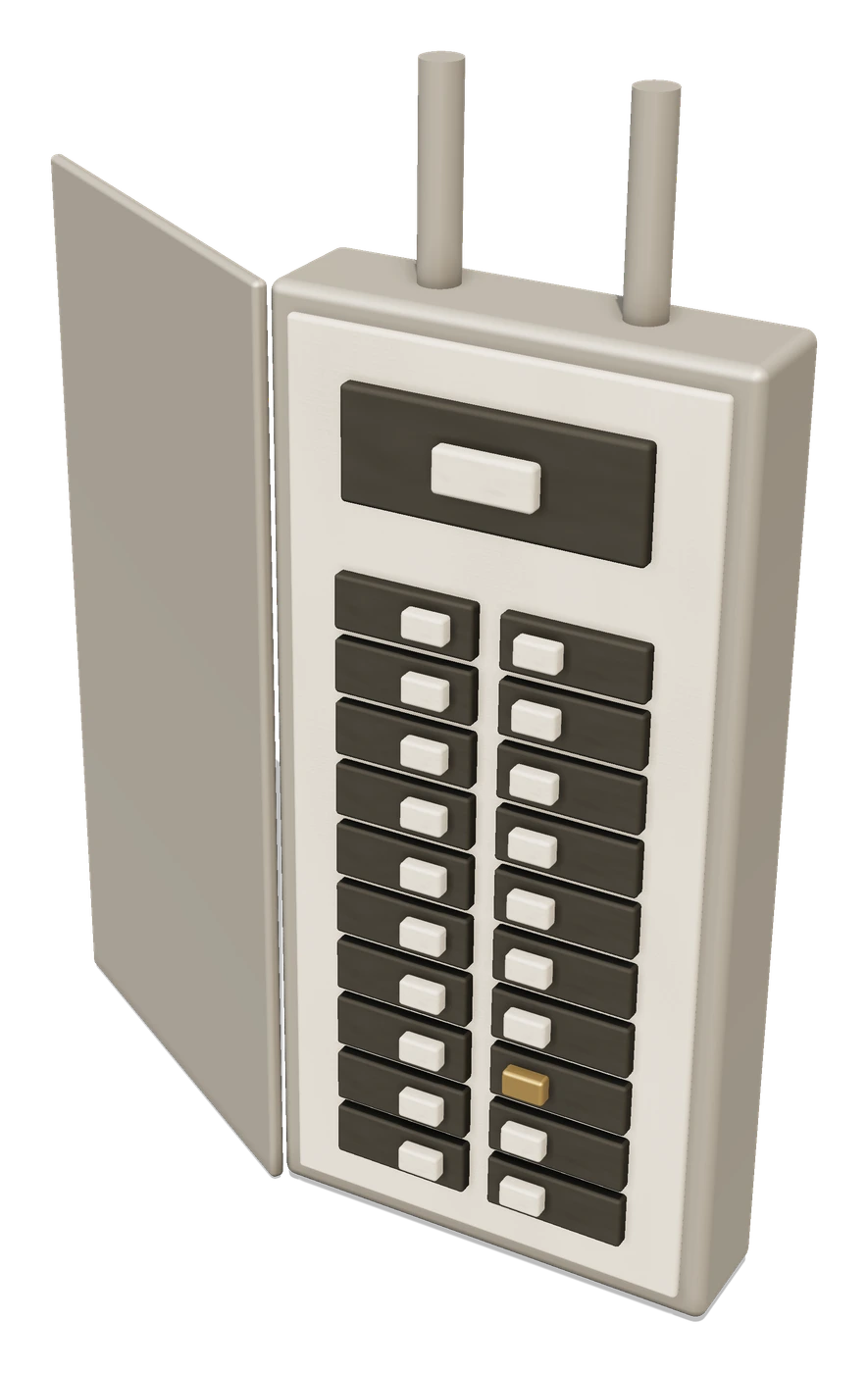
A 200-amp panel upgrade costs $1,050 to $2,300 here. The job is usually a day of work, but the utility side can stretch it. Austin Energy controls the service connection. Any change to the meter or the service mast goes through them as well as the city.
Older Austin homes often have 100-amp service, or a panel that has been added to piecemeal over decades. Adding an EV charger, a heat pump, a tankless water heater, a hot tub or a shop subpanel can push a 100-amp service past its limit. Ask the electrician to run a load calculation for everything you plan to add at once, so you pay for one upgrade instead of two.
Austin Energy publishes approved socket-mounted transfer switch devices for backup power, including models from ConnectDER, GenerLink, Tesla and Enphase. These are approved for use on 200-amp residential services. A socket-mounted transfer switch needs no permit, but registration and a field operations consultation are required. Both are requested through the Austin Build + Connect portal. If your service qualifies, that costs less than a full transfer switch.
EV chargers, solar and batteries in Austin
EV chargers
Austin Energy offers a rebate that covers 50% of the cost, up to $500, for a qualified Power Partner EV compatible Level 2 home charging station. To qualify you must receive electricity from Austin Energy, have purchased or leased a plug-in electric vehicle, enroll in Power Partner EV, and install a new station at your address. The station and any receptacle must be UL, ETL or cETL listed, and the install must meet all applicable electrical codes.
The DSIRE database lists a separate Austin Energy rebate of 50% of the purchase and installation cost of a Level 2 charging station, capped at $1,200 for Open Charge Point Protocol stations and $900 for non-OCPP stations. Program terms change, so confirm the current amount with Austin Energy before you count on it.
Enrolling in Power Partner EV also earns a $50 bill credit plus $25 each year you remain in the program. During Power Partner events, Austin Energy remotely pauses or slows charging on an enrolled charger. Events typically run June through September, last up to four hours between 2 and 7 p.m., and are capped at 15 per month. You can override an event and resume charging at any time without penalty.
Austin Energy suggests checking references and getting at least three estimates for your charger installation.
Solar
Austin Energy offers a $4,000 rebate for eligible home solar projects, according to its For Your Home page. A SolarReviews write-up describes a $2,500 rebate for systems installed by an Austin Energy participating contractor after completing a solar education course. The two figures differ, so confirm the current amount and conditions with Austin Energy before signing.
Only participating solar contractors can offer Austin Energy solar rebates and incentives. Power Purchase Agreements, where a third party owns the system and sells you the power, are not allowed for residential customers in Austin Energy territory.
Austin Energy credits solar production at the Value of Solar rate. Its For Your Home page lists 12.89 cents per kilowatt-hour. Its residential interconnection agreement lists $0.1289 per kWh at the time of signing. You are billed for 100% of the electricity your home uses at the residential rate and credited for all solar production, a buy-all, sell-all structure. Excess credits roll over to the next bill but cannot be cashed out. They cannot be used to wipe out City of Austin charges such as taxes.
The permit path runs through both the city and the utility. The installer must get an electrical permit from the City of Austin with site plans, a one-line diagram, the completed Distributed Generation Planning Application and equipment details. City review can take about 15 business days. An inspection can be scheduled as soon as 24 hours after it is requested. Austin Energy must pass a final inspection before the system can be turned on. It installs a solar meter typically within 5 to 10 business days of that passed inspection. The whole interconnection and installation process can take four to six weeks.
Solar panels alone will not keep your lights on during an outage. Code requires grid-tied systems to shut off or isolate during an outage. Systems without a battery turn off. If backup power matters to you, ask about a battery before you sign the solar contract.
What local risks drive electrical work here
Central Texas summers push attic temperatures high. Wiring run through an attic takes the heat. Loose connections and aging insulation show up as flickering lights or a warm cover plate. A burning smell at the panel needs a call now.
Lightning and surges are common in spring and summer storms. A whole-home surge protector at the panel is a small add-on during a panel upgrade.
Foundation movement in clay soils is common in Austin. It can pull on service masts and strain the conduit where the service enters the house. If your meter box looks tilted or the mast leans, have it looked at before it becomes an emergency.
Older homes may still have aluminum branch circuits, which need specific connectors and, in some cases, replacement. Ask the electrician what they find before they quote a fix.
Storm outages bring out generators, and generators bring out transfer switch questions. A generator tied into the house panel needs the right transfer equipment so it cannot backfeed the utility line. Austin Energy's approved socket-mounted devices are one option. A full transfer switch is another.
How to check an electrician before you hire
Start with the TDLR license search. TDLR's online licensing services show whether a person or business has a current license. Search both the company name and the individual Master Electrician's name, and check that the status is active.
TDLR also publishes enforcement actions, penalties and administrative orders. A search there shows whether the company has a history with the state.
Check the insurance next. Texas requires electrical contractors to carry at least $300,000 per occurrence and $600,000 aggregate in liability coverage. Ask for a certificate and confirm the dates are current.
Ask who will pull the permit. In Austin, the contractor must be registered with the city before applying for an electrical permit. If a company cannot pull a permit in your city, it is probably not set up to do the work legally.
Texas does not license general contractors, and a handyman can legally take small jobs. Anyone performing non-exempt electrical work must be licensed and must work through a licensed electrical contractor. A new circuit, a panel, a charger or a solar tie-in all need permits, so hire a licensed electrical contractor.
TDLR's main office is at 920 Colorado St., Austin, Texas 78701. It can be reached at (512) 463-6599 or (800) 803-9202. Complaints go through TDLR's complaints and enforcement process.
GOLDGCP checks each electrician's state license, insurance, business and public records, portfolio and client references before they get a job. You pay your pro directly, stage by stage, each milestone after you approve that stage. For more on how that works, see how GOLDGCP works and payment protection.
Common electrical jobs in Austin
| Job | Austin price range | Permit and utility steps |
|---|---|---|
| Replace an outlet with a GFCI | $74 to $165 | Usually no permit for a direct swap |
| New GFCI outlet | $125 to $285 | Permit if a new circuit is run |
| Ceiling fan installation | $125 to $285 | Permit if new wiring is run |
| Dedicated circuit | $205 to $740 | Austin stand-alone electrical permit |
| Level 2 EV charger | $615 to $2,150 | City electrical permit; Austin Energy rebate forms |
| Panel upgrade to 200 amps | $1,050 to $2,300 | City permit; Austin Energy service connection |
| Rewiring or grounding a house | $1,650 to $8,200 | City permit; inspections at rough-in and final |
| Solar or solar plus battery | Quoted per system | City electrical permit, Austin Energy interconnection and final inspection |
If the job involves water damage from a burst pipe or a storm, see our Austin plumbing guide. If you are planning a heat pump water heater, the electrical side is covered in our water heater guide.
Areas we cover
GOLDGCP electricians work across the Austin metro:
- Austin
- Round Rock
- Cedar Park
- Georgetown
- Pflugerville
- Leander
- Westlake
Type your ZIP code below to see whether a vetted electrician covers your street.
How GOLDGCP works
- Tell us about the job through the form, by phone or on WhatsApp. Mention your city, your panel size if you know it, and whether you are on Austin Energy or another utility.
- We match you with up to 3 vetted, licensed electricians and show prices for your ZIP code before anyone visits.
- The electrician you pick pulls the permit from your city and coordinates with Austin Energy where the service or meter is involved.
- You pay your pro directly, stage by stage, each milestone after you approve that stage, and the last after the final inspection.
For a burning smell, sparking or a dead panel, use the 24/7 emergency line at the top of the page.
Frequently asked questions
How much does an electrician cost per hour in Austin?
Usually $41 to $105 an hour for a licensed electrician, plus a service call of $82 to $165. Texas construction costs run below the national average, which is why Austin rates sit under the US range of $50 to $130 an hour. Evening, weekend and holiday calls cost more. Jobs that need a permit add the city fee.
How much does a panel upgrade cost in Austin?
Upgrading to 200 amps costs about $1,050 to $2,300 here. The city electrical permit is separate. Austin Energy handles the service connection and meter. If you are adding an EV charger or a heat pump at the same time, ask for one load calculation so you pay for a single upgrade.
Do I need a permit to install an EV charger in Austin?
Yes. The City of Austin issues a stand-alone electrical permit for the charger circuit. The contractor must be registered with the city before applying. If you want the Austin Energy rebate, the station must be UL, ETL or cETL listed and installed to code. You must also enroll in Power Partner EV.
Who licenses electricians in Texas?
The Texas Department of Licensing and Regulation. The company needs an Electrical Contractor license, which requires employing a licensed Master Electrician. Individual electricians hold Master or Journeyman licenses. You can verify either on TDLR's online license search and check enforcement actions on the same site.
Can a homeowner do electrical work in Austin?
Only under a homestead permit, and only in limited cases. You need a homestead exemption filed with the county appraisal district. The work cannot include the main electric service, and the permit cannot be transferred. A panel upgrade, service change, EV charger circuit or solar tie-in needs a licensed electrical contractor.
Does Austin Energy still offer solar and EV rebates?
Austin Energy lists a $4,000 rebate for eligible home solar projects and a rebate covering 50% of an EV charger cost up to $500. DSIRE separately lists up to $1,200 for OCPP Level 2 stations. Program terms change, so confirm the current amount and conditions with Austin Energy before you sign a contract.
What should I do if I smell burning at my electrical panel?
Treat it as an emergency. Do not keep resetting the breaker. If you can safely reach the main breaker, shut off power to the house and call a licensed electrician or your utility. A burning smell at a panel can mean a loose connection or failing breaker. Do not schedule it for next week.
How we calculate these prices
GOLDGCP starts from national price ranges for each job, taken from published 2026 cost guides and checked against local price guides where they exist. To get a local price, we multiply the national range by the construction cost factor for the metro from the U.S. Army Corps of Engineers Area Cost Factors (US average = 1.00). Where that table has no entry for a metro, we use the nearest listed location or the state value. For ZIP codes outside the 50 largest metros, the cost estimator uses the state's price level from the Bureau of Economic Analysis Regional Price Parities. Ranges include labor and standard materials but not unusual site conditions, so a written quote after an inspection is always the final price.
Sources
- Austin Energy · Home EV Charger Rebate
- Austin Energy · For Your Home
- Texas Department of Licensing and Regulation
- U.S. Army Corps of Engineers
- U.S. Bureau of Economic Analysis

About this guide
Written by the GOLDGCP editorial team. Prices come from national cost guides adjusted with official construction cost factors for Austin; rules and statistics come from the agencies and reports linked in the text. We update this page when prices or codes change.