The short answer
Architect fees in Austin run about $3,950 to $8,850 to design a 600 square foot ADU and $3,300 to $24,600 for a 2,500 square foot new home. Building a 600 square foot detached ADU costs roughly $73,800 to $123,000. Lot eligibility comes first: Austin requires 5,750 square feet and SF-1, SF-2 or SF-3 zoning.
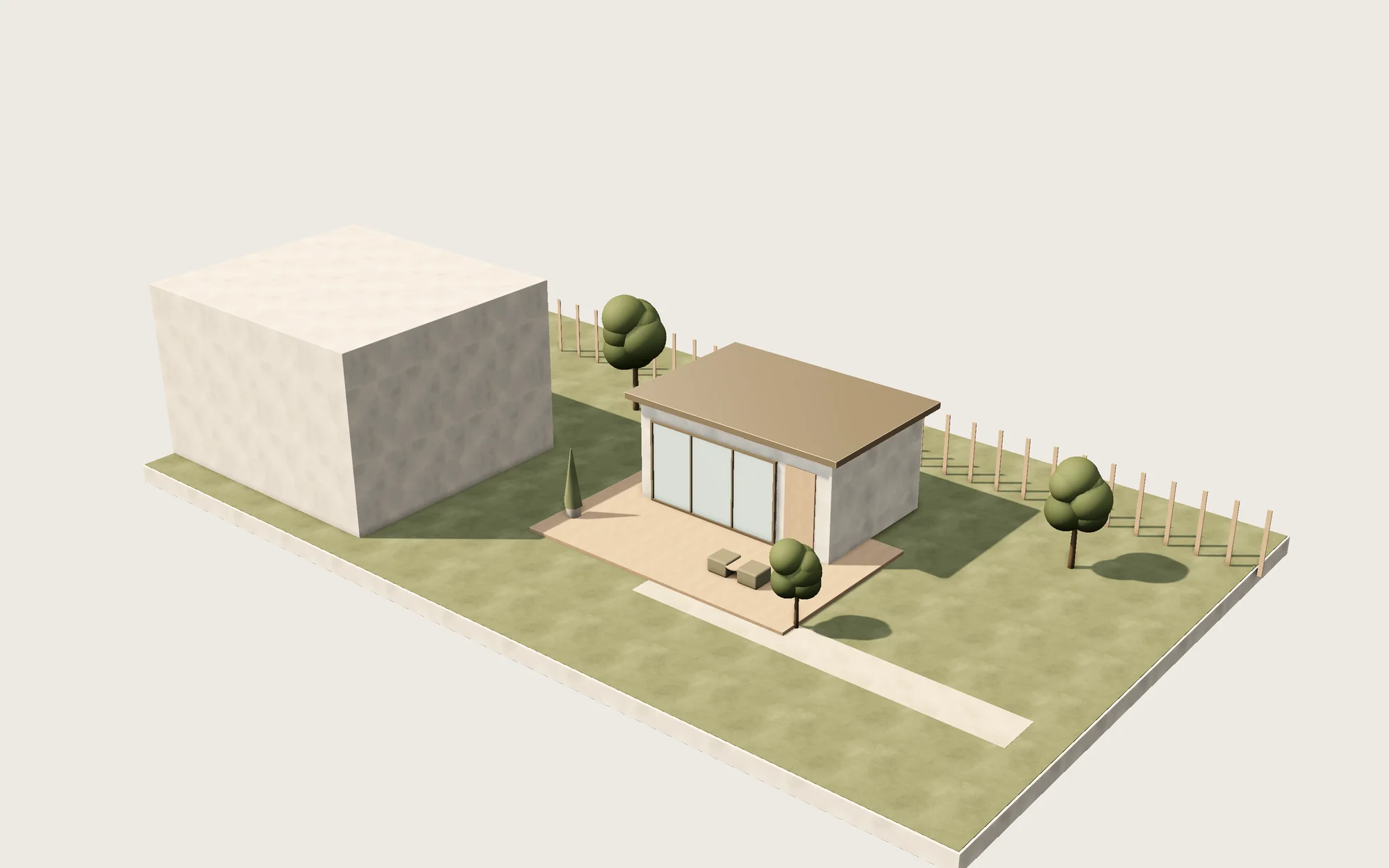
What architects and ADUs cost in Austin
These figures use national cost data with the Texas construction cost factor of 0.82 from the U.S. Army Corps of Engineers Area Cost Factors. That source has no separate Austin entry. Design fees and build costs are listed separately because you usually pay the architect months before a builder starts.
| Job | Austin (typical range) | US average |
|---|---|---|
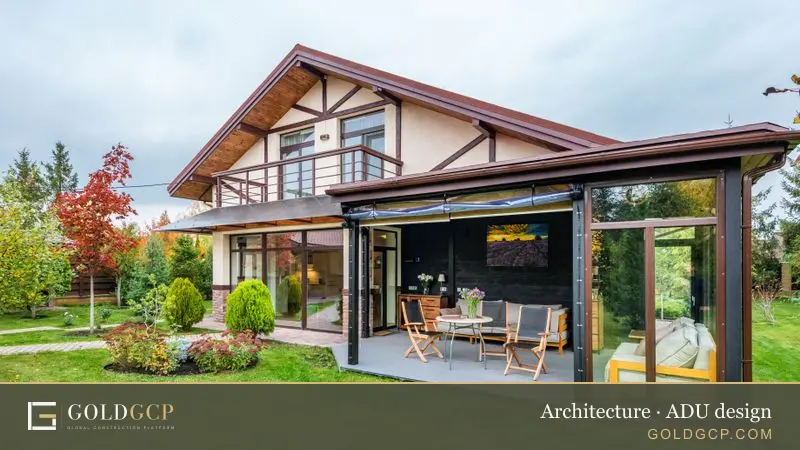
| Architect fees, ADU (600 sq ft) | $3,950–$8,850 | $4,800–$10,800 |
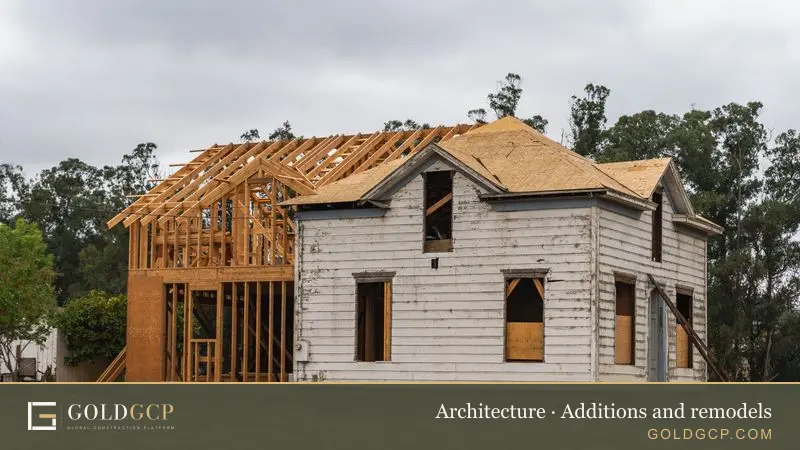
| Architect fees, addition (500 sq ft) | $2,450–$6,150 | $3,000–$7,500 |
| Architect fees, new home (2,500 sq ft) | $3,300–$24,600 | $4,000–$30,000 |
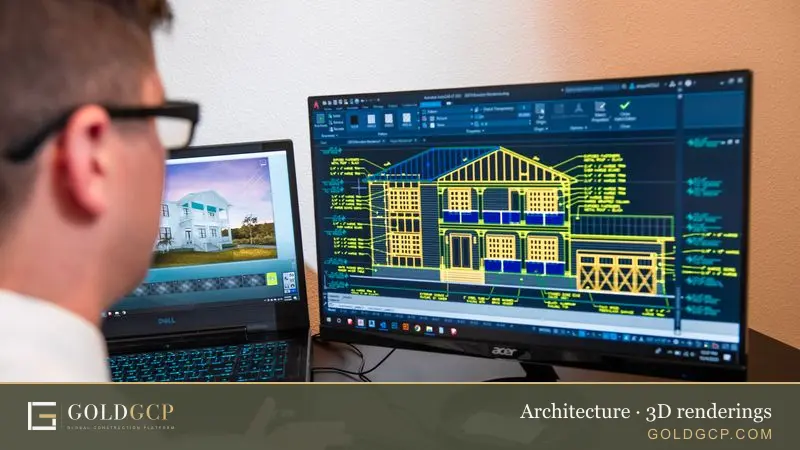
| 3D rendering package | $655–$2,600 | $800–$3,200 |
| Prefab ADU, 600 sq ft, built | $39,350–$78,700 | $48,000–$96,000 |
| Garage conversion ADU, 600 sq ft | $24,600–$98,400 | $30,000–$120,000 |
| Attached ADU, 600 sq ft | $61,500–$110,700 | $75,000–$135,000 |
| Detached ADU, 600 sq ft | $73,800–$123,000 | $90,000–$150,000 |
| ADU above a garage, 600 sq ft | $98,400–$246,000 | $120,000–$300,000 |
| Land survey | $330–$1,500 | $400–$1,800 |
Estimates for 2026, including labor and standard parts. Austin prices use the Texas statewide construction cost factor of 0.82 (US average = 1.00) from the U.S. Army Corps of Engineers Area Cost Factors, which have no separate Austin entry. Your quote depends on access, materials and the condition of the home.
The cost estimator below works out design fees and weeks to permit for your project type and ZIP code. The architecture cost estimator page has a longer version.
The same estimator has its own page, easy to share or bookmark: Architect fee estimator.
How Austin architects charge
HomeGuide's national figures put residential architects at 5% to 20% of construction cost, $2 to $15 per square foot, or $100 to $250 an hour, with firm principals at up to $350. A permit set alone runs $2,000 to $20,000, and full service through construction runs $15,000 to $80,000 or more.
The fee is usually split by phase:
| Phase | Share of the fee | What you get |
|---|---|---|
| Schematic design | 20% | Layout options, massing, early cost check |
| Design development | 10% | Materials, windows, structure and systems |
| Construction documents | 40% | The permit set and the drawings builders price |
| Bidding | 5% | Help comparing builder bids |
| Construction administration | 25% | Site visits and answers during the build |
Floodplain lots, steep sites and creek-adjacent properties usually add a survey, engineering and a second round of city review, which pushes the fee toward the top of each range. The architecture pillar page compares fees across project types.
What the build costs
A 600 square foot prefab ADU runs about $39,350 to $78,700 built. A garage conversion runs $24,600 to $98,400, an attached ADU $61,500 to $110,700, a detached ADU $73,800 to $123,000, and a unit above a garage $98,400 to $246,000. A land survey, needed on most ADU lots, runs $330 to $1,500. A 3D rendering package runs $655 to $2,600 if you want to see the unit before the layout is fixed.
How ADU rules work in Austin
An Additional Dwelling Unit is a separate dwelling unit on the same property as a single-family home. The City of Austin's Land Development Code regulates it. A structure counts as a dwelling unit if it has habitable space, a full bathroom and permanent cooking facilities.
Who can build one
The property must be zoned SF-1, SF-2 or SF-3 and have a minimum lot area of 5,750 square feet or greater. Zoning no longer requires a minimum distance between units, but the International Residential Code minimum space between units still applies, and you must follow all fire separation requirements in R302.1(1).
You have to check deed restrictions yourself; the city does not. Austin says the applicant must verify property-specific information such as deed restrictions or restrictive covenants. Read your title report before you pay for drawings.
Short-term rental limits
An ADU built after October 1, 2015 may not be used as a short-term rental for more than 30 days in a calendar year. A Certificate of Occupancy for the ADU must be submitted with the short-term rental license application. If you plan to rent the unit on Airbnb, the city has already limited that.
What the city does not run
Austin does not publish a pre-approved ADU plan catalog. Every ADU goes through residential plan review as a new construction or addition, submitted through the New Construction or Addition Web Form, so you need a full custom permit set. Our ADU design guide covers layouts and cost-saving choices.
Floodplains, creeks and drainage easements
About 10% of land in Austin is in the floodplain and can flood quickly. Current floodplain maps show where flooding is likely with 10.2 inches of rain in 24 hours, and updated maps will reflect almost 13 inches in some areas. That amount has a one percent chance of occurring in any given year, which is the 100-year storm.
The rules change what your architect can draw.
- Foundation floor slabs must be a minimum of two feet above the 100-year floodplain elevation (Section 25-12-53 (C) 1).
- Normal access to proposed buildings must be to areas a minimum of one foot above the 100-year floodplain (Section 25-12-53 (C) 4).
- A site plan is required for all development proposed within the 100-year floodplain.
- Proposed development must not result in additional identifiable adverse flooding on other property.
- Any proposed fill must be offset by at least an equal amount of excavation within the floodplain, with cut and fill calculations.
- If an encroachment would increase flood elevations, FEMA must approve a Conditional Letter of Map Revision before the city issues a development permit. The applicant prepares the engineering analysis and pays FEMA's fees.
- Variances are considered by City Council and must be requested in writing.
Remodels, repairs or alterations of existing buildings in the floodplain must include a cost estimate of all proposed work. Owner-performed work still needs a labor cost estimate as if a contractor were hired. Permanent structures such as buildings, sheds, fences and pools are generally not allowed in drainage easements. The floodplain office can be reached at 512-974-2843.
Until the city finishes its floodplain study updates, the regulatory floodplain is based on the current FEMA 500-year floodplain, which is broader than the 100-year line on older maps. A lot that looked dry on a 2015 map may not be.
Do you need a permit?
Yes, for any ADU, addition or new home. You need a Building Permit to erect, construct, enlarge, alter, repair, improve, remove, convert, relocate or demolish any building or structure within the city's zoning jurisdiction. Residential plan review covers new construction, additions, interior remodeling and demolition of single-family, duplex or two-family houses and additional buildings on one lot.
Reviewers check projects against Chapter 25-2 of the Land Development Code, the 2024 International Residential Code, and Chapter 25-12 Technical Codes with local amendments. Interior remodels go through the Interior Remodel Web Form. A list of work that does not need a permit is on the Work Exempt from Building Permits page.
Fees and payment
The City of Austin fee schedule for FY 2026-27 went into effect on October 1, 2026. Residential building plan review and permit fees are published in a separate residential fee schedule PDF. The city sets plan review fees when you submit the application, and permit fees once it approves the application and the permit is ready to be activated.
You can pay online by checking account with no service fee, though a $30 ACH Return Fee applies for insufficient funds. Credit card payments through the AB+C Portal carry a 2.35% service fee with a $2.00 minimum. In-person credit card payments are accepted only for amounts under $10,000; cash and check are fee-free.
How long review takes and what expires
Austin does not publish a fixed plan review turnaround for residential projects. Call 512-978-4000 during business hours for development questions, or 3-1-1 after hours. Once a permit is active, it expires on the 181st day if the project has not been scheduled for or received an inspection. A passed inspection extends the expiration date 180 days. A canceled or failed inspection does not.
Outside the city limits
Travis County Development Services permits construction and remodeling outside corporate city limits, including single-family residences and duplexes, driveways, on-site sewage facilities, and fences and retaining walls. Any development in Travis County requires a permit. Basic permits are applied for online at MyPermitNow.org, and technical review does not begin until the fee is paid. The permit desk is at 700 Lavaca, Suite 540, open Monday to Thursday from 9:00 AM to 2:00 PM, phone (512) 854-4215. A pre-application meeting costs $458.
Williamson County has no zoning regulations, has not adopted residential building code standards for unincorporated areas, and cannot issue a Certificate of Occupancy. If your lot is in a city or city ETJ, the city's rules apply. The County Engineer's office handles floodplain questions at 512-943-3330.
The suburbs run their own departments. Round Rock uses a one-permit system, so every contractor must be on the application before it issues, and a permit becomes invalid if work does not start within six months. Cedar Park requires all contractors to register, free of charge. Pflugerville reviews under the 2021 ICC codes and the 2020 National Electrical Code and requires a residential energy compliance certificate. Leander runs permits through its Development Hub. Each city's plan review is separate from Austin's, so a set drawn for one will need adjusting for another.
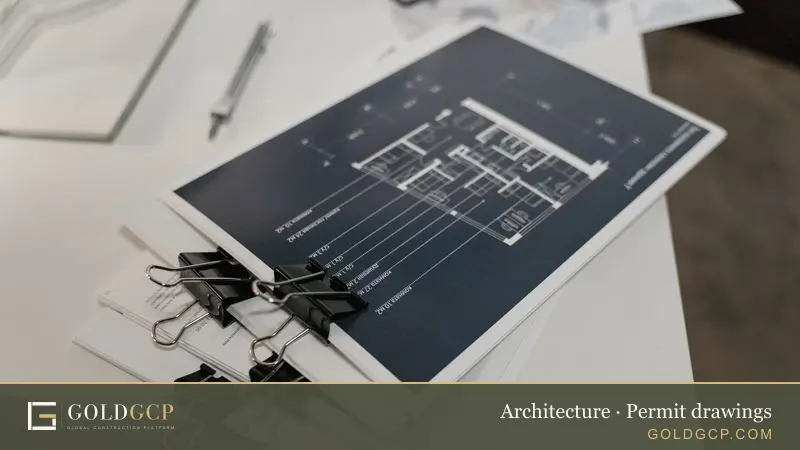
Our guide to permit drawings lists what a complete set includes.
Structural engineering and energy code
Many Austin projects need a structural engineer, especially second stories, above-garage ADUs and anything on expansive clay soils. HomeGuide puts structural plans at $500 to $3,000 for an average house or remodel, up to $12,000 for large projects. Most engineers will not stamp plans they did not create or supervise. Our guide to structural coordination explains how the engineer's drawings fit into the architect's set.
Austin Energy Green Building developed the first rating system in the U.S. for evaluating the sustainability of buildings in 1991. It rates new and remodeled single family, multifamily and commercial buildings. Projects register in its Online Rating System, and a $50 service fee is charged for each rating. Ask whether your project needs a rating before the permit set is finished.
The program's design standards show what Central Texas reviewers expect. A correct Manual J calculation that results in fewer than 600 square feet of living space per ton of cooling is inappropriate for the region, and the home will not be rated. Homes under about 900 square feet where split systems are too large must use a mini-split. Kitchen exhaust of 400 cfm or more needs make-up air, and bathroom exhaust fans must be on a timer or humidistat, not a motion sensor. These are the details that come back as plan review comments.
How to check an architect before you hire
The Texas Board of Architectural Examiners registers Texas architects and has done so since 1937. It is against the law for anyone to claim to be an architect unless the board registers them.
- Look up the individual on the TBAE individual search by first name, last name, registration number or profession. Check the firm too on the business search.
- Read the status as well as the name. A Delinquent registration means the person has not renewed and must not practice until renewed. An Inactive registration means the architect may not practice in Texas. A Revoked status usually means nonpayment of the annual fee, not discipline.
- Get a written contract. The board's rules define Construction Documents as drawings, specifications, addenda, change orders and other supplemental documents prepared for regulatory approval, permitting or construction. The contract should say exactly which of these you receive.
- Ask who stamps the structural sheets and who prepares the energy compliance documents.
Not every project needs a licensed architect. Under the Texas Architectural Act, private single-family dwellings, duplexes, farms, ranches and agricultural buildings are exempt, and so is an alteration that does not involve a substantial structural or exitway change. For alterations or additions to existing buildings, a registered architect or approved engineer must be engaged when construction costs exceed $50,000; for new buildings, the threshold is $100,000. An alteration that removes, relocates or adds walls or partitions, or changes an exit, triggers the requirement regardless of cost.
An unlicensed person who designs an exempt project must not use any form of the word "architect" in connection with the offer or performance of design services. If a designer calls themselves an architect in Austin, they need a Texas certificate. The board is at P.O. Box 12337, Austin, TX 78711, phone (512) 305-9000. Interior-only projects are covered in our Austin interior designer guide.
Areas we cover
GOLDGCP architects and vetted pros work across the Austin metro, including:
- Austin, including the floodplain and creek-adjacent neighborhoods
- Round Rock
- Cedar Park
- Georgetown
- Pflugerville
- Leander
- Westlake
Each city outside Austin runs its own building department and permit portal, and Travis and Williamson counties handle the unincorporated land between them. Enter your ZIP code to see local prices.
How GOLDGCP works
- Tell us about the lot and the project.
- Our in-house architects check zoning, ADU eligibility, floodplain status and the right permit authority, then draw the permit set.
- We match you with up to 3 vetted, licensed builders and show prices by ZIP code.
- You approve each stage and pay your pro directly, milestone by milestone, tracked in the client portal. See payment protection for how milestones work.
Builders pass six-step vetting first: state license verification, an insurance check, a business and public-records check, portfolio review, client reference calls, and onboarding with a quality score.
Frequently asked questions
How much does an architect cost in Austin?
About $3,950 to $8,850 for a 600 square foot ADU design, $2,450 to $6,150 for a 500 square foot addition, and $3,300 to $24,600 for a 2,500 square foot new home, using national data at Texas's 0.82 cost factor.
How much does it cost to build an ADU in Austin?
A 600 square foot detached ADU runs about $73,800 to $123,000 built. An attached ADU runs $61,500 to $110,700, a garage conversion $24,600 to $98,400, and a prefab unit $39,350 to $78,700. Design, survey and permit fees are extra.
Can I build an ADU on my lot in Austin?
Only if the property is zoned SF-1, SF-2 or SF-3 and has at least 5,750 square feet of lot area. Check deed restrictions yourself; the city does not. A structure with habitable space, a full bathroom and permanent cooking facilities counts as a dwelling unit.
How long does Austin take to review an ADU permit?
The city does not publish a fixed residential turnaround. Call 512-978-4000 during business hours with your address. Once the permit is active it expires on day 181 without an inspection, and a passed inspection extends it 180 days.
What changes if my lot is in the floodplain?
Slabs must sit two feet above the 100-year floodplain elevation, access one foot above it, and a site plan is required. Fill must be offset by equal excavation. If flood elevations rise, FEMA must approve a map revision before the city permits the work.
Do I need a licensed architect for an ADU in Austin?
Not always. Private single-family dwellings and duplexes are exempt from the Texas Architectural Act. But an alteration over $50,000, or one that moves walls or exits, needs a registered architect or approved engineer, and only a registered architect may call themselves one.
Can I rent out a new ADU short term?
An ADU built after October 1, 2015 may not be used as a short-term rental for more than 30 days in a calendar year, and the license application needs the unit's Certificate of Occupancy. Long-term rental has no such limit in the city's ADU rules.
How we calculate these prices
GOLDGCP starts from national price ranges for each job, taken from published 2026 cost guides and checked against local price guides where they exist. To get a local price, we multiply the national range by the construction cost factor for the metro from the U.S. Army Corps of Engineers Area Cost Factors (US average = 1.00). Where that table has no entry for a metro, we use the nearest listed location or the state value. For ZIP codes outside the 50 largest metros, the cost estimator uses the state's price level from the Bureau of Economic Analysis Regional Price Parities. Ranges include labor and standard materials but not unusual site conditions, so a written quote after an inspection is always the final price.
Sources

About this guide
Written by the GOLDGCP editorial team. Prices come from national cost guides adjusted with official construction cost factors for Austin; rules and statistics come from the agencies and reports linked in the text. We update this page when prices or codes change.