
The short answer
A new asphalt shingle roof on a typical Seattle house costs about $8,050 to $16,100, and metal runs $11,500 to $36,800. Most leak repairs land between $175 and $1,150. Roofs here fail on moss, wind and months of rain. Permit rules change from city to city.
What roofers charge in Seattle
These prices come from national cost data adjusted for Seattle. The U.S. Army Corps of Engineers puts construction costs in the Puget Sound area at 1.15 times the national average, so a roof that costs $10,000 elsewhere tends to cost around $11,500 here.
| Job | Seattle (typical range) | US average |
|---|---|---|
| Asphalt shingle roof, 2,000 sq ft | $8,050–$16,100 | $7,000–$14,000 |
| Metal roof, 2,000 sq ft | $11,500–$36,800 | $10,000–$32,000 |
| Tile roof, 2,000 sq ft | $16,100–$57,500 | $14,000–$50,000 |
| Flat roof, 1,000 sq ft | $3,450–$12,650 | $3,000–$11,000 |
| Tear-off of one old layer, 2,000 sq ft | $2,300–$4,600 | $2,000–$4,000 |
| Vent boot repair | $86–$175 | $75–$150 |
| Replace up to 25 shingles | $115–$345 | $100–$300 |
| Flashing repair | $230–$575 | $200–$500 |
| Minor leak repair | $175–$1,150 | $150–$1,000 |
| Leak with water damage | $1,150–$6,900 | $1,000–$6,000 |
| Roof deck repair, per 100 sq ft | $230–$575 | $200–$500 |
Estimates for 2026, including labor and standard parts. Seattle prices use a construction cost factor of 1.15 (US average = 1.00) from the U.S. Army Corps of Engineers Area Cost Factors, based on drawn from Tacoma (1.07) and Puget Sound bases (1.21). Your quote depends on access, materials and the condition of the home.
What pushes a quote up in Seattle:
- Tear-off: each old layer that comes off adds about $2,300 to $4,600 on a 2,000-square-foot roof.
- Deck repairs: wet rot under old shingles is common, and new sheathing is priced by the sheet or by the 100 square feet.
- Access: steep lots, narrow driveways and tall trees make staging and hauling slower.
- Moss: a roof that has carried moss for years often needs cleaning, and sometimes new underlayment, before anything goes back on.
Run your own numbers with the cost estimator below or the full roofing cost estimator. Both use the rate for your ZIP code. For national prices and how roofers measure a roof, see our roofing cost guide.
The same estimator has its own page, easy to share or bookmark: Roof replacement cost estimator.
Roofing materials that suit Puget Sound
These are the common choices at Seattle prices for 2,000 square feet of roof:
| Material | Seattle installed cost, 2,000 sq ft | Notes for this climate |
|---|---|---|
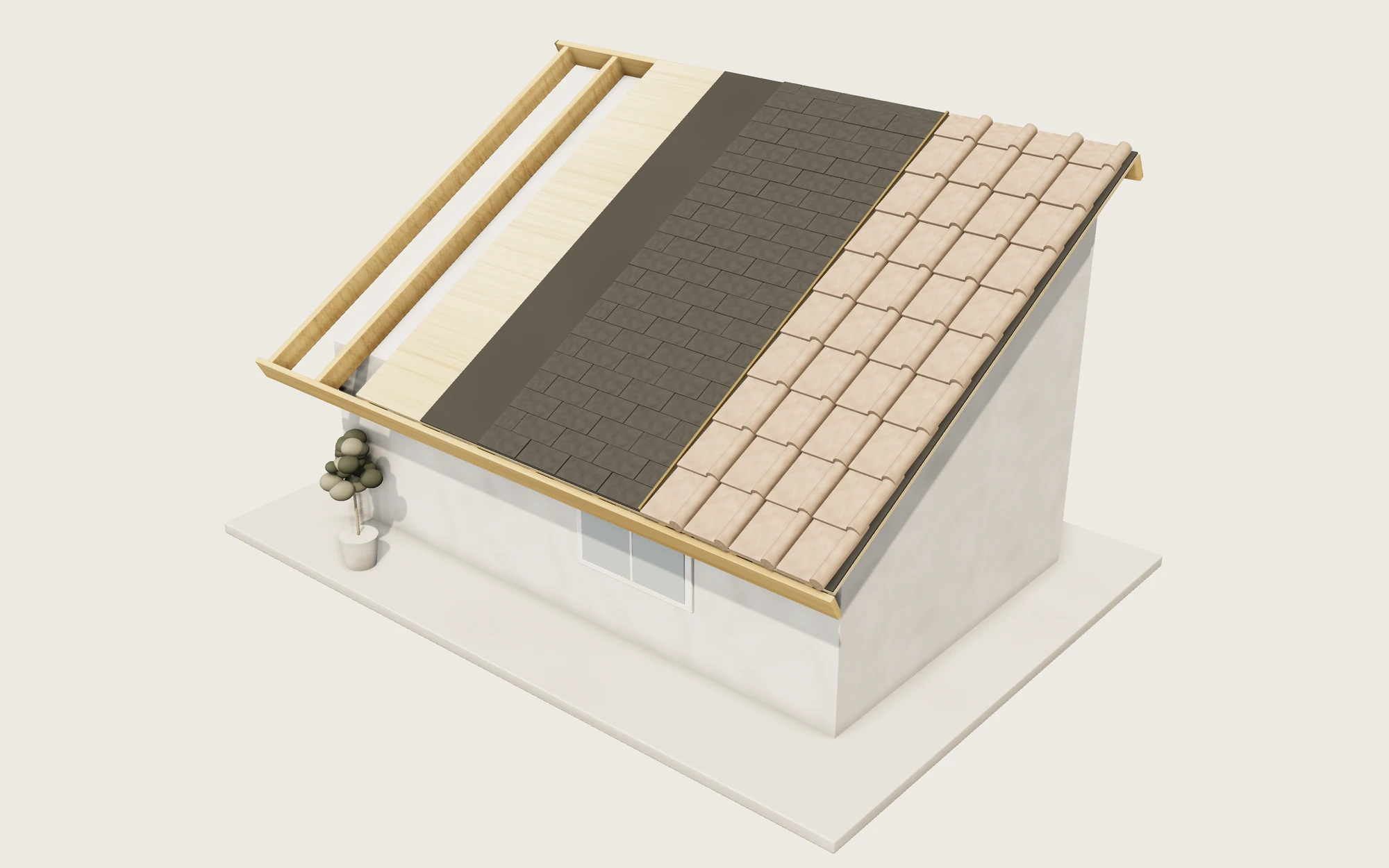
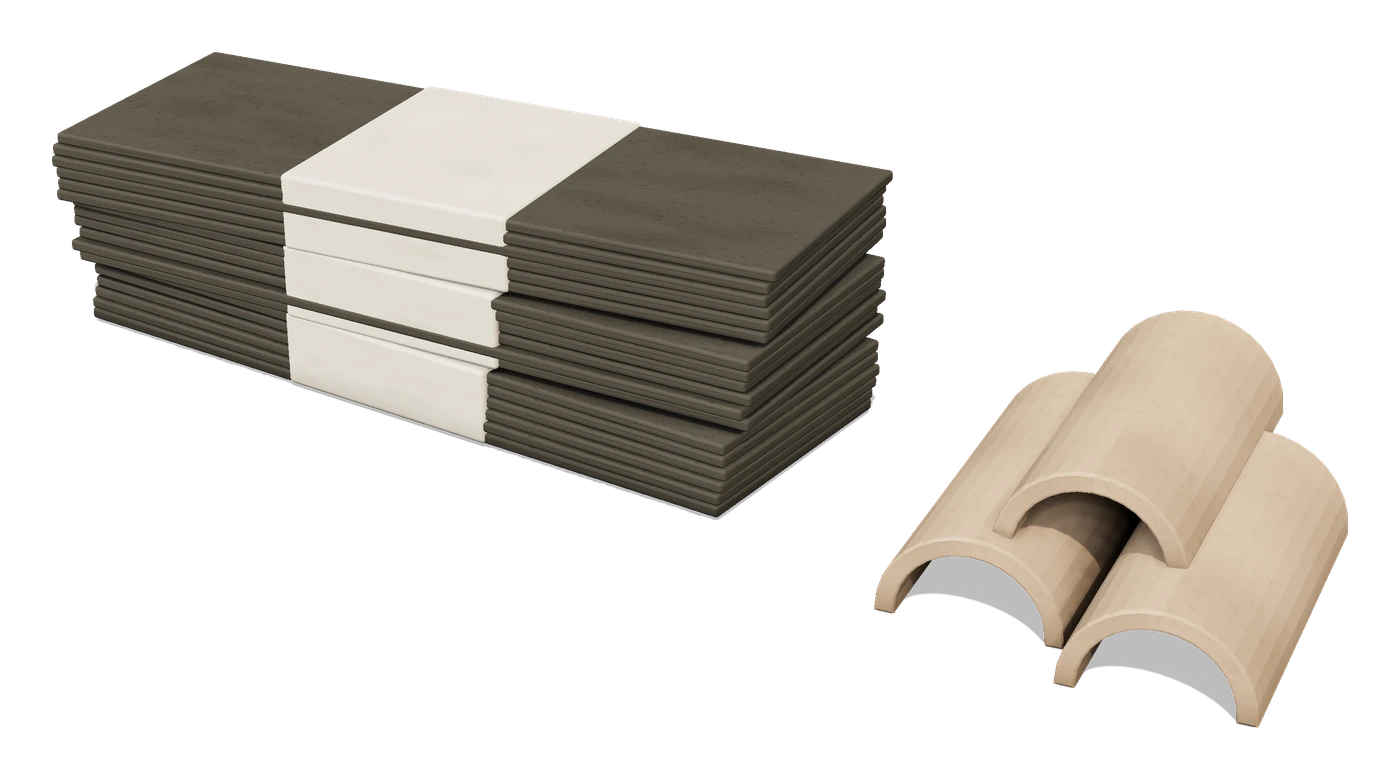
| Asphalt (composition) shingles | $8,050 to $16,100 | The default choice; architectural shingles handle wind better than three-tab |
| Metal | $11,500 to $36,800 | Sheds rain and moss well; costs more up front |
| Tile | $16,100 to $57,500 | Heavy; the layer under the tile wears out first |
| Low-slope (flat) roof, 1,000 sq ft | $3,450 to $12,650 | Common on mid-century homes and additions |
Asphalt shingles and moss
Most Seattle roofs are asphalt. The material holds up here, but shade and damp let moss take hold on north-facing slopes, where it holds water against the shingles and lifts their edges. A roofer who quotes a reroof should also quote moss treatment and, if the roof has had moss before, zinc or copper strips near the ridge.
Metal roofs
Metal costs more up front and lasts longer. On a steep pitch it sheds needles and leaves better than shingles, which matters under the firs and cedars that shade many lots. Ask how the panels handle a low slope, because some profiles are not rated for one.
Flat and low-slope roofs
Flat roofs show up on mid-century houses, garages and additions across the city. They are the first place a Seattle homeowner notices a leak, because water stands on them instead of running off. A flat roof job is priced by the square. The membrane, the drains and the flashing matter more than the brand name.
Why Seattle roofs fail
Seattle gets most of its rain from October through April, so a roof can look fine all summer and leak in the first week of November. The failures are predictable:
- Moss and algae: shade plus moisture. Moss grows on the north slope, holds water and shortens shingle life.
- Windstorms: fall and winter low-pressure systems bring gusts that lift ridge caps, tear flashing and drop limbs onto roofs.
- Tree cover: needles pile in valleys and gutters, dam the water and send it sideways under the shingles.
- Freeze-thaw: at the passes and on colder nights, water in a valley or gutter freezes and works flashing loose.
Plan an inspection in late summer or early fall, before the rain starts. A roofer can clear the valleys, treat the moss, reseal the flashing and check the underlayment at the eaves while the schedule is open. If a storm is already here and water is coming in, call our 24/7 emergency line.
Do you need a permit?
The answer depends on which city or county you live in, and on how much of the roof you touch.
City of Seattle: the city runs its own building department. Check with the Seattle Department of Construction and Inspections before work starts, and the state energy code applies to the assembly.
Bellevue: a reroof can require a permit, and the city publishes its own rules for roofing projects. A roof recover, meaning new roofing over the existing covering, needs no building permit unless the added material increases the total roof weight by more than 5 percent. There are no energy code requirements for a recover. A residential roof replacement needs no building permit if the repaired or replaced sheathing is limited to five 4-foot by 8-foot sheets (City of Bellevue). Changing the slope of a roof or adding dormers needs a permit with plan review (City of Bellevue).
Redmond: a building permit is required for additions, alterations and remodels of an existing home. Permit fees are based on the value of construction, and estimates are available by emailing the Permit Technicians (City of Redmond).
Kirkland: re-roofing has its own Re-Roof Building Permit Checklist. A rodent abatement declaration is required for projects with exterior work such as re-roofing (City of Kirkland).
Renton: a re-roof permit is required if you replace roof covering or sheathing on a commercial or multi-family building, or sheathing on a single-family home, and it is issued over the counter. Structural changes such as truss or rafter alterations or heavier roofing need plan review and a full building permit. Re-roofs can be applied for online (City of Renton).
Tacoma: building permits are needed for remodels and additions, and applications go through the Tacoma Permits system (City of Tacoma).
Everett: construction permits, checklists and fee schedules are handled through the city's online permitting portal (City of Everett).
Unincorporated King County: replacing roofing on a detached one- or two-family house needs no permit, unless the property contains critical areas (King County).
Pierce County: a building permit is not required to re-roof a home or private garage with a slope greater than 2 in 12 when the total load of all roof coverings does not exceed 7.5 pounds per square foot. The exemption does not apply if roof sheathing is being replaced (Pierce County).
Snohomish County: residential permits are handled by the county for unincorporated areas, and some projects are subject to environmental review (Snohomish County).
Energy code and ventilation
Washington's energy code applies when the roof assembly is opened. In Bellevue's summary of the rules: if insulation sits in the roof cavity and the cavity is not exposed, no new insulation is required. If the cavity is exposed, it must be insulated to full depth. If there is no insulation and the sheathing or cavity is exposed, insulation must be added in the cavity or above the sheathing. A vented roof assembly needs a gap between the insulation and the sheathing for air circulation (City of Bellevue).
A roof that cannot dry upward grows mold in the attic. Ask the roofer how the ridge and soffit vents will work before the deck goes back on.
Repair or replace?
Repair makes sense when the damage is local: a cracked vent boot, a few lifted shingles, or failed flashing at a chimney or skylight. At Seattle prices those run from about $86 to $575. A minor leak runs $175 to $1,150. A leak that has already soaked the deck or a ceiling costs $1,150 to $6,900.
Replacement starts to make sense when leaks show up in more than one place after the same storm, when shingles are bald or curling over large areas, when moss has been growing for years, or when the roof is near the end of its material's life.
Windstorm and fallen-tree claims
Before calling a roofer about storm damage, photograph the damage inside and out and call your insurer to open a claim. Get the adjuster's scope in writing and compare it line by line with the roofer's estimate. Be careful with anyone who knocks on doors after a storm. In Washington, it is a criminal penalty to hire or act as an unregistered contractor (Chapter 18.27 RCW).
How to check a roofer before you hire
Washington registers contractors under Chapter 18.27 RCW rather than licensing roofers by trade, and roofing is one of the specialties a registered contractor can carry. Check the registration.
- Look up the contractor's registration on the Washington State Department of Labor & Industries site. The status should be active and the business name should match.
- Confirm the bond: registered contractors must carry a bond or other security, and a homeowner can take action against it (Chapter 18.27 RCW).
- Confirm insurance: contractors must carry insurance or financial responsibility, and registration is suspended if coverage lapses.
- Ask for the disclosure statement: contractors must give the homeowner one, and it is a prerequisite to filing a lien claim.
- Get a written contract that names the product line, the underlayment, the flashing and who pulls the permit.
- Keep the deposit small and tie payments to stages you can see.
If a roofer cannot produce a registration number, stop. The state runs an enforcement team targeting unregistered contractors, and violations can be treated as consumer protection act violations.
GOLDGCP checks every roofer before they join: state license verification, insurance, a business and public-records check, a portfolio review, client reference calls, and onboarding with a quality score. You pay your pro directly, stage by stage, each milestone after you approve that stage. Read more about how milestone payments work.
Areas we cover
GOLDGCP roofers work across the Puget Sound region:
- Seattle, from Ballard to Rainier Valley
- Bellevue and Redmond
- Kirkland
- Renton
- Tacoma
- Everett
Enter your ZIP code to see roofing prices for your area and get matched with a local roofer.
How GOLDGCP works
- Tell us about the roof: material, rough size, the leak or the plan. Use the form, call or send a WhatsApp message.
- You see prices for your ZIP code, then we match you with up to 3 vetted, licensed pros.
- Your pro inspects, gives a written estimate, pulls the city or county permit and orders the right materials.
- You pay your pro directly, stage by stage: for example after tear-off and deck inspection, and after the final inspection. Track it all in the client portal.
For an active leak during a storm, call our 24/7 emergency line.
Frequently asked questions
How much does a new roof cost in Seattle?
For about 2,000 square feet of roof, expect $8,050 to $16,100 in asphalt shingles, $11,500 to $36,800 in metal and $16,100 to $57,500 in tile. Tear-off of an old layer adds $2,300 to $4,600. Steep lots, deck repairs and heavy moss push the price up.
How much does roof repair cost in Seattle?
Small fixes such as a vent boot, a few shingles or a flashing repair cost about $86 to $575. A minor leak runs $175 to $1,150. If water has already damaged the deck, insulation or a ceiling, plan on $1,150 to $6,900.
Do I need a permit to replace my roof in Seattle?
It depends on where you live. Bellevue, Redmond, Kirkland and Renton each have their own reroof rules, and Renton issues re-roof permits over the counter. Unincorporated King County exempts roofing replacement on one- and two-family houses unless the property has critical areas. Pierce County exempts steep-slope reroofs under 7.5 pounds per square foot unless sheathing is replaced.
Does a new roof in Seattle have to meet the energy code?
When the roof cavity is opened, Washington's energy code applies. Exposed cavity insulation must be brought to full depth, and a roof with no insulation must get some. A vented roof assembly needs a gap between the insulation and the sheathing so the roof can dry.
What roof is best for the Seattle climate?
Asphalt shingles are the most common and handle the climate if moss is controlled. Metal sheds rain and needles well on steep pitches. Flat roofs need a membrane rated for standing water. Whatever the material, ventilation and flashing details matter more than the brand.
When should I fix my roof in Seattle?
Late summer and early fall, before the rain. Most of the year's rain falls from October through April, so problems often stay hidden until the first storm. Booking an inspection in September avoids the post-storm rush.
What license does a roofer need in Washington?
Washington registers contractors under Chapter 18.27 RCW rather than licensing roofers by trade. Check the registration, bond and insurance on the state Labor & Industries site. A contractor must be registered before they can sue a homeowner, and hiring an unregistered contractor is a criminal penalty.
How we calculate these prices
GOLDGCP starts from national price ranges for each job, taken from published 2026 cost guides and checked against local price guides where they exist. To get a local price, we multiply the national range by the construction cost factor for the metro from the U.S. Army Corps of Engineers Area Cost Factors (US average = 1.00). Where that table has no entry for a metro, we use the nearest listed location or the state value. For ZIP codes outside the 50 largest metros, the cost estimator uses the state's price level from the Bureau of Economic Analysis Regional Price Parities. Ranges include labor and standard materials but not unusual site conditions, so a written quote after an inspection is always the final price.
Sources

About this guide
Written by the GOLDGCP editorial team. Prices come from national cost guides adjusted with official construction cost factors for Seattle; rules and statistics come from the agencies and reports linked in the text. We update this page when prices or codes change.