
The short answer
Water heater repair in Denver runs $160 to $790, and a new 50-gallon tank installed costs $735 to $3,250. Denver-area water is hard enough that a tank rated for 12 years often gives 7 to 10. Flushing and the anode rod decide how long yours lasts.
What water heater work costs in Denver
The table shows installed prices for a single-family home, adjusted with the Denver construction cost factor of 1.05 from the U.S. Army Corps of Engineers. The metro runs about 5% above the national average.
| Job | Denver (typical range) | US average |
|---|---|---|
| 40-gallon tank, installed | $630–$3,150 | $600–$3,000 |
| 50-gallon tank, installed | $735–$3,250 | $700–$3,100 |
| 80-gallon tank, installed | $1,250–$4,200 | $1,200–$4,000 |
| Tankless, electric, installed | $1,450–$3,150 | $1,400–$3,000 |
| Tankless, gas, installed | $2,200–$5,900 | $2,100–$5,600 |
| Heat pump (hybrid), installed | $2,100–$4,850 | $2,000–$4,600 |
| Water heater repair | $160–$790 | $150–$750 |
| Old tank removal | $79–$525 | $75–$500 |
| Gas vent replacement | $105–$630 | $100–$600 |
| Gas line upgrade | $370–$2,100 | $350–$2,000 |
| Expansion tank | $105–$420 | $100–$400 |
| Permit | $53–$210 | $50–$200 |
Estimates for 2026, including labor and standard parts. Denver prices use the metro's construction cost factor of 1.05 (US average = 1.00) from the U.S. Army Corps of Engineers Area Cost Factors. Your quote depends on access, materials and the condition of the home.
Repairs are priced by the part. A thermocouple, a gas control valve, a heating element, an anode rod or a relief valve is usually worth fixing on a tank under about 6 years old. If the leak is from a fitting or the drain valve and you still have hot water, a repair is normally the right call.
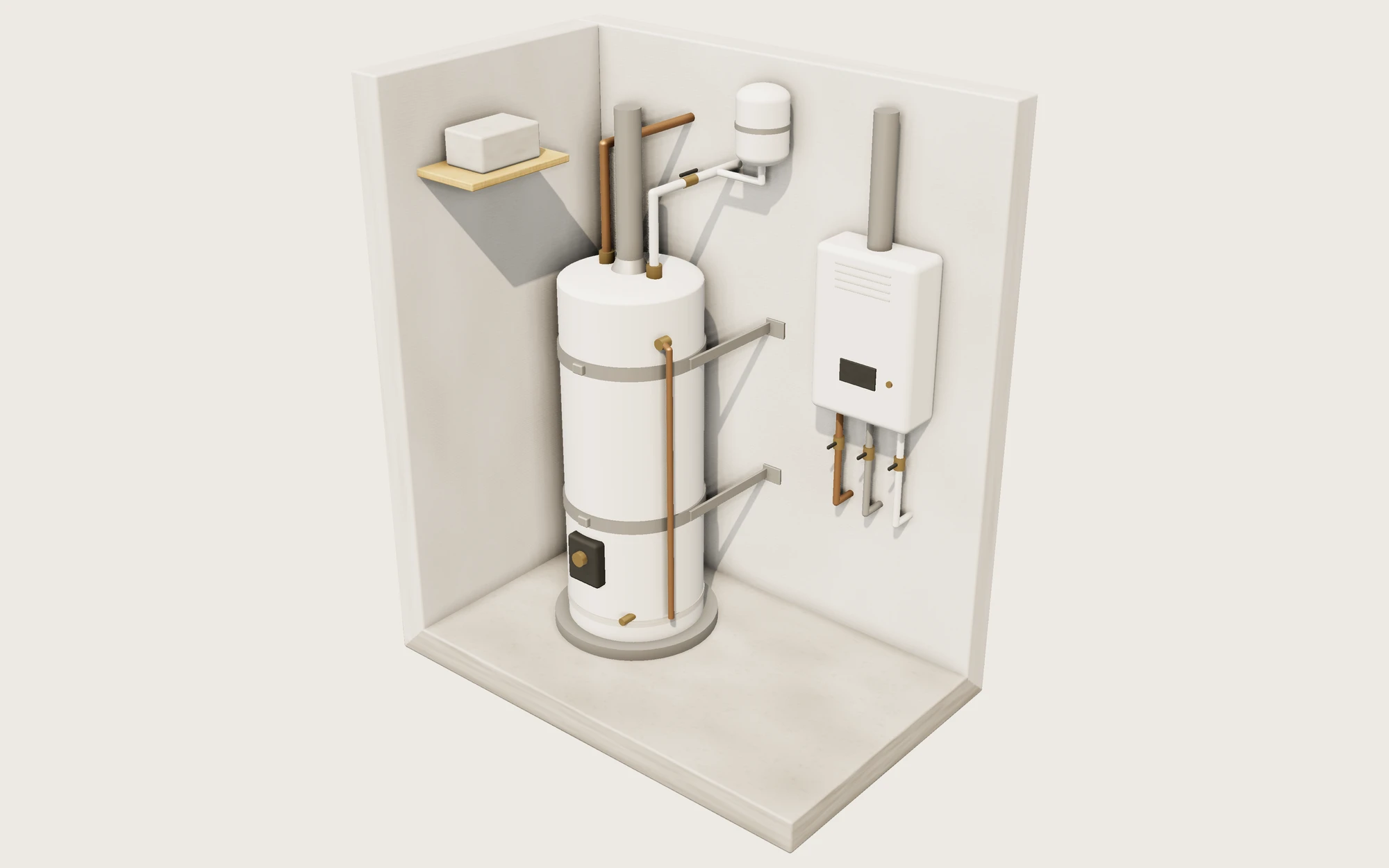
Two extras show up on many Denver replacements. The metro's municipal supply is a closed-loop system, so code requires a thermal expansion tank on every water heater ($105 to $420 installed). A relief valve that keeps weeping usually means the home never had an expansion tank. Old tank removal runs $79 to $525, and if the venting is old or undersized, gas vent replacement adds $105 to $630.
Use the cost estimator for a price based on your ZIP code, tank size and fuel.
Repair or replace?
Age is the first test. A standard 40-gallon tank carries a 12-year rating, but in Arvada and the rest of Jefferson County, hard water scale on the tank floor and burner means homeowners realistically get 7 to 10 years. Past that, a repair usually puts money into a tank that is close to failing.
The second test is where the water comes from. A tank that leaks from the body means a new heater. A leak at a fitting or the drain valve on a tank under about 6 years old is a repair.
The third is repeat failures. If the igniter or thermocouple has gone out more than once, or the unit keeps tripping the breaker, ask the installer to check the venting and the gas pressure before replacing parts again. A heater that was never derated for the elevation can keep fouling its own parts.
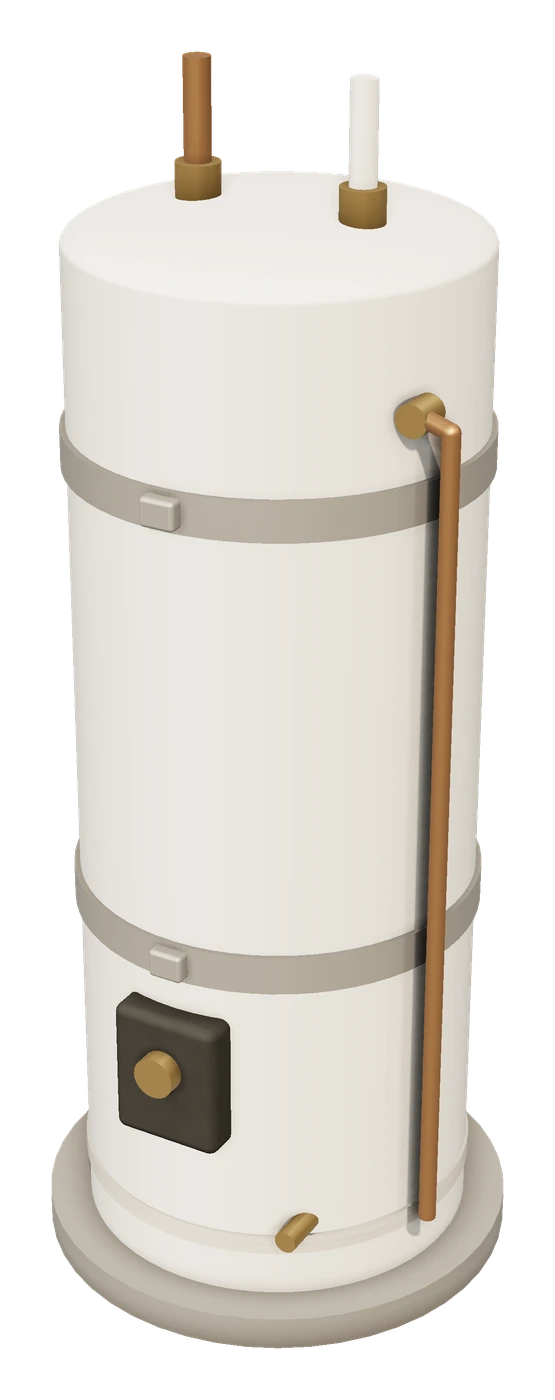
Sediment is the quiet killer. Denver's water carries dissolved calcium and magnesium that settle as scale, and the rumbling sound from a tank is that scale cooking on the bottom. Flushing the tank once a year and checking the anode rod add the most life.
Tank, tankless or heat pump in a Denver home
| Gas tank | Gas tankless | Heat pump | |
|---|---|---|---|
| Installed cost in Denver | $735 to $3,250 (50 gal) | $2,200 to $5,900 | $2,100 to $4,850 |
| Extra work often needed | Expansion tank, pan and drain, vent check | Larger gas line ($370 to $2,100), stainless venting, condensate drain | Dedicated electrical circuit, condensate drain, space that stays warm |
| Best fit | Most homes, lowest up-front cost | Households with gas service and room for a bigger line | Homes with a warm garage or utility room and panel capacity |
Gas tank
A like-for-like gas tank is the lowest-cost option and the easiest permit. On a Denver replacement, expect the expansion tank, a pan and drain where the heater sits above finished space, and a venting check. If the heater is in a garage, the burner needs protection from cars and the unit needs clearance from stored flammables.
Gas tankless
A tankless unit fires only when a tap opens, so there is no tank kept hot all day. The cost is in the install. A tankless burner can pull up to 199,000 BTU, and most Front Range homes feed the tank with a 3/4-inch gas line that cannot support that, so a dedicated 1-inch line from the meter is usually needed. That is the $370 to $2,100 gas line upgrade in the table. Stainless venting and a condensate drain come on top.
Arvada requires a gas line sizing calculation and plan review for a fuel-burning tankless heater that is not a like-for-like replacement. Budget for that step and the extra review time.
Cold inlet water matters more here than in most metros. Groundwater coming into a Denver home in winter is cold, so a tankless unit has to raise the water further to reach a comfortable shower temperature. Ask the installer to size the unit for the winter inlet temperature, not the summer one.
Heat pump
A heat pump water heater pulls heat from the air around it. It needs a dedicated electrical circuit, a drain for condensate and a space that stays warm year-round. A garage or utility room works if it does not drop toward freezing. The unit also cools the room it sits in, which is welcome in July and not in January.
If your electrical panel needs work first, that is a separate permit and a separate trade. Colorado electrical contractors must be registered with the state and hold or employ a master electrician, and the panel work is inspected under the local electrical code.
Rebates and incentives for Denver water heaters in 2026
Check each program before you buy, because the status changes. The research for this page did not confirm a current Xcel Energy, Colorado Energy Office or city water heater rebate amount, so ask the installer and the utility directly. Two things are worth knowing:
- The federal tax credit for water heater equipment ended for equipment installed after December 31, 2025, so do not count on a federal credit for a 2026 install.
- TECH Clean California is a California program and does not apply in Colorado.
Denver Water's residential rebate list covers a WaterSense toilet, not a water heater. If you are replacing fixtures at the same time, that rebate is separate.
Hard water, altitude and how long your heater lasts
Denver's water is naturally hard. Roto-Rooter puts it at 180 to 220 ppm, from mineral-rich mountain geology, and Jefferson County supply runs 12 to 17 grains per gallon, where anything over 7 is officially hard. Boulder is the exception: its average hardness is 42 mg/L, about 2.4 grains per gallon, which is soft.
Hard water does two things to a heater. In a tank, calcium and magnesium settle as scale on the tank floor and the burner, which wastes gas and corrodes the lower element on electric units. In a tankless unit, scale builds in the heat exchanger and the unit needs a yearly descale.
Altitude is the second local factor. At Denver-area altitude, a gas water heater burns differently than at sea level, and venting requirements change with the elevation. A heater installed without derating can soot its burner and fail inspection on draft.
What helps:
- Flush a tank once a year.
- Check the anode rod and replace it when it is mostly gone.
- Descale a tankless unit at least once a year.
- Have the installer confirm the unit is rated or derated for the home's elevation.
A water softener reduces scale, but some softeners have a built-in check valve. That closes the system and makes the expansion tank mandatory.
Do you need a permit?
Yes. Denver and nearly every Front Range city require a permit to install a water heater, including replacements, gas or electric. Colorado requires a licensed plumbing contractor, a permit and an inspection for water heater installation or replacement. The permit fee in Denver runs $53 to $210.
Each city runs its own permit office, so the answer depends on your address:
| City | Permit authority and process |
|---|---|
| Denver | Denver Community Planning and Development portal |
| Aurora | City of Aurora permit system |
| Lakewood | eTRAKiT online; contractor must be registered with the city |
| Littleton | eTRAKiT online; fees paid through eTRAKiT or by check at the city |
| Highlands Ranch and unincorporated Douglas County | Douglas County eSubmittal; water heater replacement needs no plan review |
| Arvada | Building Safety Division; online portal for licensed pros, in person at City Hall for homeowners |
| Boulder | City of Boulder permits; contractor must hold a Boulder license first |
A few local details worth knowing:
- Lakewood issues stand-alone water heater permits only to contractors registered for the plumbing trade. Mechanical contractors may not install water heaters there.
- Douglas County requires contractors to be registered, verifies state plumbing licenses through DORA before issuing a permit, and waives the registration fee in unincorporated areas.
- Arvada requires water heater sizing documentation showing the unit meets hot water demand.
- Boulder does not accept reciprocal contractor licenses from other jurisdictions, so a Denver-licensed plumber needs a separate Boulder license to pull a Boulder permit.
- In an emergency, Douglas County allows the work first and the permit application by the next business day.
The inspector checks the venting and draft first on a gas unit, then the expansion tank, the relief valve discharge line, the pan and drain, and the combustion air. Unpermitted work can be flagged at resale, and some lenders will not fund a mortgage on a home with known unpermitted mechanical work. If an unpermitted heater fails and causes water damage, an insurance carrier may deny or reduce the claim.
How to check a water heater installer before you hire
Water heater work in Colorado is plumbing work. The installer needs a Colorado plumbing contractor license and a master plumber behind it. Arvada requires a plumbing contractor to be or employ full-time a master plumber licensed by the state. Boulder requires a Colorado DORA master plumber or plumbing contractor certification before it issues a city license.
- Look up the license through the state's license lookup and confirm it is active and in the company's name.
- Check the city registration for your address. Lakewood, Arvada, Douglas County and Boulder each keep their own list.
- Ask who pulls the permit and books the inspection. It should be the installer.
- Get the price in writing with the expansion tank, pan and drain, haul-away and permit listed.
- If the job needs a new electrical circuit or a panel upgrade, confirm the electrical contractor's state registration.
A complaint against a licensed plumber can be filed through the state's online complaint system. The State Plumbing Board is at 1560 Broadway, Suite 1350, Denver, CO 80202, phone 303-894-7800.
Every installer in the GOLDGCP network passes a license check, insurance verification, a business and public-records check and reference calls before getting a job.
Areas we cover
GOLDGCP water heater pros work across the Denver metro:
- Denver
- Aurora
- Lakewood
- Littleton
- Highlands Ranch
- Arvada
- Boulder
Enter your ZIP code to find a vetted installer near you.
How GOLDGCP works
- Tell us what's happening through the form, a call or WhatsApp. Include the tank's age, size and fuel if you know them.
- We match you with up to 3 vetted, licensed pros and show prices for your ZIP code before anyone visits.
- The installer pulls the permit, does the work and books the inspection.
- You pay in milestones, each one after you approve that stage.
No hot water and a leak on the floor? Call the 24/7 emergency line at the top of the page. For general plumbing work beyond the heater, see our Denver plumbing guide.
Frequently asked questions
How much does water heater repair cost in Denver?
Most repairs run $160 to $790. A thermocouple, gas control valve, heating element or anode rod is usually worth fixing on a tank under about 6 years old. A tank that leaks from the body needs replacing. A weeping relief valve often means the home never had an expansion tank.
Should I repair or replace my water heater in Denver?
Replace it if the tank body leaks, if it is past 7 to 10 years, or if the same part keeps failing. Denver's hard water shortens tank life, so a 12-year rating often means 7 to 10 years here. Younger tanks with a bad part are usually worth fixing.
Do I need a permit to replace a water heater in Denver?
Yes. Denver and nearly every Front Range city require a permit for a water heater replacement, gas or electric. Denver uses its Community Planning and Development portal. Aurora, Lakewood, Littleton, Douglas County, Arvada and Boulder each run their own permit office.
Is a tankless water heater worth it in Denver?
It costs more up front, $2,200 to $5,900 installed, because most homes need a dedicated 1-inch gas line and new venting. It can last longer than a tank and frees floor space. Size it for Denver's cold winter inlet water, and plan a yearly descale.
How does Denver's hard water affect my water heater?
Denver water runs 180 to 220 ppm, and Jefferson County supply is 12 to 17 grains per gallon. Scale settles on the tank floor and burner, wastes gas and corrodes electric elements. Flush the tank yearly, check the anode rod, and descale a tankless unit.
Are there rebates for heat pump water heaters in Denver?
The research for this page did not confirm a current Xcel Energy, Colorado Energy Office or city water heater rebate amount, so ask the installer and your utility. The federal tax credit for water heater equipment ended for equipment installed after December 31, 2025. TECH Clean California does not apply in Colorado.
Does altitude affect a gas water heater in Denver?
Yes. Elevation changes how a gas appliance burns and drafts. A heater that was not rated or derated for the altitude can soot its burner and fail inspection on draft. Ask the installer to confirm the unit matches your elevation.
How we calculate these prices
GOLDGCP starts from national price ranges for each job, taken from published 2026 cost guides and checked against local price guides where they exist. To get a local price, we multiply the national range by the construction cost factor for the metro from the U.S. Army Corps of Engineers Area Cost Factors (US average = 1.00). Where that table has no entry for a metro, we use the nearest listed location or the state value. For ZIP codes outside the 50 largest metros, the cost estimator uses the state's price level from the Bureau of Economic Analysis Regional Price Parities. Ranges include labor and standard materials but not unusual site conditions, so a written quote after an inspection is always the final price.
Sources

About this guide
Written by the GOLDGCP editorial team. Prices come from national cost guides adjusted with official construction cost factors for Denver; rules and statistics come from the agencies and reports linked in the text. We update this page when prices or codes change.